

Table Of Contents
Introduction
In today’s digital-first education environment, higher education institutions handle vast amounts of sensitive student data from personal details and academic records to financial and health information. While technology has made learning more accessible and efficient, it has also increased the risk of cyber threats such as phishing, ransomware, and unauthorized access.
Student data breaches are becoming increasingly common, and their consequences can be severe, affecting both institutional credibility and student safety. This makes it essential for universities and colleges to adopt strong cybersecurity practices. By implementing proactive strategies, raising awareness, and investing in the right technologies, institutions can significantly reduce the risk of data breaches and ensure a secure learning ecosystem.
Causes of Data Breaches in Schools
A data breach in schools occurs when unauthorized individuals, either internal users or external hackers, gain access to confidential or sensitive information stored in school databases. These breaches can compromise student records, staff information, and institutional data, leading to serious security and reputational risks.
Phishing Attacks
Phishing attacks are one of the most common causes of data breaches in colleges. These involve fraudulent emails or fake websites designed to trick users into clicking malicious links or downloading harmful attachments. Even a single click can install malware or ransomware, giving attackers access to sensitive data. Schools are especially vulnerable due to frequent email communication, and studies show that nearly 89% of affected institutions reported phishing as the primary attack method.
Pretexting (Social Engineering)
Pretexting is a form of social engineering where attackers create believable scenarios to manipulate individuals into sharing sensitive information such as login credentials. This method often involves impersonation or fake requests that appear legitimate to the target. It is widely used in the education sector, making it a major contributor to security breaches. Studies indicate that around 45% of school cyber intrusions originate from phishing and fake login pages, showing how effective these tactics can be.
External Cyber Threats
External actors are responsible for approximately 80% of data breaches in educational institutions. Most of these attacks (around 96%) are financially motivated, with cybercriminals targeting sensitive data for monetary gain. Additionally, there has been a rise in large-scale attacks on major EdTech platforms, increasing overall risk exposure.
Human Error
Human error is one of the leading causes of data breaches in schools, often occurring through weak passwords, shared credentials, or accidental clicks on phishing links. Such mistakes can expose sensitive student records, financial information, and institutional data. Reports suggest that school districts face multiple cyber incidents each week, many of which are linked to operational mistakes and human error. The EDMO Admissions Agent addresses these risks by automating repetitive admissions tasks like data entry, application review, and document verification with precision. It ensures consistent workflows, tracks tasks in real time, and centralizes communication, reducing reliance on manual handling.
Insider Threats
In some cases, data breaches are caused intentionally by individuals within the institution. Students or staff members may misuse their access privileges to leak or manipulate data, sometimes with the intent of damaging the institution’s reputation.
Impact of Data Breaches in Schools
A data breach in schools or colleges can have serious and long-lasting consequences, affecting both institutions and students. When sensitive information is exposed, it not only creates immediate risks but can also lead to long-term personal and financial harm.
Exposure of Sensitive Student Information
Data breaches can reveal confidential student details such as personal identification, academic records, and contact information. Hackers may sell this data on illegal platforms or use it for fraudulent activities, including accessing bank accounts or other private systems.
Identity Theft and Impersonation
Even limited information, such as a student’s name and email address, can be misused. Cybercriminals can impersonate individuals, gain access to social media accounts, or commit identity theft, leading to serious personal and financial consequences.
Long-Term Risks for Young Students
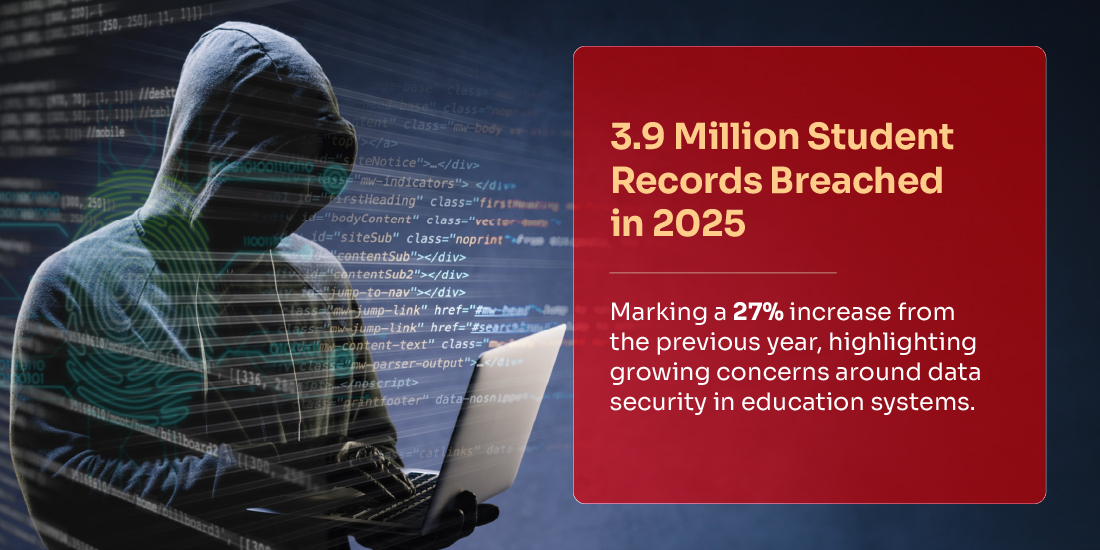
Even though younger students may not actively use financial services or social media, stolen data can create serious long-term risks. Exposed personal information can be misused later, leaving their identities vulnerable for years. Reports indicate that data from over 1,200 K–12 schools has been exposed online, affecting millions of students. In 2025 alone, 3.9 million student records were breached, marking a 27% increase from the previous year.
Misuse of Highly Sensitive Records
Cyberattacks in the education sector increasingly involve the theft and public exposure of highly sensitive student data. This includes information related to mental health, medical history, disciplinary actions, and personal experiences. Such breaches can lead to serious emotional distress and long-term privacy concerns for students. With a 23% rise in ransomware attacks in 2025, the risk of sensitive data misuse continues to grow.
Financial and Operational Damage to Institutions
Data breaches can impose substantial financial strain on schools, as institutions must invest in data recovery, legal compliance, and advanced cybersecurity measures. These unexpected costs can significantly impact budgets, especially for resource-constrained institutions. Beyond financial losses, breaches often disrupt daily operations, affecting admissions, classes, and administrative processes.
Reputational Damage and Loss of Trust
A data breach can damage the credibility of an educational institution. Parents, students, and stakeholders may lose trust in the school’s ability to protect sensitive information, impacting future enrollments and institutional reputation.
Lifelong Privacy Implications
The most serious consequence is the long-term impact on students. Once sensitive data is leaked online, it can remain accessible indefinitely, potentially affecting future education, employment opportunities, and personal safety.
Comprehensive Approach to Preventing and Managing Data Breaches in Schools
Although data breaches in schools can be highly disruptive, they are largely preventable with the right mix of technology, policies, and awareness. Since cyber threats continue to evolve, schools must adopt a proactive and multi-layered cybersecurity strategy that not only prevents attacks but also ensures a quick and effective response if a breach occurs.
Strengthen Control Over Privileged Access
Accounts with administrative or high-level permissions are prime targets for cybercriminals. Schools should limit such access to only essential personnel, implement role-based controls, and regularly audit account activity to identify any unusual behavior. This helps reduce the risk of unauthorized access and potential data breaches. Reports indicate that 91% of universities and 60% of secondary schools experienced cyberattacks in the past year, highlighting the need for stricter access management.
Deploy Intelligent Threat Detection Systems
Modern cybersecurity solutions can continuously monitor networks and systems to identify potential threats like malware, phishing attempts, and ransomware. Automated alerts and real-time responses help institutions act quickly before significant damage occurs.
Enforce Multi-Factor Authentication (MFA)
Adding an extra layer of verification, such as OTPs, biometrics, or authentication apps, ensures that even if login credentials are compromised, unauthorized access can still be prevented.
Secure Financial Transactions Digitally
Using virtual or digital cards for online payments minimizes the exposure of sensitive banking details. This is especially important for schools handling online fees, subscriptions, or vendor payments.
Promote Continuous Cybersecurity Awareness
Human error remains one of the leading causes of data breaches. Regular training sessions for both staff and students can help them recognize phishing emails, avoid suspicious links, and follow best practices like using strong, unique passwords.
Enhance Print and Device Security
Printers and connected devices are often overlooked entry points for cyberattacks. Schools should implement secure printing protocols, user authentication for print jobs, and regular monitoring of device access to protect sensitive information.
Set Up Data Breach Monitoring and Alerts
Schools can use monitoring tools and alert systems to detect if any accounts or platforms have been compromised. Early detection enables swift corrective actions, such as password resets and system checks, minimizing potential damage. On average, the education sector takes 4.8 months to report data breaches, which often delays response and worsens the impact. Implementing real-time monitoring ensures that schools can act quickly to protect sensitive information.
Use Virtual Private Networks (VPNs) for Safe Access
VPNs encrypt internet connections, making it safer for staff and students to access school systems, especially when using public or remote networks. This reduces the risk of data interception and unauthorized tracking.
Develop a Data Breach Response Plan
Prepare a clear action plan outlining steps to take in case of a breach. This should include immediate reporting procedures, notifying IT teams, securing affected systems, and updating passwords to minimize damage.
Implement Secure Digital Communication Tools
Schools can use secure digital communication platforms to facilitate safe interaction between students, staff, and administration while minimizing the risk of exposing sensitive information. These systems can verify user identities, securely log interactions, and provide guidance without sharing confidential data. EDMO Student Copilot enhances this process by providing omnichannel communication and 24/7 assistance. It connects students with admission officers across voice calls, SMS, and WhatsApp, ensuring every student is reachable on their preferred platform. By delivering consistent, accurate messaging and personalized guidance, it improves the student experience, providing timely updates and support exactly when needed.
Conclusion
Preventing student data breaches in higher education institutions requires a comprehensive and continuous approach. From implementing advanced security technologies to promoting cybersecurity awareness among students and staff, every layer of protection plays a crucial role. Institutions must also stay prepared with a clear response plan to minimize damage in case of an incident.
Ultimately, safeguarding student data is not just a technical responsibility but a commitment to trust, privacy, and institutional integrity. By prioritizing cybersecurity and adopting proactive measures, universities can create a safer digital ecosystem and protect their students from evolving cyber threats.
Frequently Asked Questions
Question 1. Should universities be required to disclose data breaches to parents and students?
Question 2. What practical steps do universities take to protect students from threats like phishing and data breaches?
Question 3. What type of student data is most at risk during a data breach?
Question 4. How can students protect themselves from phishing attacks?
Written By






No comments yet. Be the first to comment!
Leave a Comment