


Table Of Contents
Introduction
The admissions workflow in higher education is the start-to-end process that colleges and universities use to attract, evaluate, admit, and enroll students. Reviewing applications & admission documents is just a part of it. It commences with the first student inquiry and outreach, then proceeds through application processing, checking documents, coordinating financial aid, making admissions decisions, and finally confirming enrollment.
In the past, admissions teams managed everything manually, coordinating across different departments, CRMs, and communication channels. They were singlehandedly responsible for handling thousands of questions, applications, transcripts, recommendation letters, scholarship forms, and student interactions within a brief admissions period. As student applications and stiff competition grow, universities are devising new ways to work efficiently while still giving each student a personal experience.
Nowadays, the admissions process has several interconnected steps: recruiting students, handling inquiries, collecting and reviewing applications, cross-checking documents, processing financial aid, making decisions, communicating with admitted students, and helping them enroll. Each step generates substantial student data and requires ongoing communication between the school and applicants.
AI-powered automation tools are changing how admissions work. More universities now use AI tools to automate routine tasks, respond faster, personalize messages, and help with enrollment decisions. These tools can evaluate applications, underline missing information, send reminders, perform student lead scoring, and focus outreach on the most engaged students. Predictive analytics also helps teams estimate how many students will enroll and find those who might need extra support.
AI does more than just automate tasks. It helps schools build more connected and responsive admissions systems. Tools like student chatbots, CRM software, and predictive models make work easier for admissions teams and improve the experience for applicants. Rather than taking away human contact, AI lets staff spend more time building relationships, offering guidance, and connecting personally with future students.
As colleges and universities deal with enrollment management problems, limited staff, and higher expectations from tech-savvy students, admissions processes are shifting from manual, complicated systems to ones that use data and technology.
What is the Admission Workflow?

An admissions workflow is a series of sequential steps that help universities manage admissions and prospective students.
A prospective student drops the first inquiry, which, through a step-by-step process, converts into enrollment. This process includes tracking applications, checking documents, reviewing candidates, and using automated messages to make the student experience smoother and lessen the workload for staff.
Stages of Admission Workflow
Let’s delineate the stages of the admission workflow
Student Recruitment & Lead Generation
Colleges and universities reach out to potential students through their websites, college fairs, digital ads, social media, webinars, email campaigns, and connections with counselors.
Inquiry Management
Schools gather student questions through forms, phone calls, chats, events, or CRM systems. They then start building relationships with applicants by sending personalized messages.
Application Submission
Students fill out and send in their application forms, along with their grades, essays, recommendation letters, test scores, and any other needed documents.
Document Collection & Verification
Admissions staff check transcripts, certificates, ID documents, English test scores, and other supporting papers.
Application Review & Evaluation
Applications are checked for grades, eligibility, school priorities, essays, extracurricular activities, and other admission needs.
Financial Aid & Scholarship Processing
Students who qualify are considered for scholarships, grants, tuition waivers, or other financial aid.
Admission Decision-Making
Schools send out admission decisions, which can include acceptance, rejection, waitlisting, or conditional offers.
Student Communication & Yield Management
Universities stay in touch with admitted students through follow-up messages, webinars, campus tours, counseling, and personal outreach to help more students enroll
Enrollment Confirmation
Students accept their offers, pay deposits, finish onboarding steps, and confirm they will enroll.
Onboarding & Orientation
Schools help students sign up for classes, arrange housing, join orientation programs, set up student services, and settle into campus life.
Key Benefits of Workflow Automation
AI-powered workflow automation is helping enrollment teams simplify admissions operations by cutting down on the bottlenecks that take up most of their time during recruitment. Admissions officers often juggle thousands of applications at once while working with financial aid, registrars, counselors, and student support. Much of their day is spent on repetitive tasks like following up, tracking incomplete applications, checking documents, updating statuses, scheduling interviews and answering common questions, among others.
Automation also makes it easier for teams to work together. Admissions staff no longer have to spend too much time moving information between systems or chasing down updates from other departments. AI-powered workflows bring communication into one place, keep student records up to date in real time, and give counselors a clearer picture of each applicant’s progress.
For admissions officers, this means they can work more efficiently and respond faster. With quicker application processing, fewer emails, easier document management, better lead prioritization, and automated communication, teams can spend more time connecting with students and families. Instead of being bogged down by operations, counselors can focus on building relationships, recruiting strategically, and guiding students in a more personal way.
Faster Admissions Processing
AI-powered workflow automation lets schools handle applications, documents, and student questions more quickly. With automated routing, verification, and status updates, admissions teams can respond to applicants faster, especially during busy enrollment periods.
Lower Administrative Burden
Admissions teams often spend a lot of time on repetitive tasks. Workflow automation cuts down on manual work like emails, spreadsheets, follow-ups, and tracking applications, so staff can focus more on strategy and working directly with students.
Improved Data Accuracy
Automation helps reduce mistakes in handling documents, entering data, and managing applications. AI can spot incomplete records, highlight inconsistencies, and keep applicant data more organized across different systems.
Smarter Applicant Communication
Automated workflows let schools send reminders, status updates, and personalized follow-ups throughout the admissions process. This keeps applicants engaged without admissions counselors needing to reach out manually all the time.
Personalized Engagement at Scale
AI helps universities customize messages based on student interests, engagement, location, academic background, and how likely they are to enroll. Schools can keep communication personal, even when handling thousands of applicants at once.
Better Enrollment Forecasting
Predictive analytics tools help admissions teams find students who are most likely to enroll, estimate yield rates, and plan recruitment better. This helps schools make smarter decisions about enrollment and resources.
Cross-Team Collaboration
Admissions workflows usually involve several departments, like financial aid, registrar’s offices, advising, and student support. Automation helps keep information in sync and makes it easier for teams to work together during enrollment.
Reduced Operational Pressure
By automating repetitive tasks, schools can handle more applicants without needing a lot more staff. This lowers costs, helps prevent staff burnout, and makes admissions run more smoothly.
Implementation Strategy for Admissions Automation
To automate admissions in higher education, it is best to take a step-by-step approach that aims for real results instead of replacing everything at once. Many institutions now see that automation works best when it starts small, focusing on clear, repetitive, and high-volume tasks.
Success depends not just on choosing the right technology, but also on having clear workflows, getting everyone on the same page, and regularly reviewing progress. The main aim is to boost efficiency and decision-making while keeping people involved in important admissions decisions.
Start with High-Impact, Low-Risk Processes
Schools should start automating tasks that happen often, are easy to define, and involve a lot of work, like answering inquiries, tracking documents, and managing communications. These areas usually show fast results, helping teams see the benefits right away and feel more comfortable with automation before moving on to harder tasks.
Map Existing Workflows Before Automation
Before bringing in automation tools, universities should first write down and review how their admissions process works now. This helps spot any problems, repeated steps, or slow points. Without this understanding, there is a chance of automating things that do not work well instead of making them better.
Involve Key Stakeholders Early
Getting automation to work well means working together across admissions, IT, marketing, and leadership. Involving the people who will use the system from the start helps make sure it fits their needs and makes it more likely they will use it in the long run.
Take an Incremental Implementation Approach
Instead of automating everything at once, schools should roll out automation in stages. Starting with small pilot programs lets teams test things out, learn what works, and make improvements before expanding. This approach lowers risk and helps everything fit together more smoothly.
Maintain Human Oversight in Critical Decisions
Automation is meant to help, not take over, human decision-making in admissions. AI can take care of routine tasks and handle data, but people should still make the important calls, like who gets admitted, who receives scholarships, and any special cases. This helps keep things fair and accurate.
Measure Performance and Continuously Optimize
Schools should keep an eye on important metrics such as how long things take, how much staff workload is reduced, how quickly they respond, how many inquiries turn into enrollments, and the cost per new student. By tracking these, universities can identify areas for improvement and make their automation work better over time.
Types of Admission Workflow Tools
Colleges and universities use a mix of workflow automation tools to make each step of admissions and enrollment smoother. These tools help manage communication with applicants, handle repetitive tasks, process documents, and keep student data organized. Today, many schools combine CRM platforms, AI document tools, communication systems, predictive analytics, and workflow automation to boost efficiency and improve the student experience.
CRM and Enrollment Management Platforms
CRM and enrollment management platforms are the backbone of today’s admissions work. They help schools handle student questions, automate messages, track applications, follow recruitment progress, and personalize outreach. Tools like Slate, Salesforce Education Cloud, Element451, and EDMO let universities keep applicant information in one place and give teams a clear view of enrollment activity.
AI-Powered Document Intelligence Tools
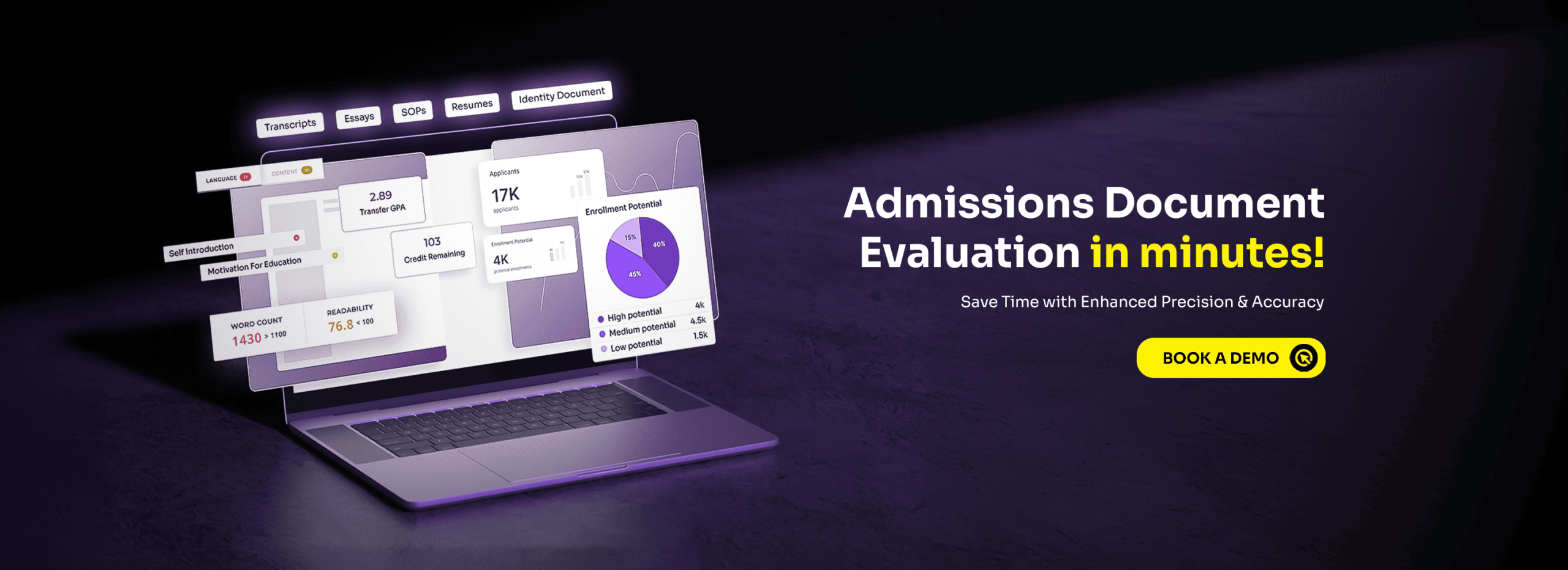
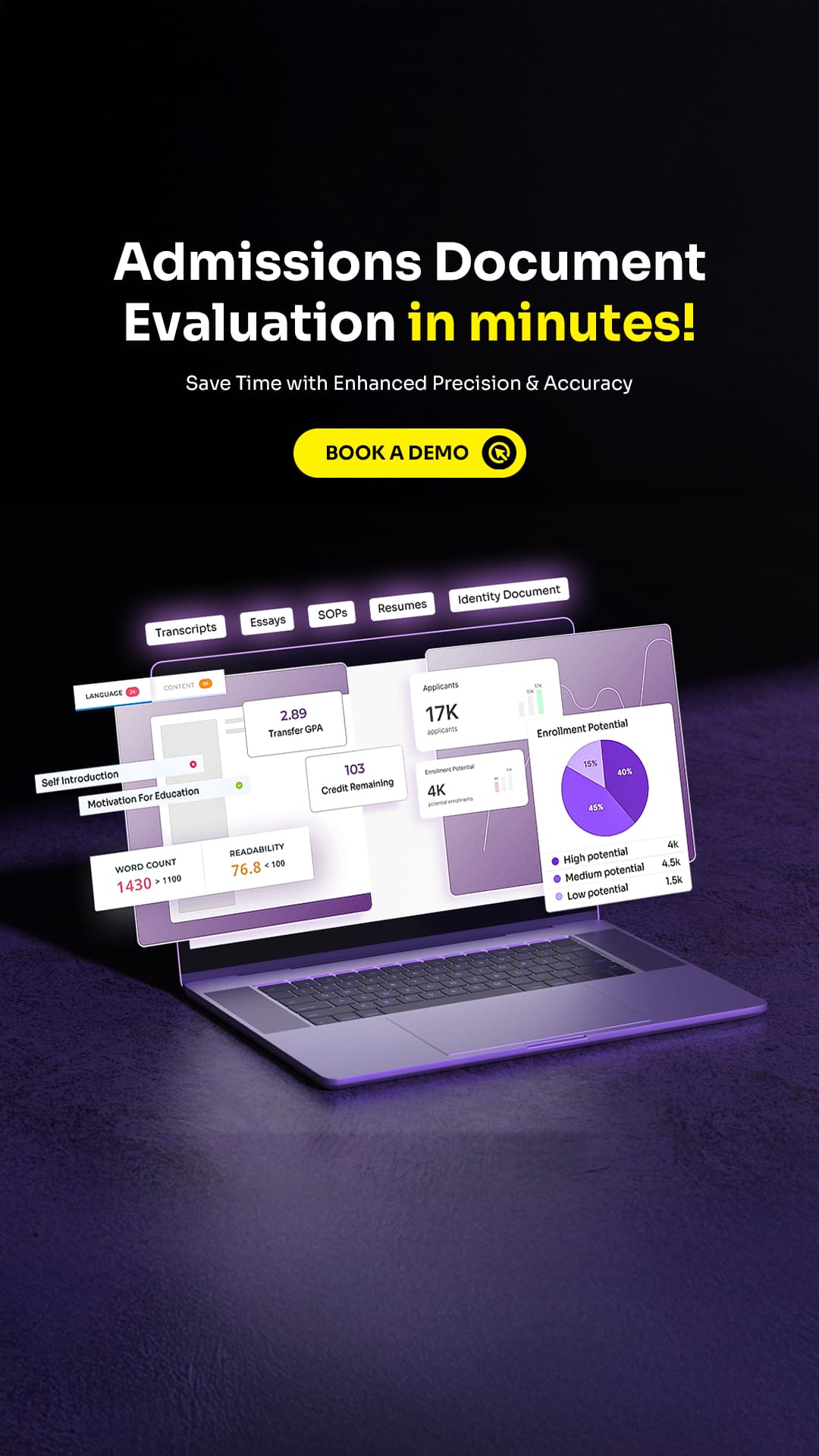
AI-powered document tools help automate tasks like transcript evaluation, GPA calculation, application review, transfer credit checks, and document verification. EDMO offers solutions such as Application Evaluator, Transfer Credit Evaluator, and GPA Calculator to cut down on manual work, improve accuracy, and speed up admissions decisions. These tools are especially helpful for schools with many domestic and international applicants.
Conversational AI and Copilot Tools
Conversational AI tools help admissions teams by automating student engagement and support tasks. AI assistants can answer questions, guide applicants through the process, give status updates, and help counselors find information and manage communication. EDMO’s tools, like Advisor Copilot and Student Copilot, help schools respond faster, personalize interactions, and lighten the workload while still offering human-centered support.
Marketing Automation Platforms
Marketing automation tools let universities manage email campaigns, send event invites, nurture leads, and reach out to students in a more personal way. These platforms help admissions teams group students by engagement, interests, location, or where they are in the enrollment process, making recruitment more efficient and improving conversion rates.
Workflow and Integration Platforms
Workflow automation and integration tools link systems like CRMs, Student Information Systems (SIS), financial aid platforms, and enrollment databases. They automate data sharing, cut down on manual work between departments, and make admissions processes run more smoothly.
Student Information Systems (SIS)
Student Information Systems keep track of records like enrollment, registration, academic history, financial aid, and student progress. While CRMs focus on engagement and recruitment, SIS platforms are the main systems for managing student data throughout their time at the institution.
Analytics and Predictive Enrollment Tools
Predictive analytics platforms help admissions teams forecast enrollment trends, identify high-intent applicants, improve yield Predictive analytics platforms help admissions teams predict enrollment trends, spot applicants who are likely to enroll, improve yield predictions, and fine-tune recruitment strategies. AI analytics tools look at engagement and applicant behavior to support data-driven planning and resource use.
How to Choose the Right Tool for Admission Workflow Solutions
When choosing an admissions automation solution, it’s important to consider more than just the features. Institutions should look for a platform that fits their enrollment goals, addresses their operational challenges, and works well with their current technology. Because admissions workflows can be very different from one institution to another, the best solution should make processes more efficient without making things harder for students or staff.
Identify Operational Pain Points
Before looking at different platforms, institutions should first figure out the main problems they want to solve. These might include slow application processing, communication delays, manual document checks, disconnected systems, or a lack of a clear view of the enrollment process. Knowing these issues helps schools focus on tools that solve real problems instead of adding features they don’t need.
Evaluate Workflow Compatibility
The chosen solution should fit with the school’s current admissions processes and structure. Universities need to check if the platform can handle their application reviews, communication, document management, and teamwork between departments like admissions, financial aid, and student services.
Prioritize Integration Capabilities
Admissions automation tools should work well with existing systems like CRM platforms, Student Information Systems (SIS), ERP platforms, financial aid systems, and marketing tools. Good integration helps break down data silos, improves teamwork, and keeps student information accurate and up to date across departments.
Assess AI and Automation Capabilities
Institutions need to look at how well the platform uses AI and automation to make admissions work better. Useful features include automated document processing, transcript evaluation, communication workflows, predictive enrollment analytics, chatbot support, and applicant prioritization. The main goal should be to add real value to daily operations, not just to automate for the sake of it.
Consider Scalability and Flexibility
As institutions grow, add new programs, or reach out to new student markets, their admissions needs will change. The best solution should be flexible, able to handle new strategies, more applicants, and future workflow changes without needing a complete system overhaul.
Evaluate User Experience for Staff and Students
A good admissions automation platform should be easy to use for both staff and students. Staff should find it simple to manage their tasks, and students should get clear updates, be able to track their applications easily, and submit documents without hassle.
Review Reporting and Analytics Features
Having access to clear data is important for planning enrollment and improving how things run. Institutions should check if the platform offers useful analytics about applicant behavior, conversion rates, enrollment forecasts, communication results, and overall efficiency.
Ensure Human Oversight and Control
Automation can make operations smoother, but people should still oversee important admissions decisions. The best platform will help staff make decisions, not replace their judgment, especially when reviewing applications, scholarships, or special cases.
Assess Vendor Support and Implementation Services
How well the system is set up often affects long-term success. Institutions should look at the vendor’s onboarding process, training, ability to customize, customer service, and experience with higher education before choosing.
Long-Term Value, Not Just Cost
The cheapest option is not always the best. Universities should think about long-term value, like saving time, reducing manual work, improving enrollment results, scaling up easily, and making things better for both students and staff.
Conclusion
Admissions workflows in higher education are getting more complicated as schools handle more applications, higher student expectations, and greater operational demands. AI-powered automation is helping universities by cutting down on repetitive tasks, making communication smoother, speeding up application reviews, and supporting data-driven enrollment decisions. Tools like CRM systems, document intelligence, predictive analytics, and conversational AI are making admissions processes more connected, efficient, and focused on students.
But successful automation is more than just using new technology. Schools need a clear, step-by-step plan that focuses on making workflows simple, encouraging teamwork, connecting systems, and keeping people involved. The best automation strategies make operations more efficient while still allowing for personal student interactions and thoughtful decision-making.
As higher education changes, admissions automation will become a key part of enrollment strategies. It will help schools handle growth, respond faster, and give applicants a better experience.
Frequently Asked Questions
Ques 1. What is admissions workflow automation in higher education?
Ques 2. How does AI help admissions teams?
Ques 3. Can admissions automation replace admissions counselors?
Written By


You May Also Like
 AI in Education

 AI in Education
 AI in Education
No comments yet. Be the first to comment!
Leave a Comment