

Table Of Contents
Introduction
International student enrollment is becoming increasingly dynamic, influenced by evolving immigration policies, global uncertainties, and shifting student expectations. Today’s students are not only looking for quality education but also for flexibility, support, and a sense of belonging. As competition among institutions grows, adopting a proactive and student-focused approach is essential.
By implementing thoughtful strategies that prioritize communication, accessibility, and global engagement, higher education institutions can successfully attract, support, and retain international students while building a more diverse and resilient academic community.
Key Strategies to Strengthen International Student Enrollment in Higher Education
International student enrollment continues to evolve amid shifting immigration policies, global uncertainties, and changing student expectations. Institutions must move beyond traditional recruitment approaches and adopt more student-centric, flexible, and resilient strategies.
Enhance Communication and Student Support
In times of uncertainty, consistent and transparent communication plays a critical role in building trust and confidence among international students. Institutions that prioritize timely engagement are better positioned to support students throughout their journey.
- Maintain a regular communication schedule (weekly or biweekly) to share updates, guidance, and important information.
- Provide a dedicated point of contact to offer personalized support and build stronger connections.
- Monitor visa processes and proactively assist students facing potential challenges.
- Continuously reinforce the importance of international students as valuable contributors to campus diversity and learning experiences.
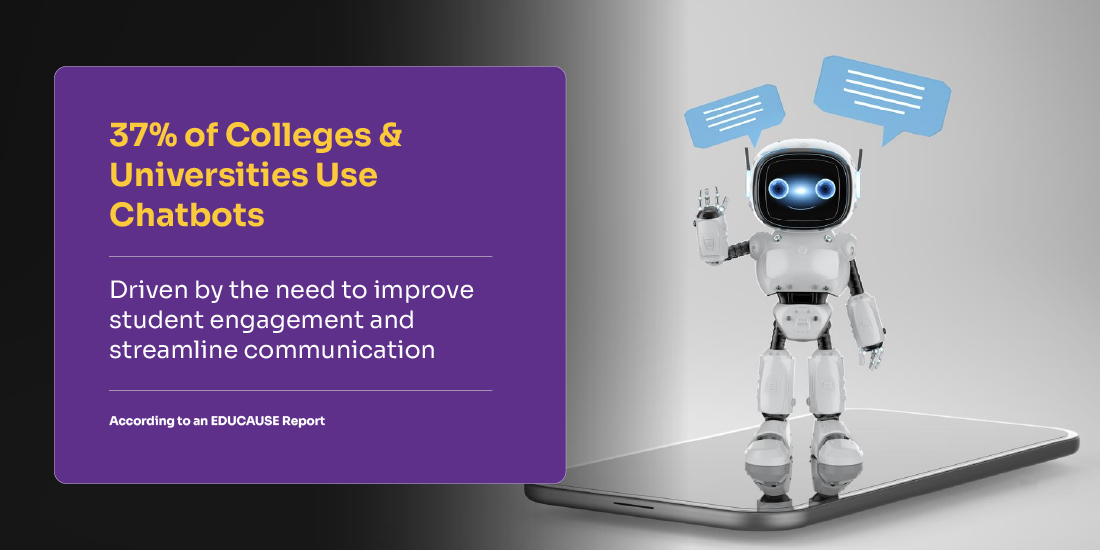
The growing use of AI-powered communication tools highlights the importance of responsive support systems. According to an EDUCAUSE report cited in education news, 37% of colleges and universities have adopted institution-wide chatbot solutions, enabling real-time responses and continuous engagement.
To further enhance student support, platforms like EDMO Student Copilot can play a vital role. It acts as an AI-powered assistant that helps institutions provide instant query resolution, personalized guidance, and 24/7 support to students. By streamlining communication and improving response times, it ensures a seamless and more engaging student experience.
Diversify and Expand Recruitment Efforts
Uncertainty around visa policies and global changes has made it important for institutions to broaden their recruitment strategies. A 17% drop in new international student enrollments in 2025 shows how quickly student confidence can be affected.
- Identify and target regions less affected by policy or geopolitical changes.
- Explore emerging markets with growing interest in international education.
- Strengthen recruitment among students already studying domestically (e.g., international high school or community college students).
By expanding their reach and reducing reliance on a limited number of markets, institutions can better navigate uncertainty and sustain international enrollment growth.
Offer Flexible Enrollment Pathways
Flexibility is now essential, not optional. In response to enrollment uncertainty, 72% of institutions offered deferrals to spring 2026, showing how widespread flexibility has become.
- Introduce deferral options across different academic timelines (semester, trimester, or full year).
- Reassess rigid policies such as fixed deadlines or housing requirements.
- Clearly communicate flexible options to help students and families make informed decisions.
Advocate for Student-Friendly Policies
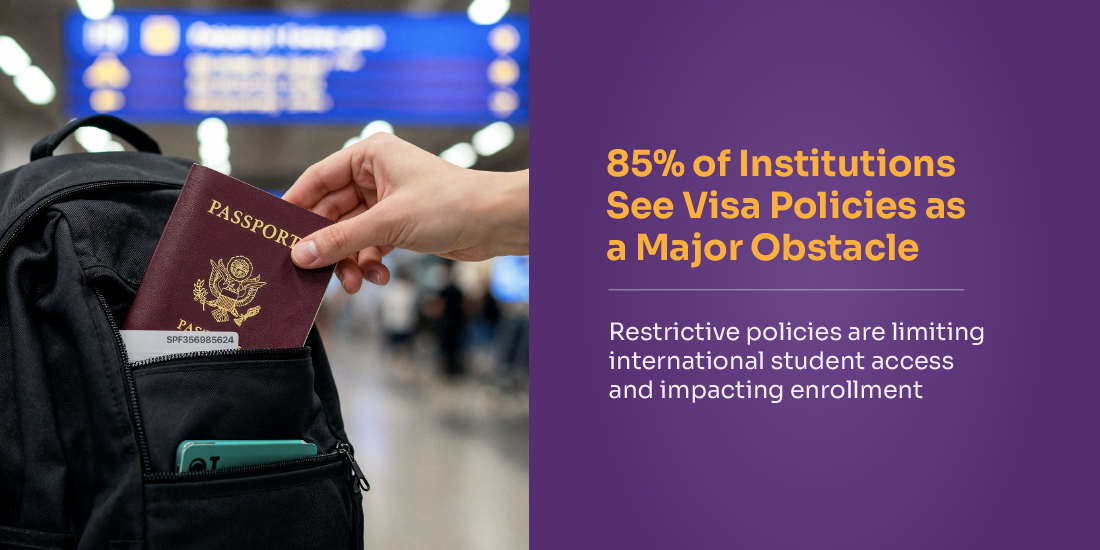
With international enrollment facing increasing challenges, policy-related barriers have become a significant concern. Recent data indicate that 85% of institutions view restrictive visa policies as a major obstacle, underscoring the urgent need for stronger advocacy and institutional support. Institutions play a crucial role in creating a more supportive and inclusive environment for international students by:
- Collaborate with legal teams to assist students dealing with visa-related concerns.
- Partner with educational associations and peer institutions to advocate for transparent and inclusive immigration policies.
Higher education institutions play a crucial role in fostering a more supportive and inclusive environment for international students.
Strengthen Global Partnerships
International collaborations can help maintain enrollment continuity.
- Utilize global campuses or partnerships to offer alternative study pathways.
- Develop joint degree programs or bridge courses to support seamless academic transitions.
- Provide remote-start or hybrid options through trusted international partners.
Strategically Expand Online Learning Options
Online education can complement traditional learning and support enrollment goals.
- Integrate virtual programs as part of a long-term international strategy.
- Use online learning to maintain engagement and accessibility for students unable to travel.
- Position digital offerings as a flexible pathway rather than a temporary solution.
Make Financial Aid Transparent and Accessible
Affordability remains a key concern for international students and their families.
- Clearly communicate available scholarships, grants, and loan options.
- Simplify access to financial aid information on websites and marketing materials.
- Build confidence by outlining eligibility and application processes.
Transparent financial support can directly influence a student’s decision to apply and enroll.
Leverage International Alumni Networks
Alumni can play a powerful role in influencing prospective students.
- Build active alumni communities in key international regions.
- Encourage alumni to share testimonials, experiences, and career outcomes.
- Organize networking events where prospective students can connect with alumni.
Real-life success stories create trust and provide social proof for your institution.
Conclusion
Supporting international student enrollment requires more than short-term solutions it demands a long-term, strategic approach centered on adaptability, empathy, and innovation. Institutions that prioritize clear communication, flexible policies, and global engagement will be better positioned to navigate uncertainty and maintain steady enrollment.
By investing in these strategies, higher education institutions can not only attract and retain international students but also enrich their campuses with diverse perspectives, fostering a more globally connected and dynamic learning environment.
Frequently Asked Questions
Question 1. What strategies are universities implementing to mitigate budget shortfalls due to reduced international student enrollments and cuts in research funding?
Question 2. How valuable is having an online student recruitment strategy to attract and enroll qualified international students?
Question 3. What are the most effective tactics for international student support?
Question 4. How can universities retain international students?
Question 5. What role do global partnerships play in international student enrollment?
Written By







No comments yet. Be the first to comment!
Leave a Comment