
Table Of Contents
- 1Introduction
- 2What Is Direct Admissions?
- 3Types of Direct Admissions in Higher Education
- 4How Does Direct Admissions Work?
- 5Direct Admissions vs. Traditional Admissions
- 6Why Are Colleges and Universities Adopting Direct Admissions?
- 7Benefits of Direct Admissions for Colleges and Universities
- 8Challenges Universities Should Consider With Direct Admissions
- 9How Direct Admissions Changes the Role of Admissions Teams
- 10How to Build a Direct Admissions Strategy
- 11How AI and Automation Can Support Direct Admissions
- 12How to Measure the Success of a Direct Admissions Program
- 13Conclusion
Introduction
Direct admissions is gaining momentum across US higher education as colleges and universities look for new ways to attract qualified students, address enrollment challenges, and simplify the admissions process. Unlike traditional admissions, where students must apply before receiving an admission decision, direct admissions allows institutions to proactively offer admission to eligible students based on predefined academic criteria. For the 2026–27 admissions cycle, 234 colleges and universities are participating in Common App Direct Admissions. Institutions such as Georgia State University, George Mason University, Utah State University, and the University of Massachusetts Boston are among those adopting this approach, alongside state-led initiatives in Minnesota and Idaho.
The growing interest in direct admissions reflects a broader shift in how universities approach student recruitment and enrollment. With increasing competition for students, demographic changes, and concerns about college affordability and accessibility, institutions are exploring ways to reach prospective students earlier and remove unnecessary application barriers. Direct admissions can help universities engage students who might otherwise hesitate to apply, expand their recruitment pipelines, and communicate admission opportunities more effectively. However, receiving an admission offer does not guarantee enrollment, making timely communication, financial aid guidance, and a streamlined enrollment experience essential to converting these offers into enrolled students.
What Is Direct Admissions?
Direct admissions is a college enrollment process in which universities proactively offer admission to eligible students based on predefined academic criteria, such as high school GPA, without requiring them to complete the traditional application process first. Rather than waiting for students to apply, institutions identify qualified candidates and communicate their admission eligibility upfront, although students may still need to complete additional steps to secure admission. Direct admissions is gaining popularity because it removes common application barriers, reduces uncertainty about acceptance, and helps universities reach students who might otherwise never apply. With growing enrollment pressures, demographic shifts, and increasing competition for prospective students, colleges are embracing this model to expand access, strengthen recruitment pipelines, and engage qualified students earlier in their college decision-making journey.
Types of Direct Admissions in Higher Education
Direct admissions programs can take different forms depending on how universities identify eligible students, communicate admission offers, and manage the enrollment process. While the goal is to simplify college access, institutions adopt different models based on their recruitment strategies, available student data, and admission requirements.
Statewide Direct Admissions Programs
Statewide direct admissions initiatives allow participating colleges and universities to identify eligible high school students using academic records shared through approved state or school systems. Students receive notifications identifying institutions where they qualify for admission, often before submitting an application. For example, the University of Minnesota Duluth, Minnesota State University Mankato, and St. Cloud State University participate in Direct Admissions Minnesota, which helps eligible high school seniors discover college opportunities based on their academic qualifications.
Common App-Based Direct Admissions
Under this model, universities partner with centralized application platforms to identify students who meet their admission criteria. Common App Direct Admissions allows participating institutions to extend proactive, nonbinding admission offers to eligible students based on information in their Common App profiles. Universities such as Georgia State University, Utah State University, the University of Massachusetts Boston, and George Mason University participate in this initiative, enabling students to receive admission opportunities before completing the traditional application process.
Institution-Led Direct Admissions
Some universities establish their own direct admissions initiatives by working with local school districts or using authorized student records to identify qualified candidates. These programs allow institutions to define eligibility requirements and manage recruitment outreach directly. For example, George Mason University has partnered with school districts to identify eligible high school students and extend personalized admission offers. Students then complete the required application and verification steps to finalize their admission.
Automatic Admissions Based on Academic Eligibility
Automatic or assured admissions programs offer guaranteed admission to students who meet specific academic requirements, such as a minimum GPA or class rank. For example, Texas A&M University and the University of Texas at Austin offer automatic admission pathways for eligible students under Texas’s state admissions framework. Unlike proactive direct admissions initiatives, these programs generally require students to submit an application before receiving an official admission decision.
Although these models differ in implementation, they share a common objective of making college admissions more accessible and predictable while helping universities connect with academically qualified students. However, automatic admissions should be understood as a related but distinct model, since eligibility does not necessarily result in a proactive admission offer.
How Does Direct Admissions Work?
Direct admissions reverses the traditional college application process. Instead of waiting for prospective students to submit applications, universities identify academically eligible candidates and proactively communicate admission opportunities. Although the exact process varies by institution and program, most direct admissions initiatives follow these steps.
Universities Establish Admission Eligibility Criteria
Participating institutions define the academic requirements students must meet to qualify for direct admission. These may include minimum high school GPA, completion of required coursework, or other academic qualifications. Universities establish these criteria based on their admission policies and program requirements.
Eligible Students Are Identified
Universities identify qualified students through authorized academic records, participating high schools, state education systems, or centralized platforms such as the Common App. Student information is evaluated against the institution’s predefined admission criteria to determine eligibility without requiring students to initiate a traditional application.
Students Receive Proactive Admission Offers
Students who meet the eligibility requirements receive a direct admission offer or notification, often through email, an application platform, or their high school. The communication typically identifies the institution, explains the admission opportunity, and outlines the steps needed to proceed. Depending on the program, the offer may be conditional or nonbinding.
Students Complete the Required Application Steps
Although direct admissions simplifies the initial process, students may still need to submit a shortened application, confirm their interest, provide official transcripts, or complete additional institutional requirements. Some programs waive application fees or eliminate requirements such as essays and recommendation letters.
Universities Verify Eligibility and Finalize Admission
Admissions teams review the required documentation to confirm that students meet institutional and program-specific requirements. This may involve verifying academic records, checking application information, and confirming eligibility for the selected program. Once the necessary conditions are satisfied, the university finalizes the admission decision.
Admitted Students Move Toward Enrollment
After admission is confirmed, students complete the remaining enrollment requirements, including financial aid applications, orientation, course registration, and other institutional procedures. Universities can support this transition through personalized communication, academic advising, and timely reminders that help students move from receiving an offer to enrolling.
Direct admissions simplifies how students enter the admissions process, but it does not eliminate the steps required to become enrolled. Its effectiveness depends on how well universities connect proactive admission offers with clear guidance, efficient verification, and continued student engagement.
Direct Admissions vs. Traditional Admissions
The primary difference between direct admissions and traditional admissions lies in how students enter the application process. In traditional admissions, students research universities, submit applications, and wait for institutions to evaluate their eligibility before receiving an admission decision. Direct admissions take a more proactive approach, allowing universities to identify qualified students and extend admission offers based on predefined academic criteria, often before a formal application is submitted. While both models aim to enroll eligible students, they differ in their recruitment processes, application requirements, timelines, and student engagement strategies.
| Criteria | Direct Admissions | Traditional Admissions |
| Admission Approach | Universities proactively identify eligible students and extend admission opportunities. | Students initiate the process by applying to universities. |
| Application Requirements | Often involves simplified applications with fewer initial requirements. | Typically requires a formal application and supporting documents. |
| Eligibility Assessment | Initial eligibility is determined using predefined academic criteria. | Eligibility is evaluated after students submit their applications. |
| Admission Offers | Eligible students may receive conditional or nonbinding offers before applying. | Students receive admission decisions after application review. |
| Application Fees | Often waived under participating direct admissions programs. | May apply, depending on institutional policies and available waivers. |
| Recruitment Strategy | Proactive outreach to students who meet institutional requirements. | Primarily relies on students expressing interest and applying. |
| Student Engagement | Universities can engage students earlier in the decision-making process. | Engagement typically begins through recruitment outreach or student inquiries. |
| Admission Timeline | Can shorten initial eligibility screening and admission notification. | Follows established application deadlines and review timelines. |
| Enrollment Process | Students must still complete required verification, financial aid, and enrollment steps. | Admitted students complete institutional enrollment requirements. |
| Primary Advantage | Reduces initial application barriers and expands opportunities to reach qualified students. | Allows institutions to conduct comprehensive, individualized application reviews. |
Why Are Colleges and Universities Adopting Direct Admissions?
Colleges and universities are increasingly adopting direct admissions as they rethink traditional student recruitment strategies and respond to changing enrollment patterns. With growing competition, demographic shifts, and increasing concerns about college affordability, institutions are exploring ways to reach qualified students earlier and make the admissions process more accessible. Direct admissions offers an opportunity to address these challenges while creating a more proactive approach to enrollment management.
Addressing Enrollment Declines and Demographic Shifts
Many universities, particularly regional public institutions and smaller private colleges, are preparing for changes in the college-age population. Direct admissions allows institutions to expand their prospective student pool by reaching academically eligible students who may not have considered applying. This can help universities strengthen their recruitment pipelines and reduce their dependence on traditional applicant inquiries.
Reducing Barriers to College Access
Traditional college applications can involve fees, essays, recommendation letters, and multiple submission requirements that discourage some students from applying. Direct admissions removes or simplifies many of these initial steps, making college opportunities more accessible. This is particularly valuable for first-generation students and those who may be uncertain about their chances of being accepted.
Reaching Students Who Might Otherwise Never Apply
Some academically qualified students do not pursue higher education because they underestimate their eligibility or lack guidance about available opportunities. By proactively communicating admission offers, universities can introduce themselves to students who are not actively researching institutions. This helps colleges engage a wider audience beyond students already participating in traditional recruitment channels.
Improving Recruitment Efficiency and Resource Allocation
Admissions teams spend considerable time reviewing applications, assessing basic eligibility, and managing administrative processes. Direct admissions allows universities to establish academic eligibility criteria upfront and identify qualified students earlier. This can reduce repetitive initial screening and enable admissions staff to dedicate more attention to personalized counseling, financial aid guidance, and enrollment support.
Strengthening Student Engagement and Enrollment Conversion
Receiving an early admission offer can give prospective students greater confidence in their college options and create an opportunity for universities to begin meaningful conversations sooner. Institutions can use this early engagement to explain academic programs, address affordability concerns, and guide students through enrollment requirements. While direct admissions does not guarantee enrollment, it can help universities build stronger relationships with prospective students before they make their final college decisions.
Supporting Institutional Access and Enrollment Goals
Direct admissions can support institutional efforts to expand educational opportunities for students who face informational or procedural barriers to college. By applying transparent academic eligibility criteria and reaching students through schools or participating application platforms, universities can make admission opportunities more visible. Institutions can also evaluate participation, application completion, and enrollment outcomes to understand whether their programs are reaching the intended student populations.
Ultimately, universities are adopting direct admissions not simply to increase the number of admission offers they issue, but to modernize how they connect with prospective students. Its long-term success depends on whether institutions can translate those offers into meaningful student engagement, completed applications, and actual enrollments.
Benefits of Direct Admissions for Colleges and Universities
Beyond simplifying the application process, direct admissions offers several operational and strategic advantages for higher education institutions. By identifying eligible students earlier, universities can improve enrollment planning, make better use of recruitment resources, and create a more predictable admissions process.
Better Enrollment Forecasting and Planning
Direct admissions gives universities earlier visibility into the number of academically eligible prospective students. By tracking offer acceptance, application completion, and enrollment confirmations, institutions can develop more informed enrollment projections. This can support decisions about course availability, faculty allocation, student services, and institutional budgets.
Lower Student Recruitment Costs
Traditional recruitment often involves substantial spending on advertising, lead generation, recruitment events, and application campaigns. Direct admissions can help universities reduce their reliance on some of these activities by connecting with qualified students through existing academic records and participating platforms. This allows institutions to allocate recruitment budgets more strategically, although actual savings depend on program costs and enrollment outcomes.
More Consistent and Transparent Admission Decisions
Direct admissions programs rely on clearly defined academic eligibility requirements, such as GPA thresholds or completed coursework. Applying these criteria consistently can make initial admission decisions more predictable and easier to explain to students. It also helps institutions maintain standardized eligibility screening while reserving individual review for programs or applicants requiring additional assessment.
Stronger Institutional Partnerships With High Schools
Statewide and institution-led direct admissions initiatives often involve collaboration between universities, school districts, and high school counselors. These partnerships can create more consistent channels for sharing admission information, explaining college pathways, and supporting students through the transition to higher education. Over time, universities can use these relationships to strengthen their regional presence and build sustainable recruitment networks.
For colleges and universities, the value of direct admissions extends beyond issuing admission offers. When implemented effectively, it can improve institutional planning, optimize recruitment spending, standardize eligibility assessment, and strengthen relationships with the schools that serve future students.
Challenges Universities Should Consider With Direct Admissions
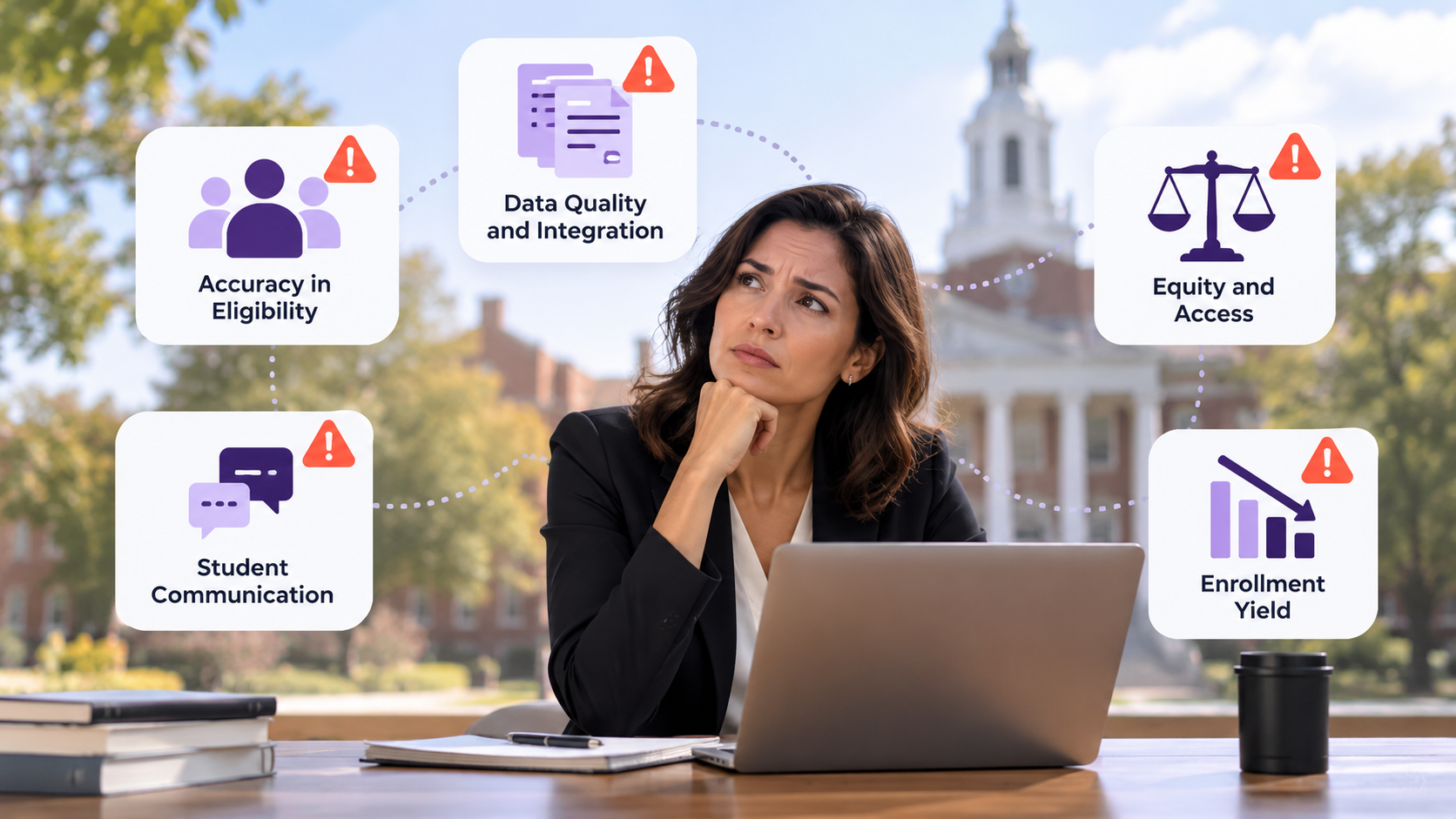
While direct admissions can simplify college recruitment and expand access to higher education, implementing them successfully creates operational challenges. Universities must ensure that admission offers are accurate, enrollment processes remain manageable, and students receive the support needed to complete their enrollment journey.
Converting Admission Offers Into Actual Enrollments
One of the biggest challenges with direct admissions is that receiving an offer does not necessarily mean a student intends to enroll. Some students may have little prior interest in the institution or may be considering several colleges simultaneously. Universities need to distinguish between students who receive offers, those who express interest, and those who ultimately enroll. Without an effective follow-up strategy, institutions risk generating large numbers of admission offers without meaningful enrollment growth.
Maintaining Accurate and Up-to-Date Student Data
Direct admissions relies on academic information collected through high schools, state education systems, or application platforms. Incomplete records, outdated GPAs, inconsistent student information, or missing coursework details can affect eligibility assessments. Universities must establish reliable data-sharing procedures and verification processes to avoid issuing incorrect offers or creating confusion when students complete their applications.
Managing Program-Specific Admission Requirements
Meeting a university’s general admission criteria does not always guarantee eligibility for every academic program. Competitive majors, nursing programs, engineering courses, and other specialized pathways may have additional prerequisites, limited seats, or separate selection processes. Institutions must clearly communicate whether a direct admission offer guarantees admission to the university, a specific college, or a particular degree program to avoid misleading prospective students.
Addressing Financial Aid and Affordability Concerns
An admission offer may remove uncertainty about acceptance, but students still need to determine whether attending the institution is financially feasible. Tuition costs, housing expenses, financial aid eligibility, and scholarship availability can influence enrollment decisions. Universities that extend direct admission offers without providing timely information about affordability may struggle to convert eligible students into enrolled students.
Integrating Direct Admissions With Existing University Systems
Many institutions rely on separate systems for recruitment, application management, student records, financial aid, and enrollment. Introducing direct admissions requires these systems to support proactive offers, track student responses, manage application completion, and update enrollment statuses accurately. Without effective integration, admissions teams may face duplicate records, disconnected workflows, and additional administrative work.
Protecting Student Data and Maintaining Compliance
Direct admissions programs often involve sharing student academic and personal information between high schools, state agencies, application platforms, and universities. Institutions must ensure that these arrangements comply with applicable privacy requirements, including FERPA where relevant. Clear data-sharing agreements, appropriate access controls, and secure information handling are essential to protecting student information and maintaining trust.
Successfully implementing direct admissions requires more than establishing eligibility criteria and sending admission offers. Universities must address data quality, program requirements, affordability, technology integration, and student follow-through to build a process that is both accessible and operationally sustainable.
How Direct Admissions Changes the Role of Admissions Teams
Direct admissions is changing how admissions teams operate by shifting their responsibilities from primarily evaluating incoming applications to actively managing student interest and enrollment. As universities begin identifying eligible students before they apply, admissions professionals must adapt their workflows, communication strategies, and performance priorities to support this new approach.
Shifting From Application Review to Student Advising
In traditional admissions, teams spend considerable time evaluating applications and determining whether students meet institutional requirements. With direct admissions, initial eligibility is often established before students express interest. This allows admissions professionals to focus more on helping students explore academic programs, understand their options, and make informed enrollment decisions.
Managing Proactive and Personalized Student Communication
Admissions teams can no longer depend entirely on prospective students initiating conversations. They must proactively engage students who receive admission offers, including those who may be unfamiliar with the university. This requires personalized outreach that addresses individual questions, explains the value of attending, and provides relevant information throughout the decision-making process.
Supporting Students Through Enrollment Completion
Under direct admissions, receiving an offer is only the beginning of the student journey. Admissions teams must help students complete outstanding requirements, understand important deadlines, and navigate the transition from admission to enrollment. This makes ongoing student support and timely intervention increasingly important responsibilities, particularly for students who have limited experience navigating college processes.
Measuring Performance Beyond Application Volume
Traditional admissions teams often track inquiries, applications, acceptance rates, and enrollment numbers. Direct admissions introduces additional measures, including offer engagement rates, student response rates, application completion rates, and offer-to-enrollment conversion. Admissions leaders must use these metrics to identify where students disengage, evaluate outreach effectiveness, and improve enrollment strategies.
Ultimately, direct admissions shifts the role of admissions teams from primarily processing applications to guiding prospective students through their enrollment decisions. Institutions that adapt their staffing, communication practices, and performance measurement to this model will be better positioned to turn admission opportunities into meaningful student outcomes.
How to Build a Direct Admissions Strategy
Building a successful direct admissions strategy requires universities to go beyond identifying eligible students and issuing admission offers. Institutions need a structured approach that aligns admission criteria, recruitment goals, technology, and enrollment support to ensure the program delivers measurable results.
Here are five practical steps universities can follow to develop an effective direct admissions strategy.
Define Clear Enrollment Goals and Target Student Groups
Before launching a direct admissions program, universities should identify what they want to achieve. This could include increasing first-year enrollment, attracting more in-state students, improving access for first-generation learners, or filling capacity in specific academic programs. Defining target student groups and measurable enrollment goals helps institutions design a program that aligns with their recruitment priorities.
Choose the Right Direct Admissions Model and Partners
Universities should evaluate whether a statewide initiative, centralized platform such as Common App, or institution-led program best fits their needs. Consider the availability of student academic records, geographic recruitment priorities, implementation costs, and institutional resources. The right partnerships can help universities establish a reliable process for identifying and reaching eligible students.
Design a Clear and Actionable Admission Offer
A direct admission offer should explain more than a student’s eligibility. It should clearly state what admission is being offered, whether additional requirements apply, and what the student needs to do next. Universities should provide straightforward instructions, important deadlines, and relevant links so students can respond without navigating a complicated application process.
Create a Coordinated Enrollment Follow-Up Plan
Universities should establish a communication plan that begins immediately after an offer is issued. Rather than sending generic reminders, institutions can tailor outreach based on student responses, academic interests, and incomplete enrollment requirements. Assigning clear ownership for follow-up activities helps ensure that interested students receive timely guidance and do not lose momentum before enrollment.
Pilot the Program and Refine It Using Enrollment Data
Instead of launching direct admissions across every program at once, universities can begin with a selected student population, geographic region, or academic department. Track metrics such as offer response rates, completed applications, confirmed enrollments, and cost per enrolled student. Comparing these results with institutional benchmarks can help admissions leaders identify what works, address gaps, and make informed decisions about expanding the program.
A well-designed direct admissions strategy should balance proactive recruitment with a straightforward enrollment experience. By starting with clear objectives, selecting suitable partners, and continuously evaluating outcomes, universities can build a program that supports sustainable enrollment growth.
Building and implementing a direct admissions strategy requires a fundamental shift in how an institution approaches recruitment, data management, and student engagement.
How AI and Automation Can Support Direct Admissions
Direct admissions may make it easier for students to get into college, but it doesn’t necessarily make the process easier for admissions teams. Imagine a university sending 10,000 admission offers in a single cycle. Each student may have questions about tuition, scholarships, academic programs, or what to do next. Some will respond immediately, others may take weeks, and many will need additional support before deciding to enroll. Managing these interactions manually can quickly become overwhelming. This is where AI and automation can make a meaningful difference.
EDMO Tools That Can Support Direct Admissions
GPA Calculator: Automatically calculates and standardizes GPAs across different grading systems, helping admissions teams assess students against institution-defined academic eligibility requirements.
Admissions Application Evaluator: Analyzes transcripts and supporting application materials against institutional criteria, providing structured insights for reviewing students who require additional evaluation.
Student Copilot: Provides 24/7 assistance to students receiving direct admission offers, answering questions about program requirements, financial aid, enrollment steps, and deadlines.
ID Verification: Supports secure identity verification for students accepting admission offers, helping institutions validate applicant identities and reduce fraud risks.
Transfer Credit Evaluator: Evaluates previous coursework and identifies potential transfer credit equivalencies, helping transfer students better understand how their existing credits may apply toward a degree.
Help Students Make Sense of Their Admission Offers
Receiving an admission offer is exciting, but students may not know what it means or what they should do next. Some may wonder whether they qualify for scholarships, whether their preferred major is available, or if they need to submit additional documents.
AI-powered student assistants can answer these questions through chat, text, email, or phone, giving students access to information when they need it. Instead of waiting for an admissions counselor to respond, students can get answers to routine questions and move forward with greater confidence.
Take the Manual Work Out of Document Reviews
Direct admissions doesn’t eliminate the need to verify academic qualifications. Universities may still need to review official transcripts, calculate GPAs, and confirm that students meet admission requirements.
Document Intelligence can handle much of this repetitive work by extracting academic information, calculating GPAs, and highlighting records that need attention. Admissions staff can spend less time entering transcript details and more time reviewing exceptions or helping students with complex circumstances.
Reach Students Before They Lose Interest
A student might receive an admission offer, open the email, and then forget about it while comparing colleges or dealing with other priorities. By the time an admissions counselor follows up, that student may have already made a decision elsewhere.
Automated outreach can help universities stay connected without overwhelming students with generic reminders. For example, someone who hasn’t responded to an offer might receive a message explaining their next steps, while a student who has started enrolling could receive a reminder about an outstanding requirement. This makes communication more relevant to where each student is in the process.
Give Admissions Teams a Clearer Picture of Student Progress
When thousands of students receive admission offers, it becomes difficult to know who is genuinely interested, who needs assistance, and who has stopped making progress.
Connected admissions systems can bring together student responses, completed requirements, and enrollment activity in one place. This helps counselors identify students who need personal attention and spend their time where it can make the greatest difference.
Ultimately, direct admissions is only as effective as the experience that follows the offer. AI and automation can help universities manage the additional volume, but their real value lies in making it easier for students to get answers, complete requirements, and make informed decisions about attending college.
How to Measure the Success of a Direct Admissions Program
Sending thousands of admission offers doesn’t necessarily mean a direct admissions program is successful. Universities need to understand how students respond to those offers, how many eventually enroll, and whether the program delivers better results than traditional recruitment methods. Tracking the right metrics can help enrollment leaders identify what is working and where improvements are needed.
Admission Offer Response Rate
This metric measures the percentage of students who respond to a direct admission offer by expressing interest, accepting the invitation, or taking another defined action. A low response rate may indicate that students aren’t seeing the offers, don’t understand their value, or need clearer communication.
Formula: (Students Who Responded to Offers ÷ Total Offers Delivered) × 100
Application Completion Rate
Even when students receive direct admission offers, many programs still require them to complete certain application steps. This metric shows how many students successfully finish those requirements after responding to an offer. It helps universities understand whether their application process is straightforward or whether students are dropping out before completing it.
Formula: (Completed Applications ÷ Students Who Started the Required Application Process) × 100
Offer-to-Enrollment Conversion Rate
This is one of the most important indicators of direct admissions performance. It measures how many students who received admission offers ultimately enroll at the institution. Universities can compare conversion rates across student groups, academic programs, and recruitment cycles to understand which offers translate into actual enrollment.
Formula: (Students Enrolled Through Direct Admissions ÷ Total Direct Admission Offers Delivered) × 100
Cost per Enrolled Student
Direct admissions programs may involve expenses related to technology, platform partnerships, outreach, and staff time. Tracking the cost per enrolled student helps universities determine whether the program is financially sustainable compared with other recruitment approaches.
Formula: Total Direct Admissions Program Costs ÷ Number of Students Enrolled Through the Program
Together, these four metrics give universities a clearer picture of direct admissions performance, from initial student interest to actual enrollment and recruitment costs. Reviewing them across admission cycles can help institutions improve their strategies and make more informed decisions about expanding their programs.
Conclusion
Direct admissions is changing how colleges and universities approach student recruitment by shifting the focus from waiting for applications to actively reaching qualified students. At a time when institutions are facing demographic shifts, enrollment pressures, and changing student expectations, this approach offers an opportunity to make college admissions more accessible while building stronger enrollment pipelines.
However, the success of direct admissions isn’t measured by how many offers a university sends, but by how many students ultimately enroll. Institutions that combine proactive admission offers with timely communication, clear financial guidance, and a seamless enrollment experience will be better positioned to turn student interest into enrollment. For universities looking to strengthen their long-term enrollment strategies, direct admissions is worth exploring not simply as an alternative admissions model, but as a new way to build meaningful connections with future students.
Frequently Asked Questions
Ques 1: Is direct admission the same as automatic admission?
Ques 2: Is direct admission binding for students?
Ques 3: Do students still need to submit documents after receiving a direct admission offer?
Ques 4: Can transfer students receive direct admission offers?
Ques 5: Can graduate programs use direct admissions?
Ques 6: Can universities offer scholarships with direct admission offers?
Ques 7: When should colleges send direct admission offers?
Ques 8: Can students receive direct admission offers from multiple universities?
Ques 9: Does Direct Admissions Increase Applications and Enrollment?
Written By





No comments yet. Be the first to comment!
Leave a Comment