

Table Of Contents
- 1Introduction
- 2What Is College Application Fraud?
- 3Student Application Fraud Signs Admissions Teams Should Watch For
- 4How AI Is Changing College Application Fraud
- 5How College Application Fraud Impacts Universities
- 6How Universities Can Detect College Application Fraud
- 7How Universities Can Prevent Application Fraud
- 8How AI and Document Intelligence Can Strengthen Application Verification
- 9Building a Fraud-Resistant Admissions Workflow
- 10Conclusion
Introduction
College application fraud is becoming a serious challenge for universities across the United States. From applicants using stolen identities and submitting falsified academic records to automated bots creating fake student accounts, institutions are facing increasingly sophisticated attempts to exploit their admissions systems. And in some cases, the goal isn’t even to earn a degree. It’s to gain access to financial aid.
The scale of the problem became particularly clear in California. According to a May 2026 CalMatters investigation, an estimated 34% of applications to California’s community colleges were suspected of being fraudulent during spring 2025. Between January and March of that year alone, scammers stole nearly $5.6 million in federal student aid and more than $900,000 in state aid. Although colleges have since made progress in detecting suspicious applications, the incidents highlight how vulnerable admissions and financial aid processes can become.
For universities, the consequences go beyond financial losses. Fraudulent applications can consume admissions staff time, distort enrollment data, occupy seats intended for legitimate students, and undermine trust in institutional processes. As fraud tactics evolve, how can colleges identify suspicious applications without making admissions more difficult for genuine students?
This article explores the different types of college application fraud, the warning signs admissions teams should watch for, and the steps universities can take to prevent fraud while maintaining an accessible enrollment experience.
What Is College Application Fraud?
College application fraud occurs when an individual deliberately provides false information, uses someone else’s identity, or submits fraudulent documents to gain admission, access financial aid, or obtain other benefits from a college or university. It can involve anything from falsifying academic qualifications to creating fake student accounts using stolen personal information. While some cases involve applicants misrepresenting their credentials, others are part of organized schemes designed to exploit university admissions and financial aid systems.
Types of College Application Fraud
Identity Theft and Impersonation: Fraudsters use stolen or fabricated personal information to submit applications under someone else’s identity. In some cases, they impersonate legitimate students to gain access to institutional systems or financial aid.
Fake Student Applications (Ghost Students): Individuals or automated bots create fraudulent student profiles and submit applications, often with the intention of enrolling in courses and collecting financial aid without genuinely participating in education.
Academic Document Fraud: Applicants submit forged or altered transcripts, diplomas, recommendation letters, or other academic records to misrepresent their qualifications and meet admission requirements.
Financial Aid Fraud: Fraudsters provide false financial or personal information, use stolen identities, or create fake enrollments to obtain grants, loans, or other student financial assistance they are not entitled to receive.
Application Misrepresentation: Applicants deliberately provide false information about academic achievements, extracurricular activities, employment history, or other credentials to improve their chances of admission.
AI-Assisted Application Fraud: Fraudsters use AI tools to generate fabricated application materials, create convincing fake documents, or automate large numbers of fraudulent applications. The use of AI itself does not constitute fraud; the concern arises when it is used to deceive institutions.
Third-Party or Admissions Agent Fraud: Unauthorized or dishonest agents submit false information, fabricate supporting documents, or misrepresent applicant qualifications, sometimes without the student’s full knowledge, to secure admission or financial benefits.
Why College Application Fraud Is Becoming a Bigger Risk for Universities
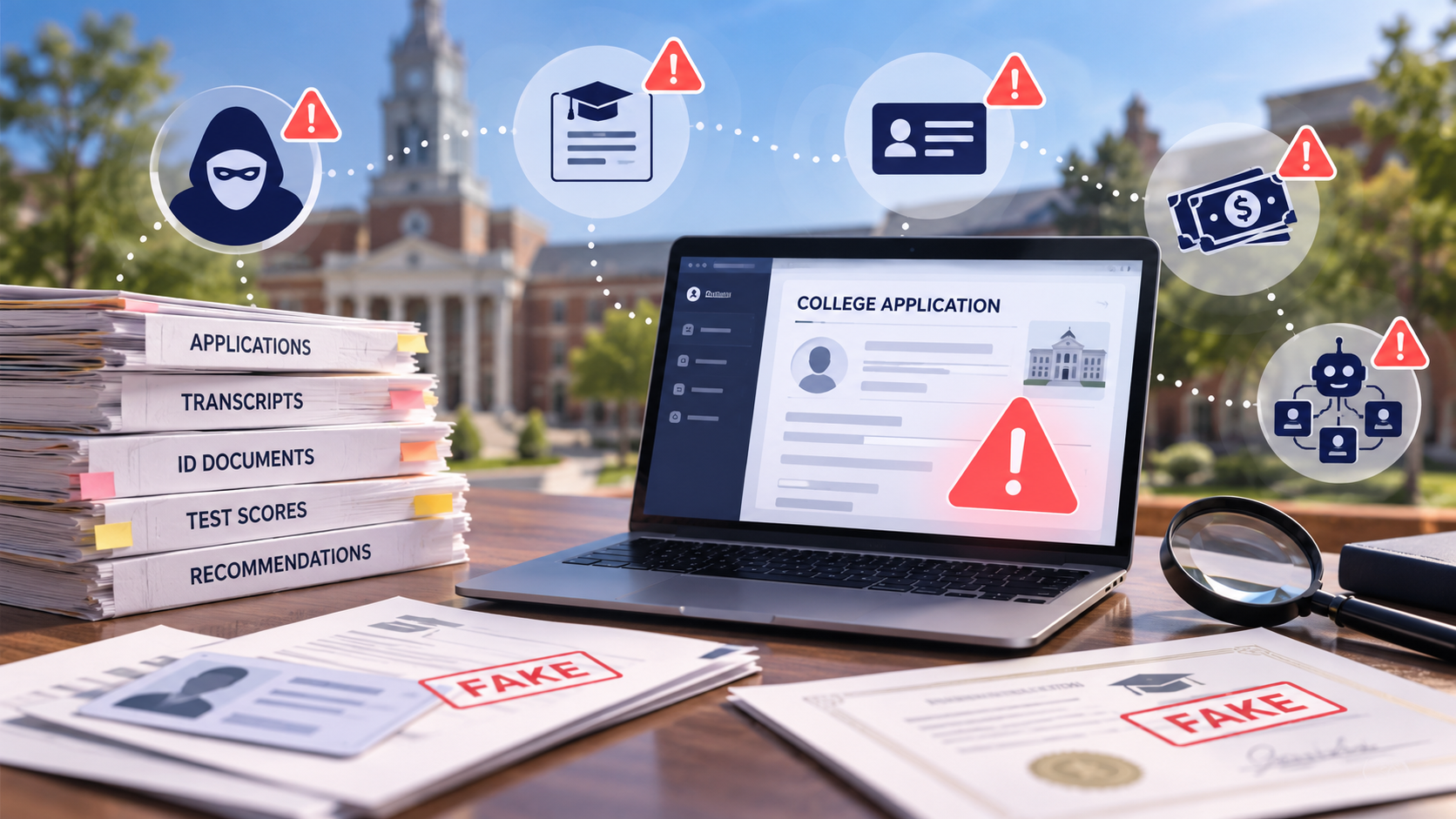
College application fraud is creating challenges that go far beyond admitting an unqualified student. From financial losses and increased administrative workloads to compromised student information and unreliable enrollment data, the consequences can affect multiple departments across an institution. Recent incidents at U.S. colleges show how difficult it can be to identify fraudulent applications, particularly when institutions are processing thousands of submissions.
Financial Losses and Misuse of Student Aid
Fraudulent applications can result in financial aid being distributed to individuals who have no intention of pursuing an education. Scammers may use stolen identities or fake student profiles to enroll in courses and collect grants or loans, leaving institutions to investigate the losses and strengthen their verification processes.
The scale of this problem became clear in California. According to a May 2026 CalMatters investigation, nearly 34% of applications to California community colleges were suspected of being fraudulent during the spring 2025 peak. Fraudsters also stole approximately $5.6 million in federal student aid between January and March 2025 alone.
For universities, such incidents highlight the financial risks of failing to identify fraudulent applications before enrollment and aid disbursement.
Increased Workload and Delays for Admissions Teams
Every suspicious application requires additional attention. Admissions staff may need to verify identities, review supporting documents, investigate inconsistencies, and coordinate with other departments before making a decision. When fraudulent applications arrive in large numbers, these checks can slow down the processing of legitimate applications.
At Prince George’s Community College in Maryland, officials reported that approximately one in eight new student applications and one in twelve new enrollments were fraudulent at the height of the problem, despite manual review processes.
For institutions already managing high application volumes, this creates additional administrative pressure and takes valuable staff time away from supporting genuine applicants.
Compromised Admissions Integrity and Institutional Reputation
When applicants successfully gain admission using false credentials, it raises questions about the reliability of an institution’s verification processes. Fraudulent admissions can also result in scholarships, academic opportunities, or institutional resources being awarded based on misleading information.
In 2024, Lehigh University in Pennsylvania expelled a student who had secured admission and a scholarship using falsified documents. The case reportedly involved fabricated financial records, a fake death certificate, and impersonation of a school official.
Such incidents demonstrate how document fraud can undermine admissions decisions and create reputational concerns for institutions.
Greater Risk of Academic Credential Fraud
Universities rely on transcripts, recommendation letters, test scores, and other academic documents to evaluate applicants. When these records are forged or altered, admissions teams may struggle to distinguish legitimate qualifications from fabricated ones, particularly when documents appear authentic.
In a case involving the University of Missouri, a man admitted in 2025 to using counterfeit transcripts, recommendation letters, and other supporting documents to gain admission to a chemistry PhD program in 2023. The fraud also enabled him to obtain a stipend and tuition waiver valued at more than $49,000.
This case highlights why verifying the authenticity of academic records is just as important as reviewing their contents.
Unreliable Enrollment Data and Forecasting
Universities depend on application and enrollment data to forecast student demand, allocate budgets, plan course capacity, and evaluate recruitment performance. Fraudulent applications can inflate inquiry and application numbers, making enrollment pipelines appear stronger than they actually are.
For example, when large numbers of fake applications enter a community college’s admissions system, enrollment teams may struggle to determine how many prospective students are genuinely interested in attending.
Without reliable data, institutions risk making staffing, budgeting, and recruitment decisions based on misleading enrollment projections.
Additional Barriers for Legitimate Applicants
As universities strengthen fraud prevention measures, genuine students may face additional identity checks, document verification requirements, or longer application processing times.
These measures can be particularly challenging for students who need to retrieve older transcripts, submit international academic records, or complete enrollment within a limited timeframe.
Universities must therefore balance stronger fraud detection with an accessible admissions experience. The objective should be to identify suspicious applications early without creating unnecessary delays for students who are genuinely seeking an education.
Ultimately, the growing sophistication of college application fraud means institutions can no longer rely solely on manual document reviews and basic identity checks. Universities need a coordinated approach that protects financial aid, supports admissions teams, maintains reliable enrollment data, and prevents fraudulent applications from progressing through the enrollment process.
Student Application Fraud Signs Admissions Teams Should Watch For
Not every fraudulent college application is easy to identify. Some contain obvious discrepancies, while others use convincing academic documents, stolen identities, or fabricated personal information that can go unnoticed during routine reviews. For admissions teams handling hundreds or thousands of applications, recognizing unusual patterns early can help prevent fraudulent submissions from progressing further. Here are some common red flags to watch for.
Inconsistent Personal Information
Differences in an applicant’s name, date of birth, address, or other identifying details across application forms, identity documents, and academic records may indicate identity theft or impersonation. Admissions teams should pay particular attention to unexplained discrepancies, especially when multiple pieces of information do not match.
Suspicious or Altered Academic Documents
Transcripts, diplomas, recommendation letters, and other supporting documents may contain unusual formatting, inconsistent grades, missing institutional details, or signs of digital alteration. Documents that cannot be verified with the issuing institution may require further investigation.
Multiple Applications With Similar Information
A large number of applications submitted using the same contact information, mailing address, phone number, or other repeated details can indicate coordinated fraudulent activity. Admissions teams should also watch for unusual similarities across applications that appear to come from unrelated individuals.
Unusual Application Submission Patterns
Sudden spikes in applications, large numbers of submissions within short periods, or repeated activity associated with the same technical identifiers may suggest automated submissions or organized fraud attempts. These patterns are particularly important when applications are submitted at volumes that differ significantly from normal enrollment activity.
Identity Verification Failures
Applicants who repeatedly fail identity verification checks, submit identification documents that do not match their application details, or provide information that cannot be authenticated may require additional review. However, verification failures should be investigated rather than treated as automatic evidence of fraud.
Inconsistent Academic or Employment History
Unexplained differences between an applicant’s reported qualifications and supporting documents can raise concerns. Examples include conflicting graduation dates, unverifiable institutions, or employment details that do not align with submitted records.
Unusual Financial Aid or Enrollment Activity
Applications that appear primarily focused on accessing financial aid, particularly when combined with suspicious identity information or unusual enrollment behavior, may warrant closer examination. Repeated changes to financial information, questionable supporting documents, or patterns associated with known fraud schemes can also signal potential problems.
Repeated Changes to Applicant Information
Frequent or unexplained changes to names, addresses, contact details, or other sensitive information after an application has been submitted may indicate an attempt to conceal identity inconsistencies or redirect communications. Admissions teams should review these changes in context and verify sensitive updates through appropriate procedures.
Identifying these warning signs is an important first step, but a red flag does not necessarily mean an application is fraudulent. Legitimate students may have name changes, unusual academic histories, shared addresses, or difficulties obtaining documents. Universities should use these indicators to guide additional verification rather than automatically reject applications. A combination of document checks, identity verification, pattern monitoring, and human review can help institutions detect potential fraud while protecting genuine applicants.
How AI Is Changing College Application Fraud
Reviewing thousands of applications, transcripts, and identity documents makes it difficult for admissions teams to catch every inconsistency. Fraudulent submissions can sometimes slip through, especially when documents appear legitimate or suspicious patterns are spread across multiple applications. With automated verification and intelligent fraud detection, universities can identify potential risks earlier, reduce manual reviews, and protect the integrity of their admissions processes.
Detect Fake and Altered Academic Documents
Transcripts, diplomas, and recommendation letters can be forged or digitally altered to misrepresent an applicant’s qualifications. Intelligent document processing can identify inconsistencies in academic records, detect potential signs of manipulation, and compare extracted information against application details.
For example, if a transcript contains conflicting grades, unusual formatting, or information that doesn’t match the applicant’s records, the system can flag it for further review. This helps admissions teams identify questionable documents without manually examining every detail.
Identify Suspicious Application Patterns and Fake Student Accounts
Fraudulent applications may appear legitimate when reviewed individually, but unusual patterns often emerge when multiple submissions are analyzed together.
Automated fraud detection can identify repeated contact information, duplicate applicant details, unusual submission volumes, and similarities across supposedly unrelated applications.
For instance, dozens of applications submitted within a short period using overlapping information could indicate coordinated fraudulent activity. Flagging these patterns early helps universities investigate potential ghost student schemes before they affect enrollment records or financial aid processes.
Strengthen Identity Verification and Prevent Impersonation
Fraudsters may use stolen identities, fabricated personal information, or manipulated identification documents to submit applications and access institutional benefits.
Digital identity verification can help authenticate submitted IDs, compare applicant details across records, and identify discrepancies that require additional checks. Where appropriate, facial matching and liveness detection can provide another layer of verification.
This helps universities reduce the risk of identity-based fraud while protecting sensitive student information and financial aid resources.
Reduce Manual Reviews and Accelerate Legitimate Admissions
Investigating suspicious applications takes valuable time away from reviewing genuine applicants and supporting prospective students.
Automated workflows can extract information from submitted documents, cross-check application details, and flag potential issues for admissions staff. Applications without identified concerns can move through standard processing, while higher-risk submissions receive additional attention.
This allows universities to focus their resources where they’re needed most, reduce administrative delays, and provide a smoother enrollment experience for legitimate students.
By combining document verification, identity checks, and application pattern analysis, universities can strengthen fraud prevention without adding unnecessary complexity to admissions. The goal isn’t to replace human judgment, but to help admissions teams catch potential problems earlier, make informed decisions, and ensure genuine students aren’t held back by fraudulent activity.
How College Application Fraud Impacts Universities
The consequences of college application fraud don’t always end when a suspicious application is identified. Some problems only become apparent after an applicant has been admitted, registered for classes, or received financial aid. At that stage, institutions may face complications involving academic operations, regulatory obligations, and student services.
Disruptions to Course Planning and Academic Operations
When fake students register for courses, they can occupy seats that could otherwise go to genuine learners. Faculty may also spend time tracking students who never participate in coursework or responding to enrollment irregularities. This can be particularly disruptive in online programs where student participation is harder to verify in person.
Financial Aid Compliance and Audit Complications
Fraudulent enrollments can create problems with financial aid eligibility, disbursement records, and institutional reporting. Colleges may need to investigate questionable payments, correct student records, and provide documentation during audits or regulatory reviews. Depending on the circumstances, institutions may also face financial liabilities or additional compliance requirements.
Complications in Student Records and Academic Credentials
When fraudulent applicants successfully enroll, their information can enter student information systems, academic records, and other institutional databases. Correcting these records may require coordination between admissions, registrar, IT, and financial aid teams. If fraudulent activity goes undetected long enough, institutions may also need to review academic credits or credentials awarded under false pretenses.
Reduced Access to Opportunities for Genuine Students
Fraudulent enrollments can affect more than application processing. In programs with limited capacity, fake students may temporarily occupy course seats, advising appointments, or other resources intended for legitimate learners. When fraudulent applicants receive scholarships or other limited institutional benefits, eligible students may also miss out on opportunities.
College application fraud can therefore create problems throughout the student lifecycle, not just at the point of admission. Preventing fraudulent applications from progressing into enrollment helps universities protect academic operations, maintain accurate student records, and ensure institutional resources reach genuine students.
How Universities Can Detect College Application Fraud
Detecting college application fraud requires more than checking whether an applicant has submitted all the required documents. Universities need to verify that the information is authentic, identify suspicious activity across applications, and investigate inconsistencies before they lead to fraudulent admissions or financial aid disbursements. A combination of verification procedures, automated checks, and coordination between departments can help institutions identify potential fraud without creating unnecessary barriers for genuine students.
Verify Applicant Identities at Critical Stages
Universities should establish identity verification procedures at key points in the enrollment process, particularly before granting access to sensitive student systems or disbursing financial aid.
This may involve validating government-issued identification, checking whether personal details match institutional records, and using additional authentication when suspicious activity is detected.
A risk-based approach allows institutions to apply stronger verification where necessary rather than requiring every applicant to complete the same additional checks.
Authenticate Academic Documents With Issuing Institutions
A transcript that looks genuine isn’t necessarily authentic. Universities should verify academic records through official transcript services, trusted electronic delivery platforms, or direct communication with the issuing institution.
Admissions teams can also check whether the institution is recognized, whether the credentials match the applicant’s reported academic history, and whether submitted documents contain unexplained discrepancies.
This helps prevent forged transcripts, fabricated qualifications, and altered academic records from influencing admissions decisions.
Monitor Application Activity for Unusual Patterns
Looking at applications individually may not reveal coordinated fraud. Universities should also examine submission activity across their admissions systems.
Repeated contact information, unusual spikes in applications, multiple accounts linked to the same technical identifiers, or large numbers of submissions within a short period can warrant investigation.
Fraud detection systems can help identify these patterns and alert staff when activity differs significantly from established application trends.
Cross-Check Information Across Admissions and Financial Aid Systems
Fraudulent information may appear consistent within a single application but conflict with records held by another department.
Universities can improve detection by comparing relevant applicant details across admissions, registrar, identity verification, and financial aid systems, subject to applicable privacy and data-sharing requirements.
For example, unexplained differences in identifying information or enrollment status may indicate that an application requires closer examination.
Review Suspicious Cases Before Enrollment or Aid Disbursement
When an application is flagged, universities should have a clear process for determining what happens next.
This may include requesting clarification, verifying documents through independent sources, or conducting additional identity checks. Staff should document their findings and escalate cases when there is credible evidence of fraudulent activity.
Importantly, an unusual application pattern or verification failure should not automatically result in rejection. Applicants should have a reasonable opportunity to correct errors and provide legitimate supporting information.
Coordinate Fraud Detection Across University Departments
Application fraud often involves more than one department. Admissions teams may notice suspicious documents, financial aid staff may identify questionable eligibility information, and IT teams may detect unusual account activity.
Establishing a shared reporting and escalation process helps institutions connect these warning signs rather than investigating each issue in isolation.
Regular reviews of confirmed fraud cases can also help universities update their verification procedures and identify weaknesses before similar incidents occur again.
Ultimately, effective fraud detection depends on identifying inconsistencies early and verifying them through reliable sources. Universities that combine identity checks, document authentication, application monitoring, and coordinated investigations can strengthen admissions integrity while keeping the process accessible for legitimate applicants.
How Universities Can Prevent Application Fraud
While detecting suspicious applications helps universities respond to potential fraud, prevention requires addressing the weaknesses that allow fraudulent activity to occur in the first place. By strengthening application security, establishing clear policies, and regularly reviewing institutional safeguards, colleges can make their admissions processes harder to exploit without creating unnecessary obstacles for genuine students.
Strengthen Security Across Application Portals
Universities should protect their online application systems against automated submissions, unauthorized access, and fake account creation. Measures such as bot protection, rate limiting, multifactor authentication, and secure account recovery can make it more difficult for fraudsters to exploit admissions portals.
Establish Clear Fraud Prevention Policies
Institutions should have documented policies defining application fraud, outlining the consequences of deliberate misrepresentation, and establishing consistent procedures for handling suspected cases. These policies should also explain how applicants can correct errors or challenge decisions, helping universities maintain fairness and transparency.
Train Admissions Staff on Emerging Fraud Tactics
Fraudsters continue to develop new methods, including synthetic identities, manipulated documents, and automated application submissions. Regular training helps admissions staff stay informed about these tactics, understand institutional procedures, and respond appropriately when they encounter potential fraud.
Introduce Safeguards Before Financial Aid Disbursement
Universities should ensure that required eligibility and enrollment checks are completed before releasing financial aid. Appropriate controls over changes to payment details, access to financial aid accounts, and disbursement authorization can reduce opportunities for fraudulent claims and unauthorized payments.
Conduct Regular Security Audits and Risk Assessments
Application fraud prevention measures need to evolve as new vulnerabilities emerge. Universities should periodically assess their admissions systems, review previous incidents, test security controls, and address weaknesses identified during audits. This helps institutions strengthen their defenses before those gaps are exploited.
Evaluate the Security of Third-Party Admissions Platforms
Universities often depend on external vendors for application management, document collection, and enrollment services. Before adopting these platforms, institutions should review their security standards, data protection practices, access controls, and incident response procedures. Regular vendor assessments can help reduce vulnerabilities introduced through third-party systems.
Preventing application fraud requires universities to think beyond individual applications and strengthen the systems and processes supporting enrollment. A secure application environment, well-defined policies, and regular risk assessments can reduce opportunities for fraud while keeping the admissions experience accessible to legitimate students.
How AI and Document Intelligence Can Strengthen Application Verification
As college application fraud becomes more sophisticated, universities need a reliable way to review applicant documents, verify identities, and identify inconsistencies without slowing down admissions. EDMO’s Document Intelligence helps institutions automate document-heavy admissions workflows, reduce manual reviews, and improve the accuracy and consistency of application processing.
Here’s how EDMO supports a more secure and efficient admissions process:
Verify Applicant Identities With Greater Confidence
EDMO’s ID Verification solution helps universities validate government-issued identification documents and check applicant information for potential inconsistencies. By automating identity checks, institutions can identify submissions that require closer examination and reduce reliance on manual verification.
Identify Inconsistencies Across Application Documents
EDMO’s Admissions Application Evaluator helps admissions teams extract and review information from submitted documents, compare applicant details, and identify missing or inconsistent information. This makes it easier to flag applications that require additional review before an admissions decision is made.
Improve the Accuracy of Academic Record Processing
EDMO’s GPA Calculator automates the extraction and calculation of academic information from transcripts, reducing manual data entry and helping institutions maintain consistent academic evaluations. Discrepancies identified during processing can be reviewed by admissions staff before records are finalized.
Reduce Manual Work Without Losing Human Oversight
By automating repetitive document processing and verification tasks, EDMO helps admissions teams spend less time reviewing routine information and more time addressing applications that need individual attention. Institutions retain control over admissions decisions and can investigate flagged inconsistencies through their established verification procedures.
Stronger application verification shouldn’t mean a slower admissions process. With EDMO’s Document Intelligence, universities can streamline document reviews, strengthen identity checks, and improve the consistency of admissions workflows while keeping human judgment at the center of important decisions.
Building a Fraud-Resistant Admissions Workflow
Preventing college application fraud isn’t about adding more verification steps or making admissions harder for students. It’s about building a process where potential risks are identified at the right time, information moves securely between departments, and suspicious applications receive attention before they create larger problems. For universities, this means bringing together technology, clear responsibilities, and human oversight throughout the enrollment journey.
A fraud-resistant admissions workflow should follow a structured approach:
- Application Submission: Provide a secure application portal with appropriate access controls and safeguards against automated or unauthorized submissions.
- Initial Screening: Check applications for completeness, duplicate records, and unusual submission activity before moving them into the review process.
- Document and Identity Verification: Validate applicant identities, review academic credentials, and confirm information through trusted sources when additional verification is needed.
- Risk Assessment and Escalation: Route applications with unresolved discrepancies or suspicious patterns to designated staff for further investigation rather than automatically rejecting them.
- Admissions Decision: Ensure that verified information and documented review findings inform admissions decisions, with qualified staff retaining responsibility for final determinations.
- Enrollment and Financial Aid Clearance: Confirm that required eligibility checks are complete before granting sensitive system access or releasing financial aid.
- Continuous Monitoring and Improvement: Review confirmed fraud incidents, track verification outcomes, and refine institutional procedures to address emerging threats.
The goal is to make fraud prevention part of the admissions process rather than a separate task that begins only after something goes wrong. When universities establish clear checkpoints and connect verification with existing enrollment workflows, they can reduce fraud risks, avoid unnecessary administrative delays, and provide a more reliable experience for genuine applicants.
Conclusion
College application fraud is no longer limited to altered transcripts or false claims on applications. It can involve stolen or synthetic identities, bots, forged documents, impersonation, coordinated financial aid schemes, and AI-generated application materials. Addressing this challenge with a single document check or review is no longer plausible. AI and document intelligence can make this process more scalable by extracting information from application materials, identifying inconsistencies, recognizing duplicate patterns, and routing exceptions to the right teams. The objective is not to make admissions harder for every applicant. It is to make the process more resilient, accountable, and fair, protecting institutional resources and creating more reliable pathways for genuine applicants.
Frequently Asked Questions
Ques 1. What should admissions teams do when an application is flagged for possible fraud?
Ques 2. How should universities handle fraudulent applications submitted through education agents?
Ques 3. Can genuine application documents be incorrectly flagged as fraudulent?
Ques 4. Should universities tell applicants why additional verification is required?
Ques 5. How can universities prevent fraud without creating friction for genuine applicants?
Ques 6. How often should universities review their application fraud prevention processes?
Written By








No comments yet. Be the first to comment!
Leave a Comment