
Table Of Contents
Introduction
Higher education institutions are facing one of the most challenging enrollment environments in years. In many areas, there are fewer domestic students, more global competition, changing student expectations, and greater sensitivity to costs. These factors make it harder to attract and keep students. At the same time, students now expect quick replies, personal attention, and a smooth application process at every step.
Because of these challenges, universities need to rethink old enrollment methods that depend on one-way communication and manual work. Today’s student journey is not straightforward. It involves a lot of research and is shaped by many digital and social channels. If schools do not respond quickly, they may lose strong applicants before those students even decide where to apply.
This blog looks at the main enrollment challenges colleges and universities face today. It also shares practical, technology-based strategies to help admissions teams shift from reacting to problems to taking a proactive, data-driven approach.
Understanding the Challenges in University Enrollment
Higher education enrollment has become more complex due to structural, economic, and behavioral shifts in student demand. Demographic changes, increased competition, and evolving perceptions of degree value have disrupted the traditional enrollment funnel. As a result, universities must reassess their strategies to attract, engage, and retain students in an increasingly fragmented and competitive landscape.
Demographic Declines
A significant long-term challenge is the declining college-age population in many regions. In the United States, lower birth rates since 2007 have reduced the number of high school graduates, shrinking the pool of traditional applicants and intensifying competition for each student.
Increased Competition
Universities now compete not only with regional peers but also with online degree providers, international institutions, bootcamps, and for-profit education platforms. This broader landscape has increased student choice and heightened the need for differentiation in academic offerings, branding, and student experience.
Economic Barriers
Rising tuition and concerns about student debt remain major deterrents for prospective students and their families. Many now assess education through a return-on-investment lens, questioning whether long-term financial benefits justify the cost. This economic pressure is especially significant for middle-income families and first-generation students.
Changing Perceptions of Education
The traditional four-year degree is no longer viewed as the sole path to career success. More students are considering vocational training, certifications, micro-credentials, and shorter, skills-based programs that offer quicker entry into the workforce. This shift requires universities to re-evaluate the relevance, flexibility, and career alignment of their programs.
Student Expectations and Digital Experience Gaps
Today’s students expect seamless, personalized, and real-time engagement throughout the admissions process. However, many institutions still use fragmented systems and manual communication, causing delays, inconsistent outreach, and limited visibility for applicants. This gap often leads to drop-offs, even among highly qualified candidates.
Institutional Barriers to Enrollment
Enrollment challenges are influenced not only by external market forces but also by persistent barriers that originate within the institution. Although demographic shifts and competition shape the broader landscape, internal inefficiencies, outdated systems, and misaligned student experiences frequently determine whether prospective students choose to apply, enroll, or withdraw. Addressing these internal barriers is crucial for institutions seeking to improve conversion rates and promote long-term student success.
Outdated or Misaligned Academic Programs
Many institutions continue to offer programs that have not evolved to align with current industry demands or student interests. When curricula do not incorporate emerging skills, career pathways, or interdisciplinary learning models, prospective students frequently seek alternatives that appear more relevant and future-oriented. This misalignment reduces both application volume and enrollment conversion rates.
Ineffective Marketing and Recruitment Strategies
Insufficient outreach strategies, inconsistent messaging, and limited digital engagement can significantly diminish institutional visibility. In a competitive higher education market, students expect clear articulation of value and personalized communication. Institutions that depend on traditional or fragmented recruitment approaches often struggle to attract and retain student interest.
Poor Campus Infrastructure and Student Experience
Physical and digital infrastructure play a critical role in shaping perception. Outdated classrooms, limited student support resources, or underdeveloped digital systems can negatively impact how prospective students evaluate an institution. A lack of modern learning environments and accessible technology can make competing institutions more attractive by comparison.
Insufficient Campus Culture and Inclusion Gaps
The campus environment has become increasingly significant in enrollment decisions. Institutions lacking diversity, inclusion, or a strong sense of belonging may struggle to attract a broad range of applicants. Prospective students actively assess whether they will feel supported, represented, and safe within the campus community prior to enrollment.
Administrative Inefficiencies and Complex Processes
Cumbersome application procedures, slow response times, and fragmented communication channels introduce significant friction into the enrollment process. When students encounter registration delays, unclear instructions, or limited access to support services, they are more likely to disengage and pursue institutions with more efficient and responsive processes.
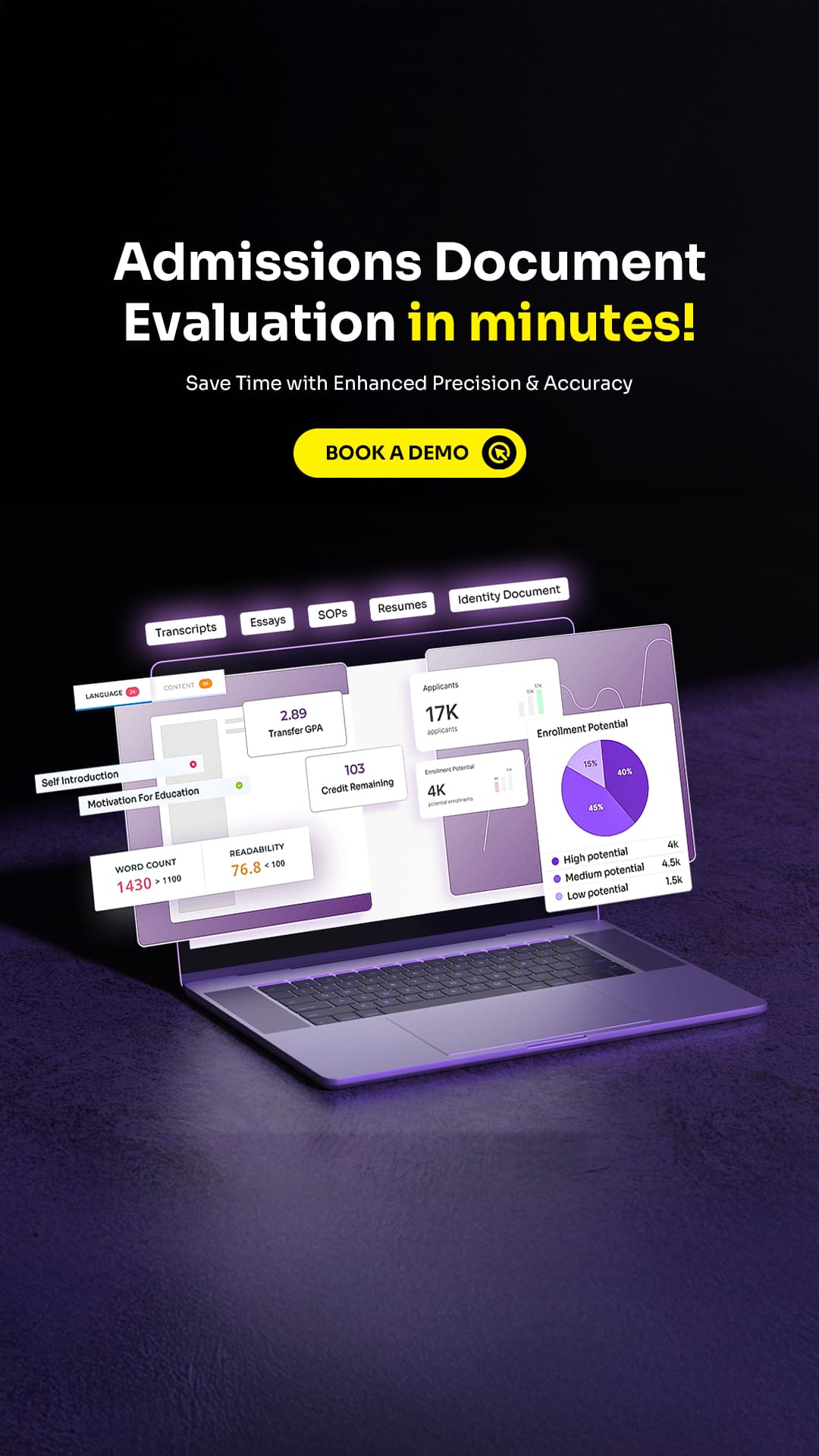
EDMO’s Document Intelligence capabilities extend into several specialized tools that streamline key parts of the admissions and student evaluation lifecycle. These tools reduce manual workload, improve accuracy, and enable faster, more consistent decision-making across admissions teams.
EDMO’s Document Intelligence Tools
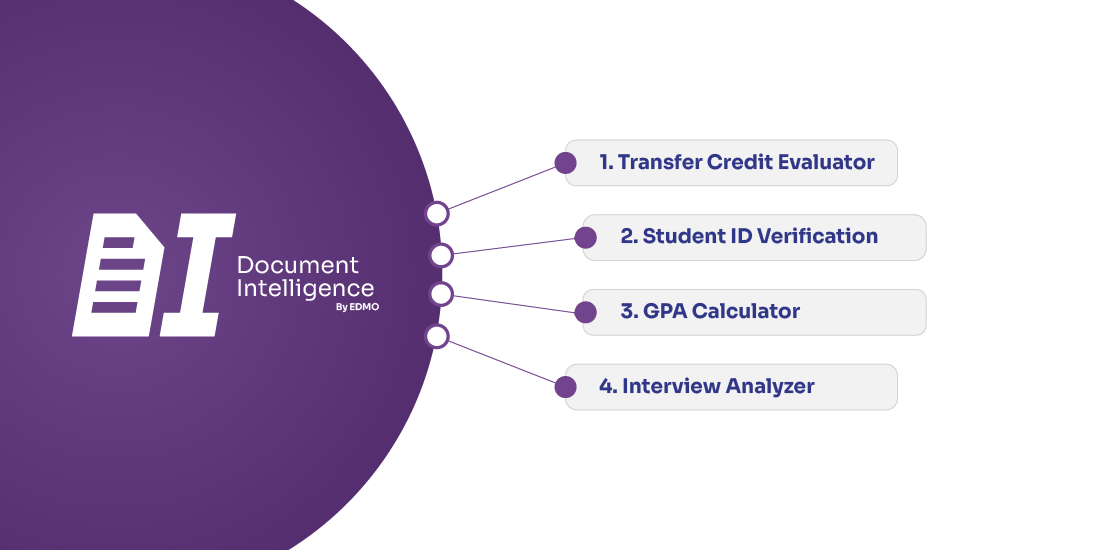
Transfer Credit Evaluator
The Transfer Credit Evaluator automates the assessment of previously completed coursework to determine equivalency with institutional programs. It analyzes transcripts, syllabi, and credit structures to map prior learning to current degree requirements. This helps universities make faster, more consistent credit transfer decisions, especially for international and non-traditional applicants, while reducing manual evaluation effort.
Student ID Verification
EDMO’s Student ID Verification validates the identity of applicants by cross-checking submitted documents such as passports, national IDs, and application records. It helps detect inconsistencies, prevent identity fraud, and ensure that the applicant’s credentials match their claimed identity. This strengthens the integrity of the admissions process and reduces compliance risks for institutions.
GPA Calculator
The GPA Calculator standardizes academic performance across different grading systems and institutions. It converts diverse grading formats into a unified GPA scale, enabling fair comparison between applicants from different educational backgrounds. This is especially useful in international admissions, where grading systems vary widely across countries and institutions.
Interview Analyzer
The Interview Analyzer evaluates recorded or live admissions interviews by structuring qualitative responses into actionable insights. It assesses communication clarity, subject understanding, and alignment with program requirements. By summarizing key signals and patterns, it helps admissions teams make more informed, consistent, and bias-aware interview decisions.
Strategies to Overcome Enrollment Challenges in Higher Education
Higher education faces enrollment challenges that need more than small changes. Schools should rethink how they attract, engage, and support students by focusing on academic relevance, efficient operations, and using data to guide decisions. The best strategies improve both how the institution is seen from the outside and how it works on the inside, making sure every step of the student journey is clear, fast, and valuable.
Modernize Academic Programs and Learning Pathways
Colleges and universities should regularly update their courses to match new industry needs and what students are looking for. Adding flexible learning options, programs that cross different subjects, micro-credentials, and stackable qualifications can make their offerings more appealing. When programs are linked to job opportunities, students see more value and are more likely to enroll.
Strengthen Data-Driven Recruitment and Marketing
Good enrollment strategies start with understanding what students want and how they behave. Schools can use data to find strong applicants, send personalized messages, and connect with students in different ways. Focused campaigns, clear communication, and quick responses help schools reach more students and build a better group of applicants.
Enhance Digital-First Student Experience
Today, students expect an easy digital experience. Universities should make applications simple, cut down on manual steps, and keep communication quick and clear across all platforms. Mobile-friendly websites, automatic updates, and self-service tools make it easier for students to apply and help prevent them from dropping out of the process.
Improve Campus Culture and Student Support Systems
Creating a welcoming and student-focused campus is key to attracting and keeping students. Schools should support diversity, offer peer mentoring, provide counseling, and run programs that help students feel part of a community. When students feel they belong, they are more likely to enroll and stay.
Streamline Administration with Automation and AI
Slow admissions processes can frustrate students and delay decisions. By automating routine tasks like checking documents, answering questions, and tracking applications, schools can speed things up. AI tools can also help admissions teams by scoring leads, tracking engagement, and sending personalized follow-ups, which leads to quicker and more reliable decisions.
Conclusion
In conclusion, addressing enrollment challenges in higher education requires a balanced focus on external pressures and internal inefficiencies. Institutions that modernize academic offerings, embrace digital-first engagement, and streamline administrative processes are better positioned to attract and retain students in a competitive environment. Fostering an inclusive campus culture and delivering a seamless student experience are also critical to building trust and long-term commitment. Ultimately, universities that adopt an agile, data-informed, and student-centric approach will improve enrollment outcomes and strengthen their institutional relevance in a rapidly evolving education landscape.
Frequently Asked Questions
Ques 1. What are some reasons why traditional universities are facing enrollment challenges compared to vocational community colleges?
Ques 2 What challenges might international students face during the admission process and while studying abroad?
Ques 3. What is the major challenge faced by higher education institutions in student enrollment and admissions today?
Ques 4. How does rising tuition cost impact student enrollment decisions?
Ques 5. How are changing student expectations affecting university enrollment strategies?
Written By




No comments yet. Be the first to comment!
Leave a Comment