

Table Of Contents
- 1Introduction
- 2What Is the Mirror Effect in College Admissions?
- 3The Psychology Behind Representation
- 4How Gen Z Evaluates Colleges Differently
- 5 What Gen Z Actively Looks For
- 6 What Gen Z Ignores
- 7Why Many Institutions Struggle to Connect with Gen Z
- 8How Personalized Storytelling Drives Student Enrollment
- 9 Key Elements of Effective Storytelling
- 10 Why Personalized Storytelling Is Effective
- 11Introducing EDMO’s Conversation Intelligence
- 12How Conversation Intelligence Enables the Mirror Effect at Scale
- 13How EDMO Helps Students Feel “Seen” Instantly
- 14Conclusion
Introduction
Gen Z doesn’t just choose colleges; they choose where they feel they belong. Today’s students are not only looking at rankings, courses, or campus facilities; they are searching for environments where they can truly see themselves fitting in. This is where the concept of the “Mirror Effect” comes in, the idea that students are naturally drawn to colleges that reflect their identity, values, and experiences.
Unlike previous generations who relied heavily on brochures and generic marketing, Gen Z prefers real and relatable stories. They want to see students like them through social media, testimonials, and authentic campus experiences before they even consider applying. This shift has changed how colleges connect with prospective students, making personalization and representation more important than ever.
In this blog, we will explore the psychology behind the Mirror Effect and how institutions can adapt their strategies to better engage and attract Gen Z applicants.
What Is the Mirror Effect in College Admissions?
The “Mirror Effect” in college admissions refers to the tendency of students, especially Gen Z, to prefer colleges where they see their own identity, lifestyle, and aspirations reflected. In simple terms, students are more likely to apply to institutions that feel familiar, inclusive, and relatable to who they are or who they want to become.
This effect works on a subconscious level. When exploring colleges, students naturally evaluate whether they can see themselves in the environment based on three key factors:
Identity: Students look for signs that reflect their background, culture, values, and interests. Representation matters, and seeing people like themselves helps build a sense of comfort and trust.
Lifestyle: Campus life, student communities, and peer groups play a big role. Students want to imagine their day-to-day life and whether it aligns with their personality and social preferences.
Aspirations: Future goals also influence decisions. Students are drawn to success stories, alumni journeys, and career outcomes that match what they hope to achieve.
In real-world behavior, this trend is clearly reflected in how students engage with content that feels authentic and relatable. Whether it is student-generated content, social media posts, or real campus experiences, they are far more likely to connect with content that mirrors their own reality.
Recent data also supports this shift, showing that Gen Z students are increasingly choosing colleges based on reels, vlogs, and genuine campus experiences rather than relying solely on traditional rankings. This highlights a strong preference for relatable and real-world content.
The Psychology Behind Representation
The Mirror Effect in college admissions is driven by deep psychological patterns that influence how students judge safety, belonging, and opportunity. For Gen Z, college selection is not only a rational decision based on academics, but also an emotional and identity-based choice. Representation helps bridge the gap between interest and application by shaping trust and comfort.
Social Identity Theory
Social Identity Theory explains that individuals define themselves through the groups they belong to, and they are naturally drawn to communities where they feel accepted and valued. In college admissions, this translates into students actively searching for signals that confirm:
- “People like me are part of this campus.”
- “Students from my background are succeeding here.”
- “I will not feel out of place here.”
How this appears in student behavior:
- Preference for colleges showcasing diverse student communities
- Higher engagement with student-led content and real stories
- Stronger interest in institutions that highlight cultural, academic, or regional inclusion
- Avoiding colleges where they cannot identify any relatable representation
This theory shows that belonging often matters as much as academic quality in decision-making.
Cognitive Ease and Familiarity
Cognitive ease refers to how comfortable and effortless it feels for a student to process information. Familiarity plays a key role in reducing hesitation during decision-making.
- Familiar faces, relatable student stories, and culturally aligned experiences create a sense of comfort.
- Students are more likely to trust content that feels authentic rather than overly polished or generic.
- It reduces “decision fatigue,” especially when students are comparing multiple colleges at once.
- Familiar environments help students visualize themselves on campus, making the decision more intuitive.
- Social media content such as day-in-the-life videos and student-generated posts increases relatability and engagement.
Emotional Validation and Belonging
Emotional validation is the feeling that one’s identity, background, and goals are acknowledged and respected. For students, this is a critical factor in choosing a college. Representation delivers powerful emotional signals such as:
- “You belong here.”
- “Your background is respected here.”
- “Students like you succeed here.”
Positive outcomes of strong representation:
- Builds emotional safety and confidence in applying.
- Encourages students to imagine themselves on campus.
- Strengthens long-term trust in the institution.
Consequences of lack of representation:
- Creates hesitation even among academically qualified students.
- Leads to subconscious exclusion, where students assume they won’t fit in.
- Reduces engagement with college marketing content.
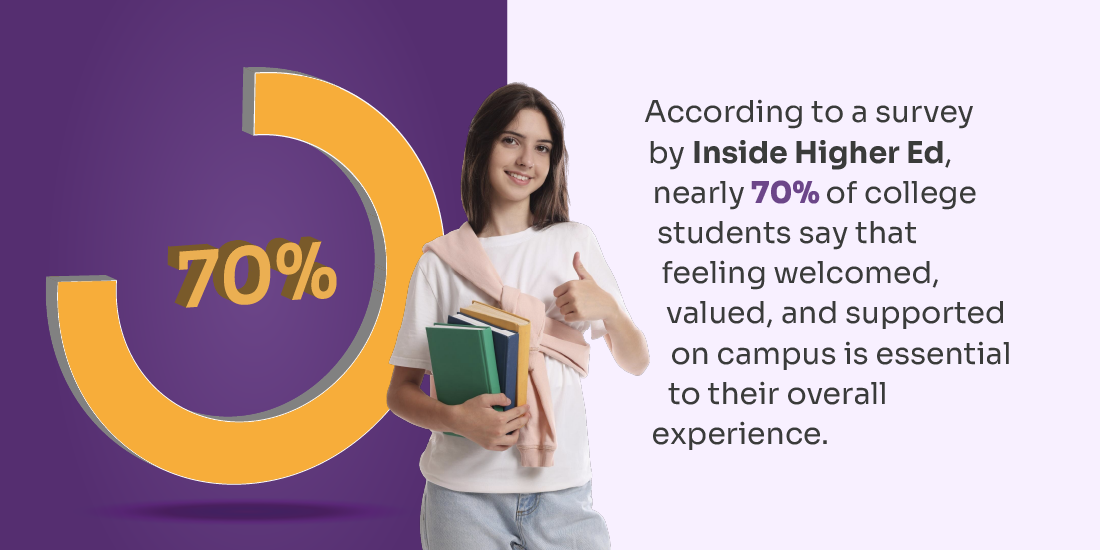
According to a survey by Inside Higher Ed, nearly 70% of college students say that feeling welcomed, valued, and supported on campus is essential to their overall experience. This highlights how strongly students prioritize a sense of belonging when choosing a college.
How Gen Z Evaluates Colleges Differently
Gen Z, as a digital-first generation, evaluates colleges in a very different way compared to earlier generations. Their decision-making is heavily influenced by online experiences, social media content, and peer validation rather than traditional brochures, advertisements, or rankings alone. For them, a college is not just evaluated on rankings or infrastructure, but on how real, relatable, and trustworthy it appears in digital spaces.
Digital-First Decision Making
Gen Z students begin their college search online and form impressions long before visiting a campus or speaking to an admissions counselor.
Their decisions are shaped by:
- Social media platforms like Instagram, YouTube, and LinkedIn
- Student-created content and campus reels
- Online reviews, discussions, and peer opinions
- Virtual tours and digital campus experiences
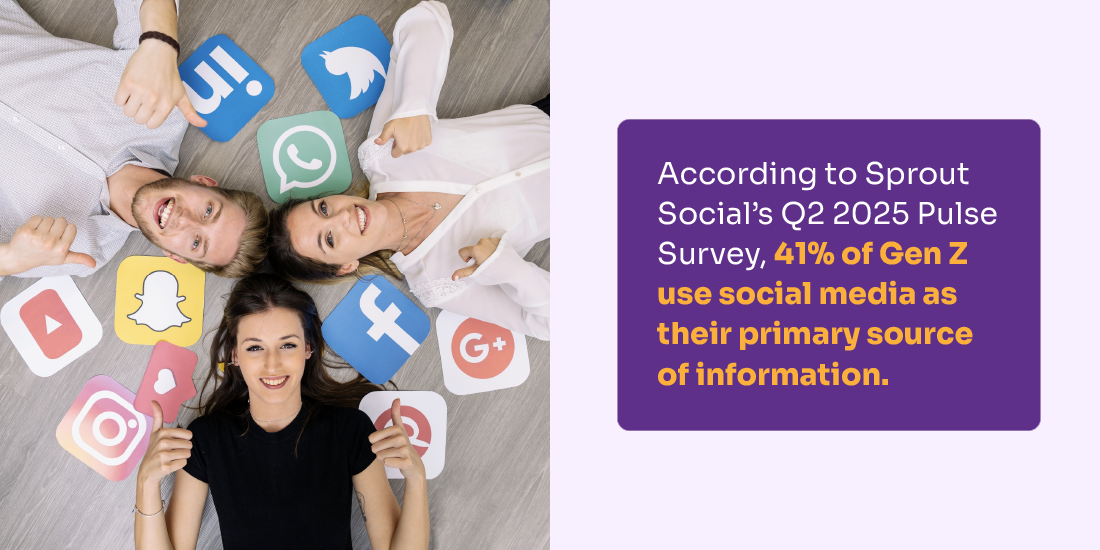
As a result, a college’s digital presence plays a crucial role in attracting prospective students. According to Sprout Social’s Q2 2025 Pulse Survey conducted by Glimpse, which surveyed over 2,200 users across the US, UK, and Australia, 41% of Gen Z rely on social media as their primary source of information. This makes social platforms the leading search channel, surpassing traditional search engines (32%) and recommendations from friends and family (9%).
What Gen Z Actively Looks For
Before making a college decision, Gen Z students actively scan digital platforms to understand what life at an institution truly feels like. Unlike traditional applicants who relied mainly on official brochures or rankings, today’s students prefer real, unfiltered, and relatable content that helps them imagine themselves on campus.
Authentic Student Stories
Gen Z prefers real and unfiltered experiences over polished marketing content. They want to hear directly from students about:
- Academic challenges and achievements
- Campus life and daily routines
- Internships, placements, and career journeys
- Personal growth experiences
Authenticity builds trust and helps students imagine their own journey in that environment.
Diversity in Representation
Students pay close attention to whether a college reflects different identities and backgrounds. They look for:
- Cultural and regional diversity
- Inclusion of international and domestic students
- Equal visibility of different student groups
- Representation across gender, interests, and disciplines
This helps them assess whether they will feel included and accepted.
Peer-Generated Content (UGC)
User-generated content plays a major role in influencing perception. Gen Z engages more with:
- Reels and short-form videos created by students
- Day-in-the-life campus vlogs
- Testimonials shared on social media
- Real-time campus updates from peers
Such content feels more trustworthy than institutional messaging. This type of content is often perceived as more credible and trustworthy compared to traditional institutional messaging. In fact, a survey found that 93% of students rely on platforms like Instagram and YouTube to research colleges, highlighting the strong influence of real and relatable peer-driven content on their decision-making process.
What Gen Z Ignores
Gen Z is quick to filter out content that feels inauthentic or overly promotional. They tend to ignore:
- Stock images that look staged or unrealistic
- Generic, one-size-fits-all messaging
- Highly formal or sales-driven communication
If content does not feel real or relatable, it is often skipped entirely, regardless of the institution’s reputation.
For Gen Z, relevance, authenticity, and relatability matter far more than reach or visibility. Colleges that focus on real student voices and meaningful representation are more likely to build trust, engagement, and ultimately attract applications.
Why Many Institutions Struggle to Connect with Gen Z
Although many colleges have adopted digital marketing, a significant gap still exists in how effectively they engage Gen Z students. The challenge is not the lack of presence, but the lack of relevance. Many communication strategies remain outdated, overly generic, and disconnected from what today’s students actually expect.
Overdependence on Static and One-Way Content
A large number of institutions still rely on traditional content formats such as:
- Brochures and printed materials
- PDF prospectuses
- Mass email campaigns
While these formats provide information, they often lack interaction and personalization. For Gen Z, who are used to dynamic and engaging digital experiences, such content feels passive and unappealing.
Key limitation:
- No real-time engagement or feedback
- Limited emotional connection
- Does not reflect actual student experiences
Lack of Audience Segmentation
One of the biggest shortcomings is the failure to tailor communication for different student groups. Many institutions continue to use a “one-size-fits-all” approach, sending identical messages to all prospective students.
This approach ignores important differences such as:
- Geographic location and cultural context
- Academic interests and preferred courses
- Career goals and long-term aspirations
- Personal backgrounds and learning preferences
Gen Z expects personalized communication that speaks directly to their needs and goals. Generic messaging fails to capture their attention.
Consequences of Generic Messaging
When communication is not personalized, it creates a disconnect between the student and the institution.
- Students struggle to relate to the content
- They do not see their identity or goals reflected
- The messaging feels irrelevant and impersonal
Resulting impact:
- Lower engagement across digital platforms
- Reduced trust in the institution’s communication
- Higher drop-off rates during the application process
Research indicates that 74% of students expect college communication to be tailored to their interests, emphasizing the growing need for relevant and personalized experiences in the decision-making journey.
Overall, institutions that fail to adapt to personalized and engaging communication risk losing potential applicants, not because of academic limitations, but due to a lack of connection and relevance.
How Personalized Storytelling Drives Student Enrollment
In a highly competitive education market, sharing information alone is no longer enough to influence student decisions. Gen Z expects more than facts they look for connection, authenticity, and real experiences. Personalized storytelling helps institutions move beyond basic promotion and create meaningful engagement that directly impacts enrollment outcomes.
Moving Beyond Information to Meaningful Connection
Traditional college marketing focuses on what an institution offers. However, students today are more interested in understanding how those offerings translate into real experiences.
Personalized storytelling enhances communication by:
- Converting institutional information into real-life student journeys
- Demonstrating how different types of students navigate and succeed on campus
- Helping prospects visualize their own future within the institution
- Creating a more human and approachable brand image
This approach makes communication more engaging and easier to relate to.
Key Elements of Effective Storytelling
Strong storytelling is rooted in authenticity and diversity. It highlights real student experiences that reflect different backgrounds, goals, and challenges.
Some impactful storytelling formats include:
First-generation student success stories: Show how support systems, mentorship, and academic resources help students overcome barriers and achieve success
International student experiences: Highlight cultural adjustment, campus inclusivity, and global exposure
Entrepreneurial or creative journeys: Showcase how students use campus opportunities to build startups, projects, or innovative careers
Additional elements that strengthen storytelling:
- Real voices instead of scripted narratives
- Visual and video-based content for better engagement
- Clear progression from challenges to achievements
Why Personalized Storytelling Is Effective
Personalized storytelling works because it aligns with how students naturally process information and make decisions. Instead of relying only on facts or statistics, students respond more strongly to real experiences that feel relevant and relatable.
Strengthens Relatability
Students are more likely to connect with content that mirrors their own background, interests, or ambitions. This increases their sense of belonging.
Builds Emotional Connection
Stories trigger emotions such as inspiration, trust, and confidence, which play a major role in decision-making.
Improves Engagement and Recall
Narrative-driven content is more memorable than plain facts, leading to higher interaction across digital platforms.
Drives Decision and Action
When students see real examples of success, they feel more confident taking the next step, whether it is exploring programs, registering for updates, or submitting applications.
Overall, personalized storytelling shifts college marketing from simply delivering information to creating experiences that resonate with students, making it a powerful tool for improving engagement and driving enrollment success.
Introducing EDMO’s Conversation Intelligence
As student expectations evolve, institutions need smarter tools to deliver personalized and real-time engagement. This is where EDMO’s Conversation Intelligence comes in, enabling colleges to move beyond static communication and create meaningful, data-driven interactions at scale.
What Is Conversation Intelligence?
Conversation Intelligence is an AI-powered system that analyzes and understands student intent, behavior, and preferences in real time. Instead of treating every student the same, it adapts communication based on individual needs and actions.
Key capabilities include:
- Interpreting student queries and intent instantly
- Tracking behavior across multiple touchpoints (website, chat, social media)
- Identifying interests, preferred courses, and engagement patterns
- Delivering personalized responses and recommendations in real time
This allows institutions to move from generic messaging to highly relevant, student-specific interactions
How Conversation Intelligence Enables the Mirror Effect at Scale
Creating personalized experiences for a large number of students is a major challenge for institutions. Conversation Intelligence addresses this by delivering tailored interactions that make each student feel represented, thereby replicating the Mirror Effect at scale.
Key ways it achieves this:
Personalized content matching
The system aligns students with content based on their profile, behavior, and interests, ensuring they see information that is directly relevant to them.
Adaptive communication style
Messaging tone and communication approach are adjusted according to individual preferences, making interactions feel more natural and engaging.
Dynamic and evolving interactions
Content continuously updates based on real-time engagement, ensuring that each interaction becomes more relevant as the student progresses.
Improved engagement and conversion outcomes
By reflecting students’ identity and aspirations, institutions see higher engagement, stronger emotional connections, and better conversion rates from inquiry to enrollment.
How EDMO Helps Students Feel “Seen” Instantly
In the college decision journey, the first interaction often shapes a student’s perception of an institution. As an AI-powered platform, EDMO ensures this first impression is not generic, but personalized and meaningful, helping students feel recognized and valued from the very beginning.
Real-time personalized engagement
EDMO enables real-time, personalized engagement by delivering instant responses tailored to each student’s queries, interests, and academic goals. This removes delays and ensures that students receive relevant information exactly when they need it, making interactions feel more direct and attentive rather than generic. The immediacy of such communication helps create a strong first impression and sustains student interest throughout the journey. This approach aligns well with Gen Z behavior, where 87.5% are already using AI and 58.2% engage with it on a monthly basis. As a result, institutions adopting AI-driven engagement early are beginning to see improved interaction and stronger connections with prospective students.
Smart content recommendations
Instead of presenting the same information to everyone, EDMO curates content based on individual student profiles and behavior. It highlights relevant programs, student journeys, and opportunities that align with their interests. This targeted approach makes the content more useful and relatable for students.
Context-aware communication journey
EDMO tracks and understands previous interactions, allowing conversations to progress naturally over time. Each new interaction builds on past behavior, creating a seamless and consistent experience. Students do not have to repeat information, which reduces friction in the communication process.
Builds trust and confidence early
By combining personalization, relevance, and timely communication, EDMO creates a trustworthy interaction environment. Students feel supported and guided rather than overwhelmed by information. This reduces uncertainty and helps them make informed decisions more confidently.
Multi-channel engagement consistency
EDMO ensures a consistent experience across multiple platforms such as websites, chatbots, and social media channels. Students receive aligned messaging regardless of where they interact, which avoids confusion and builds trust. This unified communication approach strengthens the overall brand experience.
Overall, EDMO creates a personalized and human-like experience that goes beyond basic communication, ensuring every student feels seen, understood, and connected throughout their decision-making journey.
Conclusion
Gen Z does not choose colleges based only on information; they choose institutions where they feel represented and understood. Their decisions are shaped by connection, relatability, and the ability to see themselves as part of the campus experience.
The “Mirror Effect” is not just a passing trend but a fundamental shift in how students evaluate and select colleges. It highlights the growing importance of representation, personalization, and authentic engagement in the decision-making process.
As student expectations continue to evolve, institutions must move beyond traditional communication methods and adopt more student-centric approaches. With solutions like EDMO’s Conversation Intelligence, colleges can deliver personalized, real-time experiences that ensure every student feels seen, valued, and inspired to take the next step.
Frequently Asked Questions
Question 1. What is the Mirror Effect in college admissions?
Question 2. Why is personalization important for Gen Z students?
Question 3. How can colleges create a stronger Mirror Effect?
Written By


You May Also Like
 AI in Education

 AI in Education
 AI in Education
No comments yet. Be the first to comment!
Leave a Comment