
Table Of Contents
- 1Introduction
- 2What is Digital Transformation in Higher Education?
- 3Technologies Driving Digital Transformation in Higher Education
- 4Key Drivers of Digital Transformation in Higher Education
- 5Benefits of Digital Transformation in Higher Education
- 6Why are universities investing in digital transformation?
- 7Key Steps in Higher Education Digital Transformation Roadmap
- 8Examples of Digital Transformation in Higher Education
- 9Examples of Digital Transformation in Higher Education
- 10Challenges of Digital Transformation in Higher Education
- 11How EDMO Supports Digital Transformation in Higher Education
- 12Conclusion
Introduction
Digital transformation in higher education is not a new concept. Universities have been adopting technology for decades, from moving student records online and introducing Learning Management Systems (LMS) to implementing Student Information Systems (SIS), admissions CRMs, and cloud-based platforms.
However, much of this transformation has happened in bits and pieces. Admissions teams introduced CRMs to manage prospective students, registrars adopted student data management systems, and academic departments implemented separate tools for teaching and learning. While these investments improved individual processes, they did not always create a connected institutional experience.
Over time, the conversation among higher education leaders has also evolved. Initially, digital transformation was largely about cutting down paperwork as much as possible, modernizing archaic systems, and improving operational efficiency. Today, CIOs, enrollment leaders, registrars, and university administrators are asking potent questions: How can technology improve the entire student journey? How can institutions make better use of their data? And how can AI support staff without compromising institutional autonomy?
There is also a growing recognition that digital transformation is not simply about adopting more technology. Many universities already have sophisticated systems in place, yet staff continue to manage disconnected workflows, manually transfer information, and navigate multiple platforms to complete everyday tasks. This has shifted the focus from digitizing individual activities to building connected, intelligent institutional operations. AI, automation, data integration, and analytics are increasingly becoming part of a larger digital transformation strategy rather than isolated technology initiatives.
For higher education institutions, the challenge now is to move beyond fragmented modernization toward a workable approach that connects people, processes, data, and technology.
This blog explores what digital transformation in higher education means today, how it has evolved, practical examples across university operations, and a roadmap for institutions looking to build a more connected and future-ready campus.
What is Digital Transformation in Higher Education?
In the higher education space, digital transformation refers to how colleges and universities use technology to improve teaching, student services, administrative operations, and institutional decision-making. It goes beyond moving age-old processes online to changing how information is accessed, how departments work together, and how services are delivered.
For example, an online admissions portal allows students to submit applications digitally. But when that portal connects with a CRM, automatically processes academic documents, updates the Student Information System (SIS), and keeps applicants informed, technology begins to transform the entire admissions process.
Today, universities have access to a growing range of digital solutions. The challenge is no longer simply finding technology to perform a task, but choosing the right combination of tools and making them work together.
Technologies Driving Digital Transformation in Higher Education
Artificial Intelligence and Intelligent Automation
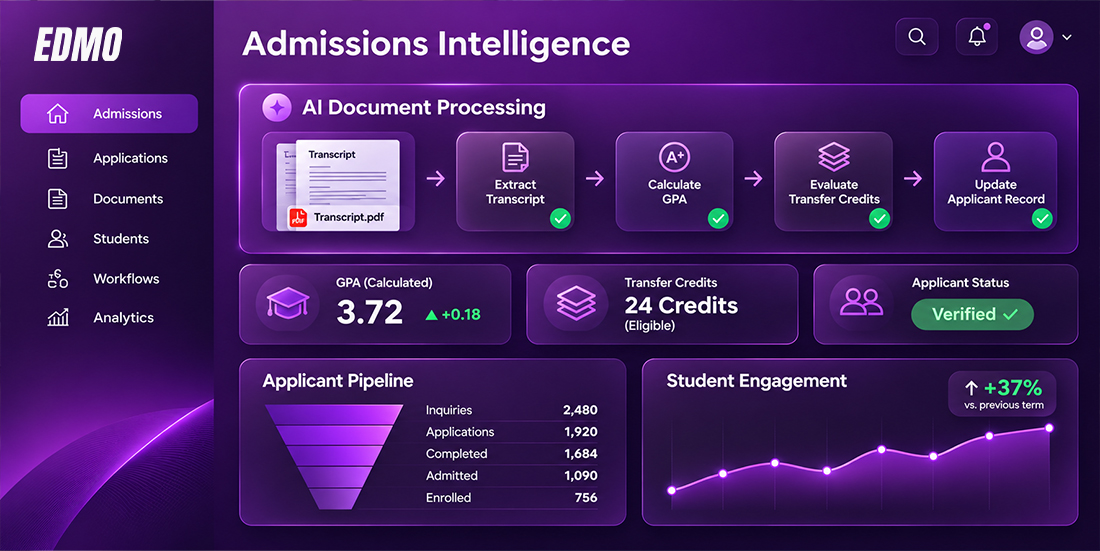
AI has expanded what universities can automate beyond routine administrative tasks. AI-powered tools can interpret academic documents, respond to student questions, summarize information, support application reviews, and help staff identify cases requiring attention.
For example, platforms such as EDMO provide AI capabilities for transcript processing, GPA calculation, transfer credit evaluation, and student engagement. These technologies can be added to existing admissions systems, allowing institutions to automate labor-intensive activities without rebuilding their entire technology infrastructure.
Cloud Computing and SaaS Platforms
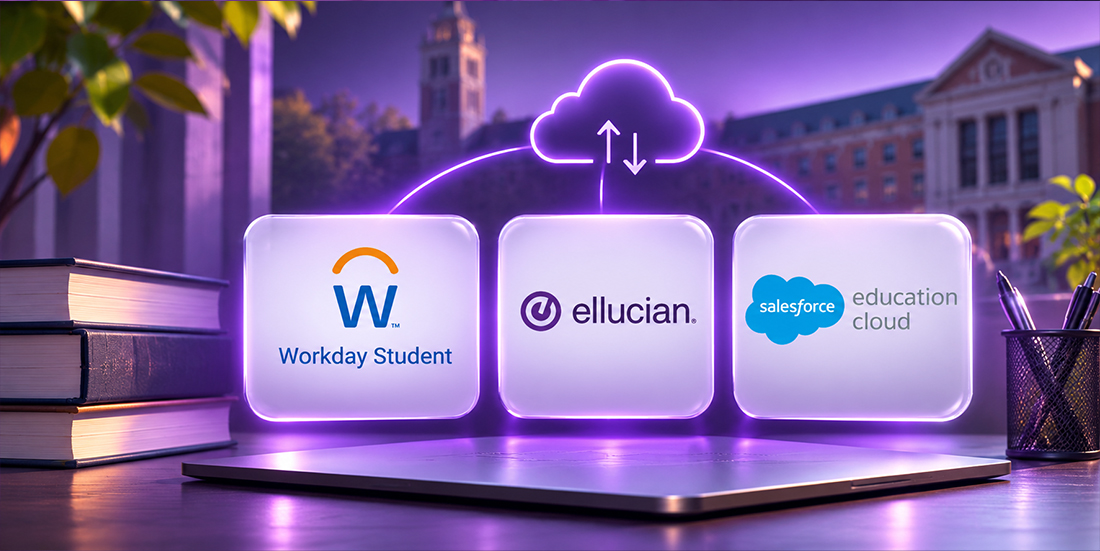
Cloud-based software has made it easier for universities to access technology without maintaining every application on campus servers. Software-as-a-Service (SaaS) platforms support admissions management, academic administration, financial operations, and student services through remotely hosted applications.
Solutions such as Workday Student, Ellucian, and Salesforce Education Cloud illustrate how universities can manage institutional activities through cloud-based environments. These platforms can also support system updates, remote access, and expansion as institutional needs change.
CRM and Student Information Systems
Customer Relationship Management (CRM) platforms and Student Information Systems (SIS) remain central to university operations.
Admissions CRMs such as Slate and Salesforce Education Cloud help institutions manage prospective student relationships, recruitment campaigns, and application activities. SIS platforms maintain academic records, registration information, and other student data.
Digital transformation becomes more effective when these systems exchange information accurately. Integrations can reduce duplicate records, limit manual updates, and make relevant student information available to authorized departments.
Learning Management Systems and Digital Learning Platforms
Learning Management Systems (LMS) have evolved from repositories for course materials into platforms supporting online instruction, assessments, collaboration, and academic progress tracking.
Tools such as Canvas, Blackboard, and Moodle allow faculty to manage coursework, provide feedback, and deliver learning experiences across physical and virtual classrooms.
When learning platforms connect with student records and analytics systems, institutions can better understand academic engagement and identify students who may need additional support.
Data Analytics and Business Intelligence
Universities collect information across enrollment, academics, finance, and student services, but that information is not always easy to analyze collectively.
Business intelligence tools such as Microsoft Power BI and Tableau help institutions create dashboards, monitor performance, and identify trends. Enrollment leaders can examine application conversion, admission yield, and recruitment performance, while academic teams can study course participation and retention patterns.
The value of these tools depends heavily on having reliable, accessible data across institutional systems.
Integration Platforms and APIs
Universities rarely operate on a single technology platform. Admissions, academic records, learning management, finance, and communication systems often come from different providers.
Application Programming Interfaces (APIs) and integration platforms such as MuleSoft and Boomi help these systems exchange information. For example, an integration can allow an admissions platform to share approved applicant data with the SIS or return document evaluation results to the CRM.
This enables institutions to modernize individual processes while continuing to use established software.
Low-Code and No-Code Automation Tools
Not every university workflow requires custom software development. Low-code and no-code platforms allow teams to configure forms, approvals, notifications, and routine processes using visual interfaces.
Tools such as Microsoft Power Automate and ServiceNow can support activities including request routing, administrative approvals, and internal service management.
These solutions can help departments address smaller operational challenges, provided institutions establish appropriate IT oversight, security controls, and integration standards.
From Individual Tools to Institution-Wide Transformation
Universities now have more technology options than ever before. Yet adopting AI, cloud software, analytics, or automation independently does not always equal better institutional performance.
The real opportunity lies in connecting these capabilities around common goals. A university might already have a CRM for recruitment, an SIS for student records, an LMS for teaching, and analytics software for reporting. Digital transformation happens when these systems and the people using them can support a more coordinated student journey.
For higher education leaders, the priority is therefore not to introduce every emerging technology, but to understand where existing systems fall short and which new capabilities can close those gaps.
Key Drivers of Digital Transformation in Higher Education
Higher education leaders are facing a convergence of pressures that are changing how universities operate. The rapid rise of AI, shifting enrollment patterns, evolving student expectations, and new regulatory requirements are forcing institutions to rethink their technology priorities.
In 2026, the pressures look different. AI is challenging established workflows, students are questioning fragmented digital experiences, enrollment patterns are shifting, and new accessibility requirements are influencing technology decisions.
These developments are making digital transformation less of a long-term IT initiative and more of an immediate institutional priority.
Technological Advancements: From AI Experiments to Workflow Reinvention
The conversation around artificial intelligence in higher education has changed considerably over the past two years. Universities are moving beyond experimenting with generative AI for content creation and student FAQs to exploring how AI can participate in everyday institutional operations.
The 2025 EDUCAUSE AI Landscape Study examined how institutions are approaching AI leadership, policies, workforce readiness, and implementation. By June 2026, an EDUCAUSE Review analysis was raising a more fundamental concern: many universities were still experimenting with AI without reconsidering the processes these technologies were meant to improve.
This distinction matters. Adding an AI chatbot to an outdated student service process may improve response times, but it does little to resolve the disconnected systems and approval requirements behind that process.
Newer AI capabilities are opening opportunities to automate document interpretation, academic record evaluation, application processing, and administrative coordination. The challenge for university leaders is deciding which processes should be redesigned rather than simply accelerated.
Changing Student Expectations: Students Want Fewer Digital Barriers
The next phase of digital transformation is being shaped by students who are increasingly frustrated with navigating multiple university systems.
According to the 2025 Pathify Student Digital Experience Survey, conducted among 1,010 U.S. college and university students, 75% preferred accessing student services through a single centralized platform rather than separate portals. The survey also found that 95% would be somewhat or very likely to use a unified digital platform if their institution offered one.
These findings challenge a common assumption in higher education: that providing more digital tools automatically creates a better student experience.
A university may offer an admissions portal, financial aid platform, learning management system, and student dashboard, yet still require students to navigate each independently.
The 2026 EDUCAUSE Students and Technology Report also highlighted the importance of cybersecurity, privacy, and workforce preparation in shaping student technology experiences. Notably, 46% of surveyed students reported encountering a security threat during the previous academic year.
For institutions, the expectation is no longer simply to make services available online. Students need digital experiences that are connected, accessible, secure, and easy to navigate.
Competitive Pressure: Enrollment Growth Is Becoming More Uneven
Competition in higher education is no longer just about attracting more applicants. Institutions must respond to changes in where students enroll, which programs they choose, and how they evaluate the value of a degree.
The National Student Clearinghouse Research Center’s preliminary Fall 2026 enrollment report shows why. Undergraduate enrollment growth slowed to 0.6% in fall 2026, compared with 2.4% in fall 2025. Community colleges recorded 1.2% growth, while master’s program enrollment declined 3.7%.
Program-level trends were equally revealing. Computer and information science enrollment fell by double-digit percentages across undergraduate and graduate institution categories, while health-related fields continued to grow.
These figures suggest that institutions cannot rely on broad enrollment growth to support every program or recruitment strategy.
Enrollment leaders need better visibility into program demand, application conversion, student engagement, and the reasons prospective students abandon the enrollment process.
Digital transformation is becoming closely tied to institutional competitiveness because universities need to respond to changing demand while managing recruitment and administrative costs.
Regulatory and Accreditation Requirements: Accessibility Is Now a Technology Deadline
Regulatory expectations are also changing how universities evaluate their digital infrastructure.
One significant development is the U.S. Department of Justice’s rule under Title II of the Americans with Disabilities Act, which establishes specific accessibility requirements for web content and mobile applications provided by state and local government entities, including public universities.
The rule generally requires covered content to meet WCAG 2.1 Level AA, with compliance deadlines beginning April 24, 2026, for larger public entities and April 26, 2027, for smaller entities and special district governments, subject to the rule’s provisions.
This has implications beyond university websites. Admissions portals, online forms, student service applications, and certain third-party digital services may also fall within the requirements.
Meanwhile, institutions must continue managing student privacy obligations, cybersecurity risks, academic record accuracy, and evidence required for accreditation reviews.
These pressures are encouraging universities to look more closely at vendor selection, data governance, accessibility testing, and the reliability of their institutional systems.
Digital transformation is increasingly about ensuring that technology remains usable, accountable, and compliant as institutional requirements evolve.
Societal Changes: The Traditional Student Model Is No Longer Enough
Changes in demographics, employment, and educational pathways are challenging universities to reconsider whom their systems were designed to serve.
A 2025 American Institutes for Research report highlighted the scale of the adult learner opportunity, citing more than 82 million U.S. adults who had never enrolled in postsecondary education and approximately 43.1 million with some college credit but no degree.
The report also found that many institutions had not yet made substantial operational changes to support adult learners through flexible scheduling, credit for prior learning, and competency-based education.
These challenges have important technology implications. A working professional returning to complete a degree may need an accurate transfer credit assessment before applying. A student pursuing a short-term credential may expect flexible enrollment options and a clear pathway toward a future qualification. Someone balancing employment and family responsibilities may need access to university services outside conventional office hours. Traditional academic and administrative processes were not always designed around these experiences. Recent enrollment data reinforces this shift. The National Student Clearinghouse reported that undergraduate certificate enrollment grew 10.2% in spring 2026, faster than other undergraduate credential categories.
For universities, digital transformation increasingly involves supporting more flexible educational pathways, recognizing previous learning, and serving students whose needs differ from those of traditional full-time undergraduates.
What These Drivers Mean for University Leaders
Taken together, these developments point to a change in how higher education institutions need to approach digital transformation.
The question is no longer whether universities should invest in AI, cloud platforms, or digital student services. Many have already made those investments.
The more pressing questions are whether those technologies address current enrollment and operational challenges, whether they work together, and whether institutions can adapt them as student needs and external requirements continue to change.
That is where digital transformation moves beyond individual technology projects and begins influencing the future operating model of the university.
Benefits of Digital Transformation in Higher Education
The value of digital transformation becomes clearer when universities measure what changes in their day-to-day operations. A faster application review, an earlier warning about a student at risk of dropping out, or a more accurate enrollment forecast can have a greater institutional impact than simply introducing another digital platform.
According to the 2025 Higher Ed Innovation Index, 66% of surveyed institutions reported reduced staff burnout through AI initiatives, while 39% identified inadequate system integration as their biggest technology gap. These findings highlight two important opportunities for digital transformation in higher education: reducing repetitive administrative work and connecting existing systems to help university teams work more effectively.
Here are some of the more tangible benefits universities can achieve.
Recovering Applications That Would Otherwise Remain Incomplete
Universities invest considerable resources in attracting prospective students, yet not every applicant completes the admissions process. Some abandon applications because of missing documents, unclear requirements, or a lack of timely follow-up.
Connected admissions systems can identify where an application has stalled and initiate communication based on the student’s outstanding requirements. Enrollment counselors can then prioritize applicants who need personal assistance rather than manually checking every application record.
This allows institutions to improve application completion using students already in their admissions pipeline, instead of relying entirely on additional recruitment spending.
Giving Transfer Students Earlier Clarity on Their Academic Pathway
Transfer students often need to understand how many of their previously earned credits will count toward a new degree before committing to an institution.
When transfer credit evaluation depends on manual transcript reviews, course description searches, and departmental approvals, students may wait for information that directly affects their enrollment decision.
AI-assisted transfer credit evaluation and connected academic records can help universities prepare preliminary equivalencies earlier, identify courses requiring faculty review, and communicate credit applicability more clearly.
This can reduce uncertainty around degree completion timelines and help transfer applicants make more informed choices.
Identifying Students Who Need Support Before They Disengage
Traditional student success reporting often reveals problems after they have already affected academic performance. By the time a student receives poor grades or stops attending classes, the opportunity for early intervention may be limited.
When a Learning Management System (LMS), attendance, advising, and academic data are available together, institutions can identify patterns such as declining course participation, repeated missed assignments, or unresolved academic concerns.
Advisors can use these indicators to initiate outreach and connect students with appropriate resources. The benefit is not simply predicting attrition, but creating more opportunities to support students before difficulties become harder to address.
Making Enrollment Forecasts More Reliable
Enrollment planning affects faculty hiring, course availability, classroom capacity, housing, and institutional budgets. Yet universities often make these decisions before knowing how many admitted students will actually enroll.
Integrated CRM and SIS data can give enrollment leaders a more detailed picture of applicant progression, admission acceptance, enrollment confirmations, and historical yield patterns.
Predictive analytics can support scenario planning across programs and student populations, allowing institutions to prepare for different enrollment outcomes.
Although forecasts cannot eliminate uncertainty, better information helps universities make resource decisions earlier and adjust plans as enrollment patterns change.
Reducing the Time Between an Admissions Decision and Student Action
An admission decision is only one part of the enrollment journey. Students may still need to submit additional information, accept an offer, complete financial aid requirements, or register for orientation.
Delays often occur because these activities are managed by different departments using separate systems.
Digital workflows can make the next required action visible to students and automatically update relevant teams when a requirement is completed. For example, an accepted applicant who submits an enrollment confirmation can receive the appropriate onboarding instructions without waiting for a separate manual update.
This helps universities reduce administrative gaps during the period between admission and enrollment, when continued student engagement is especially important.
Making Better Use of Existing Technology Investments
Many universities already pay for sophisticated CRM, SIS, LMS, and analytics platforms. However, their full value may remain unrealized when staff must move between systems, export spreadsheets, or enter the same information multiple times.
System integrations and workflow automation can extend the usefulness of existing technology without requiring an institution-wide replacement.
For example, AI-powered document processing can extract information from academic records and return structured results to an established admissions CRM. Staff continue working in a familiar environment while benefiting from additional capabilities.
This approach allows universities to address operational gaps while preserving previous technology investments.
Improving Auditability of Academic and Administrative Processes
Admissions reviews, GPA calculations, transfer credit decisions, and student record changes can involve multiple staff members and institutional policies.
When decisions are documented through emails or disconnected spreadsheets, reconstructing how a particular outcome was reached can be difficult.
Digital systems can maintain records of workflow activity, calculation rules, approvals, and authorized changes. This gives institutions a clearer basis for reviewing exceptions, resolving disputes, and demonstrating that established procedures were followed.
The benefit is particularly important for registrars and admissions leaders responsible for maintaining consistent academic records and decision-making practices.
Expanding Services Without Expanding Administrative Work at the Same Rate
Universities are increasingly serving students through online programs, flexible learning pathways, and multiple enrollment cycles. These models can create additional administrative demands, even when overall student numbers remain stable.
A university introducing more frequent program start dates, for example, may need to process applications, verify documents, and support onboarding throughout the year rather than during a few traditional admission periods.
Automated workflows and self-service capabilities can help institutions manage these activities without increasing repetitive administrative work in direct proportion to enrollment volume.
This gives universities more flexibility to introduce new programs and serve different student populations while maintaining manageable operations.
Why are universities investing in digital transformation?
Universities are under increasing pressure to improve enrollment outcomes, manage financial uncertainty, and meet changing student needs. Technology investments are now being evaluated against tangible institutional goals, from protecting enrollment revenue to reducing administrative costs and improving student retention.
Here are five major reasons driving investment in digital transformation in higher education.
Protecting Enrollment Revenue Amid Changing Student Demand
Enrollment is a major source of revenue for many universities, making fluctuations in student numbers a financial concern. Institutions are investing in digital tools that help them understand applicant behavior, identify enrollment bottlenecks, and improve conversion rates throughout the admissions funnel.
CRM platforms, predictive analytics, and AI-powered student engagement tools allow enrollment teams to track prospective students, identify incomplete applications, and intervene before applicants disengage. Universities can also use enrollment data to understand which academic programs are attracting interest and adjust recruitment efforts accordingly.
The goal is to make better use of existing applicant pipelines while reducing the revenue lost through avoidable enrollment drop-offs.
Controlling Operational Costs Without Compromising Services
Budget constraints are encouraging universities to examine how much time and money they spend on administrative processes. Activities such as transcript evaluation, GPA calculation, application processing, financial aid documentation, and student record updates can consume significant staff resources.
AI-powered document processing and workflow automation can reduce the manual effort involved in these activities. Instead of expanding administrative teams whenever application volumes increase, institutions can use technology to handle routine processing while staff focus on exceptions and student-facing responsibilities.
This is particularly important for universities trying to maintain service quality while operating with limited financial and staffing resources.
Improving Student Retention Through Earlier Intervention
Student retention has become an important area of technology investment because losing enrolled students affects both institutional finances and student outcomes.
Universities are increasingly using learning analytics, student engagement data, and early-alert systems to recognize potential problems before students withdraw. Information from Learning Management Systems (LMS), academic records, and advising platforms can reveal declining participation, missed assignments, or unresolved support needs.
When these indicators are available to advisors, institutions can initiate timely outreach and connect students with academic, financial, or personal support services.
The objective is to move from responding to student attrition after it occurs to identifying opportunities for intervention earlier in the academic journey.
Maximizing Returns From Existing Technology Investments
Many universities have already invested heavily in CRM, SIS, LMS, and other institutional platforms. However, disconnected systems often prevent departments from accessing consistent information or completing workflows without manual intervention.
Rather than replacing these platforms, institutions are investing in system integrations, APIs, and AI-powered automation to extend their capabilities.
For example, universities can connect document evaluation tools with an existing admissions CRM, allowing academic information to be processed automatically and returned to the applicant record. This reduces duplicate work while preserving familiar systems and established processes.
Adapting to New Student Populations and Learning Models
The traditional model of students entering a university directly after high school and studying full-time on campus no longer represents every learner universities serve.
Institutions are expanding online programs, professional certificates, transfer pathways, and flexible learning options to reach working adults, returning students, and individuals seeking career advancement.
These populations often require different enrollment processes. A transfer applicant may need a faster credit evaluation, while a working professional may need evening access to enrollment support or flexible course registration.
Universities are investing in digital admissions, self-service platforms, automated academic evaluations, and online student services to accommodate these requirements.
As educational pathways become more varied, institutions need technology that can support different types of learners without creating separate administrative processes for every program.
Key Steps in Higher Education Digital Transformation Roadmap
A successful digital transformation roadmap helps universities identify technology gaps, prioritize investments, and introduce new solutions without disrupting existing operations.
Assess Existing Technology and Processes
Review current CRM, SIS, LMS, and administrative systems to identify outdated processes, disconnected data, and manual workflows. Focus on areas where technology limitations affect institutional performance.
Set Clear Goals and KPIs
Define measurable objectives such as reducing application processing time, improving enrollment conversion, increasing student retention, or lowering administrative costs. Establish baseline metrics to track progress.
Prioritize High-Impact Opportunities
Start with processes that offer measurable improvements, such as transcript evaluation, student communication, application management, or academic advising. Consider implementation costs, complexity, and institutional readiness.
Benchmark Against Other Universities
Study how peer institutions are approaching digital transformation, which technologies they have adopted, and the results they have achieved. Use their experiences to identify proven practices, potential challenges, and opportunities relevant to your institution.
Choose Technology Vendors Carefully
Evaluate vendors based on higher education experience, integration capabilities, data security, scalability, implementation support, and total cost of ownership. Request demonstrations, review university case studies, and speak with existing customers before making a decision.
Connect Systems and Establish Data Governance
Use APIs and integration platforms to connect institutional systems and maintain consistent student records. Establish data security, access controls, and governance policies to support reliable information exchange.
Test Through Pilot Programs
Introduce new technologies within selected departments or programs before institution-wide deployment. Evaluate accuracy, integration performance, staff feedback, and operational results.
Train Staff and Manage Change
Prepare faculty, admissions teams, registrars, and administrators to use new tools effectively. Provide role-specific training and establish clear responsibilities for managing automated workflows.
Scale and Measure Results
Expand successful initiatives across departments while monitoring KPIs such as processing time, student satisfaction, enrollment outcomes, and cost savings. Regularly review performance and adjust workflows as institutional needs evolve.
Examples of Digital Transformation in Higher Education
Digital transformation is easier to understand through universities that have implemented technology at scale and documented the results. Arizona State University and Georgia State University offer two examples of how institutions can use technology to address long-standing operational and student success challenges.
Arizona State University: Connecting Student Services Through Salesforce
Arizona State University (ASU) began its Service Excellence Initiatives in 2013 after identifying gaps in student service quality, communication, and access to online resources.
Rather than allowing individual departments to continue managing student interactions independently, ASU adopted Salesforce as an institution-wide CRM platform.
The university introduced centralized knowledge resources, case management, automated request routing, and personalized communication capabilities. These tools helped departments coordinate student inquiries and manage service requests without requiring students to contact multiple offices.
Over time, Salesforce expanded beyond student services into recruitment, alumni relations, donor engagement, and other university operations. In 2023, ASU marked ten years of its Salesforce partnership and described the platform as a core part of its efforts to create a more connected institutional experience.
Georgia State University: Using Predictive Analytics to Improve Student Success
Georgia State University is one of the most frequently cited examples of data-driven student success initiatives in higher education.
In 2012, the university introduced its Graduation and Progression Success (GPS) advising system to identify students at risk of falling behind academically.
The system uses predictive analytics and more than 800 risk indicators to monitor student progress. When a student registers for an unsuitable course, struggles academically, or encounters another identified barrier, the system can alert an advisor to intervene.
This changed advising from a largely reactive service into a more proactive process.
According to Georgia State, its four-year graduation rate increased by seven percentage points following the introduction of GPS Advising. The university also reported that graduating students were completing degrees more quickly, reducing unnecessary tuition expenses.
Georgia State later expanded its technology-driven student support initiatives, including an AI-powered chatbot called Pounce to help students navigate enrollment requirements, financial aid, and registration.
Examples of Digital Transformation in Higher Education
Digital transformation is easier to understand through universities that have implemented technology at scale and documented the results.
Unity Environmental University: Cutting Financial Aid Review Time by 90%
In December 2025, Unity Environmental University shared the results of its digital transformation initiative, which involved replacing its legacy CAMS student information system with a Salesforce-based platform. Facing challenges with disconnected systems, operational inefficiencies, and scalability, the university partnered with Tondro Consulting to modernize registrar, bursar, and other administrative operations through integrated data and automated workflows. As a result, financial aid eligibility reviews dropped from three weeks to just two days, transfer credit evaluation time decreased from 48 hours to 24 hours, and staff processed 50% more VA military certifications without increasing headcount. The initiative also established a foundation for adopting Salesforce Agentforce and other AI capabilities, demonstrating how modernizing institutional infrastructure can deliver measurable improvements across university operations.
University of Leicester: Modernizing Admissions and Student Communication
In 2025, the University of Leicester demonstrated how digital transformation could improve student communication and streamline administrative operations. The university adopted Microsoft Dynamics 365 and AI-powered capabilities to modernize student interactions, automate repetitive tasks, and improve how staff manage information across departments. By introducing standardized communication templates and more efficient workflows, the university reported an estimated 312 staff hours saved annually from templates in one task alone. The initiative highlights how universities can use digital technologies to reduce administrative workloads, improve response efficiency, and allow staff to dedicate more time to supporting students.
Challenges of Digital Transformation in Higher Education
Despite its benefits, implementing digital transformation in higher education comes with several challenges that universities must address to ensure long-term success.
Legacy Systems and Integration Issues
Many universities rely on outdated CRM, SIS, and administrative systems that are difficult to integrate with modern technologies. Disconnected platforms create data silos, duplicate work, and complicate automation.
Budget Constraints and Implementation Costs
Limited IT budgets make it difficult for institutions to invest in new technologies, infrastructure upgrades, and staff training. Universities must balance upfront investments with long-term operational benefits.
Resistance to Change and Skills Gaps
Faculty and administrative staff may hesitate to adopt new technologies due to unfamiliar workflows, limited technical skills, or concerns about AI replacing existing responsibilities. Insufficient training can slow adoption.
Data Privacy, Security, and Compliance
Universities manage sensitive student and institutional information, making cybersecurity and data governance critical. New technologies must meet FERPA requirements, protect student records, and maintain appropriate access controls.
Scalability and Vendor Dependence
Solutions that work for one department may struggle to support institution-wide operations. Universities also risk becoming dependent on vendors with limited customization, integration flexibility, or long-term support capabilities.
How EDMO Supports Digital Transformation in Higher Education
EDMO helps universities accelerate digital transformation by bringing AI-powered automation into existing enrollment and student management processes. Rather than requiring institutions to replace their current technology infrastructure, EDMO integrates with platforms such as Salesforce, Slate, and other CRM, SIS, and LMS systems to automate workflows, reduce manual effort, and improve student engagement.
Automating Admissions and Document Processing
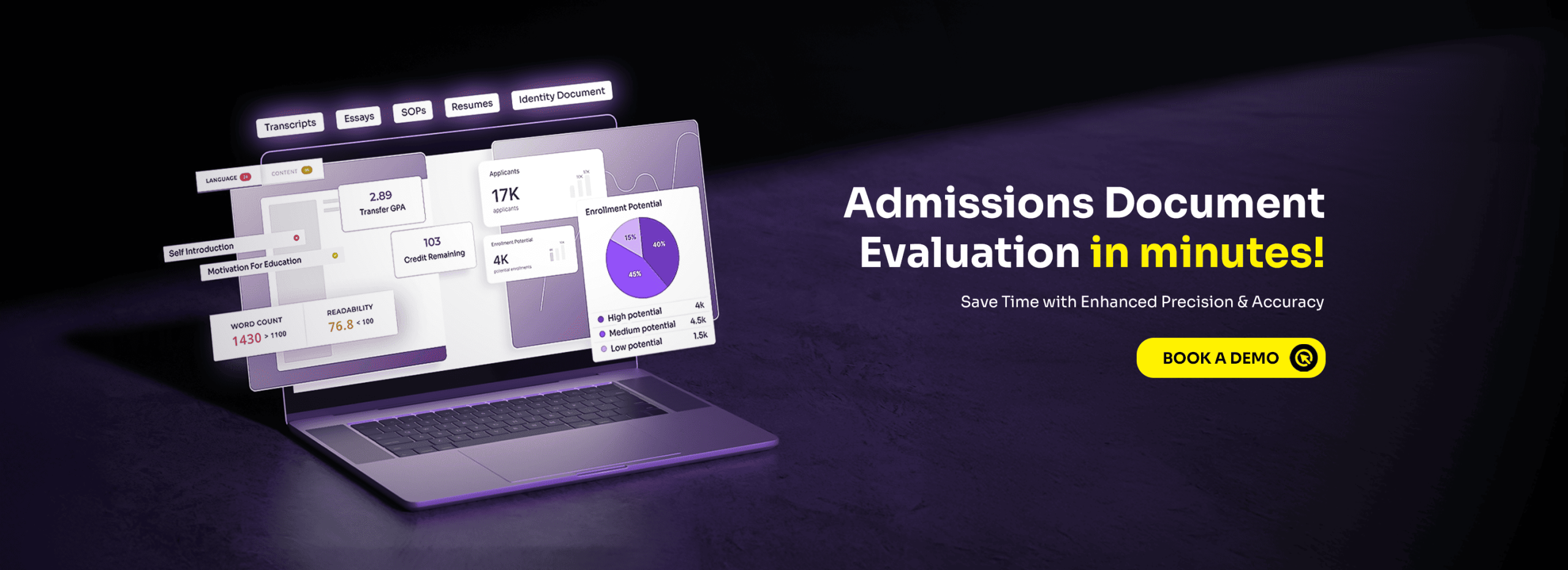
EDMO’s Document Intelligence suite automates time-consuming processes such as transfer credit evaluation, GPA calculation, application evaluation, document extraction, and identity verification. This helps admissions and registrar teams process applications faster, reduce manual errors, and manage higher volumes without proportionally increasing administrative workload.
Improving Student Engagement With AI Copilots
EDMO’s Conversation Intelligence suite enables universities to engage prospective and enrolled students through AI-powered voice, web chat, text, and email interactions. Student Copilot provides round-the-clock assistance with admissions questions, application status, deadlines, and next steps, while escalating complex inquiries to human advisors when needed.
Streamlining Enrollment and Advisor Workflows
EDMO helps enrollment teams manage student inquiries, prioritize high-intent prospects, and automate follow-ups. Its AI-powered lead nurturing and Advisor Copilot capabilities help staff identify students who need attention, track outstanding requirements, and take timely action throughout the enrollment journey.
Integrating With Existing University Systems
Through System Intelligence, EDMO connects with institutional platforms such as Salesforce Education Cloud, Slate, Ellucian Banner, PeopleSoft, Workday Student, Canvas, and Blackboard. These integrations support information exchange across systems, helping universities introduce AI capabilities without rebuilding their existing technology infrastructure.
Supporting Responsible AI Adoption
EDMO combines AI automation with human oversight, allowing university teams to review decisions, manage exceptions, and retain control over critical processes. Its Human Intelligence capabilities also provide implementation assistance, training, and ongoing support to help institutions adopt AI effectively.
By combining document automation, student engagement, system integration, and human oversight, EDMO enables universities to modernize enrollment operations while building on their existing technology investments.
Conclusion
Digital transformation in higher education is becoming essential for universities looking to improve enrollment outcomes, reduce administrative complexity, and meet evolving student expectations. However, success depends on more than adopting new technologies. Institutions need to identify operational gaps, prioritize high-impact initiatives, integrate existing systems, and measure results consistently.
As AI and automation continue to reshape higher education, universities that take a phased, outcome-driven approach will be better positioned to improve student services, support institutional growth, and adapt to future challenges.
Frequently Asked Questions
Ques 1. What is digital transformation?
Ques 2. What does digital transformation mean in education?
Ques 3. What are the 5 main areas of digital transformation?
Ques 4. How Can Universities Develop a Digital Transformation Strategy?
Written By






No comments yet. Be the first to comment!
Leave a Comment