


Table Of Contents
Introduction
In recent times, prospective students expect far more than glossy brochures, promotional videos, and carefully crafted marketing campaigns. They research institutions across multiple channels, compare experiences shared by current students, read online reviews, explore social media, watch day-in-the-life videos, and seek opinions from alumni before making one of the biggest decisions of their lives.
More importantly, they expect transparency. They want to know what the classroom experience is really like, whether they will feel supported, how career services deliver outcomes, and what campus life looks like beyond the official website. Generic messaging about “world-class education” or “student success” is no longer enough because nearly every institution makes similar claims. Students increasingly look for evidence that helps them picture themselves thriving at a particular university.
This shift in expectations has made authentic storytelling one of the most powerful tools for driving enrollment. Rather than relying solely on institutional messaging, universities that share genuine student journeys, faculty perspectives, alumni success stories, and everyday campus experiences create a stronger sense of trust and connection. Authentic narratives give prospective students a realistic view of the institution while helping them imagine their own future there. When stories reflect real experiences instead of polished marketing language, they resonate more deeply, differentiate the institution from competitors, and influence enrollment decisions by turning curiosity into confidence.
What Storytelling Means for Higher Education
Storytelling in higher education is more than a marketing technique. It is the practice of communicating an institution’s purpose, values, and impact through real human experiences. Every university has thousands of stories, from a first-generation student who overcame barriers to graduate, to a faculty member whose research changed lives, to an advisor who helped a struggling student stay enrolled. These stories transform abstract claims into tangible experiences that prospective students can relate to. Instead of simply telling students that an institution is innovative, inclusive, or career-focused, storytelling demonstrates those qualities through authentic examples.
When done well, storytelling creates an emotional connection long before a student submits an application. It builds credibility by replacing promotional language with genuine voices, helps institutions differentiate themselves in an increasingly competitive enrollment landscape, and strengthens trust at every stage of the student journey. A compelling narrative also has an impact beyond recruitment. It reinforces institutional identity, inspires alumni engagement, supports fundraising efforts, and gives faculty, staff, and students a shared sense of purpose. Ultimately, effective storytelling does not just help universities attract more applicants. It helps them attract students who genuinely connect with the institution’s mission, culture, and community, leading to stronger enrollment outcomes and a more engaged campus.
It builds trust before a conversation even begins
Prospective students are naturally skeptical of marketing claims because every institution promises excellent academics and career outcomes. Authentic stories featuring real students, faculty, and alumni make those promises feel credible and help establish trust from the very first interaction.
It helps students picture themselves on campus
Choosing a university is an emotional decision as much as a practical one. When students read about someone who shares their aspirations, challenges, or background, they can more easily imagine themselves thriving in that environment, making the institution feel like the right fit.
It makes your institution memorable
Facts and statistics are important, but stories are what people remember. A compelling narrative about a student’s transformation or a faculty member’s impact stays with prospective students long after they’ve forgotten tuition figures or campus amenities.
It sets your institution apart from the competition
Thousands of colleges offer similar programs, scholarships, and facilities. What cannot be replicated is your institution’s people, culture, and experiences. Storytelling brings those unique qualities to life and gives students a reason to choose you over another university.
It influences enrollment decisions with confidence, not persuasion
Instead of convincing students through promotional messaging, storytelling helps them reach their own conclusions. Seeing authentic experiences from current students and alumni provides the reassurance they need to apply, enroll, or commit to an offer.
It creates stronger engagement throughout the recruitment journey
Stories encourage prospective students to spend more time exploring your website, watching videos, reading blogs, attending webinars, and interacting with admissions counselors. Every meaningful story becomes another touchpoint that keeps students engaged.
It strengthens your institution’s brand over time
Consistently sharing stories that reflect your mission, values, and community builds a recognizable identity. Rather than being known only for rankings or programs, your institution becomes known for the experiences and outcomes it creates.
It inspires current students, alumni, and faculty to become advocates
When people see their experiences celebrated, they are more likely to share those stories with others. This creates a continuous cycle of authentic, word-of-mouth promotion that no advertising campaign can replicate.
It supports more than just admissions
Great storytelling also benefits alumni relations, fundraising, employer partnerships, and institutional reputation. The same narratives that attract prospective students can strengthen relationships across the entire higher education ecosystem.
Ultimately, it drives sustainable enrollment growth
Institutions that consistently tell honest, human-centered stories don’t just attract more applicants. They attract students who genuinely connect with the institution’s mission and culture. Those students are often more engaged, more likely to enroll, and more likely to succeed once they become part of the campus community.
Narrative vs. Declarative Storytelling: When to Use Each
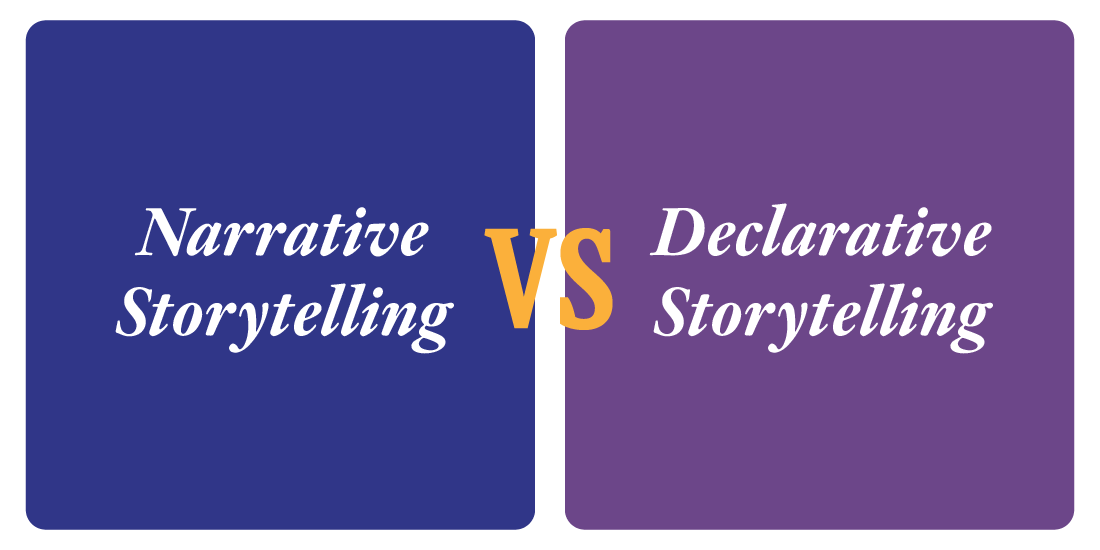
Every piece of content your institution publishes has a purpose. Sometimes, your goal is to help prospective students quickly find the information they need. Other times, your goal is to make them feel something. That’s where the difference between narrative and declarative storytelling comes in.
Narrative storytelling focuses on people, experiences, and emotions. It takes readers on a journey, showing how a student overcame challenges, how a professor inspired change, or how a campus community transformed someone’s life.
Declarative storytelling, by contrast, is direct and informative. It communicates facts, announcements, achievements, and important updates without building a story around them. Neither approach is better than the other.
The most effective higher education marketing combines both, using declarative content to answer questions and narrative content to create the emotional connection that ultimately influences enrollment decisions.
When to Use Narrative Storytelling
When you want prospective students to imagine themselves at your institution
A story about a first-year student finding their community or a transfer student successfully navigating campus life helps readers picture what their own experience could look like. It makes the institution feel real rather than aspirational.
When you’re showcasing the impact of your programs
Instead of simply saying that your engineering program prepares students for successful careers, introduce readers to a graduate who turned classroom learning into a meaningful career. Stories make outcomes tangible and believable.
When your goal is to build trust instead of simply promoting
Students can usually recognize marketing language. Hearing directly from current students, alumni, faculty, or staff feels far more authentic because it reflects genuine experiences rather than institutional claims.
When you want to communicate your institution’s values
Diversity, innovation, inclusion, student support, and academic excellence are powerful ideas, but they become much more meaningful when demonstrated through real people and real experiences.
When you’re creating content designed to inspire engagement
Blogs, videos, podcasts, social media campaigns, student spotlights, and alumni features are all excellent opportunities to tell stories that encourage prospective students to keep exploring your institution.
When to Use Declarative Storytelling
When students need clear, actionable information
Admissions deadlines, tuition details, scholarship requirements, application checklists, and event registrations should always be communicated in a simple and direct way. Students shouldn’t have to read through a story to find essential information.
When announcing important institutional updates
Whether it’s the launch of a new degree program, a new campus building, accreditation, or a major research achievement, straightforward communication ensures your message is easy to understand and share.
When supporting your stories with facts
Narrative captures attention, but data builds confidence. After sharing a student’s success story, reinforce it with graduate employment rates, internship statistics, or career outcomes to demonstrate that the experience isn’t an exception.
When creating high-intent admissions content
Prospective students visiting admissions pages, financial aid resources, or FAQs are looking for answers, not inspiration. Declarative content respects their time by helping them find exactly what they need.
When communicating time-sensitive or operational updates
Changes to application processes, campus policies, orientation schedules, or emergency notifications should always prioritize clarity over creativity so there is no room for misunderstanding.
The strongest higher education brands don’t rely exclusively on facts or stories. They know that facts help students make informed decisions, while stories help them make confident ones. By balancing both approaches, institutions can educate, inspire, and guide prospective students through every stage of the enrollment journey.
Strategies for Effective Brand Storytelling in Higher Education
A great story doesn’t happen by chance. It requires a clear purpose, authentic voices, and a deep understanding of what prospective students care about. The most memorable higher education brands don’t just publish content consistently. They tell stories that reflect who they are, what they stand for, and how they change students’ lives. Here are some strategies that can help institutions build stories that resonate and inspire action.
Start with your students, not your institution
The best higher education stories aren’t about buildings, rankings, or marketing messages. They’re about people. Instead of leading with what your university offers, focus on the students who have experienced those opportunities. Show their aspirations, challenges, milestones, and achievements. When prospective students see someone like themselves succeeding, it becomes much easier to picture their own future at your institution.
Tell stories with a clear beginning, middle, and end
Every compelling story follows a journey. Introduce the person, explain the challenge or opportunity they faced, describe how the institution supported them, and end with the outcome. Whether it’s a first-generation student earning their degree or a researcher solving real-world problems, a complete narrative is always more engaging than a collection of disconnected facts.
Show, don’t just tell
Instead of saying your university is innovative, supportive, or diverse, demonstrate those qualities through real experiences. Let students describe how a faculty mentor changed their perspective, how an internship shaped their career, or how campus organizations helped them find a sense of belonging. Authentic examples make institutional values feel credible.
Use multiple voices across your institution
Your brand is made up of thousands of unique experiences. Don’t limit storytelling to admissions or marketing teams. Feature current students, faculty members, alumni, researchers, career advisors, support staff, employers, and even parents. Every perspective adds another layer of authenticity and helps prospective students connect with your institution in different ways.
Be authentic, even when the journey isn’t perfect
The most memorable stories aren’t flawless. Students appreciate honesty about challenges, setbacks, and personal growth because those experiences feel genuine. Sharing how someone overcame academic difficulties, adjusted to a new country, or discovered a new career path often creates a stronger emotional connection than only highlighting success.
Match the story to the stage of the student journey
A prospective student discovering your institution for the first time needs different stories than an admitted student deciding whether to enroll. Awareness-stage content should inspire curiosity, while decision-stage stories should build confidence by highlighting academic support, career outcomes, campus life, and student success. The right story at the right time makes every interaction more meaningful.
Adapt one story across multiple channels
A single student success story can become much more than a website article. It can be repurposed into a short-form video, a podcast episode, an Instagram carousel, a LinkedIn post, an email campaign, or a testimonial in an admissions brochure. Consistent storytelling across channels helps reinforce your brand while reaching students wherever they consume content.
Support stories with meaningful evidence
Emotion captures attention, but evidence builds trust. Pair personal experiences with relevant data such as graduation rates, internship opportunities, research achievements, scholarship statistics, or employment outcomes. This combination reassures prospective students that the stories they are reading reflect broader institutional success.
Encourage your community to tell their own stories
Some of the most authentic content doesn’t come from the marketing team at all. Encourage students, alumni, faculty, and campus organizations to share their own experiences through blogs, videos, social media posts, and testimonials. User-generated stories often feel more genuine because they reflect unscripted, lived experiences.
Measure what resonates and keep improving
Storytelling should evolve based on audience feedback. Monitor which stories generate the most engagement, website visits, video views, applications, or inquiries. Pay attention to the themes students respond to most, then use those insights to create future content that is even more relevant and impactful.
Great storytelling is not about producing more content. It’s about telling the right stories in the right way. When universities consistently share authentic experiences that reflect their mission and community, they don’t just strengthen their brand. They build trust, deepen emotional connections, and inspire prospective students to take the next step toward enrollment.
Why Storytelling Is the Strategy
Many institutions still think of storytelling as something the marketing team does to make a campaign more engaging. A student spotlight on Instagram, an alumni success story on the website, or a campus tour video is often treated as standalone content. While these efforts are valuable, they only scratch the surface of what storytelling can achieve.
The most successful institutions recognize that storytelling is not simply a content tactic. It is a strategic approach that shapes how the university communicates its identity, builds relationships, and influences decisions throughout the student lifecycle. Every interaction, whether it’s an admissions email, a campus visit, a faculty interview, or a conversation with a current student, contributes to the story a prospective student forms about the institution.
When storytelling becomes a strategy, it creates consistency across every touchpoint. Instead of departments communicating in silos, everyone tells the same larger story about the institution’s mission, values, culture, and impact. Admissions highlights student success. Faculty showcase meaningful learning experiences. Career services share graduate outcomes. Alumni relations celebrate lifelong connections. Together, these narratives reinforce a single, authentic brand identity.
This strategic approach is especially important because today’s students don’t experience an institution through just one channel. They might discover your university through a social media post, read student blogs, attend a virtual event, browse your website, watch YouTube videos, and exchange emails with admissions counselors before they ever submit an application. If every interaction tells a different story, students are left with a fragmented impression. If every interaction reinforces the same authentic narrative, trust grows naturally.
Treating storytelling as a strategy also changes how institutions create content. Instead of constantly asking, “What should we post this week?” teams begin asking, “What stories best represent who we are, and how can we tell them consistently across every stage of the student journey?” That shift leads to more purposeful communication, stronger brand recognition, and content that supports long-term enrollment goals rather than short-term engagement metrics.
Ultimately, universities don’t compete solely on programs, rankings, or facilities. They compete on the experiences they create and the stories people tell about them. Institutions that make storytelling part of their overall enrollment and brand strategy don’t just capture attention. They build trust, create emotional connections, and give prospective students a compelling reason to choose them over every other option.
It shapes your institution’s identity, not just your marketing
Storytelling goes beyond creating engaging social media posts or blog articles. It defines how prospective students, parents, alumni, faculty, and employers perceive your institution. Every story contributes to the larger narrative of who you are and what you stand for.
It creates consistency across every student touchpoint
A prospective student doesn’t interact with your institution in just one place. They visit your website, browse social media, attend webinars, read emails, and speak with admissions counselors. When every interaction reinforces the same message and values, it builds familiarity and trust.
It influences the entire student journey, not just recruitment
Effective storytelling doesn’t stop once a student submits an application. It supports enrollment, orientation, student engagement, retention, alumni relations, and even fundraising. A strong narrative continues to strengthen relationships long after admission.
It helps every department tell the same story
Admissions, marketing, faculty, student affairs, career services, and alumni relations all communicate with different audiences. A storytelling strategy ensures these teams work toward a shared narrative instead of delivering disconnected messages.
It transforms content from promotional to meaningful
Instead of constantly creating content to fill a calendar, institutions begin sharing stories with a clear purpose. Every blog, video, email, or student testimonial contributes to a larger narrative that reflects the institution’s mission and impact.
It builds emotional connections that facts alone cannot
Rankings, statistics, and program details help students compare institutions, but stories help them connect with one. A memorable narrative creates a sense of belonging long before a student steps onto campus.
It makes your brand more memorable in a competitive market
Many universities offer similar academic programs and student services. What truly differentiates an institution is the collection of authentic experiences that only its community can tell.
It turns students, alumni, and faculty into brand ambassadors
When people feel connected to an institution’s story, they’re more likely to share their own experiences. These authentic voices often carry more credibility than traditional marketing campaigns and help amplify the institution’s reputation organically.
It supports long-term enrollment growth instead of short-term campaigns
A tactical campaign may generate applications for one admission cycle, but a storytelling strategy continuously strengthens your reputation, builds trust, and attracts future generations of students.
It gives every piece of communication a clear purpose
Rather than asking, “What should we post next?” institutions begin asking, “What story do we want prospective students to remember?” This shift leads to more intentional communication and a stronger, more recognizable brand over time.
Conclusion
Artificial intelligence is transforming nearly every aspect of higher education, from recruitment and admissions to advising and student support. But while technology can automate communication and personalize experiences at scale, it cannot replace the authenticity of a real human story. In fact, as AI-generated content becomes more common, genuine student experiences, faculty voices, and alumni journeys will become even more valuable. The institutions that thrive won’t simply be those with the smartest technology or the biggest marketing budgets. They’ll be the ones that consistently tell stories that students trust, remember, and want to become part of.
Frequently Asked Questions
Ques 1. How does storytelling contribute to higher education?
Ques 2. Why does brand personality matter in higher education storytelling?
Ques 3. What are the most effective storytelling strategies for higher education?
Written By





No comments yet. Be the first to comment!
Leave a Comment