

Table Of Contents
- 1Introduction
- 2What higher education institutions need to know
- 3What Are Traditional Chatbots?
- 4What Are AI Chatbots?
- 5AI vs. Traditional Chatbots: Key Differences
- 6Why Higher Education Institutions Are Moving Toward AI Chatbots
- 7Use Cases of AI Chatbots in Higher Education
- 8Where Rule-Based Chatbots Still Work Well
- 9How Universities Can Successfully Roll Out AI Chatbots
- 10How EDMO Helps Universities Move Beyond Traditional Chatbots
- 11Future of Chatbots in Higher Education
- 12Conclusion
Introduction
For years, colleges and universities have used chatbots to answer simple questions about admissions, courses, and fees. Now, new AI-powered copilots and tools are transforming what automated student communication can achieve. Unlike older chatbots that follow scripts and look for keywords, AI-powered enrollment tools can understand context, learn from each conversation, and offer more personalized support throughout a student’s experience. This change is more than just a technology upgrade; it’s changing how schools connect with, help, and keep students.
What higher education institutions need to know
Rule-based vs. contextual intelligence
Traditional chatbots stick to set scripts and often struggle if someone asks an unexpected question. AI systems, on the other hand, can pick up on intent, context, and subtle differences, making conversations feel more natural and accurate.
Limited support vs. end-to-end student journey coverage
Older chatbots usually just answer admissions FAQs. AI platforms can help with everything from recruitment and onboarding to academic advising and supporting student success.
Reactive answers vs. proactive guidance
Traditional bots only respond when asked. AI systems can go further by sending reminders, suggesting next steps, alerting about risks, and offering personalized advice.
Static knowledge base vs. continuous learning
Chatbots need to be updated by hand. AI systems can keep learning from new data, policy changes, and how people interact, so their answers get better over time.
Single-channel vs. omnichannel engagement
Traditional tools are often confined to a website widget. AI systems can operate across SMS, WhatsApp, email, portals, and voice, maintaining context across channels.
Basic automation vs. decision support
Chatbots handle FAQs. AI systems can assist advisors and staff by summarizing student interactions, identifying at-risk students, and recommending interventions.
Fragmented experience vs. unified student view
Traditional systems often work separately from each other. AI platforms can bring together all student data and interactions into one useful profile for the institution.
What Are Traditional Chatbots?
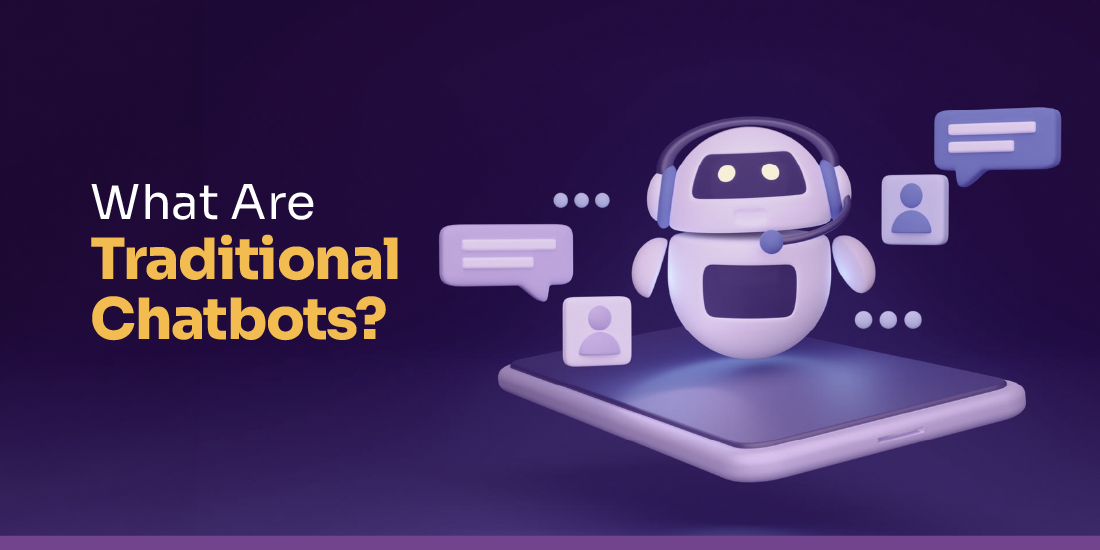
Traditional chatbots are rule-based software programs that simulate conversation with users through predefined scripts. They use decision trees, keyword recognition, and fixed responses instead of understanding context or intent. They are best suited for simple, repetitive queries but struggle with complex or ambiguous questions.
Basic functions of traditional chatbots
- Answering frequently asked questions (FAQs)
Provide predefined responses to common queries such as admission deadlines, fees, or course lists. - Guiding users through fixed workflows
Help users complete simple step-by-step processes like form submissions or basic registrations. - Keyword-based query matching
Trigger responses based on specific words or phrases the user enters. - Providing basic information retrieval
Share static information from a limited knowledge base, such as office hours or contact details. - Routing queries to human agents
Transfer complex or unresolved issues to a support representative. - Simple menu-driven interactions
Offer users clickable options or buttons to navigate preset conversation paths. - Automating repetitive support tasks
Reduce staff workload by handling high-volume, low-complexity inquiries.
What Are AI Chatbots?
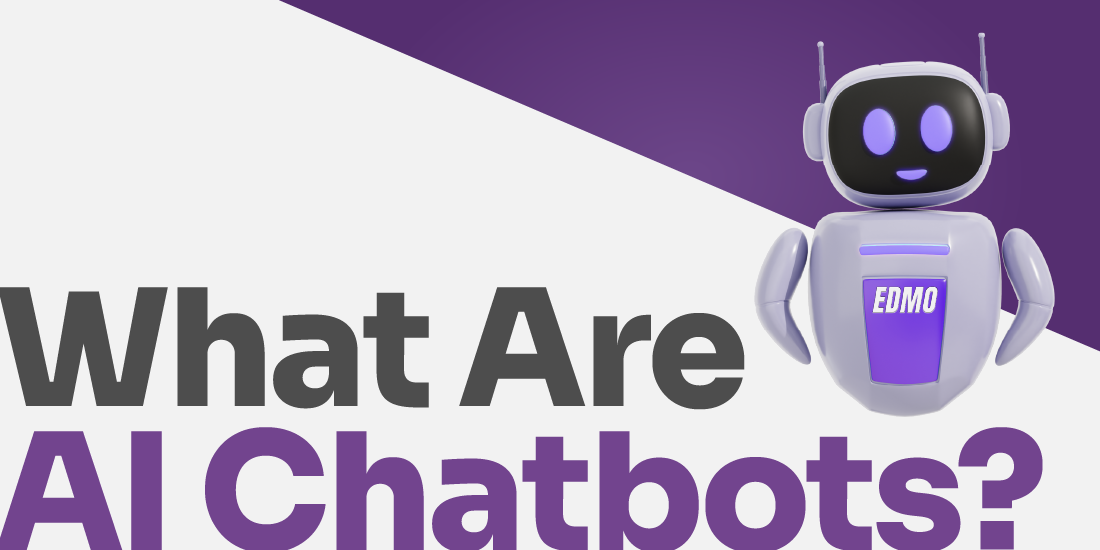
AI chatbots are smart conversational tools that use artificial intelligence, including natural language processing, machine learning, and large language models. Unlike older chatbots that follow set scripts, AI chatbots can understand intent, interpret context, learn from interactions, and generate dynamic responses. This allows them to handle more complex, nuanced, and multi-step conversations on different platforms.
Functions of AI chatbots
Understanding user intent and context
Figure out what a user means, even if the question is worded in a new way or is missing some details.
Providing personalized responses
Give answers that fit each user by using information like their academic background, where they are in the application process, or their previous conversations.
Handling end-to-end workflows
Help users through entire processes, such as filling out applications, answering admissions questions, guiding enrollment steps, and offering onboarding support.
24/7 student support across channels
Connect with users on websites, WhatsApp, SMS, email, and voice calls, making sure the conversation continues smoothly across all channels.
Real-time guidance and recommendations
Offer advice on what to do next, remind users about deadlines, suggest course options, or list needed documents based on each person’s situation.
Learning and improving over time
Keep improving answers by learning from new information, recent conversations, and updates from the institution.
Summarizing and assisting staff workflows
Create summaries of conversations, identify students who may need extra help, and give advisors useful information they can act on.
Handling complex, multi-turn conversations
Handle longer conversations where the topic or context changes over several messages or sessions.
AI vs. Traditional Chatbots: Key Differences
AI chatbots and traditional chatbots differ in how they process information, respond to users, and deliver value. Traditional chatbots use predefined rules and scripted flows to answer specific queries. In contrast, AI chatbots leverage machine learning and natural language understanding to interpret intent, adapt to context, and provide dynamic, personalized responses. As a result, AI systems handle complex, multi-step conversations more effectively, while traditional chatbots are limited to basic, repetitive interactions.
AI vs. Traditional Chatbots: Differences in a table
| Feature | AI Chatbot | Traditional Chatbot |
| Core technology | Natural language processing, machine learning, LLMs | Rule-based scripts and decision trees |
| Understanding capability | Understands intent, context, and nuance | Matches keywords or predefined patterns |
| Flexibility | Handles complex and evolving queries | Limited to fixed conversation paths |
| Personalization | Provides tailored responses based on user data | Offers generic, one-size-fits-all replies |
| Learning ability | Continuously improves from interactions | Does not learn unless manually updated |
| Conversation flow | Supports multi-turn, dynamic conversations | Works best for single-turn or linear flows |
| Use cases | End-to-end student journey support, advising, engagement | FAQs, basic information retrieval |
| Channel support | Omnichannel (web, SMS, WhatsApp, email, voice) | Typically limited to single platform (web/app widget) |
Why Higher Education Institutions Are Moving Toward AI Chatbots
Higher education is changing the way it communicates with students. Old support systems like email chains, call centers, and simple chatbots no longer meet the needs of today’s fast-paced, digital-first students. Schools now handle thousands of questions at once about admissions, financial aid, course selection, and onboarding. AI chatbots help fill this gap by offering real-time, relevant, and scalable support throughout the student journey. That’s why many universities are now choosing AI-powered chat systems instead of older tools.
Rising student expectations for instant support
Today’s students are used to getting quick answers from platforms like Google, Amazon, and social media. They want the same fast responses from their universities. Waiting hours or days for an email reply feels old-fashioned, especially during important times like application deadlines or enrollment decisions. AI chatbots meet these expectations by giving instant answers any time, day or night.
Increasing volume of inquiries
Admissions offices often get thousands of the same questions about things like eligibility, application status, deadlines, and fees. This can slow down staff. AI chatbots can answer these common questions right away and in a consistent way, which takes pressure off staff and speeds up responses.
Need for personalized engagement
Students want more than generic messages. They expect advice that fits their academic background, interests, and where they are in the application process. AI chatbots can look at user data and past interactions to give helpful suggestions, like recommending programs, reminding students about missing documents, or guiding them based on their progress.
24/7 global accessibility requirements
Universities welcome students from all over the world and across different time zones. For example, a student in India might reach out to a US university outside of normal office hours. AI chatbots provide nonstop support, so students can get answers right away no matter where they are or what time it is.
Improving enrollment efficiency
The admissions process usually has several steps, like submitting applications, uploading documents, doing interviews, and paying fees. Students sometimes stop the process because they get confused or don’t have enough help. AI chatbots work as real-time assistants, guiding students through each step, explaining what’s needed, and making it easier to stay on track.
Reducing administrative workload
University staff often spend a lot of time answering the same questions over and over, instead of focusing on important tasks like student counseling or planning enrollment. AI chatbots can handle these routine questions, giving staff more time to focus on work that needs their judgment and empathy.
Omnichannel communication demand
Students use many different platforms to communicate, like WhatsApp, SMS, email, university portals, and even voice assistants. Traditional systems have trouble keeping things consistent across all these channels. AI chatbots bring everything together, making sure students get the same answers and can keep their conversations going smoothly, no matter which platform they use.
Better data-driven decision-making
Each time a student interacts with an AI chatbot, it creates useful data. Schools can look at patterns like where students drop off, what questions come up most, and signs that a student might be unsure. These insights help universities improve how they communicate, make admissions smoother, and spot students who might need extra help.
Every interaction in admissions can determine whether a student completes an application or abandons the process. As a result, effective communication is essential. Traditional chatbots primarily reduce repetitive workload by answering basic FAQs, but they often fail when students require guidance through complex, multi-step processes. In contrast, AI chatbots act as admissions assistants by understanding context, tracking progress, and actively supporting students from inquiry to enrollment.
Key differences in admissions
Handling application queries
Traditional chatbots provide fixed answers about deadlines, eligibility, or tuition, without considering the student’s profile or stage. AI chatbots offer contextual responses. For example, they can specify which intake cycle applies to a program, clarify early decision deadlines, or explain the consequences of late applications. This ensures information is relevant and actionable.
Guiding the application process
Traditional chatbots follow rigid scripts, assuming all students progress uniformly. In reality, applicants move at different paces; some may have submitted documents but not paid fees, while others are delayed by eligibility checks. AI chatbots adapt to each student’s status, guiding them through the next required step rather than repeating generic instructions.
Document assistance
Traditional chatbots only list required documents and cannot verify progress or identify missing items. AI chatbots integrate with application systems to track uploaded documents, flag missing or incorrect files, and proactively notify students. This reduces delays from incomplete applications and improves submission quality.
Personalized program recommendations
Traditional chatbots display static program catalogs or require students to browse options manually. AI chatbots analyze academic background, career interests, budget, and location preferences to recommend suitable programs. This streamlines decision-making and increases the likelihood of completing applications for best-fit programs.
Application status tracking
Traditional chatbots often redirect students to a portal or provide vague updates such as “under review.” AI chatbots translate backend status into clear, actionable explanations and next steps. For example, they can specify, “your application is under faculty review, and you may be contacted for an interview within 7–10 days,” which reduces anxiety and unnecessary support requests.
Lead nurturing and conversion support
Traditional chatbots are passive and respond only when prompted. AI chatbots actively engage students by answering questions in real time, addressing concerns such as cost or eligibility, and guiding them toward submission. They also send reminders for incomplete applications or upcoming deadlines, significantly improving conversion rates.
Interaction continuity
Traditional chatbots treat each conversation as isolated, requiring students to repeat their questions or context. AI chatbots retain memory across sessions, enabling students to resume conversations seamlessly. For example, a student who previously asked about scholarships can later continue the same discussion when addressing visa requirements, without starting over.
Support for admissions teams
Traditional chatbots marginally reduce front-line workload by handling FAQs. AI chatbots add operational value by summarizing student conversations, identifying intent signals such as high interest or hesitation, and flagging at-risk applicants. This allows admissions teams to prioritize outreach, personalize communication, and intervene at the right time to improve enrollment outcomes.
Use Cases of AI Chatbots in Higher Education
AI chatbots are becoming valuable tools in higher education because they help balance large-scale needs with personalized support. Today, students no longer follow a simple, step-by-step path from discovery to enrollment. Instead, their journey is often quick and scattered across different channels. In this setting, AI chatbots work as digital assistants that are always available to guide students, make things easier, and help staff at nearly every stage of the academic process. Their real strength is not just in answering questions, but in helping shape decisions and outcomes as they happen.
Admissions and Recruitment
This stage is like the university’s front door. AI chatbots connect with prospective students as soon as they visit a website or send a message on WhatsApp. Rather than just offering static FAQs, chatbots act like recruitment counselors by answering questions about eligibility, suggesting programs based on interests, and encouraging students to finish their applications. They can also spot students who are most interested and help admissions teams focus on the right people at the right time.
Student Services and Support
After students enroll, the number of daily questions increases quickly, including topics like timetables, ID cards, login problems, course changes, and hostel information. AI chatbots provide round-the-clock support, quickly solving routine issues and passing on more complex problems to the right staff. This leads to a better student experience and takes pressure off administrative offices.
Financial Aid Assistance
Financial aid questions are often repetitive but highly sensitive. Students want clarity on scholarships, eligibility, deadlines, and payment plans. AI chatbots simplify this by guiding students through eligibility checks, helping them understand what aid they qualify for, and reminding them about missing documents or upcoming deadlines, reducing confusion that often leads to missed opportunities.
Program and Course Discovery
Many students are unsure about what they want when they begin looking at universities. AI chatbots work as discovery advisors by asking questions about interests, academic background, and career goals, then suggesting suitable programs. Rather than giving students long lists, chatbots help narrow down options in a more guided and conversational way.
Campus Tour Support
Not all students can visit campus in person, especially those from other countries. AI chatbots can provide virtual campus guidance by sharing schedules, answering questions about logistics, and offering organized tours of facilities. Sometimes, they can also help book tours or connect students with current ambassadors.
Student Retention Initiatives
Keeping students enrolled often requires early action. AI chatbots can notice signs like missed assignments, low participation, or repeated confusion about course material and alert advisors. They can also reach out to students with reminders, resources, or support options, helping schools address problems before students decide to leave.
Alumni and Career Services
The connection with students continues after graduation. AI chatbots help keep alumni involved by sharing job openings, networking events, and opportunities to learn new skills. For current students, chatbots can help with internships, resume advice, and career suggestions, making it easier to move from school to work.
Where Rule-Based Chatbots Still Work Well
Traditional chatbots may not have the intelligence or flexibility of AI systems, but they still have a place in higher education when the use case is simple, predictable, and highly structured. In scenarios where institutions only need to deliver static information or guide users through very linear workflows, rule-based chatbots can be cost-effective, easy to maintain, and reliable without the complexity of AI-driven systems.
Simple FAQ handling
Ideal for answering repetitive questions like office hours, admission deadlines, fee structures, or contact details without needing contextual understanding.
Basic form navigation
Useful for guiding users through straightforward, step-by-step forms where the path does not change based on user input.
Limited-budget implementations
For institutions with constrained resources, rule-based bots offer a low-cost entry point into conversational automation.
High-volume, low-complexity queries
Works well in scenarios where most questions are identical and do not require personalization or reasoning.
Internal departmental tools
Can support simple HR or IT helpdesk functions like password resets, policy lookup, or ticket routing.
Static information delivery
Effective when content rarely changes and does not require learning or updates beyond occasional manual edits.
Single-purpose workflows
Suitable for narrowly defined tasks like event registrations or simple appointment booking without variations or exceptions.
How Universities Can Successfully Roll Out AI Chatbots
Implementing AI chatbots in higher education isn’t just about adding a new tool. It’s about redesigning how institutions communicate with students at scale. The real impact comes when the chatbot aligns with admissions workflows, student services, and internal systems instead of being a standalone feature. Universities that succeed focus on clear use cases, strong data integration, and continuous refinement based on real student interactions.
Start with high-impact use cases first
Don’t try to automate everything at once. Start with areas like admissions FAQs, application tracking, or student support where volume is high and outcomes are measurable.
Design around student journeys, not departments
Instead of building separate bots for admissions, finance, and academics, map conversations to the student lifecycle to make the experience seamless and connected.
Integrate with existing systems early
Connect the chatbot to CRM, SIS, and admissions platforms so it can provide real-time updates instead of generic responses.
Keep the tone human and conversational
Students engage better when the chatbot feels like a guide rather than a system. Avoid robotic phrasing and prioritize clarity and warmth.
Ensure smooth human handoff
Not every query should be automated. Build clear escalation paths so students can quickly reach a human advisor when needed.
Train with real institutional data
Use actual admission policies, program details, and historical student queries to make responses accurate and relevant.
Monitor conversations and continuously improve
Regularly review chatbot interactions to identify gaps, misunderstandings, and opportunities for optimization.
Focus on omnichannel accessibility
Meet students where they already are WhatsApp, SMS, email, and web portals; not just a single website widget.
Prioritize data privacy and compliance
Ensure student data is securely handled and aligned with institutional and regulatory requirements from day one.
How EDMO Helps Universities Move Beyond Traditional Chatbots
Most universities have already decided to use chatbots, but now they face the challenge of working with limited tools. EDMO helps institutions go beyond simple FAQ bots by offering intelligent, workflow-driven student engagement that supports admissions, enrollment, and student success from start to finish.
Turns conversations into guided admissions journeys
EDMO does more than answer questions. It guides students step by step through applications, document submissions, and enrollment tasks using a clear, conversational approach.
Connects directly with admissions and student systems
It integrates with existing university systems so students can get real-time updates on application status, missing documents, and next steps without switching platforms.
Understands student intent, not just keywords
EDMO does not just use scripted responses. It understands what students want to do and gives them helpful guidance based on their situation.
Reduces drop-offs in the application funnel
It keeps applicants moving forward by sending reminders, clearing up confusion, and making requirements easier to understand, so fewer students drop out during the process supports staff with intelligent insights. EDMO does more than talk to students. It summarizes conversations, points out students who are very interested, and alerts staff to those who might need extra help.
Works across multiple channels seamlessly
Students can use WhatsApp, SMS, web, or email and still keep the same conversation history and experience no matter which channel they choose.
Handles both scale and personalization at once
It can handle thousands of conversations at once and still give each student responses that fit their profile and where they are in the process.
Continuously improves based on real interactions
The system learns from real conversations, so institutions can keep improving their messages, workflows, and engagement strategies as time goes on.
Future of Chatbots in Higher Education
If today’s chatbots are mainly handling FAQs and basic support, the next phase looks very different. They’re steadily evolving into something closer to always-on digital advisors that understand students, anticipate needs, and actively guide them through complex decisions. In higher education, where the student journey spans discovery, admissions, academics, and careers, this shift is less about automation and more about creating a continuous, intelligent support layer that feels natural and helpful rather than transactional.
They’ll stop waiting for questions and start initiating conversations
Instead of responding only when a student asks something, chatbots will start reaching out at the right moments, nudging students about deadlines, reminding them of missing steps, or suggesting actions based on where they are in the journey.
They’ll feel less like tools and more like guides inside the system
Rather than sitting on a website as a separate widget, chatbots will be embedded across the entire university ecosystem, applications, portals, learning platforms, so support feels continuous rather than fragmented.
Conversations will finally feel truly personal
Instead of generic answers, responses will reflect a student’s specific context, what program they’re applying for, what stage they’re in, and what they’ve already completed, so guidance feels relevant, not repetitive.
Students won’t need to repeat themselves anymore
Whether they switch from WhatsApp to email or from admissions to financial aid, the chatbot will carry context forward, making interactions feel like one ongoing conversation instead of disconnected threads.
They’ll quietly become part of academic and career decision-making
Over time, these systems will help students choose courses, explore careers, and plan internships based on their interests and progress, not just answer administrative questions.
Universities will use them more for insight than just support
Beyond helping students, institutions will rely on chatbots to understand patterns, where students drop off, what confuses applicants, and where interventions are needed.
The experience will become more natural, but also more responsible
As these systems become more capable, universities will focus heavily on transparency, privacy, and ensuring AI supports decisions without replacing human judgment where it matters most.
Conclusion
Higher education is clearly moving away from static, rule-based chatbots toward more intelligent, context-aware AI systems. While traditional chatbots still serve a purpose for handling simple, repetitive queries, they fall short in environments where student journeys are complex and non-linear. AI chatbots bring a more adaptive approach, supporting students across admissions, academics, and services in a way that feels continuous, personalized, and responsive. For institutions, this shift is less about replacing existing tools overnight and more about gradually building a smarter, more connected communication layer that improves both student experience and operational efficiency.
Frequently Asked Questions
Ques 1: What is the difference between AI chatbots and traditional chatbots?
Ques 2: Are AI chatbots better for university admissions?
Ques 3: Can AI chatbots integrate with CRMs and SIS platforms?
Ques 4: How do AI chatbots improve student engagement?
Written By






No comments yet. Be the first to comment!
Leave a Comment