

Table Of Contents
Introduction
Recruiting international students is now a key focus for universities, but handling these applications comes with its own set of challenges. Admissions teams need to review credentials from different education systems, check documents, assess English verbal and written skills, manage visa timelines, and keep up communication across time zones.
Without clear processes and the right tools, these tasks can slow down reviews, add extra work, and make the experience harder for applicants. By spotting common risks early and setting up efficient workflows, universities can make admissions faster, clearer, and more reliable for international students.
Common Warning Signs
- Missing or inconsistent application documents that slow down the review process.
- Academic transcripts or credentials that have not been verified, especially from schools that are not well known.
- Fake or changed documents, such as transcripts, diplomas, or financial statements.
- English test scores that are out of date, missing, or do not meet the university’s requirements.
- Missed visa and immigration deadlines that affect enrollment timelines.
- Slow response times to applicant questions, especially across different time zones.
- Reviewing credentials by hand, which can slow things down and lead to uneven decisions.
- Duplicate or conflicting applicant records across admissions systems.
- Lack of communication visibility, making it difficult to track applicant interactions and follow-ups.
- Delayed transfer credit evaluations, which can discourage qualified international applicants from enrolling.
- Different admissions staff using different standards to review applications.
- Not enough support in multiple languages, which can cause misunderstandings and lead to more applicants dropping out.
- Weak yield management, where admitted international students lose interest because they do not get timely, personalized communication.
Red Flags to Watch for in International Student Applications
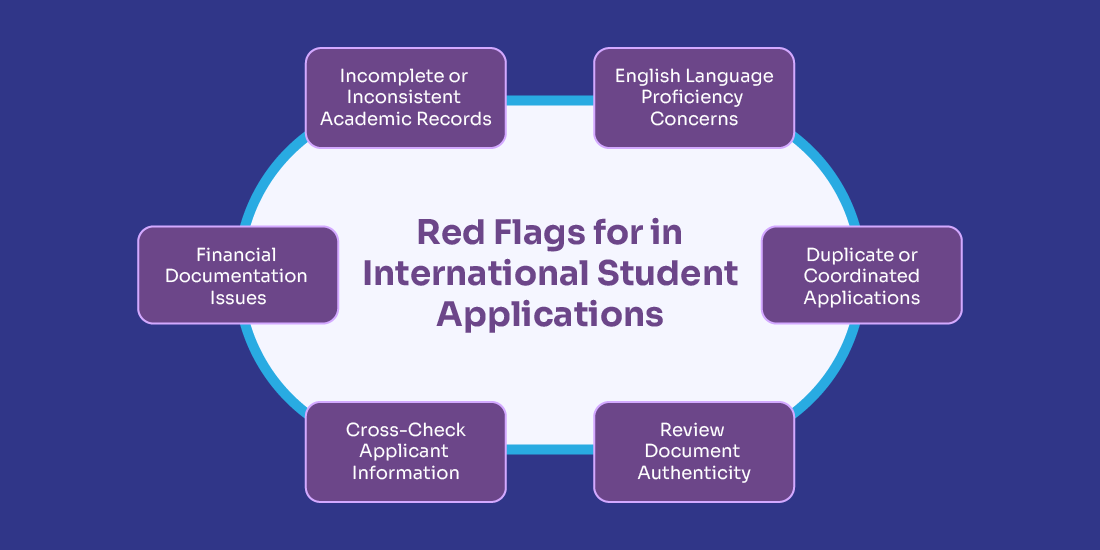
Early identification of red flags allows admissions teams to prioritize their review efforts. While these indicators do not confirm fraud or ineligibility, they often require further verification before making an admissions decision.
Incomplete or Inconsistent Academic Records
Applications missing transcripts, incomplete mark sheets, or containing conflicting academic information can delay evaluations and complicate eligibility determinations. Clear documentation requirements and automated completeness checks help minimize unnecessary communication with applicants.
Discrepancies in Personal Information
Inconsistencies in names, dates of birth, addresses, passport details, or educational records may result from administrative errors or indicate identity concerns. Cross-check all submitted documents before proceeding with the review.
Unverified or Suspicious Academic Credentials
Universities receive credentials from diverse institutions worldwide, which complicates verification. Documents that appear altered, lack official seals, or come from unrecognized institutions should be thoroughly validated before finalizing admission decisions.
English Language Proficiency Concerns
Expired test scores, unverifiable results, or language proficiency inconsistent with the applicant’s written communication may require further assessment. Confirming scores directly with testing agencies helps maintain admissions integrity.
Financial Documentation Issues
International applicants are typically required to demonstrate sufficient financial resources. Inconsistent bank statements, unverifiable sponsorship letters, or incomplete financial documentation can create compliance challenges and should be thoroughly reviewed.
Unexplained Gaps in Academic or Professional History
Extended breaks between academic programs or employment are common, but unexplained gaps may require clarification. Requesting supporting documentation provides admissions teams with the necessary context for evaluation.
Transfer Credit Documentation Gaps
Students seeking transfer credit must provide official transcripts, detailed course descriptions, and supporting academic records. Missing or incomplete documentation can significantly delay credit evaluations and enrollment decisions.
Duplicate or Coordinated Applications
Multiple applications with similar contact details, essays, references, or submission patterns may indicate coordinated activity or attempted fraud. Admissions systems should flag these cases for further review while minimizing disruption for legitimate applicants.
Frequent Changes After Submission
Repeated updates to personal information, supporting documents, or program selections after submission may require closer examination. While genuine corrections occur, significant changes should be validated before processing continues.
Delayed Responses to Verification Requests
Applicants who do not respond to requests for additional documentation or identity verification can delay the admissions process. Clear deadlines and automated reminders help universities maintain progress and ensure compliance.
Identification of Red Flags
Spotting red flags is just the beginning. Universities need a clear, consistent way to identify them every time. Instead of depending only on manual reviews, admissions teams should use both standardized processes and technology to check documents, confirm applicant details, and find unusual patterns. This approach makes the process more efficient and helps ensure that genuine applicants get timely decisions, while applications that seem risky get extra attention.
Cross-Check Applicant Information
Each application should be checked to make sure all documents match. Names, birth dates, academic records, passport details, and contact information need to be the same on transcripts, forms, and ID documents. Even small differences might be simple mistakes or could mean more checks are needed.
Verify Academic Credentials
Academic qualifications should be checked using trusted evaluation services or, if needed, by contacting the school that issued them. This helps universities make sure transcripts, diplomas, and degrees are real and that applicants meet admission requirements.
Authenticate English Language Proficiency Scores
Language test scores should be verified directly with official testing organizations to confirm they are valid, current, and belong to the applicant. Admissions teams should also look for inconsistencies between reported scores and the applicant’s written or verbal communication when appropriate.
Review Document Authenticity
Supporting documents should be checked for changes, missing seals, odd formatting, strange fonts, or poor-quality scans. Not every issue means fraud, but any document that looks suspicious should be checked further before making a decision.
Leverage Automated Document Intelligence
Technology can significantly improve the identification of red flags by automatically extracting information, detecting missing fields, highlighting inconsistencies, and comparing data across multiple documents. Automated document intelligence reduces manual effort while improving the speed and consistency of application reviews.
Monitor Application Patterns
Admissions systems should watch for unusual patterns, like several applications with the same contact details, similar personal statements, identical documents, or repeated IP addresses. Looking for these patterns helps schools find possible fraud that might be missed in single reviews.
Conduct Identity Verification
If there are questions about an applicant’s identity, universities can use secure digital checks or online interviews to make sure the person matches their documents. These extra steps help keep admissions fair without making things harder for real applicants.
Validate Financial Documentation
Financial records, sponsorship letters, and proof of funding should be checked to make sure they are complete, consistent, and meet both school and immigration rules. If needed, universities should ask for more documents or checks before making a decision.
Use Standardized Review Checklists
Using a standard admissions checklist means every application is judged by the same rules, no matter who reviews it. This makes the process more consistent, lowers the chance of mistakes, and helps everyone see how decisions are made.
Escalate High-Risk Applications for Secondary Review
Applications with several warning signs should go through a second review instead of being accepted or rejected right away. This process lets experienced staff check details more closely without causing long delays for other applicants.
Detection of Red Flags
Detecting red flags requires more than reviewing documents individually. It involves identifying inconsistencies, verifying information, and recognizing patterns that may not be immediately apparent. As international application volumes continue to grow, admissions teams need a combination of standardized review processes, technology, and collaboration to detect potential issues early without slowing down legitimate applicants. A proactive detection strategy helps institutions maintain admissions integrity while improving efficiency and applicant experience.
Use Automated Document Verification
Leverage document intelligence tools to automatically extract data from transcripts, passports, financial statements, and other supporting documents. Automation can quickly identify missing information, inconsistencies, and formatting anomalies that may require further investigation.
Verify Credentials Through Trusted Sources
Confirm academic qualifications, language proficiency scores, and professional certifications through recognized credential evaluation services or directly with the issuing institutions. Independent verification reduces the risk of accepting fraudulent or altered documents.
Cross-Check Information Across Documents
Compare names, dates of birth, academic timelines, addresses, and other personal information across all submitted documents. Even small discrepancies can reveal clerical errors or indicate that additional verification is needed.
Analyze Application Patterns
Monitor admissions data for unusual trends, such as multiple applications sharing the same contact information, similar personal statements, repeated IP addresses, or identical supporting documents. Pattern analysis can help identify coordinated or suspicious application activity.
Incorporate Identity Verification
Use secure digital identity verification or virtual interviews for applicants whose identity or documentation requires additional validation. These measures provide an extra layer of confidence while maintaining a smooth admissions experience.
Standardize the Review Process
Develop clear review guidelines and checklists so every admissions officer evaluates applications using the same criteria. A consistent process reduces subjective decision-making and improves the likelihood of identifying potential issues.
Train Admissions Staff Regularly
Provide ongoing training on emerging fraud tactics, document verification techniques, and international credential evaluation. Well-informed admissions professionals are better equipped to recognize subtle warning signs and respond appropriately.
Flag High-Risk Applications for Secondary Review
Establish clear thresholds for escalating applications that contain multiple inconsistencies or verification concerns. A secondary review by experienced admissions staff ensures higher-risk cases receive the appropriate level of scrutiny before a final decision is made.
Leverage Data and Analytics
Use admissions analytics to identify trends, recurring issues, and anomalies across application cycles. Data-driven insights can help institutions refine detection strategies, allocate review resources more effectively, and continuously strengthen admissions processes.
Preventing and Mitigating Identity Theft
The best way to deal with identity theft is to stop it before it becomes a problem. That doesn’t mean adding unnecessary hurdles for every applicant. Instead, it means building smart checks into the admissions process so genuine students can move through quickly while suspicious applications are flagged for closer review. By combining technology with well-defined processes and a well-trained admissions team, universities can reduce fraud, protect applicant data, and maintain trust in their admissions process.
Make Identity Verification Part of the Process
A simple identity check at the right stage can prevent bigger issues later. Secure digital verification tools or live identity checks help confirm that applicants are who they claim to be without adding unnecessary friction to the application experience.
Verify Documents Instead of Taking Them at Face Value
Transcripts, diplomas, English language test scores, and financial documents should be verified whenever possible. Working with trusted credential evaluation services or official issuing organizations gives admissions teams greater confidence in the authenticity of submitted documents.
Don’t Rely on Manual Reviews Alone
As application numbers grow, manually reviewing every document becomes increasingly difficult. Automated document verification and AI-powered fraud detection can quickly identify altered documents, duplicate submissions, and unusual patterns, allowing admissions officers to focus on cases that genuinely need attention.
Protect Access to Applicant Information
Sensitive applicant data should only be available to the people who need it. Limiting access, requiring secure logins, and maintaining audit trails help reduce the risk of both external attacks and accidental data exposure.
Keep Your Team Informed
Fraud tactics change constantly, and admissions teams should be prepared to recognize them. Regular training on document verification, phishing attempts, and emerging fraud trends helps staff make informed decisions and respond confidently when something doesn’t look right.
Watch for Unusual Activity
Sometimes the biggest warning signs aren’t in the documents themselves. Repeated login attempts, multiple applications using the same contact details, or sudden changes to applicant information can all indicate suspicious activity. Monitoring these patterns helps universities detect potential fraud before it progresses.
Have a Clear Plan for Suspicious Applications
When an application raises concerns, admissions teams should know exactly what happens next. A clear escalation process ensures suspicious cases receive additional review without slowing down every other application in the queue.
Treat Data Security as Part of Admissions
Admissions teams handle a significant amount of personal and financial information. Strong cybersecurity practices, secure document storage, regular system updates, and data encryption are just as important as reviewing applications themselves.
Review Your Process Regularly
Identity theft tactics don’t stay the same, and neither should admissions processes. Taking time to review policies, update verification procedures, and learn from previous admissions cycles helps universities stay one step ahead while continuing to deliver a smooth experience for legitimate international applicants.
Tools for Detecting and Preventing Fraudulent Student Accounts
With more applications coming in and fraud tactics getting more advanced, technology now plays a key role in admissions. The right tools help universities spot suspicious applications sooner, automate verification, and lighten the workload for admissions teams. These solutions support, rather than replace, human judgment by giving admissions officers the information they need to make quicker and more confident decisions.
AI-Powered Document Verification
These tools pull information from transcripts, passports, financial statements, and other documents. They also flag any inconsistencies, missing details, or signs that a document may have been tampered with.
Digital Identity Verification
Identity verification platforms make sure applicants are who they say they are by using government-issued IDs, facial matching, biometrics, or live identity checks.
Credential Evaluation Platforms
Credential evaluation tools compare international academic records to local education standards. This helps admissions teams check if transcripts are real and figure out how they match up academically.
Fraud Detection and Risk Scoring
AI-powered fraud detection platforms look at application data, user behavior, device details, and how applications are submitted. They use this information to give risk scores and spot applications that might be fraudulent.
Device and IP Intelligence
These solutions keep track of IP addresses, device fingerprints, locations, and login habits. This helps them find unusual access, duplicate accounts, or applications coming from suspicious sources.
Multi-Factor Authentication (MFA)
MFA makes accounts more secure by asking applicants and admissions staff to prove their identity in more than one way before they can log in.
Application Analytics and Pattern Detection
Admissions analytics platforms spot trends in thousands of applications. This helps universities find duplicate submissions, organized fraud attempts, or unusual enrollment patterns that might otherwise be missed.
CRM and Admissions Management Systems
Modern admissions platforms bring all applicant information together, keep track of communication, automate tasks, and create full audit trails. This makes it easier to monitor applications from start to finish.
Secure Document Management Systems
Encrypted document management solutions keep applicant records safe. They also track version history, control who can access documents, and make sure data privacy rules are followed.
Continuous Monitoring and Alerting
Real-time monitoring tools constantly check admissions systems for suspicious logins, repeated verification failures, strange account activity, or changes to applicant information. This lets universities act before possible fraud gets worse.
Conclusion
Identity theft and application fraud are becoming increasingly sophisticated, making it essential for universities to move beyond manual reviews and reactive processes. By understanding common red flags, implementing consistent verification practices, and leveraging technologies such as document intelligence, identity verification, and fraud detection, admissions teams can identify potential risks before they become larger compliance or security issues.
At the same time, an effective fraud prevention strategy shouldn’t come at the expense of the applicant experience. The most successful institutions strike a balance between security and efficiency, allowing qualified students to move through the admissions process quickly while ensuring suspicious applications receive the scrutiny they deserve. As international student mobility continues to grow, investing in the right processes and tools will be key to maintaining trust, protecting institutional integrity, and delivering a seamless admissions experience.
Frequently Asked Questions
Ques 1. What are some red flags for identity theft?
Ques 2. What are the red flags in student applications that signal identity fraud?
Ques 3. What tools help detect fraudulent student accounts?
Ques 4. How do universities detect ghost students?
Written By


You May Also Like
 AI in Education

 AI in Education
 AI in Education
No comments yet. Be the first to comment!
Leave a Comment