
Table Of Contents
- 1Introduction
- 2Emerging Trends Shaping Enrollment Management in Higher Education
- 3How Modern Enrollment Trends Differ from Traditional Approaches
- 4Key Challenges in Managing Modern Enrollment
- 5Effective Strategies to Strengthen Recruitment and Enrollment in 2026
- 6What the Future Holds for Enrollment Management
- 7Conclusion
Introduction
The way students choose and enroll in colleges is changing rapidly. By 2026, enrollment management will be influenced by technology, data analytics, shifting student expectations, and global events. Institutions need to understand these trends to attract, engage, and retain students effectively. From virtual recruitment tools and AI-driven insights to flexible program offerings and personalized student experiences, the strategies that worked in the past may no longer be enough. This blog explores the key trends shaping enrollment management in 2026 and how institutions can prepare to meet these new challenges.
Emerging Trends Shaping Enrollment Management in Higher Education
Enrollment management is evolving rapidly as institutions adapt to changing student expectations, technological advancements, and external challenges. Below are the key trends transforming how colleges and universities attract, engage, and retain students:
Technology-Driven Recruitment and Retention
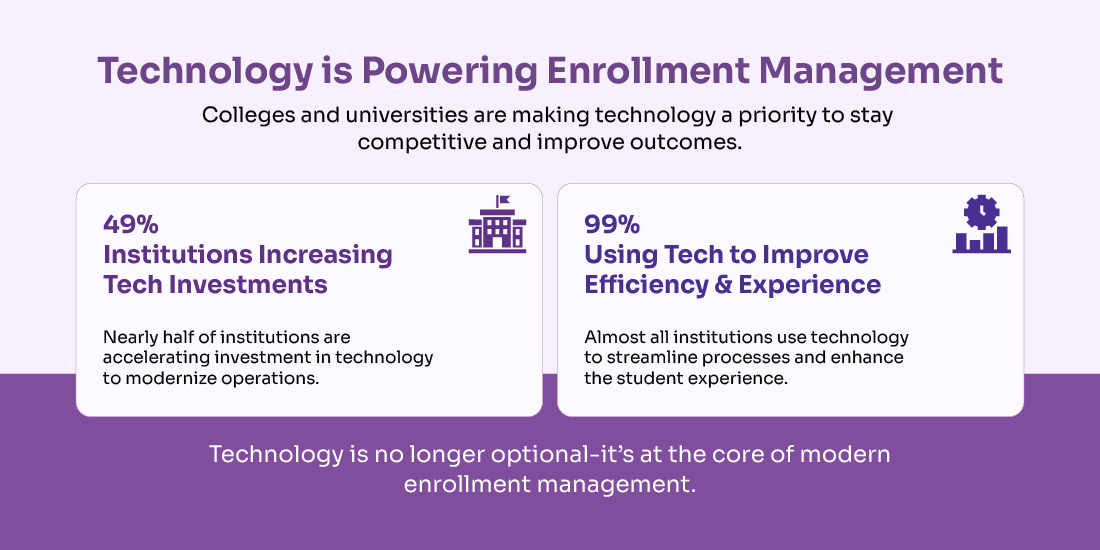
Technology is reshaping how colleges and universities manage enrollment. Institutions increasingly use data analytics to understand student behavior, forecast trends, and improve recruitment and retention strategies. Tools like online enrollment systems, AI chatbots, and virtual campus experiences make admissions more efficient and accessible. Data shows that student engagement, such as volunteering, can positively impact retention rates. With 49% of institutions increasing tech investments and 99% using it to enhance efficiency, technology is becoming central to enrollment management.
Personalization and Targeted Engagement
Generic recruitment strategies are no longer effective. Institutions are shifting toward personalized communication to better connect with students. By understanding individual preferences, colleges can tailor emails, website experiences, and outreach campaigns. This approach not only improves engagement but also increases conversion and retention rates.
Growing Importance of Digital Marketing and Social Media
Digital platforms have become key tools for enrollment marketing. Colleges and universities use social media channels like Instagram, Facebook, and X to connect with prospective students. By sharing stories, student achievements, campus experiences, and success highlights, institutions build authentic engagement and strengthen their brand. About 51% of institutions now use AI-driven social media tools, demonstrating that digital marketing has become a central part of modern student recruitment strategies.
Stronger Collaboration Between Admissions and Marketing Teams
Breaking down silos between admissions and marketing is becoming a top priority for institutions. Close collaboration ensures consistent messaging and a cohesive recruitment strategy. Admissions teams offer insights into student needs, while marketing teams design compelling communications. Together, they create a seamless and engaging enrollment experience.
Focus on Inclusive Enrollment Practices
Diversity, equity, and inclusion are now central to enrollment strategies. Institutions are actively working to remove barriers and create more accessible pathways to higher education. Initiatives such as targeted outreach programs, scholarships, and mentorship opportunities help attract underrepresented groups. These efforts not only improve access but also enrich the overall learning environment.
Adapting to External Influences
Enrollment trends are increasingly affected by external factors such as economic shifts, societal changes, and global events. Institutions that remain flexible and responsive are better positioned to navigate uncertainty. Continuous monitoring, data-driven analysis, and timely strategic adjustments are key to staying competitive. For example, the Institute of International Education reports a 17% decline in newly enrolled international students at U.S. colleges in fall 2025, largely due to visa policy changes and global uncertainties.
Expansion of Dual Enrollment Programs
Dual enrollment programs are increasingly being used as an effective recruitment strategy. Many institutions, particularly four-year universities, now allow high school students to take college-level courses, giving them early exposure to campus life and academic expectations. This experience builds familiarity and confidence, positively influencing students’ decisions to enroll. Studies show that smooth pre-enrollment experiences, including the application process, significantly shape student choices. Additionally, students who participate in dual enrollment are more likely to enroll in college immediately after high school and pursue post-secondary credentials, making it a valuable early recruitment tool.
How Modern Enrollment Trends Differ from Traditional Approaches
Student enrollment has always evolved alongside societal changes, but today’s transformation is more rapid and complex than ever before. Shifts in technology, student expectations, and market dynamics have significantly altered how students explore and choose educational institutions. Understanding these differences is essential for institutions aiming to stay relevant and competitive.
A More Digital, Self-Directed, and Non-Linear Decision Journey
In the past, students typically followed a structured path when choosing a college, often guided by counselors, parents, or teachers. Their options were limited, and decisions were usually based on a few campus visits and recommendations. Today, however, the journey is far more dynamic and self-driven. Students actively research multiple institutions across various digital platforms, explore reviews, and engage with current or former students through social media.
From Traditional Events to Instant, Personalized Digital Engagement
In the past, in-person events like college fairs and campus visits were central to student recruitment. While these remain important, there’s a clear shift toward digital engagement. Today’s students expect fast, convenient, and personalized communication through live chat, messaging platforms, and SMS campaigns. Institutions are leveraging these tools to provide real-time support, answer queries, and highlight resources such as faculty expertise and campus facilities.
Increased Competition in a Shrinking Applicant Pool
The higher education landscape has become significantly more competitive. While the number of institutions continues to grow, the pool of prospective students is not expanding at the same rate. Additionally, rising education costs and economic considerations are influencing student decisions more than ever before. This has intensified the pressure on institutions to differentiate themselves and clearly communicate their value. Even well-established institutions are rethinking their strategies to remain attractive and relevant in this competitive environment.
Shift from Mass Outreach to Targeted Engagement
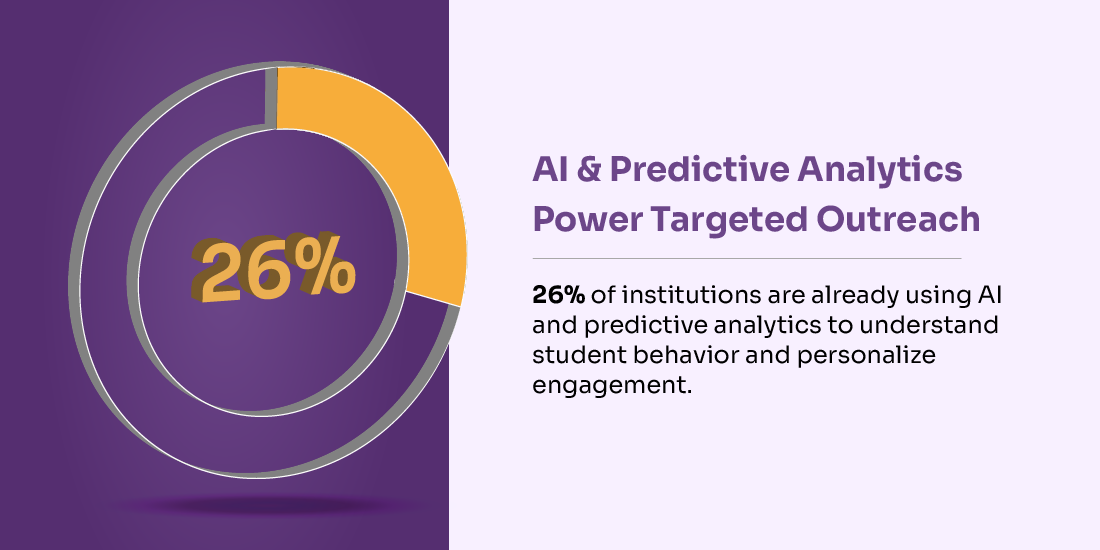
Traditionally, institutions relied on broad marketing strategies, such as distributing large volumes of brochures and promotional materials, to attract students. While this approach could generate enrollment, it often lacked precision. Today, institutions are focusing on quality over quantity by engaging with students who show genuine interest. By leveraging detailed data insights beyond basic demographics, enrollment teams can identify and connect with the right candidates more effectively, leading to better results and efficient use of resources. Around 26% of institutions are already using AI and predictive analytics to understand student behavior and enhance targeted outreach, highlighting the trend toward personalized engagement.
Enhanced Focus on Seamless Digital User Experience
Digital platforms, particularly institutional websites, have become central to the student decision-making process. A well-structured and user-friendly website not only attracts attention but also guides students toward taking action, such as applying or exploring programs. Clear calls-to-action (CTAs) and regularly updated content are essential to ensure a smooth and informative experience. As students increasingly depend on online resources, providing a seamless digital journey has become a critical component of enrollment strategies.
Key Challenges in Managing Modern Enrollment
While today’s enrollment management trends are easy to understand, putting them into practice can be difficult. Many institutions face challenges due to limited resources, changing student behavior, and increased competition.
Limited Resources to Meet Enrollment Goals
Achieving enrollment targets has become harder with smaller teams and tighter budgets. Finding the right tools and creating effective messaging requires both time and investment. This challenge becomes even greater when decisions are based on incorrect assumptions. For instance, a drop in enrollment may seem like an economic issue, but could actually be due to changing demographics. To work efficiently with fewer resources, institutions need accurate data and clear strategies from the beginning.
Difficulty in Capturing Student Attention
In today’s crowded digital space, grabbing student attention is more challenging than ever. Institutions are not only competing with each other but also with endless online distractions. As a result, general or repetitive messaging often gets ignored. To stand out, institutions must focus on creating relevant and engaging content that truly connects with students and keeps them interested.
Turning Interest into Enrollment
Attracting student interest is just the first step; converting that interest into actual enrollment is much more challenging. Even highly engaged students may stop responding without any clear reason. Institutions often interact with students multiple times but still struggle to secure final decisions. This makes it important to identify serious prospects early and guide them with clear, personalized communication that encourages them to complete the enrollment process.
Effective Strategies to Strengthen Recruitment and Enrollment in 2026
Keeping pace with recruitment and enrollment in 2026 requires institutions to align with evolving technology and changing student expectations. Success depends on adopting timely, relevant, and student-focused strategies that not only attract interest but also convert it into enrollment.
Build Trust Through Genuine Communication
Authentic communication is essential for building trust with prospective students. Today’s students seek real and transparent insights into campus life, academics, and overall experiences from a student’s perspective. By sharing honest stories, clear institutional values, and practical details such as career opportunities, campus facilities, and daily student life, institutions can strengthen their credibility. Recent data indicate that while 62% of students report high trust in their institution, a significant number still express low trust, emphasizing the need for greater transparency. Clear, relevant, and honest communication helps address student concerns and fosters stronger, more meaningful connections.
Connect with Students at the Right Time
Timing is a key factor in effective student engagement. In a fast-paced digital environment, delayed or irrelevant communication can quickly lead to lost interest. Institutions must understand when students are most receptive, whether during early exploration stages or closer to application deadlines, and tailor their outreach accordingly.
Using data-driven insights enables institutions to initiate timely and meaningful conversations that resonate with students at each stage of their decision-making journey.
To further enhance this process, tools like EDMO Advisor Copilot help institutions seamlessly support applicants throughout their enrollment journey. It offers 24/7 automated student support, enabling instant responses to queries across multiple channels, reducing wait times, and improving engagement. With features like personalized outreach and lead scoring, institutions can prioritize high-potential students while maintaining consistent communication.
Offer Simple and Accessible Digital Tools
Providing easy-to-use digital tools is essential for a smooth and efficient enrollment experience. Features like mobile-friendly websites, virtual campus tours, and live chat support allow students to explore programs, campus life, and facilities at their convenience. These tools help students access information independently and build a stronger connection with the institution. This shift is supported by increasing digital adoption, with over 40% of institutions using AI and data tools for student analytics and support, enhancing responsiveness and personalized engagement.
Enhance Early Engagement with Digital Experiences
Creating engaging digital experiences helps institutions capture student interest early in the decision-making process. Features like virtual campus tours, video testimonials, and interactive maps allow students to visualize themselves as part of the institution. These experiences make it easier for students to connect emotionally and academically with the campus. By investing in strong digital engagement, institutions can remain top-of-mind and reduce the likelihood of students shifting their interest to competing options.
What the Future Holds for Enrollment Management
As enrollment strategies continue to evolve, several key trends are expected to shape the future of how institutions attract and retain students. These trends highlight the growing role of technology, personalization, and inclusivity in higher education.
AI-Driven Personalization
Artificial Intelligence is set to play a major role in personalizing student experiences. Institutions are increasingly using AI to analyze student data and deliver tailored communication at scale. In fact, around 65% of higher education professionals are already using AI in marketing and enrollment efforts, showing rapid adoption of these technologies.
To support this shift, tools like EDMO Student Copilot enable institutions to deliver instant answers and proactive guidance throughout the enrollment process. With omnichannel communication across voice calls, SMS, and WhatsApp, it ensures students can connect through their preferred platforms. Its 24/7 assistance and personalized guidance help provide timely updates, maintain consistent messaging, and enhance the overall student experience while improving engagement and reach.
Shift Toward Digital-First Experiences
Although in-person interactions remain important, students are increasingly relying on digital platforms when exploring institutions. Virtual tours, online resources, and interactive content allow students to evaluate options conveniently from anywhere. As a result, institutions must prioritize strong digital experiences to stay competitive.
More Relevant and Targeted Communication
Students today expect communication that is meaningful and relevant to their needs. Some may prioritize academic quality, while others focus on financial aid, campus culture, or career opportunities. By using student data to segment audiences, institutions can deliver more focused and impactful messaging that stands out and builds stronger engagement.
Greater Focus on Accessibility
Accessibility is becoming a critical factor in enrollment strategies. A significant number of students require support services or accessible infrastructure. Institutions that provide inclusive facilities such as assistive technologies, accessible learning environments, and physical accommodations can create a more supportive experience and attract a wider range of students.
Better Collaboration Across Departments
Breaking down silos between departments is essential for effective enrollment management. Teams across marketing, admissions, and leadership need to work together to ensure consistent messaging and a smooth student experience. Strong collaboration helps institutions respond more effectively to changing trends and student expectations.
Conclusion
Enrollment management in 2026 will demand a proactive and strategic approach. Institutions that leverage technology, analyze data effectively, and prioritize student engagement will be better positioned to achieve their enrollment goals. Adapting to trends such as virtual recruitment, personalized communication, and evolving student expectations will not only help attract the right students but also improve retention and long-term success. By staying informed and flexible, higher education institutions can navigate the changing landscape and build sustainable enrollment strategies.
Frequently Asked Questions
Question 1. What are the forces defining Higher Education in 2026?
Question 2. What role does financial aid play in enrollment management?
Question 3. What are the best tools and software for enrollment management?
Question 4. How is student behavior influencing enrollment strategies?
Question 5. What trends are shaping virtual recruitment in higher Ed?
Written By



No comments yet. Be the first to comment!
Leave a Comment