

Table Of Contents
- 1Introduction
- 2What Is Enrollment Yield Management?
- 3The Importance of Enrollment Yield Management
- 4Key Factors Around Enrollment Yield Management
- 5How to Measure Enrollment Yield
- 6Strategies for Handling Over-Enrollment in Universities
- 7Strategies to Overcome Under-Enrollment in Higher Education
- 8Challenges in Enrollment Yield Management
- 9The Evolving Future of Yield Management in Higher Education
- 10Conclusion
Introduction
In today’s competitive higher education landscape, attracting applicants is no longer enough; institutions must successfully convert admitted students into enrolled students. This is where Enrollment Yield Management becomes essential. It focuses on understanding and improving the percentage of admitted students who choose to enroll, a metric known as student yield.
By analyzing yield rates, tracking student behavior, and refining recruitment strategies, colleges can better predict enrollment outcomes and reduce uncertainty. Effective yield management not only strengthens admissions performance but also supports financial planning, institutional reputation, and long-term growth.
What Is Enrollment Yield Management?
Enrollment yield management is a strategic approach used by colleges and universities to increase the percentage of admitted students who choose to enroll. It focuses on understanding student behavior and using data-driven strategies to improve commitment rates.
Institutions analyze historical yield data to identify trends and patterns. They often segment admitted students based on their likelihood to enroll and apply targeted strategies such as personalized communication, financial aid adjustments, scholarship offers, and engagement campaigns.
The primary goal of enrollment yield management is to optimize incoming class size and composition while ensuring institutional resources are used efficiently. By combining data analytics, predictive modeling, and proactive engagement efforts, colleges can make informed decisions that strengthen enrollment outcomes and support long-term institutional stability.

The Importance of Enrollment Yield Management
Enrollment yield management is a crucial strategy in higher education that focuses on converting admitted students into enrolled students. It impacts not only an institution’s finances but also its reputation, student diversity, and overall campus vitality. By managing yield effectively, colleges can attract the right students and ensure long-term institutional success.
Financial Stability and Planning
A strong enrollment yield provides predictable tuition revenue, enabling institutions to plan their budgets with confidence. It ensures resources are allocated efficiently across programs, scholarships, and campus facilities. Reliable revenue also allows schools to invest in strategic growth initiatives and academic excellence.
Institutional Reputation and Ranking
High yield rates reflect strong student preference and institutional desirability, which positively influence perceptions of quality and selectivity. Prestigious universities such as Harvard consistently report yield rates above 80%, highlighting their strong demand and competitive appeal. Sustained high yield rates contribute to maintaining strong rankings, enhancing institutional reputation, and attracting distinguished faculty, research funding, and high-achieving students.
Student Diversity and Campus Engagement
A strong enrollment yield is often associated with a diverse and highly committed incoming class, including domestic and international students. Diverse student cohorts enhance campus life by fostering cultural exchange, inclusive learning environments, and broader perspectives. This diversity strengthens academic discussions and promotes meaningful campus engagement.
Data-Driven Decision Making
Monitoring enrollment yield enables institutions to identify trends, assess recruitment performance, and address gaps in their admissions strategies. By analyzing data insights, admissions teams can refine marketing campaigns, improve outreach efforts, and adjust admissions policies. Timely, data-backed decisions significantly increase the chances of converting admitted students into enrolled students.
Enhanced Recruitment and Retention
Strategic marketing, personalized communication, and engaging campus experiences play a vital role in improving student conversion rates. Institutions that focus on attracting students who align with their academic strengths and campus culture tend to see stronger retention and satisfaction levels. In fact, 65% of prospective students are more likely to enroll when they receive personalized and targeted marketing, highlighting the impact of tailored engagement strategies.

Long-Term Institutional Growth
High enrollment yield strengthens alumni networks, donor engagement, and overall institutional support. It serves as a key indicator of institutional health and sustainability during challenging periods. A consistently strong yield helps schools maintain stability and pursue long-term growth strategies.
By analyzing, monitoring, and optimizing yield, colleges can build a diverse, engaged, and high-achieving student body while ensuring long-term success.
Key Factors Around Enrollment Yield Management
Enrollment yield management focuses on analyzing and improving the percentage of admitted students who decide to enroll. Student decisions are influenced by factors such as financial aid, engagement throughout the admissions process, and the institution’s program reputation. By focusing on these, institutions can encourage more admitted students to accept their offers.
Financial Aid and Scholarships
The availability and structure of financial aid packages significantly affect enrollment decisions. Prospective students often compare cost versus perceived value before committing. Institutions can strategically use scholarships and merit-based aid to improve yield among top candidates. Transparent and competitive financial aid offerings make enrollment more likely.
Communication and Follow-Up
Personalized communication plays a crucial role in improving enrollment yield. Instead of sending generic messages, institutions can tailor emails, calls, and updates based on a student’s program interest, location, or stage in the application process. Timely follow-ups, deadline reminders, and financial aid updates help students stay informed and reduce uncertainty. When students feel recognized and supported, they are more likely to develop trust and commit to enrollment.
Campus Engagement and Communication
Student engagement significantly influences a candidate’s final decision. Campus visits, virtual tours, and admitted-student events allow students to experience the institution’s environment and culture firsthand. Interactions with faculty members, current students, and alumni help them visualize their academic and social life on campus. A positive and welcoming experience builds emotional attachment, increasing the likelihood that admitted students choose to enroll.
Academic Program Appeal
The relevance, uniqueness, and perceived quality of academic programs influence a student’s choice to enroll. Programs aligned with career outcomes, industry trends, and experiential learning opportunities attract more committed applicants. Institutions with distinctive offerings or new innovative programs often see improved yield. Clear communication of program strengths is key to influencing decisions.
Institutional Reputation and Rankings
Perception of quality, prestige, and recognition strongly impacts enrollment decisions. Students and families often rely on national rankings, reviews, and alumni outcomes to evaluate institutions. A strong reputation increases confidence in investment and encourages commitment. Institutions can leverage their achievements to enhance perceived value and improve yield.
Admission Selectivity
The level of selectivity directly affects yield, as highly selective institutions often see higher enrollment from admitted students. When students perceive an offer as prestigious or competitive, they are more likely to accept. For example, Harvard’s Class of 2029 showed a 90.3% yield among international students, well above its overall yield, highlighting the influence of selectivity. Balancing selectivity with enrollment targets is crucial to maintain both quality and quantity of incoming students.
How to Measure Enrollment Yield
To optimize enrollment yield, institutions first need to measure and understand their current performance. The calculation is simple: divide the number of students who enroll by the number of students admitted, then multiply by 100 to get a percentage.
Enrollment Yield (%)= Admitted Students / Enrolled Students × 100
Example: If a college admits 1,000 students and 500 of them enroll, the yield rate is 50% (500 ÷ 1,000 × 100).
Measuring enrollment yield allows institutions to evaluate the effectiveness of their recruitment strategies and identify areas for improvement. Since yield can vary across programs, majors, and student demographics, it is important to analyze rates at a detailed level for more accurate insights.
Strategies for Handling Over-Enrollment in Universities
Over-enrollment occurs when more students accept admission offers than a university can accommodate. This can strain housing, classrooms, faculty, and campus resources. Implementing effective strategies helps institutions balance student numbers, maintain academic quality, and ensure a positive campus experience for all enrolled students.
Expanding Housing and Academic Capacity
When more students enroll than expected, universities can face over-enrollment that strains housing, classrooms, and faculty. To address this, institutions may expand dormitory space, add extra class sections, and hire additional faculty. Short-term solutions like leasing nearby apartments or partnering with local hotels provide immediate relief. Offering hybrid and online courses helps reduce classroom congestion.
Strengthening Waitlist and Deferral Strategies
Effectively using waitlists and deferral policies allows universities to manage class sizes while still admitting qualified students. Encouraging deferrals to spring or summer terms helps spread enrollment more evenly throughout the year. Clear and transparent communication ensures students understand their options. Institutions can also offer incentives such as priority course registration, guaranteed housing, or financial benefits to those who defer.
Optimizing Financial Aid and Scholarship Allocation
Over-enrollment can strain financial aid budgets, so universities must manage funds strategically. Prioritizing need-based aid ensures support reaches students who need it most, while alternative incentives like work-study, campus jobs, or tuition discounts can help balance enrollment.
Implementing tiered scholarship models allocating certain awards to deferred students or less impacted programs helps distribute resources effectively while meeting enrollment goals. Many top U.S. colleges have expanded aid policies to increase access for low-income students; for example, Princeton now reports that 25% of its incoming class is Pell Grant eligible, up from under 10% two decades ago.
Expanding Hybrid and Online Learning Models
Hybrid and online learning offer scalable solutions to accommodate more students without overwhelming campus facilities. Online courses reduce classroom congestion and provide students with flexible learning options. Investing in high-quality digital programs helps universities manage over-enrollment and adapt to changing student demand.
Hybrid models also improve retention by offering multiple pathways to complete degrees. By 2023, 53% of students participated in distance education, up from 36% in 2019, reflecting growing acceptance and demand for flexible learning.
Strategies to Overcome Under-Enrollment in Higher Education
Under-enrollment occurs when institutions enroll fewer students than projected, leading to revenue shortfalls and underutilized campus resources. By implementing targeted recruitment efforts, strengthening student engagement, and refining financial aid strategies, colleges and universities can stabilize enrollment numbers and support sustainable institutional growth.
Re-Engaging Waitlisted and Deferred Applicants
When under-enrollment occurs, engaging waitlisted and deferred applicants can help stabilize student numbers. A structured re-engagement strategy with personalized communication, updated program information, and targeted financial incentives encourages students to confirm enrollment.
Timely and transparent outreach is essential, highlighting benefits like priority housing, early course registration, or guaranteed scholarships. Such efforts can significantly boost conversion rates. Universities like Duke and Rice have successfully used late-stage waitlist offers and one-time financial grants to increase incoming class sizes. This approach is especially effective when yield projections are uncertain.
Implementing Late-Stage Recruitment and Yield Optimization Tactics
Targeted, last-minute recruitment initiatives can effectively reduce enrollment gaps. Institutions can deploy yield-boosting strategies such as limited-time financial incentives, individualized outreach campaigns, and exclusive campus or virtual events for admitted students.
Personalized phone calls, peer mentorship programs, and interactive admitted-student sessions both virtual and in-person can address concerns, strengthen institutional fit, and increase the likelihood of enrollment.
Enhancing Student Engagement and Communication Strategies
Regular and personalized communication significantly improves enrollment outcomes. Institutions that engage admitted students through emails, calls, texts, social media, and virtual events build stronger trust and connection.
Research shows that many students rely on chat features during their college search, with about 90% finding chatbot interactions helpful. Tools like EDMO Student Copilot, a student-facing omnichannel bot, enhance engagement by providing real-time updates and resolving queries. It also automates personalized messaging and tracks interactions, supporting better recruitment and retention results.
Building Strong Transfer Pathways and Community College Partnerships
Formal transfer agreements with community colleges create a steady pipeline of students and reduce reliance on first-year admissions. Clear academic pathways help students transition smoothly into four-year programs.
Streamlined credit transfers, dedicated advising, and targeted scholarships make institutions more attractive to transfer students. Georgia Tech, for example, uses AI tools to review transfer transcripts efficiently. EDMO Application Evaluator further enhances this process by instantly analyzing SOPs, LORs, transcripts, and resumes. It highlights applicant strengths, reduces errors, and provides actionable insights for faster and fairer admission decisions.
Challenges in Enrollment Yield Management
While yield management is critical for maintaining stable enrollment, it also presents several strategic and operational challenges for institutions. Managing uncertainties in student decision-making, financial constraints, and competitive pressures requires careful planning and continuous adjustment of recruitment strategies.
Key External Challenges
- Unpredictable Student Behavior: Student enrollment decisions are increasingly unpredictable, largely due to rising financial pressures and the availability of alternative education pathways. According to the Ellucian Student Voice Report 2025, more than 56% of students who chose not to enroll cited cost and financial concerns as the primary reason. Similarly, 53% of high school students who do not plan to attend college identify affordability as their main barrier. These financial uncertainties significantly impact yield rates, as admitted students may delay their decision or decline offers due to cost considerations.
- Economic Fluctuations: Shifts in economic conditions such as inflation, employment trends, and changes in household income directly influence students’ ability to pursue higher education. During periods of economic uncertainty, institutions may see higher demand for financial aid, delayed enrollment decisions, or increased deferrals, all of which can affect yield rates.
- Rising Competition: Growing competition from domestic and international universities, online degree providers, and alternative education pathways has intensified the challenge of maintaining stable yield rates. As students explore more options, institutions must strengthen their value proposition and engagement strategies to remain competitive and attract committed enrollments.
Internal Institutional Challenges
- Resource Misalignment: Enrollment goals do not always align with available institutional resources such as housing capacity, faculty availability, classroom space, or financial aid budgets. Without coordinated planning across departments, institutions may face operational strain or underutilized resources. Effective collaboration between admissions, academic, and financial teams is essential to maintain balanced and sustainable enrollment.
- Evolving Student Expectations: Today’s students expect personalized communication, flexible learning formats, and clear, transparent financial aid processes. Institutions must continuously adapt their recruitment and engagement strategies to meet these expectations. A 2025 engagement study found that 61% of students prefer personalized content, yet they are cautious about sharing personal data, 59% are comfortable sharing their email address, while only 32% are willing to share their home address. This highlights the importance of thoughtful and secure digital engagement strategies.
- Demographic Shifts: Changes in population trends and geographic mobility patterns significantly impact enrollment markets. Declining birth rates in some regions and shifting migration patterns require universities to reassess their recruitment territories and target audiences regularly.
To overcome these obstacles, institutions must adopt a flexible and data-driven approach. Continuous monitoring of enrollment data, predictive analytics, and cross-departmental collaboration can help universities adjust strategies in real time.
The Evolving Future of Yield Management in Higher Education
Yield management in higher education is entering a new phase driven by data, technology, and changing student expectations. Institutions are moving beyond traditional forecasting methods and adopting more advanced, AI-powered strategies to improve enrollment outcomes.
Growth of AI-Driven Admissions Strategies
Artificial intelligence and machine learning are playing an increasingly important role in admissions and enrollment planning. Universities are using predictive analytics to:
- Forecast enrollment trends more accurately
- Identify students who are most likely to enroll
- Optimize financial aid allocation
- Detect potential melt risks early
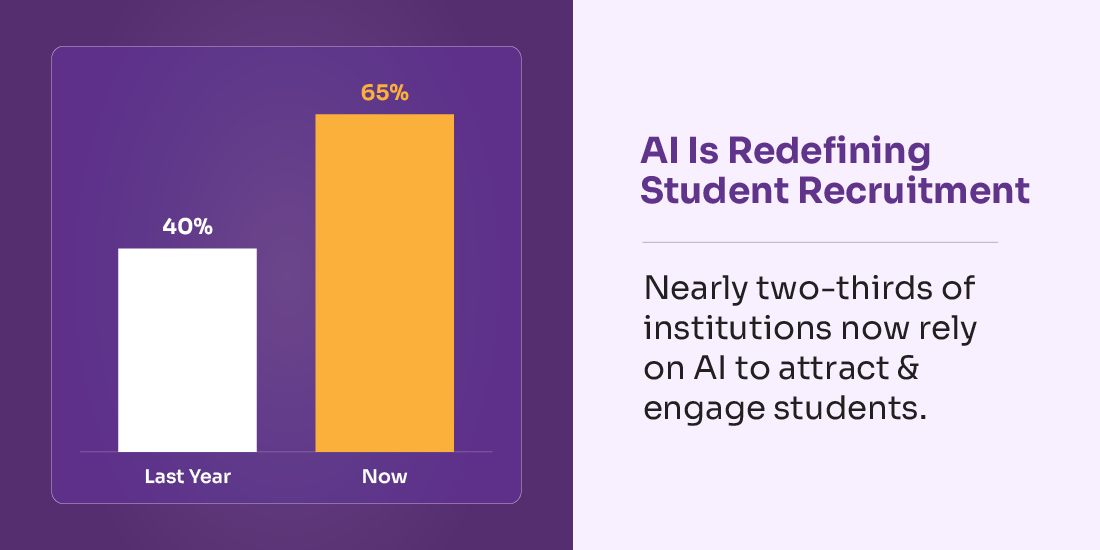
By analyzing historical data, behavioral patterns, and student engagement metrics, institutions can make more informed decisions and strengthen overall yield rates. Recent data shows that 65% of institutions now actively use AI technologies in recruitment and engagement functions, up from 40% just one year earlier.
Personalized Student Engagement
AI-powered systems enable institutions to deliver more personalized communication and financial aid offers based on each applicant’s behavior and engagement. By combining predictive analytics with CRM data, universities gain deeper insights into student preferences and enrollment likelihood. Research shows that integrating AI with CRM tools can improve yield forecasting accuracy from around 60% to 85%. As a result, institutions can better anticipate enrollment decisions and make proactive adjustments to strengthen overall outcomes.
Expansion of Digital and Social Media Influence
Digital engagement channels such as social media platforms, virtual campus tours, chatbots, and online events now play a major role in shaping enrollment decisions. Students increasingly depend on digital content to explore institutions, compare programs, and interact with current students. Research shows that 65% of students say a virtual tour increased their likelihood of applying, highlighting the impact of online experiences. To stay competitive, universities must integrate digital marketing, real-time communication tools, and data-driven engagement strategies into their recruitment approach.
Adapting to Demographic and Preference Shifts
Changing demographics and evolving student preferences are reshaping enrollment strategies across higher education. Declining birth rates in certain regions, growing demand for flexible learning options, and increased interest in career-oriented programs are influencing student choices. As a result, institutions must regularly reassess their target markets, recruitment approaches, and academic offerings.
Institutions that remain flexible, data-driven, and innovative will be better positioned to manage uncertainty and sustain long-term enrollment stability.
Conclusion
Enrollment Yield Management is not just about measuring statistics; it is a strategic process that supports institutional stability and growth. By carefully tracking yield rates, understanding student behavior, and applying targeted recruitment and engagement strategies, colleges can improve enrollment outcomes and reduce uncertainty. A strong yield rate reflects an institution’s appeal and competitiveness while also strengthening financial planning and resource management.
Frequently Asked Questions
Question 1. What is the yield rate in college admissions?
Question 2. Why Do Yield Rates Matter to Colleges?
Question 3. Which Colleges Have the Highest Yield Rates?
Question 4. What Is a Good Yield Rate for University Admissions?
Question 5. What Is the Difference Between Yield Rate and Acceptance Rate?
Written By


You May Also Like
 Study Abroad

 Study Abroad

 AI in Education



No comments yet. Be the first to comment!
Leave a Comment