


Table Of Contents
- 1Introduction
- 2Understanding Cloud Computing in Higher Education
- 3Common Cloud Platforms Used by Universities
- 4Enhancing University Capabilities with Cloud Computing
- 5Major Benefits of Cloud Computing in Higher Education
- 6Key Considerations Before Implementing Cloud Computing
- 7Challenges of Cloud Computing in Education
- 8Best Practices for Implementing Cloud Computing in Higher Education
- 9Future Trends of Cloud Computing in Higher Education
- 10Conclusion
Introduction
Cloud computing has become a transformative technology for higher education institutes, enabling universities and colleges to deliver flexible, scalable, and cost-effective digital solutions. By moving infrastructure, applications, and data to the cloud, institutions can enhance teaching, research, and administrative operations while supporting remote and hybrid learning models.
From AI-driven learning tools and adaptive platforms to streamlined student information systems, cloud computing offers a wide range of benefits that improve accessibility, collaboration, and efficiency across campuses. This blog explores the key advantages of cloud adoption in higher education and highlights practical use cases shaping modern universities.
Understanding Cloud Computing in Higher Education
Cloud computing in higher education refers to the delivery of essential computing services such as data storage, databases, networking, and software applications through the internet rather than through locally hosted infrastructure. By adopting cloud technologies, universities and colleges can access powerful digital resources without maintaining extensive on-campus hardware systems.
Higher education institutions can implement different cloud models depending on their needs. These include public cloud services, private managed clouds, and hybrid cloud environments that combine both approaches. One of the key advantages of this model is that it converts large capital investments in IT infrastructure into more flexible operational expenses. As a result, universities can scale their computing resources up or down based on demand, making it easier to support fluctuating workloads such as online learning, research activities, and administrative operations.

Common Cloud Platforms Used by Universities
Many universities rely on cloud technology to support teaching, research, and administration. Cloud-hosted platforms enable institutions to manage digital learning environments and institutional data efficiently while improving accessibility for students and faculty. Examples of cloud-based systems commonly used in higher education include:
- Learning Management Systems (LMS) hosted in the cloud for delivering online courses and managing academic content
- Education analytics platforms that analyze student performance and engagement data
- Research computing clusters that provide scalable processing power for complex research projects
- Student Information Systems (SIS) that manage admissions, enrollment, and student records
- Collaboration tools and video streaming services that support remote learning and hybrid classrooms
Many LMS and SIS vendors also provide fully hosted cloud solutions, helping institutions reduce technical complexity while ensuring reliable access to digital learning tools.
Enhancing University Capabilities with Cloud Computing
Cloud computing has become an essential technology for modern universities as they manage growing volumes of data, digital learning platforms, and complex research projects. By shifting infrastructure and services to the cloud, institutions can scale their resources efficiently, reduce dependence on physical hardware, and provide reliable digital access to students and faculty.
Improving Data Storage and Accessibility
Universities generate large volumes of data every day, including lecture recordings, research datasets, administrative documents, and assessment materials. Cloud storage solutions help institutions manage this growing data efficiently without the need for frequent investments in physical infrastructure. By storing information in the cloud, universities can replicate data across multiple locations, improving reliability and disaster recovery. It also allows students, faculty, and administrators to access information from different geographic locations with ease.
Strengthening E-Learning and Learning Management Systems
Cloud computing provides robust support for Learning Management Systems (LMS) and online learning platforms in higher education. It ensures that digital courses remain accessible even during peak usage periods, such as enrollment or exams.
Cloud infrastructure also enables seamless delivery of multimedia content and easy integration with third-party learning tools. This allows educators to update course materials, test new features, and monitor system performance efficiently, creating a more flexible and dynamic learning environment.
Promoting Collaboration Between Students and Faculty
Cloud platforms make collaboration easier by removing geographical and departmental barriers. Researchers can quickly deploy high-performance computing resources for short-term projects, while faculty members can work together on shared research data and teaching materials.
Students can also access virtual lab environments from dormitories, fieldwork locations, or international study sites. As more universities adopt cloud-based services, collaborative research and learning become more efficient, enabling interdisciplinary work and strengthening global academic partnerships.
Supporting Research and University Administration
Cloud computing enables universities to conduct large-scale research without the need for costly local infrastructure. Cloud-based computing clusters efficiently support simulations, genomic analysis, and machine learning projects, providing scalable resources on demand. Administratively, cloud-hosted student information systems automate processes such as admissions, enrollment, payments, and reporting, streamlining academic and operational workflows. In fact, surveys indicate that 88% of universities have already migrated at least a quarter of their applications to the cloud, highlighting the growing impact of cloud platforms on both academic and administrative operations.

Growing Partnerships with Cloud Service Providers
Universities are increasingly forming strategic partnerships with cloud service providers to accelerate digital transformation. Many providers now offer education-focused programs that include cloud usage credits, technical training for staff, and pre-designed system architectures that simplify compliance requirements. These collaborations help universities adopt cloud computing solutions more efficiently while minimizing risks and ensuring that institutional data and systems remain secure.
Major Benefits of Cloud Computing in Higher Education
Cloud computing is transforming how educational institutions manage technology, deliver learning resources, and support academic collaboration. By shifting systems and services to cloud platforms, universities and schools can improve efficiency, reduce infrastructure costs, and provide flexible access to digital learning tools.
Long-Term Cost Efficiency
One of the primary benefits of cloud computing in education is long-term cost efficiency. Traditional on-premise infrastructure requires significant investment in servers, storage systems, and maintenance. Cloud platforms reduce these expenses by allowing institutions to pay predictable operational costs rather than large upfront investments. This approach also minimizes spending on hardware upgrades and data center maintenance.
Improved Collaboration
Cloud computing enables better collaboration between students, teachers, and administrators. Cloud-based platforms allow users to share documents, work on projects simultaneously, and communicate in real time from different locations. Educational institutions can also develop centralized portals that support virtual classrooms and interactive learning activities. These tools make it easier for educators and learners to stay connected and exchange ideas.
Enhanced Access to Learning Resources
Cloud-based education platforms provide easier access to academic materials and digital resources. Students can access lectures, assignments, and course content from multiple devices such as laptops, tablets, or smartphones. This flexibility ensures that learning resources remain available regardless of location or device type. Cloud systems also support accessibility standards that help students with disabilities access educational content more effectively. Consequently, cloud technology promotes a more inclusive and flexible learning environment.
Scalability and Flexibility
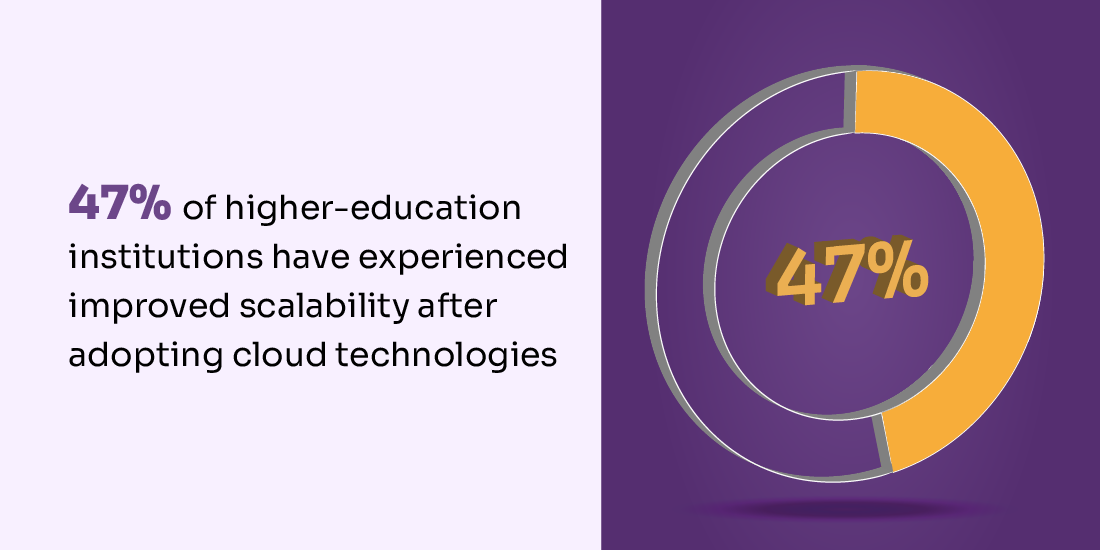
A key advantage of cloud computing for universities is its ability to scale resources according to demand. Institutions can expand storage, computing power, or platform availability during peak periods such as admissions or examination seasons. This ensures that systems remain stable and responsive even under high user loads. Cloud infrastructure also allows universities to adjust resources quickly without heavy investment in physical hardware. Reports indicate that 47% of higher-education institutions have experienced improved scalability after adopting cloud technologies, making it easier to manage growth and digital services efficiently.
Key Considerations Before Implementing Cloud Computing
Before adopting cloud computing solutions, educational institutions must consider several operational and financial factors. Careful planning helps universities ensure that cloud migration aligns with their long-term digital strategies and institutional requirements.
Selecting the Right Cloud Provider
Choosing the right cloud service provider is a critical decision for institutions. The provider should offer reliable services, strong security measures, and technical support that meets the institution’s needs. Universities must evaluate factors such as service reliability, compliance standards, and data management policies. A well-selected provider can reduce risks and ensure smooth system performance.
Long-Term Vendor Agreements
Most cloud services operate through long-term contracts between the institution and the provider. These agreements may include specific service terms and penalties for early termination. Institutions should review contract conditions carefully before committing to a provider. Understanding the terms of service helps universities avoid unexpected financial or operational issues in the future.
Security Planning and User Training
Security must be a priority when implementing cloud systems. Institutions should establish clear policies for protecting data and controlling user access to cloud platforms. Training students, faculty, and staff in cybersecurity practices is also important to prevent unauthorized access or accidental data exposure. Proper security planning helps ensure safe and reliable use of cloud technologies.
Initial Implementation and Migration Costs
While cloud computing can lower long-term operational expenses, the initial migration often requires significant investment. Universities may need to allocate funds for system migration, staff training, and infrastructure upgrades to ensure a smooth transition. Careful planning is essential to manage these upfront costs effectively.
Over time, cloud adoption typically leads to cost savings through increased efficiency and reduced hardware maintenance. Surveys show that 44% of higher-education institutions cite high on-premises investment costs as a maintenance challenge, while 38% report total cost-of-ownership benefits from using public cloud services.
Challenges of Cloud Computing in Education
Although cloud computing provides many advantages for educational institutions, it also introduces several challenges that universities must manage carefully. These challenges are mostly related to connectivity, security, and institutional dependence on external service providers.
Dependence on Internet Connectivity
Cloud computing relies heavily on stable internet access because most services and applications operate online. If internet connectivity is slow or interrupted, students and faculty may face difficulties accessing learning platforms and academic resources. Such disruptions can affect online classes, digital assessments, and communication systems.
Limited Control Over Infrastructure
Adopting cloud services means that the majority of infrastructure management, maintenance, and updates are handled by the cloud provider. While this reduces the technical workload for university IT teams, it also limits their ability to control system configurations and schedule upgrades. Institutions must rely on providers for timely updates and system changes, which can impact flexibility.
A survey on digital transformation in higher education found that over 41% of universities expressed concerns about losing control over IT infrastructure after moving to the cloud. This highlights the trade-off between convenience and direct oversight when adopting cloud solutions.
Vendor Dependence
Another challenge of cloud adoption is reliance on a single service provider. Once an institution migrates its data, applications, and systems to a specific cloud platform, changing providers can become difficult and time-consuming. This dependence may limit institutional flexibility in choosing alternative technologies or services.
Data Security Risks
While cloud platforms provide robust security features, storing university data online can increase exposure to cyber threats if not managed properly. Higher education institutions handle sensitive information, including student records, research data, and administrative documents.
Without proper security measures, cloud systems may be vulnerable to breaches or unauthorized access. Implementing strong cybersecurity practices is essential to protect institutional data and maintain trust. In fact, recent reports show that around 70% of schools experienced at least one cyberattack in the past year, emphasizing the critical need for secure cloud management.
Best Practices for Implementing Cloud Computing in Higher Education
To fully benefit from cloud technology, universities must adopt strategic approaches that ensure efficiency, scalability, and data security. CIOs and IT teams should focus on practices that support smooth cloud integration while improving the learning and administrative environment. The following best practices can help institutions successfully implement and manage cloud computing systems.
Implement a Multi-Cloud Strategy
Universities should adopt a multi-cloud strategy that leverages services from multiple providers rather than relying on a single platform. Each cloud provider offers unique features and capabilities that can support diverse academic and administrative needs.
By combining multiple cloud services, institutions can create a more flexible, resilient, and scalable digital infrastructure. Cloud-delivered applications can be integrated with services such as Microsoft OneDrive and Google Drive. This integration also supports learning management systems like Canvas LMS and Blackboard Learn, ensuring a seamless digital learning experience.
Build Strong Vendor Partnerships
Developing long-term partnerships with technology vendors is crucial for effective cloud adoption in universities. Many institutions operate with limited IT staff, making external expertise valuable for managing complex cloud systems.
Vendors can provide managed services, pre-configured software, and timely system updates to reduce operational burdens. Strong partnerships also give universities access to innovative tools and reliable technical support. This allows internal IT teams to focus on enhancing digital learning services rather than handling routine technical tasks.
Prioritize Security and Regulatory Compliance
Security and regulatory compliance must remain a top priority when adopting cloud technologies in higher education. Universities store sensitive data, including student records, research information, and financial details, making strong governance essential. Institutions should comply with international regulations such as the General Data Protection Regulation (GDPR) while enforcing encryption, identity management, and real-time threat monitoring. For instance, a cyberattack at the University of Sydney exposed personal data of around 27,000 individuals, highlighting the need for robust data protection strategies.
Use Automation and Monitoring Tools
Automation and monitoring tools are essential for efficiently managing cloud environments in universities. These tools provide real-time insights into system performance, resource usage, and operational costs, helping IT teams optimize cloud resources. Cloud management platforms also track application usage across departments, enabling smarter allocation of software and services. Automated delivery systems prioritize resources based on demand, ensuring students and faculty have timely access to necessary tools. Surveys indicate that 65% of organizations report increased operational efficiency after adopting cloud technologies, largely due to automation and advanced monitoring capabilities.
Future Trends of Cloud Computing in Higher Education
Cloud computing is expected to play an increasingly important role in shaping the future of universities. As institutions continue to adopt digital technologies, cloud infrastructure will support advanced learning tools, flexible education models, and integrated campus systems.
The following trends highlight how cloud computing will influence the development of higher education in the coming years.
Integration with Artificial Intelligence and Adaptive Learning
Cloud computing is making AI and adaptive learning tools more accessible for universities, enabling the deployment of systems for automated tutoring, performance analytics, and personalized learning pathways. These tools analyze student progress and adjust instructional content to meet individual learning needs.
For example, at Georgia State University, AI chatbots handle routine advising and financial aid inquiries, allowing staff to focus on more complex student interactions. Platforms like EDMO Student Copilot further enhance enrollment by delivering instant answers, 24/7 assistance, and personalized guidance across voice calls, SMS, and WhatsApp. This ensures consistent messaging, wider reach, and timely updates, providing a smoother student experience
Expansion of Hybrid and Remote Learning Models
Cloud-based platforms enable universities to support both synchronous and asynchronous learning environments. This allows institutions to develop hybrid classrooms where students can participate either on campus or remotely.
Such flexibility expands educational access to international students, working professionals, and lifelong learners. Cloud technology also supports modern credentialing models such as micro-credentials and stackable certificates.
Development of Digital Campus Ecosystems
Cloud services are becoming the foundation of modern digital campus infrastructures. Universities are integrating platforms such as Canvas LMS and Blackboard Learn with systems like student information systems, identity management tools, and analytics platforms. This integration creates a connected ecosystem that improves communication and data sharing across departments.
Conclusion
Cloud computing is redefining how higher education institutes operate, offering scalable, secure, and efficient solutions for academic and administrative needs. By leveraging cloud technologies, universities can provide personalized learning experiences, enable collaborative research, and simplify operational processes while reducing dependency on physical infrastructure. As more institutions adopt multi-cloud strategies, automation tools, and AI-powered platforms, cloud computing is becoming a cornerstone of modern education.
Written By






No comments yet. Be the first to comment!
Leave a Comment