

Table Of Contents
- 1Introduction
- 2What Is Marketing Automation for Education?
- 3Key Advantages of Marketing Automation for Education
- 4Effective Strategies for Implementing Marketing Automation in Education
- 5Essential Marketing Automation Tools for Educational Institutions
- 6Future of Marketing Automation in Education
- 7Conclusion
Introduction
Higher education institutions today manage thousands of prospective student interactions across websites, emails, events, and applications. When marketing and admissions teams work in silos, important student data can be missed. By unifying marketing automation software with higher education CRM systems, institutions can create a connected, student-centric recruitment process.
This integrated approach helps colleges and universities automate campaigns, track student engagement in real time, and support admissions teams with complete, accurate data. As a result, institutions can improve communication, streamline workflows, and guide prospective students smoothly from first inquiry to enrollment.
What Is Marketing Automation for Education?
Marketing automation in education uses technology to streamline and automate communication with prospective students throughout the admissions journey. It helps institutions deliver timely, personalized messages at scale without the need for manual email scheduling or follow-ups. By automating key touchpoints, admissions teams can guide students more effectively through the enrollment funnel while reducing administrative workload.
A common example is an application completion push campaign, which encourages prospective students to complete their applications through automated reminders. These campaigns can be customized based on timing and behavior, ensuring students receive the right message at the right stage. Key benefits of using an application completion automation include:
- Ready-to-use content and copy for quick campaign setup
- Pre-written reminder emails and follow-up SMS messages
- Personalized messaging to strengthen student engagement
- Direct links that make application completion easy for students
- Automated workflows that manage message sequencing and delivery
- Flexibility to enroll students in multiple workflows for different active applications
By implementing marketing automation, educational institutions can improve application completion rates, maintain consistent communication, and enhance the overall prospective student experience.
Key Advantages of Marketing Automation for Education
Marketing automation is transforming how educational institutions connect with prospective students. By streamlining communication, organizing student data, and automating routine marketing tasks, it enables colleges and universities to engage students more effectively throughout the enrollment journey. This approach not only improves efficiency for marketing and admissions teams but also enhances the overall student experience.
Time Savings and Efficiency
Marketing automation significantly reduces manual workload by automating tasks like territory assignments and lead routing. Instead of sorting inquiries through spreadsheets, admissions teams can rely on intelligent workflows to distribute leads instantly. A 2025 higher-education marketing report found that 69% of institutions using AI and automation experienced improved efficiency across marketing and enrollment processes. Automated routing ensures high-priority inquiries reach the right counselors based on geography, academic interest, or application stage. This allows teams to spend more time engaging with students and less time on repetitive administrative work.
Improved Communication
Marketing automation enables faster and more personalized communication with prospective students. Based on territory or program assignment, students are automatically connected to the right admissions representative without delays. For example, an engineering applicant can instantly receive an introduction email from their assigned counselor along with clear next steps. This creates a smoother experience and ensures students always know whom to contact for support. Studies show that 81% of institutions using automated email or messaging campaigns report higher student engagement, as timely and relevant communication encourages more interaction.
Enhanced Engagement and Personalized Marketing
Integrating territory assignments with targeted marketing allows institutions to deliver highly personalized communications. Automation ensures students receive messages that match their specific interests, such as scholarship opportunities or campus events. For example, a high school senior in Texas might get an invitation to a local in-person event, while a student in New York receives details for a virtual session. Personalized outreach keeps students engaged and informed throughout the enrollment journey. In fact, 81% of higher education professionals believe chatbots and virtual assistants will greatly transform marketing and enrollment management, highlighting the value of personalized automation.
Data-Driven Decision Making
Automated territory assignments give institutions clear insights into student engagement and counselor performance. Colleges and universities can track which regions generate the most applications, identify areas where outreach needs improvement, and monitor how quickly counselors respond to inquiries. This data allows institutions to make informed decisions such as prioritizing in-person visits in regions where students are more likely to convert.
Effective Strategies for Implementing Marketing Automation in Education
Marketing automation works best when backed by a clear strategy. Schools and universities that plan carefully see improvements in student engagement, operational efficiency, and enrollment outcomes. Here are key strategies for successful implementation:
Create Automated Email Workflows
Automated email sequences ensure prospective students receive timely and relevant communication without manual effort. For example, a student who signs up for a virtual tour can automatically receive a thank-you email, a student testimonial video, and a reminder about application deadlines. This keeps students engaged at every step of the enrollment process.
Personalize Marketing Messages
Marketing automation enables institutions to deliver messages that are tailored to each student’s interests, enrollment stage, and engagement level. For example, a student researching financial aid might receive targeted emails about scholarships, while an admitted student gets a personalized checklist of next steps. This level of personalization helps build stronger relationships and improves the likelihood of converting prospects into enrolled students. Studies show that personalized email content can generate up to six times higher response rates and significantly greater engagement compared to generic messages.
Segment Your Audience
Grouping students based on factors like demographics, academic interests, or engagement levels ensures messages are relevant. For example, international students may need information about visas, while transfer students require guidance on credit evaluations. Proper segmentation ensures students receive content that directly supports their individual needs.
Track and Analyze Results
Regularly monitoring automated campaign performance is key to optimizing outcomes. Institutions can track metrics such as email open rates, click-through rates, and conversion rates to identify what works and what needs adjustment. For instance, if a campus tour invitation has a low RSVP rate, schools can refine messaging, timing, or incentives to improve engagement. According to recent research, 77% of education leaders say data-driven strategies enhance student recruitment, highlighting the importance of measuring and refining marketing efforts.

Source: WifiTalent
Essential Marketing Automation Tools for Educational Institutions
Selecting the right marketing automation tools is critical for educational institutions seeking to manage student recruitment efficiently and deliver personalized communication at scale. Effective platforms integrate smoothly with existing systems, enable targeted engagement across multiple channels, and provide detailed analytics to support data-driven decision-making.
HubSpot Marketing Hub
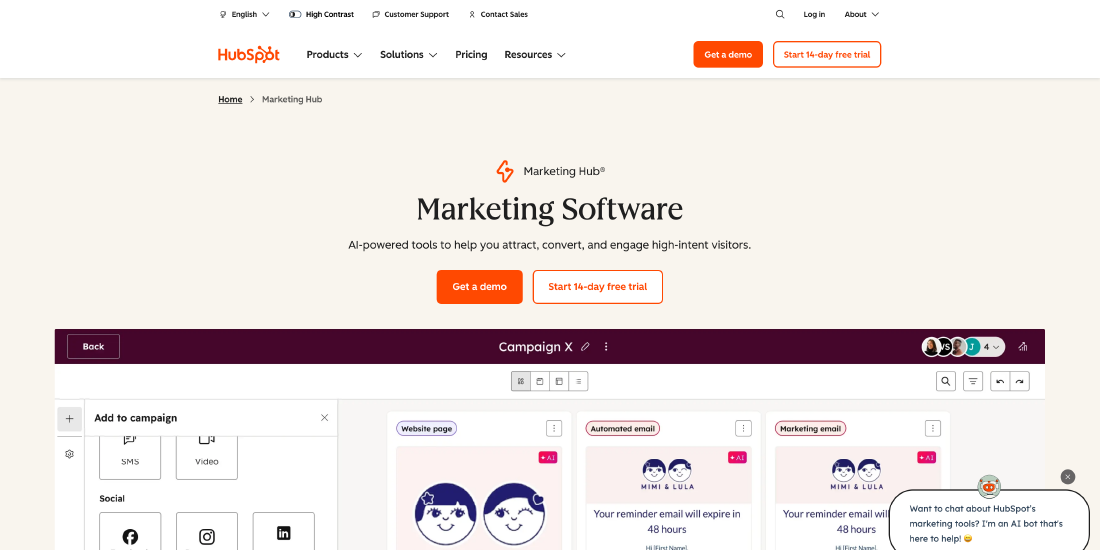
HubSpot Marketing Hub is a comprehensive marketing automation platform that supports email marketing, lead nurturing, and campaign performance tracking. Educational institutions can design automated workflows triggered by student actions such as brochure downloads, event registrations, or inquiry submissions. Its analytics and reporting features allow teams to monitor engagement levels, evaluate campaign effectiveness, and continuously refine recruitment strategies.
Grammarly
Clear and consistent communication plays a vital role in student outreach and branding. Grammarly uses AI-driven language assistance to enhance grammar, clarity, and tone across recruitment emails, website content, and social media posts. By ensuring error-free and professional messaging, institutions can improve credibility and maintain consistent communication standards.
Mailchimp
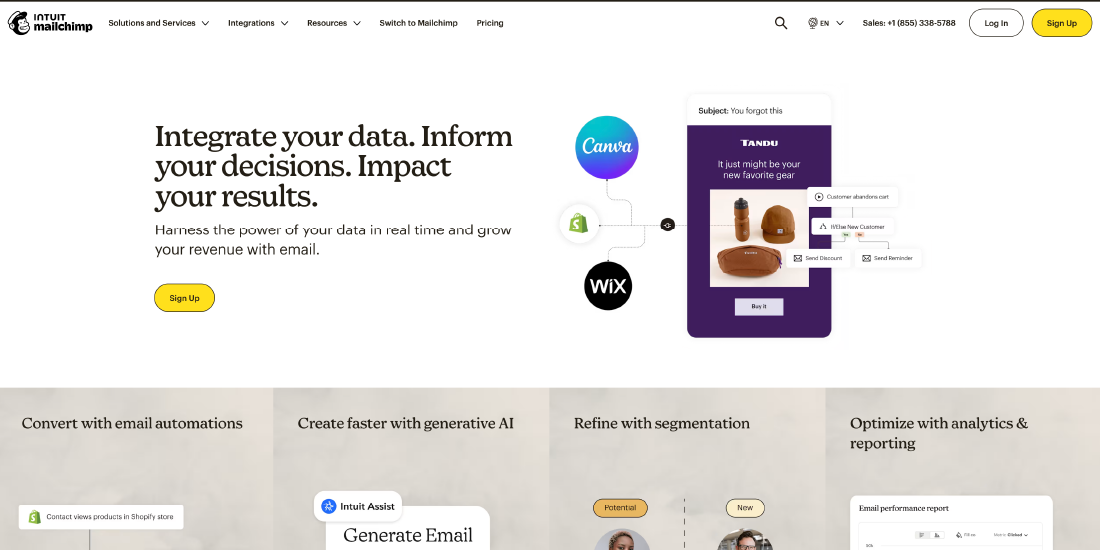
Mailchimp is a widely adopted email marketing solution that offers automation features well-suited for higher education. Institutions can create structured drip campaigns to nurture prospective students, send automated reminders for application deadlines, and segment audiences based on engagement behavior. This enables more relevant and timely communication throughout the recruitment process.
Hootsuite
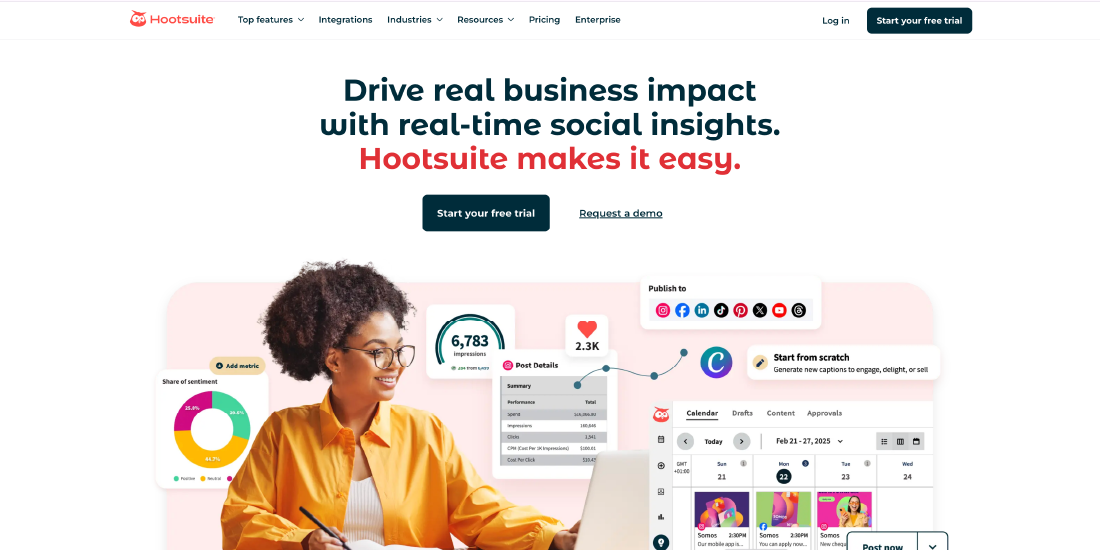
Social media is an important engagement channel for reaching prospective students. Hootsuite allows institutions to manage multiple social media platforms from a single dashboard, schedule content in advance, track performance metrics, and respond to inquiries efficiently. Its automation capabilities help maintain consistent social media activity without increasing manual workload.
Google Analytics
Understanding student behavior is essential for optimizing marketing efforts. Google Analytics provides detailed insights into website traffic, user interactions, and conversion paths. Institutions can identify which pages and campaigns drive the most engagement, analyze user journeys, and adjust marketing strategies to improve recruitment outcomes.
Future of Marketing Automation in Education
Marketing automation is rapidly transforming higher education, helping institutions streamline recruitment, enhance student engagement, and improve retention. Here are three key trends shaping its future:
AI and Predictive Analytics for Recruitment
AI-powered tools can analyze historical enrollment data to identify prospective students who are most likely to apply and recommend the most effective outreach strategies. By leveraging predictive analytics, institutions can make smarter, data-driven recruitment decisions and prioritize high-potential leads. In fact, 83% of higher education professionals believe that advanced analytics will significantly transform marketing and enrollment strategies within the next two years, highlighting the growing importance of AI in recruitment. Solutions like EDMO Conversation Intelligence enhance this process by providing actionable insights on student behavior and engagement, helping admissions teams focus on the most promising prospects and optimize outreach for better enrollment outcomes.
Omnichannel Automation
Marketing automation enables institutions to coordinate communications across multiple channels, including email, SMS, social media, and more. This ensures prospective students receive consistent, timely messages throughout their journey from inquiry to enrollment. By unifying messaging across platforms, schools can create a seamless experience that keeps students engaged at every touchpoint.
Integration with Student Success Initiatives
Automation extends beyond admissions to support student retention and success. Institutions can send reminders for advising appointments, financial aid deadlines, and campus events to keep students actively engaged throughout their academic journey. AI-enhanced CRM and analytics tools allow schools to coordinate communications across channels efficiently. According to recent research, 65% of institutions use AI-powered creative and social media tools to streamline workflows and boost student engagement. By integrating marketing automation with student success initiatives, colleges can enhance both recruitment and retention outcomes.
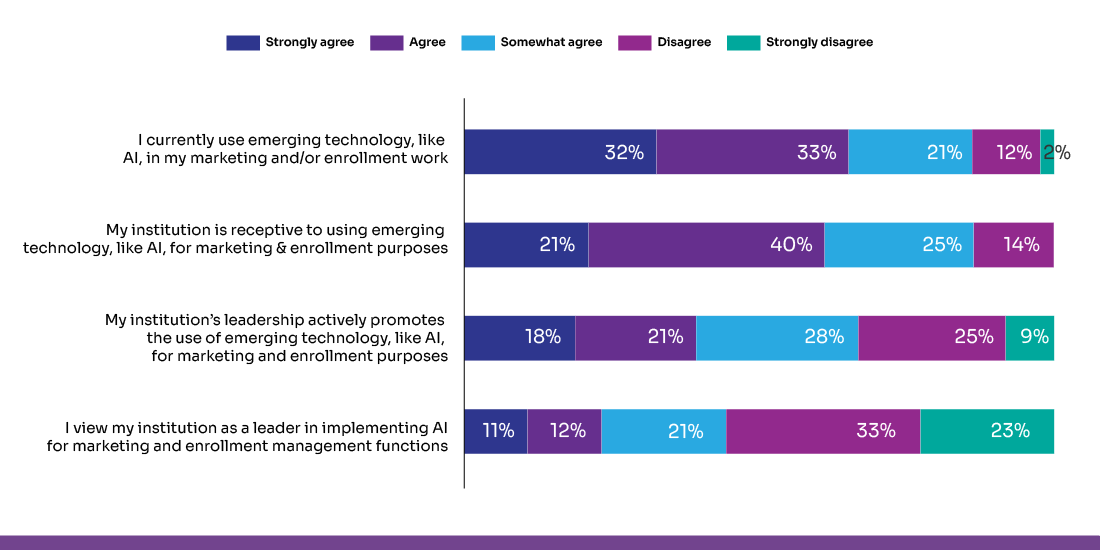
Source: Educationdynamics
Conclusion
Unifying marketing automation platforms with an admissions CRM is essential for higher education institutions seeking to streamline recruitment, improve communication, and make data-driven enrollment decisions. When these systems work together, institutions gain a complete view of prospective students, enabling personalized outreach, automated workflows, and more effective follow-ups across the entire admissions lifecycle. By integrating marketing automation platforms with an admissions CRM, universities can reduce manual effort, improve team efficiency, and deliver a seamless experience for students from first inquiry to enrollment, ultimately supporting stronger and more sustainable enrollment outcomes.
Frequently Asked Questions
Question 1. How much does a typical marketing automation platform cost for education?
Question 2. Can marketing automation help with alumni engagement?
Question 3. How can educational institutions use marketing automation effectively?
Question 4. Is marketing automation suitable for small educational institutions?
Question 5. Can marketing automation integrate with existing CRM systems?
Question 6. How does marketing automation improve student engagement?
Written By



No comments yet. Be the first to comment!
Leave a Comment