

Table Of Contents
- 1Introduction
- 2What is Enrollment Management?
- 3What is Strategic Enrollment Management Planning?
- 4Who Conducts Strategic Enrollment Management Planning?
- 5When is Strategic Enrollment Management Planning Done?
- 6Key Advantages of Strong Enrollment Management in Higher Education
- 7Core Components of Enrollment Management in Higher Education
- 8Key Roles in Enrollment Management
- 9Enrollment Management Organizational Structure
- 10Major Challenges Shaping Enrollment Management Today
- 11Technology Adoption and Digital Transformation
- 12Selecting and Implementing Enrollment Management Software
- 13Implementation Best Practices
- 14Measuring the ROI of Enrollment Technology
- 15Emerging Trends in Enrollment Management
- 16Conclusion
Introduction
Enrollment management is a strategic, institution-wide approach to attracting, enrolling, and retaining students while aligning with an institution’s mission and financial goals. From recruitment and admissions to retention and student success, effective enrollment management integrates technology, data analytics, and personalized engagement to navigate the challenges of changing demographics, rising costs, and evolving student expectations.
This guide provides a comprehensive overview of strategic enrollment management, key practices, and tools that drive institutional growth and student success.
What is Enrollment Management?
Enrollment management is a strategic, institution-wide approach aimed at attracting, engaging, and retaining students throughout their educational journey. It involves a coordinated set of initiatives that span the entire student lifecycle from generating initial interest and guiding prospective students through recruitment to supporting persistence, graduation, and post-graduation engagement.
The concept of enrollment management originated in 1976 at Boston College, developed as a response to enrollment challenges facing higher education at the time. What initially began as a tactical solution to immediate enrollment concerns has since evolved into a data-driven, holistic strategy that is critical for institutional stability, growth, and long-term success.
What is Strategic Enrollment Management Planning?
Strategic enrollment management planning refers to an institution’s deliberate, coordinated efforts to identify, recruit, enroll, retain, and graduate students in alignment with its mission, goals, and long-term vision. It ensures that enrollment decisions support both the educational objectives of the institution and its fiscal sustainability.
While SEM planning is often associated with undergraduate programs, it has increasingly become a critical focus for graduate and professional programs, reflecting the growing importance of comprehensive enrollment strategies across all levels of higher education.
By integrating data-driven insights, institutional priorities, and market trends, SEM planning allows colleges and universities to make informed decisions that enhance student success, optimize resource allocation, and support sustainable growth.
Who Conducts Strategic Enrollment Management Planning?
Strategic enrollment management planning is typically led by an institution’s Office of Enrollment Management or Office of Admissions. To enhance expertise and optimize outcomes, some colleges and universities also engage external consultants who specialize in enrollment strategy. Enrollment management planning is a collaborative, cross-functional process that relies on input from multiple departments across the institution. Key contributors often include:
- Admissions: Provides insights on prospective student pipelines, application trends, and recruitment effectiveness.
- Financial Aid: Offers data on scholarship allocation, aid packaging, and the financial barriers impacting enrollment decisions.
- Marketing: Supports recruitment campaigns, branding, and communication strategies to attract and engage students.
- Finance: Assesses budgetary implications and ensures enrollment plans align with fiscal sustainability.
- Institutional Research: Supplies critical data analytics, trend reports, and predictive modeling to guide evidence-based decision-making.
- Academic Advising: Helps align enrollment strategies with program capacities, student needs, and retention goals.
- Career Counseling: Provides insights into student outcomes and workforce alignment, which inform recruitment messaging and value propositions.
By engaging these departments in a coordinated effort, institutions can develop data-informed, mission-aligned enrollment management plans that optimize recruitment, retention, and graduation outcomes.
When is Strategic Enrollment Management Planning Done?
Strategic enrollment management (SEM) planning is a continuous and cyclical process that evolves in response to institutional priorities, enrollment trends, and external factors. While it is ongoing, specific planning activities are often tied to key institutional timelines and milestones, including:
- Admissions Deadlines: Planning aligns with undergraduate and graduate application cycles to ensure recruitment strategies and enrollment targets are met.
- Financial Aid Deadlines: Enrollment management efforts are coordinated with scholarship, grant, and aid timelines to optimize student affordability and yield.
- Institutional Financial Planning Milestones: Enrollment targets and projections feed into budgeting, resource allocation, and long-term fiscal planning.
- State Higher Education Appropriations: Public institutions often adjust enrollment strategies based on anticipated funding levels and policy changes at the state level.
By aligning enrollment management planning with these critical timelines, institutions can proactively manage recruitment, retention, and resource allocation, ensuring both student success and institutional sustainability.

Key Advantages of Strong Enrollment Management in Higher Education
Effective enrollment management in higher education relies on specialized platforms and CRM solutions that help institutions analyze data, streamline recruitment, and manage the entire student lifecycle more efficiently. Over time, these tools not only strengthen enrollment outcomes but also enhance institutional reputation and support long-term student retention.
- Real-time student data visibility: Access comprehensive student information, from contact and demographic details to application status and financial aid data, all in one centralized system.
- Actionable enrollment insights: Track enrollment trends in real time and gain a deeper understanding of the factors influencing student decisions through personalized, one-on-one engagement. Today, 31% of institutions use CRM systems with integrated analytics to enhance recruitment strategies and improve student engagement.

- Personalized student marketing: Deliver targeted, relevant communications that guide prospective students through the enrollment and application journey, improving conversion rates.
- Early risk identification: Proactively spotting potential issues helps institutions reduce student churn, close enrollment gaps, and address challenges before they impact retention. EDMO Advisor Copilot enhances this process by providing 24/7 automated student support and personalized outreach, while scoring and prioritizing high-potential leads to improve engagement, conversion, and admissions team efficiency.
Core Components of Enrollment Management in Higher Education
Enrollment management is a comprehensive, data-driven approach that aligns institutional goals with student recruitment, retention, and success. Below are the key components that work together to support sustainable enrollment outcomes.
Admissions and Recruitment
Admissions and recruitment serve as the foundation of effective enrollment management. This component focuses on attracting prospective students who are academically prepared and aligned with the institution’s mission, values, and long-term goals.
Key areas include:
- Strategic recruitment planning: Identifying priority markets and designing targeted outreach strategies to reach the right student segments
- Marketing initiatives: Developing clear, compelling messages that communicate the institution’s value proposition
- Campus visits and events: Offering on-campus and virtual experiences that highlight academic programs, campus culture, and student life
- Application management: Streamlining application and admission processes to reduce friction and improve applicant experience. With the EDMO Application Evaluator, institutions can accelerate application processing and empower admissions frameworks through AI-powered document analysis. It offers seamless integration and bulk processing, instantly reviewing SOPs, LORs, transcripts, and resumes to highlight applicant strengths, minimize human error, and provide insightful reports for smarter, fairer admission decisions.
- Selection criteria: Establishing transparent and mission-aligned admission standards
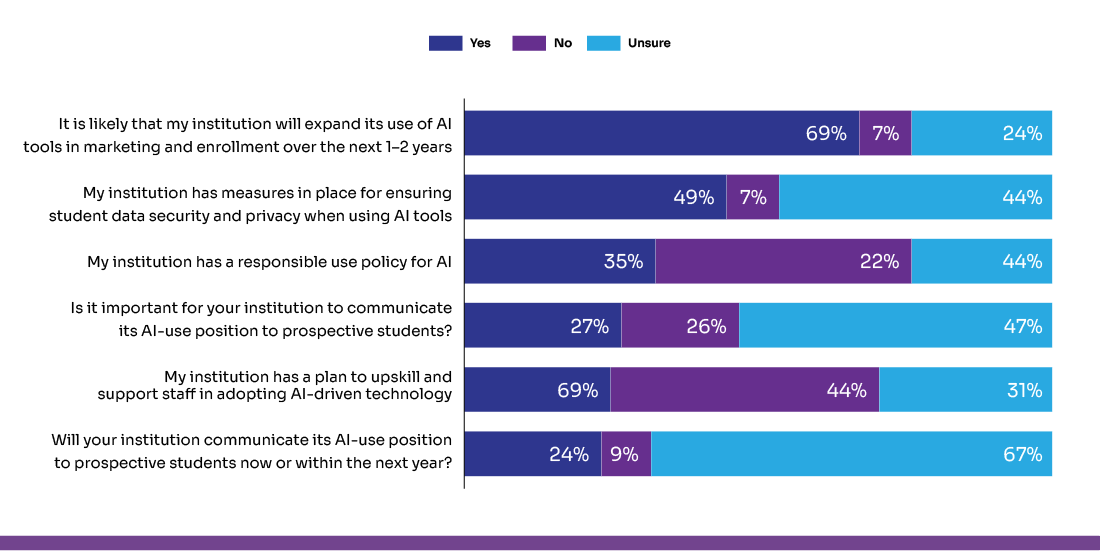
As institutions increasingly adopt artificial intelligence and digital recruitment tools, measurable benefits are emerging. Sixty-nine percent of institutions report improved efficiency in marketing and enrollment workflows, while 48% indicate a positive impact on their enrollment funnel. With the continued shift toward digital-first recruitment, colleges and universities are relying more on social media, virtual campus tours, and personalized communication to engage prospective students.
Source: Educationdynamics
Financial Aid and Scholarship Management
Financial aid has evolved into a strategic lever within enrollment management rather than a purely administrative function. Institutions use financial aid policies to influence enrollment decisions while addressing affordability and access.
Key elements include:
- Financial aid leveraging: Allocating limited aid resources strategically to maximize enrollment yield
- Tuition and pricing strategies: Balancing institutional revenue goals with student affordability
- Net price calculators: Offering transparency around actual costs after scholarships and grants
- Clear communication: Helping students and families understand financial aid options, costs, and payment expectations
- Packaging strategies: Designing aid offers that support enrollment targets, student diversity, and academic quality
When aligned with institutional priorities, financial aid strategies can significantly influence who enrolls, persists, and ultimately graduates.
Student Retention and Success Initiatives
Student retention is a critical component of enrollment management focused on supporting students from enrollment through graduation. Strong retention efforts improve student outcomes while also enhancing institutional stability and reputation.
Key retention strategies include:
- Academic support services: Tutoring, mentoring, and learning assistance programs
- Early alert systems: Identifying at-risk students early and intervening before withdrawal occurs
- Student engagement initiatives: Encouraging involvement in campus activities, organizations, and support networks
- Experience and satisfaction monitoring: Collecting feedback to address challenges and improve student services
- Targeted support programs: Designing interventions for student populations with historically lower retention rates
Institutions that excel in retention foster a shared responsibility for student success across faculty, staff, and administrators. Transfer students, in particular, benefit from tailored orientation and support programs that ease their transition.
Research and Data Analytics
Data and analytics are at the core of modern enrollment management. Institutions rely on data-driven insights to guide strategy, measure performance, and anticipate future trends.
Key functions include:
- Enrollment forecasting: Predicting future enrollment using historical data and market trends
- Student success analytics: Identifying factors that influence retention, persistence, and graduation
- Market research: Understanding prospective student preferences, behaviors, and decision-making patterns
- Key performance indicators (KPIs): Tracking metrics such as yield rates, retention rates, and completion rates
- Predictive modeling: Using analytics to anticipate student outcomes and proactively address risks
Integrated student information systems enable institutions to analyze the full student lifecycle, allowing them to respond strategically rather than reactively to enrollment challenges.
Marketing and Communications
Marketing and communications play a vital role in enrollment management by increasing institutional visibility, strengthening relationships with prospective and current students, and influencing decision-making throughout the entire student lifecycle.
Key elements of effective marketing and communications include:
- Brand positioning: Defining and maintaining a clear, differentiated institutional identity that communicates the institution’s mission, values, and unique strengths.
- Multi-channel communication: Utilizing a mix of email, social media, digital advertising, websites, and direct outreach to engage students across platforms.
- Personalized messaging: Delivering tailored content based on students’ interests, behaviors, and their stage in the enrollment funnel to improve relevance and engagement.
- Content development: Sharing authentic stories that highlight academic quality, student outcomes, faculty expertise, and campus life.
- Communication workflows: Designing consistent, well-timed engagement sequences that support both recruitment and student retention efforts.
As digital transformation accelerates, nearly 90% of higher education marketing leaders expect AI-driven campaign optimization to reshape enrollment management. Tools like EDMO Student Copilot, a student-facing omnichannel bot, enhance engagement by delivering real-time application updates, resolving student queries, and providing end-to-end enrollment support, while also automating personalized messaging and tracking interactions across channels for better recruitment and retention outcomes.
Key Roles in Enrollment Management
Effective enrollment management is a collaborative effort that involves multiple departments working together toward shared institutional goals. While roles and titles may vary across institutions, the following positions represent some of the most critical contributors to a successful enrollment management strategy.
Enrollment Manager
Leads and coordinates the overall enrollment management strategy, setting institutional enrollment goals and ensuring alignment across departments. Although not every institution has a dedicated enrollment manager, the responsibilities of this role are almost always shared across leadership teams.
Director of Admissions
The Director of Admissions oversees student recruitment and admissions operations while developing policies aligned with institutional goals. This role works closely with marketing, academic, and administrative teams to attract and admit best-fit students. Strong coordination across departments is essential for managing the admissions funnel effectively.
Director of Financial Aid
Manages the distribution of financial aid and scholarships, establishes aid policies, and collaborates with admissions and leadership teams to define eligibility criteria and support enrollment and affordability objectives.
Marketing and Communications Lead
Plans and executes marketing and communication strategies that enhance brand visibility, promote academic offerings, and engage prospective students across multiple channels.
Registrar
Maintains accurate student records, manages course registration and scheduling, and ensures the integrity and security of academic and enrollment data throughout the student lifecycle.
Academic Advisor
Provides personalized academic guidance, helping students navigate course selection, degree requirements, and institutional policies to support retention and timely graduation.
Student Life Coordinator
Enhances the overall student experience by organizing extracurricular activities, campus events, and support services that foster engagement, belonging, and student success.
Enrollment Management Organizational Structure
Effective enrollment management relies on a clearly defined organizational structure that aligns leadership, operations, and student support functions. As enrollment strategies have become more data-driven and student-centered, roles within enrollment management have evolved to address increasing complexity and competition in higher education.
Key Roles and Responsibilities include:
- Chief Enrollment Officer: Provides overall leadership and strategic oversight for recruitment, admissions, retention, and enrollment planning.
- Director of Admissions: Manages student recruitment efforts, application review, and admission decisions.
- Director of Financial Aid: Oversees financial aid programs and develops aid-leveraging strategies to support enrollment goals.
- Registrar: Maintains academic records and manages course registration and enrollment reporting.
- Marketing and Communications Lead: Designs and executes outreach and messaging strategies to support recruitment and engagement.
- Student Success Teams: Focus on retention through academic support, advising, and co-curricular initiatives.
- Institutional Research Team: Analyzes enrollment data, trends, and outcomes to inform strategic decision-making.
As enrollment management has grown more complex, these roles have become increasingly specialized. Clear leadership, defined responsibilities, and strong cross-functional collaboration are essential to ensure enrollment efforts are coordinated and effective across the institution.
Major Challenges Shaping Enrollment Management Today
Enrollment management is being reshaped by a range of internal and external pressures affecting how institutions recruit, enroll, and retain students. Shifting student demographics, financial constraints, and rapid changes in technology and policy require colleges and universities to adopt more strategic, flexible, and data-informed approaches to remain competitive and sustainable.
Demographic Changes and Evolving Student Profiles
Demographic change is one of the most significant forces reshaping enrollment management today. Declining birth rates and long-term population shifts are reducing the number of traditional college-age students, while simultaneously changing the composition and expectations of prospective learners. National projections indicate that the population of 18-year-old high school graduates in the U.S. is expected to decline by about 13% by 2041, translating to nearly 500,000 fewer potential applicants each year.
Key demographic trends affecting enrollment include:
- Smaller traditional applicant pools: Many regions are seeing sustained declines in high school graduates. States such as Illinois and New York are projected to experience decreases of 25–30% or more, intensifying competition at the regional level.
- Increasing student diversity: Growth opportunities are emerging among historically underrepresented populations, requiring more inclusive recruitment and support strategies.
- Geographic population shifts: Ongoing migration from rural to urban areas and between regions is altering where institutions must focus their recruitment efforts.
- Expansion of non-traditional learners: Demand is rising among adult learners, part-time students, transfer students, and career changers seeking flexible and career-aligned education options.
The effects of these trends vary by institution type and location. In response, colleges and universities are broadening recruitment markets, investing in outreach to non-traditional and diverse student populations, and adopting enrollment strategies that better align with evolving student needs and expectations.
Affordability Pressures and Financial Barriers
The rising cost of higher education and growing concerns around student debt continue to play a significant role in enrollment decision-making.
Key affordability-related challenges include:
- Increased price sensitivity: Students and families are more cautious than ever about tuition and total cost of attendance. Financial concerns are now a primary barrier to enrollment, with more than half of U.S. prospective students indicating that cost and potential debt could prevent them from pursuing higher education.
- Rising discount rates: Colleges are relying more heavily on institutional grants and scholarships to remain competitive, which can reduce net tuition revenue and strain operating budgets.
- Student debt concerns: Anxiety around long-term loan repayment influences not only enrollment decisions but also persistence and completion, particularly for first-generation and low-income students.
- Perceived value of education: Prospective students increasingly evaluate higher education based on return on investment, career outcomes, and post-graduation earning potential rather than prestige alone.
To respond, institutions are adopting alternative financial approaches such as tuition guarantees, income-share agreements, and more targeted financial aid strategies.
Technology Adoption and Digital Transformation
Advancements in technology are rapidly transforming enrollment management, enabling institutions to improve recruitment, communication, and decision-making through data-driven tools. At the same time, these innovations introduce new operational and equity-related challenges that institutions must navigate carefully.
Key technology trends influencing enrollment management include:
- CRM platforms: Customer Relationship Management (CRM) systems have become central to enrollment operations, allowing institutions to track and manage student interactions from initial inquiry through enrollment. Nearly one-third of institutions now integrate CRM platforms with learning and campus systems, enabling seamless communication, real-time tracking, and mobile-optimized engagement for today’s on-the-go prospective students.
- Artificial intelligence: AI-driven tools are increasingly used to automate student communications, support application review, and enhance student services. A growing share of higher education leaders recognize its impact, with 62% of university administrators indicating that artificial intelligence will significantly influence student recruitment processes by improving efficiency, responsiveness, and decision-making.
- Virtual engagement: Online campus tours, webinars, and virtual information sessions have expanded institutional reach, making it easier to connect with students regardless of geographic location.
- Data analytics: Predictive analytics help institutions forecast enrollment trends, identify at-risk students, and evaluate recruitment strategies with greater accuracy.
- Mobile-first communication: With prospective students relying heavily on smartphones, institutions are prioritizing mobile-friendly platforms, messaging, and application processes to meet student expectations.
While these technologies enhance efficiency and scale, institutions must also address challenges such as rapid technological change, staff training, and ensuring equitable access for all student populations.
Selecting and Implementing Enrollment Management Software
Technology plays a critical role in modern enrollment management, helping institutions streamline admissions processes, improve communication, and make data-driven decisions. Selecting the right software requires evaluating features that support the full student lifecycle and align with institutional goals.
Key Features to Consider
When choosing an enrollment management platform, institutions should prioritize tools that enhance efficiency, engagement, and insights:
- CRM Functionality: Track interactions with prospective and current students to manage relationships effectively. Institutions using integrated CRM and shared data systems experience up to 40% higher operational efficiency.
- Application Processing Tools: Modern admissions systems automate key workflows such as application review and transcript processing, reducing manual effort and delays. For example, Georgia Tech is introducing an AI-based tool to review transfer student transcripts, eliminating the need for staff to manually enter course data. This allows the institution to inform applicants more quickly about transferable credits, significantly reducing uncertainty and wait times in the admissions process.
- Communication Management: Coordinate outreach across multiple channels, such as email, chat, and mobile notifications.
- Analytics and Reporting: Generate actionable insights to inform recruitment strategy and predict enrollment outcomes.
- Integration Capabilities: Seamlessly connect with existing Student Information Systems (SIS) and CRM platforms.
Implementation Best Practices
Effective deployment of enrollment management technology requires thoughtful planning across multiple areas:
- Data Migration: Accurate and secure transfer of historical and active student data is essential to maintain continuity, reporting accuracy, and operational reliability during system transitions.
- Staff Training and Change Management: Providing thorough training and ongoing support helps staff use new enrollment technology effectively. However, challenges remain: although 65% of institutions are using AI in enrollment, only 56% have a formal plan to train and upskill their teams to use these tools efficiently.
- System Integration: Seamless integration with existing campus platforms, such as student information systems and learning tools, reduces disruption and improves workflow efficiency across departments.
- Customization: Tailoring the software to fit institutional needs supports adoption and long‑term value.
- Ongoing Support and Updates: Reliable vendor support and regular system upgrades ensure institutions can adapt to evolving technology and changing enrollment needs.
By linking enrollment outcomes to institutional performance, colleges can demonstrate the strategic value of their software investments, reduce administrative costs, and drive measurable growth.
Measuring the ROI of Enrollment Technology
Evaluating the return on investment (ROI) of enrollment management technology is essential for institutions to ensure that software solutions are effectively supporting recruitment goals and overall financial health. A comprehensive ROI assessment involves examining both operational efficiency and student outcomes.
Key metrics to consider include:
- Cost per Enrolled Student: Analyze the total recruitment spending relative to the number of students successfully enrolled. This helps determine which initiatives are most cost-effective and where resources can be optimized.
- Retention Rates and Revenue Impact: Monitor how enrollment technology influences student retention, as higher retention contributes directly to sustained tuition revenue and long-term institutional stability.
- Financial Aid Optimization: Assess the impact of financial aid strategies on net tuition revenue, evaluating whether the software supports efficient allocation of aid to attract and retain students without compromising institutional finances.
- Marketing and Communication Effectiveness: Measure the effectiveness of recruitment campaigns and communication channels in generating high-quality leads and converting prospects into enrolled students. For example, at the University of Central Florida, AI tools have handled over 459,000 student messages from 277,000 unique users, successfully addressing 85% of queries without human intervention, significantly reducing staff workload and improving response times.
- Productivity Gains: Enrollment technology can improve team efficiency and reduce burnout. Nearly 66% of institutions report that AI reduces staff workload, and 63% note cost savings, demonstrating that automation frees staff to focus on strategic, high-impact tasks.
By systematically linking technology performance to enrollment outcomes, institutions can quantify the value of their software investments, justify expenditures, and identify opportunities for strategic enhancement.
Emerging Trends in Enrollment Management
Artificial intelligence (AI) is transforming enrollment management by providing innovative solutions to long-standing challenges and enhancing the student experience.
Key AI-driven trends include:
- Personalized Recruitment: AI analyzes student data to deliver targeted outreach campaigns, aligning academic programs with individual interests and increasing engagement.
- Predictive Analytics: Institutions use AI to forecast enrollment patterns, identify students at risk, and allocate resources more effectively to support retention and success.
- Automated Student Support: AI-powered tools, such as chatbots, manage routine inquiries around the clock, improving response times while freeing staff to focus on complex tasks.
As adoption grows, AI continues to enhance enrollment management strategies, helping institutions respond to evolving student needs and modernize recruitment, engagement, and retention efforts.
Conclusion
Effective enrollment management is more than filling seats; it’s about aligning institutional goals with student needs, leveraging technology, and implementing data-informed strategies to improve recruitment, retention, and student success. By adopting a strategic approach, institutions can enhance operational efficiency, strengthen financial health, and create a more personalized and engaging experience for every student. Staying ahead of emerging trends, such as AI and predictive analytics, ensures that enrollment management remains adaptable and future-ready.
Frequently Asked Questions
Question 1. Why is strategic enrollment management planning important?
Question 2. How can enrollment management software help?
Question 3. What are some tips to overcome enrollment challenges?
Question 4. What role does financial aid play in enrollment management?
Question 5. What are the best tools and software for enrollment management?
Written By


You May Also Like
 AI in Education

 AI in Education
 AI in Education


No comments yet. Be the first to comment!
Leave a Comment