

Table Of Contents
Introduction
Enrollment teams are under a significant administrative workload, especially during the admission cycles, including application intake, document verification, data entry, applicant communication, review coordination, reporting, and deposit tracking. During peak periods, they are supposed to process thousands of documents accurately while also responding to inquiries, sending reminders, and monitoring performance. These repetitive, time-sensitive tasks can cause delays, evaluation errors, and employee burnout. AI and automation can help by streamlining document collection and validation, automating routine communications, standardizing evaluation workflows, and providing real-time data insights. By streamlining manual processes, AI in higher education allows enrollment teams to focus on important decision-making and meaningful engagement with prospective students.
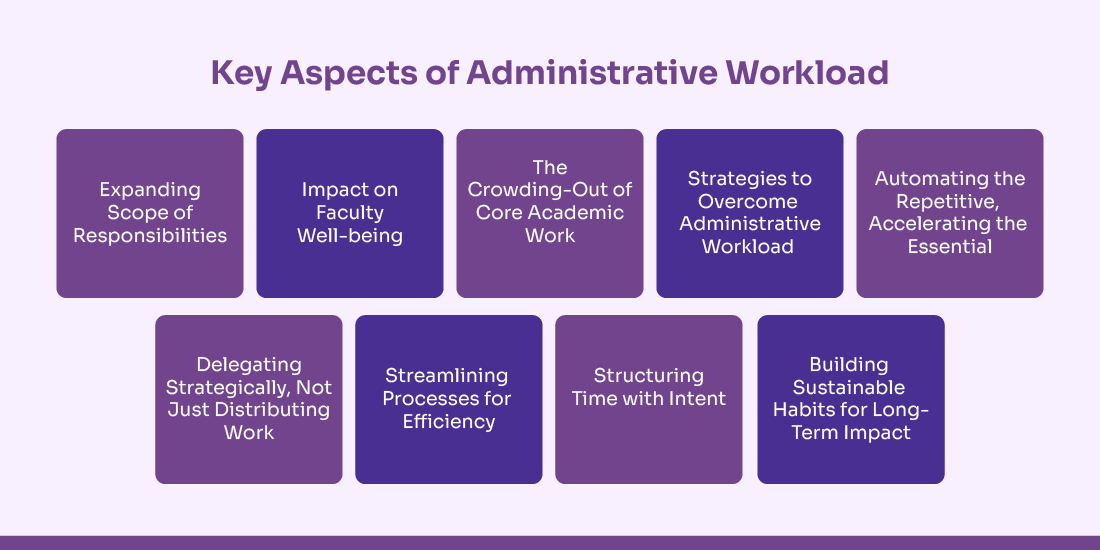
Key Aspects of Administrative Workload
Administrative work in higher education often goes well beyond what job descriptions list. These tasks are necessary for institutions to function, but over time, they have become more complicated. Faculty now have to juggle teaching, research, and a growing list of administrative duties. Many of these tasks are scattered, time-consuming, and often go unacknowledged. This growing workload changes how faculty use their time, interact with students, and help achieve institutional goals. In the end, it affects both their well-being and academic results.
Expanding Scope of Responsibilities
Faculty do much more than teach and conduct research. Their work also includes serving on committees, advising students, designing courses, and preparing reports for accreditation. In addition, there is more invisible work, such as mentoring, supporting students, and helping with diversity, equity, and inclusion efforts. These important tasks are often not officially recognized or shared equally, which means some faculty face more pressure than others.
Impact on Faculty Well-being
As administrative tasks increase, faculty often feel overwhelmed by having to manage many roles and deadlines at once. This high-pressure situation makes it harder for them to connect with students and focus on research. Over time, this imbalance can cause stress, burnout, and lower job satisfaction, which affects both individual performance and the overall mood at the institution.
The Crowding-Out of Core Academic Work
Time spent on administrative tasks comes at the expense of the faculty’s main academic responsibilities. This means they may not be able to focus as much on research, publishing, or trying new ideas in the classroom. This crowding-out effect lowers individual productivity and slows down the institution’s progress in creating knowledge and improving student learning. If this continues, it can weaken the core mission of the academic institution.
Strategies to Overcome Administrative Workload
Reducing administrative workload is not about getting rid of it completely. Instead, it means handling it in a smarter way. As our responsibilities grow, the main challenge is to stop routine tasks from taking over the time that should be spent on more important work. When people and organizations manage this well, they do more than just boost efficiency. they make room for deeper focus, better decisions, and more meaningful work. The best approach is to use technology, improve processes, and manage time on purpose to make work smoother and take back control.
Automating the Repetitive, Accelerating the Essential
Technology helps cut down on manual work and keeps things consistent. Tools for managing tasks make it easier to track deadlines, assign jobs, and automate repeated tasks, so there is less need to keep checking in. Storing records digitally with CRM systems or in one place saves time searching for information and avoids doing the same work twice. Data analytics tools also make reporting easier by spotting trends and giving quick insights, which helps people make better decisions faster.
Delegating Strategically, Not Just Distributing Work
Not every task needs the same skills, and knowing this helps prevent overload. Outsourcing jobs like accounting, payroll, or email management to outside experts lets teams focus on what matters most. Inside the team, giving tasks to people based on their strengths makes work go more smoothly. Bringing in administrative help, either part-time or full-time, can also take care of routine tasks and free up time for more important work.
Streamlining Processes for Efficiency
Too much administrative work usually comes from old or inefficient processes, not just having too much to do. Checking workflows regularly helps spot steps that do not add much value. Doing similar tasks together, like answering emails or handling reports, helps people stay focused. Using templates and clear procedures makes work more consistent, faster, and less dependent on any one person.
Structuring Time with Intent
If there are no clear limits, administrative tasks can take over the whole day. Setting aside specific times for routine work helps avoid constant interruptions. Tools like Kanban boards show what is most important, so people can focus on the tasks that matter most. It is also important to set limits on availability and say no to tasks that are not essential, to avoid taking on too much and to keep a healthy balance.
Building Sustainable Habits for Long-Term Impact
Lasting change happens through steady, small steps in how work is managed. Weekly check-ins help people and teams review their priorities and adjust as things change. Simple daily checklists keep things clear and make sure important tasks are not missed. Better communication, like having fewer meetings and making information easier to share, can save a lot of time and make work smoother and less scattered.
How AI and Automation Reduce Administrative Workload in Universities
Administrative work at universities is not only increasing, but also becoming more complicated and scattered. Tasks like admissions, financial aid, faculty management, and compliance often depend on manual work, separate systems, and frequent follow-ups. This slows down operations and affects both staff efficiency and the student experience. AI and automation are helping universities move from slow, process-heavy administration to more streamlined and intelligent workflows. This reduces effort while improving speed, accuracy, and decision-making.
Smarter Enrollment and Admissions Workflows
Student enrollment has many steps, from submitting applications to making final decisions, and often needs coordination between departments. Automation powered by AI can route applications, check documents, spot missing information, and send timely updates to applicants. This cuts down turnaround time, reduces errors, and makes admissions smoother.
Faster, Error-Free Financial Aid Processing
Handling financial aid and scholarships by hand takes a lot of time and can lead to mistakes. Automation helps schools track eligibility, check applications, and process payments more efficiently. AI can also provide insights to improve how funds are given out, making the process faster and more transparent.
Driven Faculty Management and Evaluation
Scheduling faculty, dividing workloads, and evaluating performance often require complicated coordination. AI systems can make these tasks easier by tracking teaching loads, bringing performance data together, and supporting more objective, data-based evaluations. This lowers administrative work and improves fairness and transparency.
Streamlined Campus Event Coordination
Planning campus events means managing many people, schedules, and details. Automation tools can bring scheduling together, handle venue bookings, and make it easier to communicate with attendees. This cuts down on manual work and helps events run more smoothly, whether they are academic or extracurricular.
Simplified Compliance and Accreditation Management
Universities must continuously meet evolving regulatory and accreditation requirements. Automation helps maintain up-to-date records, track compliance milestones, and generate reports for audits with minimal manual effort. This not only reduces risk but also ensures institutions remain consistently prepared.
With EDMO’s Student Copilot and Advisor Copilot, universities can bring these workflows together using AI-powered help. This means routine tasks are automated, students get real-time guidance, and advisors can manage processes more efficiently, all while reducing administrative strain across departments.
Conclusion
Administrative workload in higher education has become more than an operational issue; it is now a strategic concern. As responsibilities increase and processes become more complicated, the pressure on faculty and staff affects student experience, institutional efficiency, and academic results. If this imbalance is not addressed, it can hold back innovation, slow down decisions, and distract from key priorities such as teaching and research.
AI and automation provide a clear way forward. By cutting down on repetitive tasks, making workflows smoother, and supporting data-driven decisions, institutions can move from simply managing processes to making a real impact. The aim is not just to work faster, but to rethink how work is done and make more time for what matters most. Universities that take this step will reduce administrative burden and create more flexible, responsive, and student-focused environments.
Frequently Asked Questions
Ques 1. How does AI improve university administration?
Ques 2. Is administrative workload a big issue in higher education?
Ques 3. What are the key areas of administrative focus in universities?
Written By







No comments yet. Be the first to comment!
Leave a Comment