
Table Of Contents
- 1Introduction
- 2What Is Email Marketing for Higher Education?
- 3Key Capabilities to Prioritize in Higher Education Email Marketing Software
- 4Benefits of Email Marketing Software for Higher Education
- 5Email Marketing Tools for Higher Education
- 6How Higher Education Institutions Can Choose the Right Email Marketing Software
- 7Conclusion
Introduction
Choosing the right email marketing platform is critical for educational institutions aiming to improve student communication, enrollment outreach, and long-term engagement. When evaluating what tools are most effective for email marketing in the education sector, colleges and universities must consider solutions that support automation, personalization, compliance, and integration with campus systems. The right tool helps institutions deliver timely, relevant messages while tracking performance and optimizing communication strategies.
What Is Email Marketing for Higher Education?
Email marketing for higher education is a strategic digital communication method used by colleges and universities to engage with prospective students, enrolled students, alumni, donors, faculty, and staff through targeted and personalized email campaigns. It helps institutions nurture prospective students throughout the enrollment journey, deliver timely academic and administrative updates, promote campus events, and support ongoing community engagement.
By leveraging data, segmentation, and automation, email marketing allows institutions to build long-term relationships, improve communication efficiency, and track engagement metrics such as open rates and click-throughs to measure campaign performance and optimize outreach strategies.
Key Capabilities to Prioritize in Higher Education Email Marketing Software
When selecting an email marketing platform for a college or university, it’s important to focus on features that drive engagement, streamline recruitment workflows, improve personalization, and protect student data. Below are the essential capabilities with supportive industry data:
Advanced Segmentation and Targeting
Higher-education institutions communicate with diverse audiences, including prospective students, current students, applicants, and alumni. An effective email marketing platform should allow segmentation by academic interests, program level, campus location, application status, engagement history, and demographics. Research by Omnisend shows that segmented campaigns can achieve a 34.7% higher open rate compared to bulk emails. This capability enables institutions to deliver relevant, personalized content for example, differentiating messages for undergraduates versus graduates or engineering versus liberal arts prospects.
Behavior-Based Email Automation
Behavior-based automation allows institutions to send timely, relevant messages throughout the enrollment journey. Campaigns can be triggered by actions such as form submissions, website visits, email interactions, event registrations, or application milestones. For example, when a prospect downloads a course brochure, automated follow-ups can share information on scholarships, campus life, and deadlines. In 2025, such automated campaigns achieved 52% higher open rates, 332% higher click rates, and 2,361% greater conversion rates compared to regular scheduled emails.
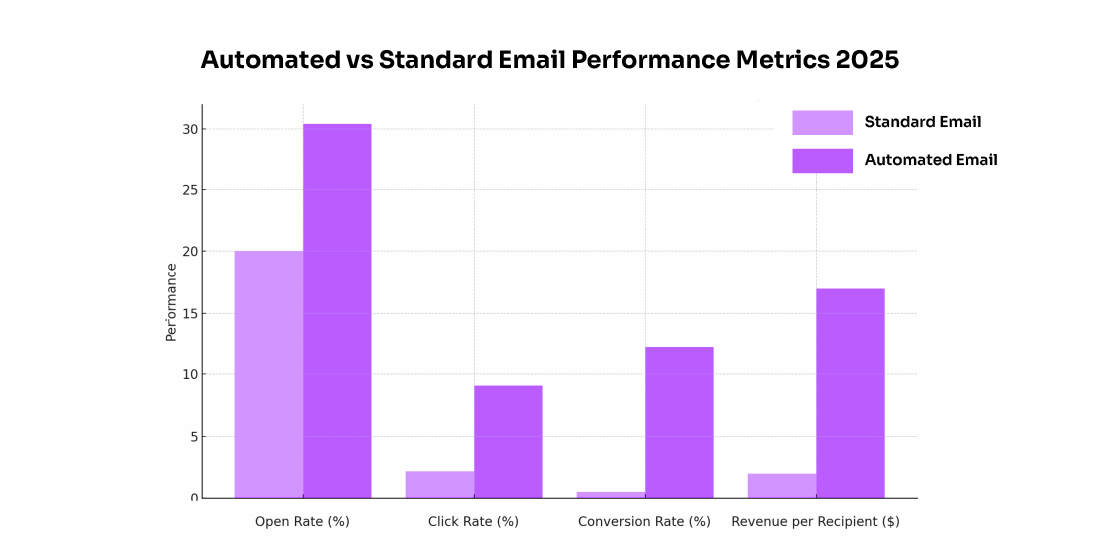
Source: Amraandelma
CRM Integration and Contact Management
Seamless integration with student information systems (SIS) and CRM platforms is critical. This ensures contact records remain accurate and updated across systems. With bidirectional data syncing, admissions teams can view a complete engagement history including emails, website activity, and interactions in one place, while status updates in the CRM automatically reflect in email segments.
Mobile-Optimized Email Templates
With a large portion of users checking emails on mobile devices, mobile-responsive design is crucial. Email marketing platforms should provide templates that automatically adjust to different screen sizes, ensuring consistent layout, readability, and functionality. Teams should also use preview tools to test how emails appear across devices before sending. Research shows that 41% of all email views come from mobile devices, highlighting the importance of mobile optimization.
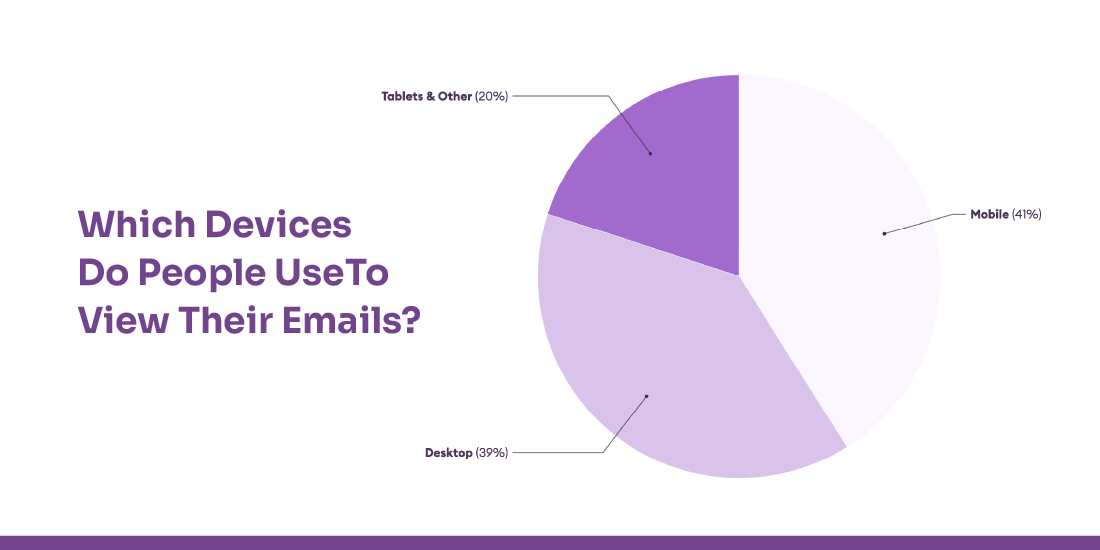
Source: Forbes
Advanced Analytics and Reporting
Beyond basic open and click rates, higher-education teams need deeper insights into campaign performance. Effective platforms provide reporting on lead sources, engagement levels, conversion rates across the enrollment funnel, A/B testing outcomes, and revenue attribution for paid programs. Visual dashboards help institutions track trends over time and compare performance across audiences and campaigns.
Compliance and Data Security
Email marketing platforms must meet higher-education compliance standards, including FERPA, CAN-SPAM, GDPR, and CASL. Key features should include consent management, automated unsubscribe handling, secure data encryption, and audit logs. For institutions with data sovereignty requirements, the platform should also offer region-specific data storage options.
Benefits of Email Marketing Software for Higher Education
Email marketing platforms provide measurable benefits that help institutions strengthen enrollment efforts, improve student engagement, and build long-term relationships with their academic community.
Streamlined Enrollment Management
Email marketing software allows institutions to automate prospect nurture campaigns from initial inquiry through enrollment. By tracking prospective students at each stage of the enrollment funnel, universities can automatically deliver relevant content based on application status and demonstrated interests. This approach not only increases conversion rates but also reduces the manual workload for admissions staff.
Enhanced Personalization at Scale
Higher education institutions engage with diverse audiences such as undergraduate and graduate prospects, international applicants, transfer students, alumni, and parents, each with unique communication needs. Email marketing platforms support advanced segmentation based on attributes and user behavior, enabling institutions to send personalized messages at scale. Research shows that personalized emails can increase open rates by up to 26%, making targeted communication more effective and impactful. Platforms like Edmo Conversation Intelligence further enhance personalization by using data insights and AI-driven recommendations to identify what content resonates most with each audience segment.
Data-Driven Decision Making
Email marketing platforms provide comprehensive analytics, including open rates, click-through rates, and conversion metrics. Marketing teams can leverage this data to identify which messages resonate with prospective students, determine the most effective recruitment channels, and assess the direct impact of campaigns on enrollment. This level of insight helps institutions optimize marketing budgets and demonstrate measurable ROI to leadership.
Improved Alumni Engagement
Maintaining long-term relationships with alumni becomes more effective with email marketing platforms. Institutions can share targeted updates on networking events, fundraising initiatives, and career opportunities, while automated workflows enable personalized touchpoints such as birthday wishes, graduation anniversaries, and industry news. Alumni engagement remains strong through email, with studies showing that 55% of individuals check their inbox more than once a day, making email a reliable channel for sustained connection.
Efficient Multi-Campus Communication
For universities with multiple campuses or online programs, email marketing software ensures consistent branding while supporting localized customization. Centralized platforms allow marketing teams to create templates that individual campuses can tailor with location-specific events, programs, and announcements, ensuring cohesive and efficient communication across all units.

Email Marketing Tools for Higher Education
Choosing the right email marketing platform is essential for higher-education institutions aiming to improve enrollment marketing, student communication, and alumni engagement. The comparison below highlights popular email marketing tools, outlining their best use cases, key features, pricing to help universities and colleges evaluate the most suitable option for their needs.
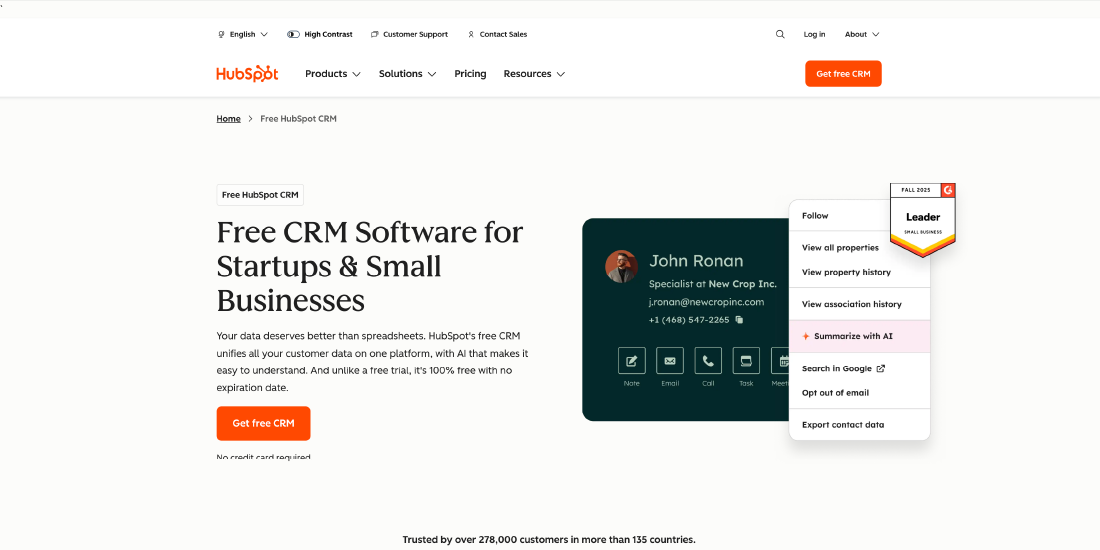
HubSpot
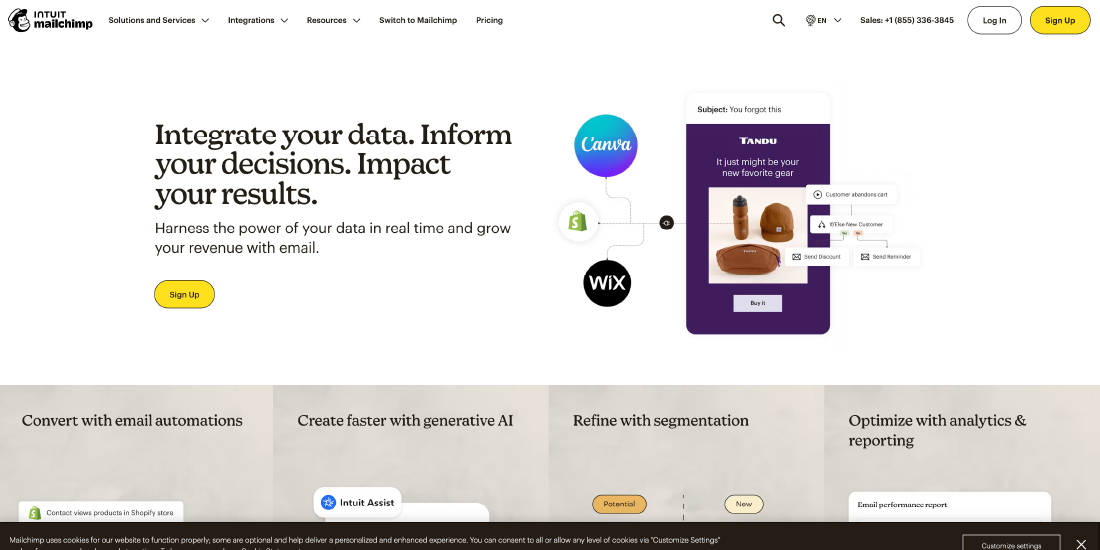
Mailchimp
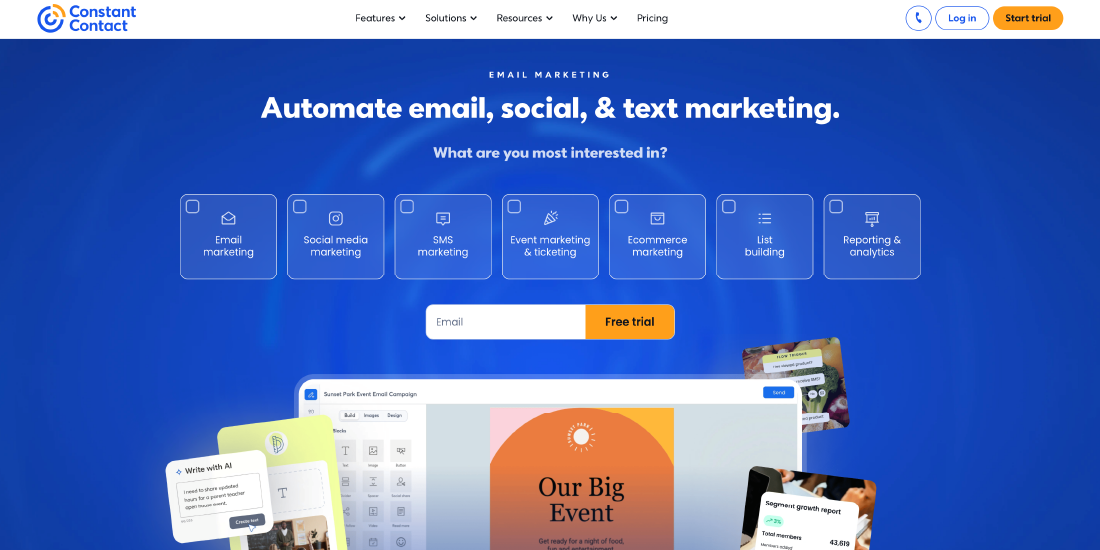
Constant Contact
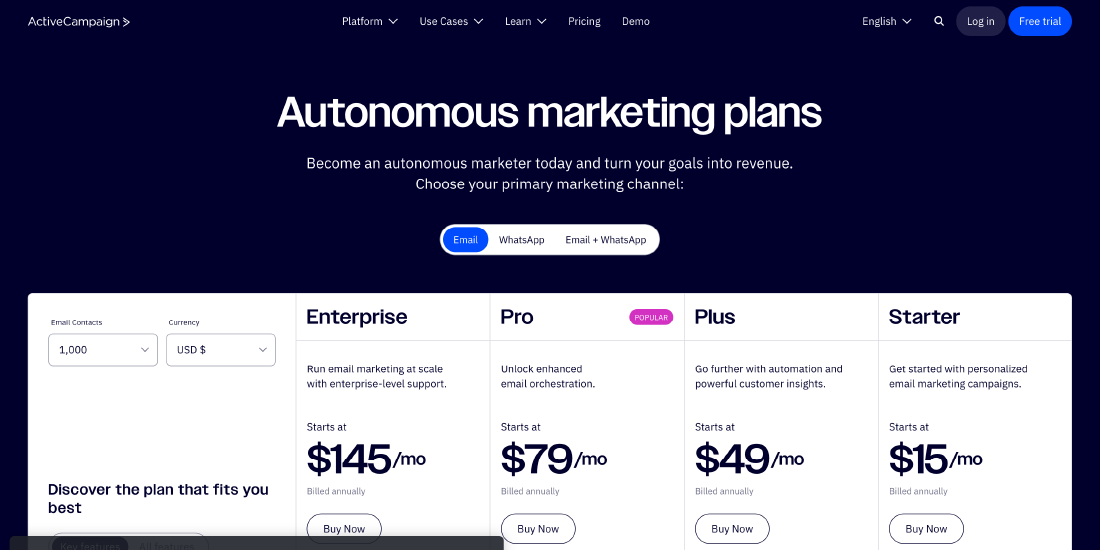
ActiveCampaign
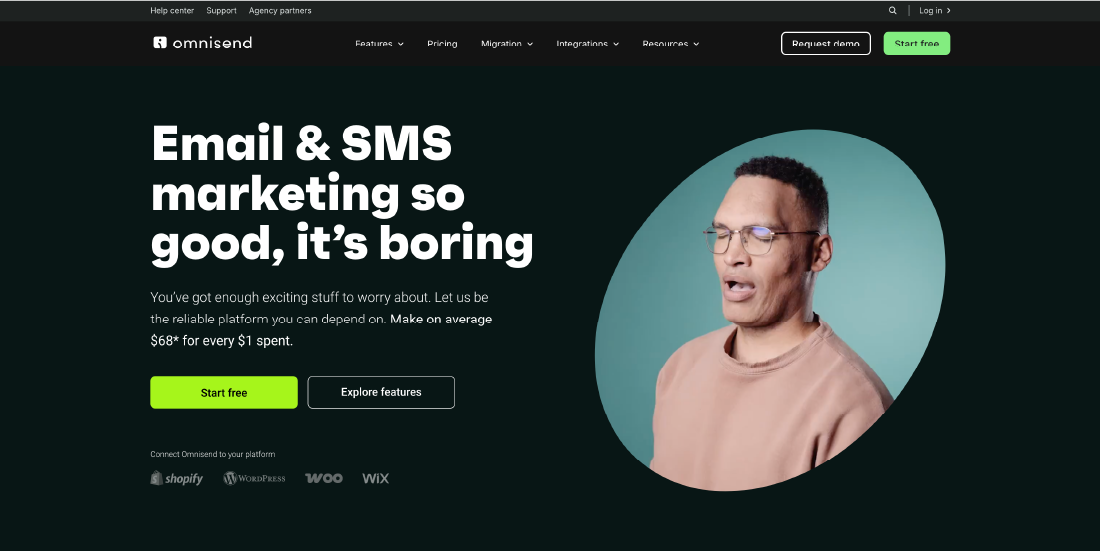
Omnisend
| Email Marketing Tool | Best For | Key Features | Pricing |
| HubSpot | Universities seeking integrated CRM and marketing automation | Free CRM, advanced automation, multi-channel campaigns, robust analytics | Free plan available; Paid plans start at $15/month |
| Mailchimp | Institutions with basic email needs and large contact lists | Drag-and-drop editor, audience segmentation, pre-built templates | Free for 500 contacts; Paid plans start at $13/month |
| Constant Contact | Schools needing event management and ticketing | Event registration tools, social media integration, automated welcome emails | Plans start at $12/month for 500 contacts |
| ActiveCampaign | Colleges requiring advanced automation and CRM features | 900+ automation templates, predictive analytics, sales automation | Plans start at $15/month for 1,000 contacts |
| Omnisend | Institutions focused on ecommerce and course sales | Multi-channel campaigns, ecommerce integrations, SMS marketing | Free for 250 contacts; Paid plans start at $16/month |
| Envoke | Canadian universities requiring CASL compliance | Data stored in Canada, advanced consent management, CASL compliance | Plans start at $69 CAD/month for 2,500 contacts |
How Higher Education Institutions Can Choose the Right Email Marketing Software
Selecting the right email marketing platform requires a thoughtful evaluation of your institution’s communication needs, operational workflows, and long-term growth plans. The following step-by-step approach helps colleges and universities choose a solution that supports enrollment, engagement, and efficiency.
Step 1: Map Your Communication Workflows
Begin by documenting all email communications your institution currently sends. This includes prospective student nurture campaigns, current student updates, alumni newsletters, event promotions, and internal communications. Identify which processes are manual versus automated, where bottlenecks occur, and which messages generate the highest engagement. This analysis highlights gaps and reveals which platform capabilities will deliver the most impact.
Step 2: Identify Must-Have Features
Create a list of essential features based on institutional priorities. Common requirements include CRM integration, advanced automation, segmentation capabilities, event management, SMS messaging, and detailed analytics. Also, identify systems the email platform must integrate with, such as your student information system (SIS), admissions CRM, event tools, or payment platforms. Prioritize features that directly support enrollment goals or significantly reduce staff workload.
Step 3: Evaluate Ease of Use and Team Fit
Assess how intuitive each platform is for your team’s skill level. Request product demos or free trials to test the email editor, automation workflows, and reporting dashboards. Consider whether your staff can begin using the platform quickly or will require extensive training. Platforms with visual, drag-and-drop interfaces are often more accessible to non-technical users and improve adoption across departments.
Step 4: Calculate Total Cost at Scale
Look beyond entry-level pricing and estimate long-term costs as your contact database grows. Consider projected contact volumes over the next one to two years, email sending limits, additional feature requirements, and potential add-ons such as SMS marketing or premium support. Since some platforms price by contact count and others by email volume, choose a model that aligns with your expected usage.
Step 5: Choose a Flexible, Scalable Platform
Select a platform that can grow with your institution and adapt to evolving communication strategies. Solutions like HubSpot allow higher-education institutions to centralize marketing, admissions, and student engagement within a single CRM-driven platform.
Conclusion
Understanding what tools are most effective for email marketing in the education sector allows institutions to make informed technology decisions that support enrollment, engagement, and long-term relationships. Platforms that offer automation, segmentation, analytics, and seamless integration with campus systems deliver the greatest value. By selecting a scalable and user-friendly email marketing solution, educational institutions can enhance communication effectiveness, optimize resources, and achieve measurable outcomes across the student lifecycle.
Frequently Asked Questions
Question 1. What is the best email marketing tool for higher education?
Question 2. What features should I look for in email marketing tools for higher education?
Question 3. How much does email marketing software for higher education cost?
Question 4. What are the best practices for email marketing in higher education?
Question 5. What tools are most effective for email marketing in the education sector?
Written By






No comments yet. Be the first to comment!
Leave a Comment