

Table Of Contents
- 1Introduction
- 2Why is a CRM Important for Universities?
- 3Key Reasons a CRM Is Important for Universities
- 4Benefits of CRM for Higher Educational Institutions
- 5Best CRM systems for higher education institutions
- 6How to Select the Best CRM for your Higher Education Institution?
- 7Implementing a CRM for Higher Education Institutions
- 8Conclusion
Introduction
Higher education institutions today operate in a hyper-competitive and student-focused environment. Colleges and universities are not just places of instruction; they are also responsible for supporting students throughout their enrollment & academic journey. From the first inquiry to alumni engagement, institutions handle large volumes of student information every day to ensure students are guided, supported, and able to succeed.
Traditionally, the data was distributed across multiple different systems, including admission systems, spreadsheets, emails, ERP systems, and learning systems. Several challenges have arisen regarding data duplication, delayed responses, communication, and visibility in the student lifecycle, thereby impacting enrollment rates and the educational institution’s growth trajectory.
This is where the importance of a CRM (Customer Relationship Management) system comes in. While in the business world, a CRM system is associated with sales and marketing, in the higher education sector, it has become an increasingly vital tool. A well-integrated CRM system helps institutions manage their relationships with prospective students throughout the enrollment lifecycle.
This comprehensive blog explains the integration of CRM in the higher education sector. It explains what it is, why it is important, how it works, the benefits, challenges, and best practices.
Why is a CRM Important for Universities?
Universities interact with students at many stages. A student may first visit a website, then apply, get admitted, enroll, ask questions during their studies, and later become an alumnus. Each of these steps creates information and communication. If this information is stored in different systems or spreadsheets, it becomes difficult to manage and easy to lose track of students. A CRM helps universities keep all student-related information in one system and manage these interactions clearly and efficiently.
Key Reasons a CRM Is Important for Universities
A CRM plays a critical role in helping universities manage student relationships more systematically and effectively. It brings clarity, consistency, and structure to how institutions engage with students across their student journey.
Keeps All Student Information within a single system
A CRM brings all student-related information into one centralized system. This includes inquiry details, application progress, communication history, and support interactions. With this complete view, university staff no longer need to rely on multiple tools or disconnected records. Everyone working with a student can quickly understand their background, current status, and next steps.
Improves Recruitment and Admissions Coordination
Universities manage thousands of prospective students at different stages of the admissions process. A CRM helps track each applicant’s journey clearly, from first inquiry to enrollment. Admissions teams can see where students drop off, follow up at the right time, and ensure that no qualified applicants are overlooked due to manual gaps or delays.
Enables Clear and Consistent Communication
Students expect timely and relevant information during the admissions process. A CRM helps institutions send the right message at the right time based on a student’s stage, interests, or actions. This reduces confusion, prevents missed deadlines, and ensures students receive consistent guidance throughoutthe process.
Reduces Manual Work and Administrative Burden
Without a CRM, admission staff often spend significant time updating spreadsheets, searching emails, and sending repetitive follow-ups. A CRM automates many of these routine tasks, such as reminders, status updates, and internal notifications. This allows teams to focus more on meaningful student engagement rather than administrative work.
Provides Insights for Better Decision-Making
A CRM offers clear reports and dashboards that show trends in applications, enrollments, engagement, and retention. University leaders can use this data to understand what is working, identify gaps, and plan more effectively. Decisions are based on real insights rather than assumptions.
Strengthens Student Support and Retention
Beyond admissions, a CRM helps institutions support students throughout their academic journey. By tracking engagement and key milestones, staff can identify when students may need additional support and intervene early. This proactive approach improves retention and helps more students complete their programs.
CRM helps universities manage student relationships in a structured, organized way throughout the entire student journey. Centralizing information and enabling consistent communication allows institutions to operate more efficiently while improving the overall student experience.
Benefits of CRM for Higher Educational Institutions
Within the realm of colleges, universities, and other such institutions, the volume of information within the student body, as well as the flow of information between several departments within such institutions, is very high. Without a well-organized system, information becomes fragmented, and several teams operate in silos. This is where the CRM helps bring order to the chaos by improving interactions between universities and students. The advantages of a CRM system are far-reaching.
Core Advantages of CRM Systems for Higher Education
The benefits of a CRM extend beyond admissions and recruitment. By centralizing data and automating processes, CRMs help institutions improve efficiency, collaboration, and student outcomes.
Centralized and Reliable Student Information
A customer relationship management (CRM) system provides a comprehensive and dependable facility for storing and managing all information about students, including inquiries, application processes, documents, and support issues.
Example: If a student initiates an inquiry with the university, the admissions personnel can instantly retrieve the application status and communication history of the student so they can provide a correct answer without having to ask the student to repeat the same information.
Improved Student Recruitment and Enrollment
CRMs allow institutions to see how prospective students move through the admissions funnel, one step at a time, from initial inquiry to enrolment. Admissions teams can quickly identify where students are dropping out and which outreach activities are most effective.
Example: An institution may discover by analyzing CRM data that students who attend virtual information sessions are more advanced in the application process. Consequently, the institution focuses its recruitment efforts on these sessions and tailors follow-up communication to support application completion.
Personalized and Timely Communication
A CRM allows institutions to communicate with each student about what matters most at each point in the journey. Students receive communications that align with their needs and timelines instead of generic messages.
Example: Reminders about pending steps are sent to students who have begun but not completed their application; enrolled students receive orientation and enrollment information.
Enhanced Operational Efficiency
Many of the mundane tasks can be automated using a customer relationship management (CRM) system, such as the sending of reminders, status notifications, and follow-up tasks. This will minimize the chances of errors occurring. As a result, enrollment staff will be able to devote more time to supporting and mentoring students rather than on administrative tasks.
Example: The CRM will automatically generate follow-up tasks for the admissions team, send confirmation notifications to the student, and notify the student of the status change when the application is submitted.
Better Collaboration Across Departments
A CRM enables multiple departments to access the same student information. Admissions, advising, and student services teams can work together without duplicating efforts.
Example: An advisor can view notes from the admissions team to understand a student’s background and needs.
Data-Driven Decision Making
The reports and dashboards in the CRMs include trends in application, enrollment, retention, and engagement. The university administration can use the data to plan recruitment strategies. The decisions are not made based on assumptions but on real data.
Example: Using CRM dashboards, university admissions teams can see which regions generate the most applications, where students drop off in the admissions process, and which campaigns drive enrollment. This insight helps them refine recruitment strategies, invest in high-performing channels, and address gaps based on actual data rather than assumptions.
Stronger Student Retention and Success
Tracking student engagement and milestones helps a college use a CRM to identify students who may need a helping hand before things go awry. If a student disengages or misses a critical milestone, a staff member may step in to help, which improves not only staying power but also the likelihood of completion.
Example: A student who stops accessing the learning portal or misses important dates is identified by the CRM early in the process. The advisors are notified to intervene, provide support and help the student before they disengage from the process, which helps increase retention and improve student success.
In a nutshell, a CRM helps higher-education teams better manage their relationships with students while reducing unnecessary work processes. Therefore, this would facilitate better decision-making while ensuring better experiences and outcomes for the students.
Best CRM systems for higher education institutions
Choosing the right Customer Relationship Management (CRM) system is essential for any higher education institution. The right CRM allows you to personalise communications, automate manual processes, gain analytics that inform your strategy and track students from first contact through to graduation and beyond. Although there are a number of options, not all are suitable for the unique needs of colleges and universities. The top CRM programmes in higher education today are listed below. Each has its own strengths and recommended uses.
Salesforce Education Cloud
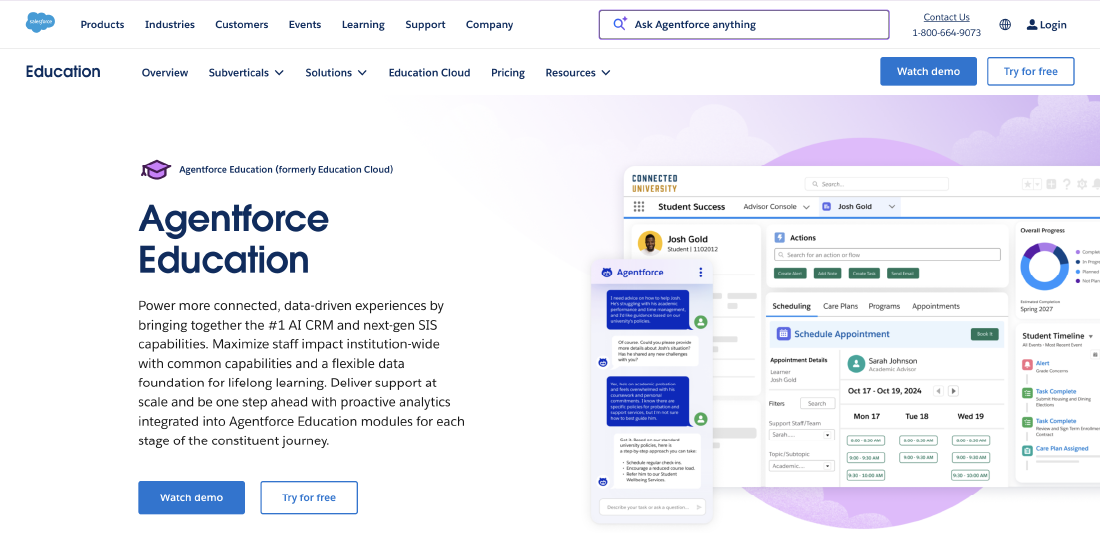
Salesforce Education Cloud is a robust CRM solution designed from the ground up to manage relationships throughout the student lifecycle. This solution provides a unified view of student information so that admissions, advising, student services, and alumni relations teams can work from the same perspective on the student. Salesforce Education Cloud is popular among large universities due to its advanced automation, reporting, and integration capabilities. Salesforce provides AI-based insights that can also be used.
Ideal for: High-enrolment or multi-branch organisations that require a sophisticated enterprise-grade CRM solution to sustain complex workflows, cross-branch collaboration and long-term scalability throughout the student lifecycle.
Slate
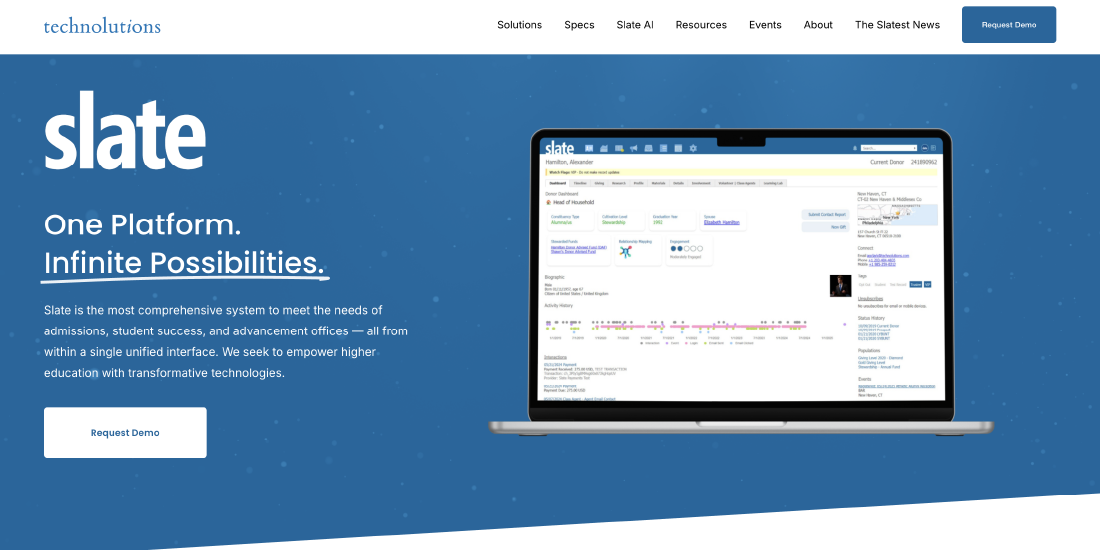
Slate is a higher education CRM with a strong focus on admissions and enrollment workflows. Slate unifies application tracking, event, communication and application review tools within one manageable platform, so admissions teams can stay organised and be more productive. Colleges choose Slate because it meets the everyday needs of admissions offices without a lot of technical hassles.
Ideal for: Colleges and universities seeking a CRM that closely reflects how admissions teams work day to day, with a strong emphasis on recruitment, application review, and enrollment management.
Ellucian CRM Recruit
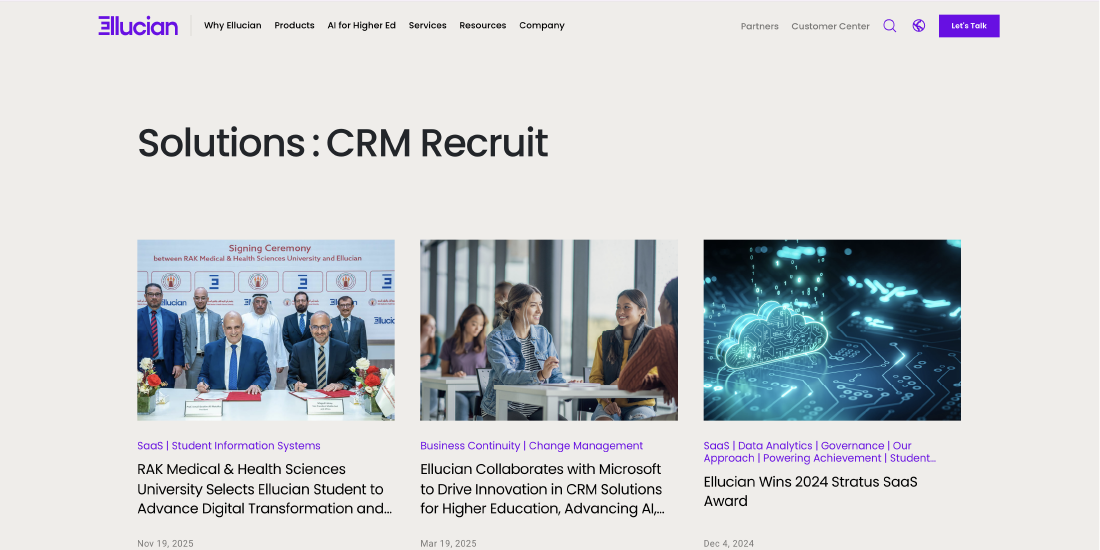
The Ellucian CRM is a higher-ed tool that is tightly coupled with Ellucian’s Student Information Systems (e.g., Banner, Colleague). It tracks recruiting, advising and student engagement and maintains data consistency with other admin systems. Enterprises that have used Ellucian SIS products typically prefer this CRM for data integration purposes.
Ideal for: Colleges and universities already invested in the Ellucian technology stack.
HubSpot
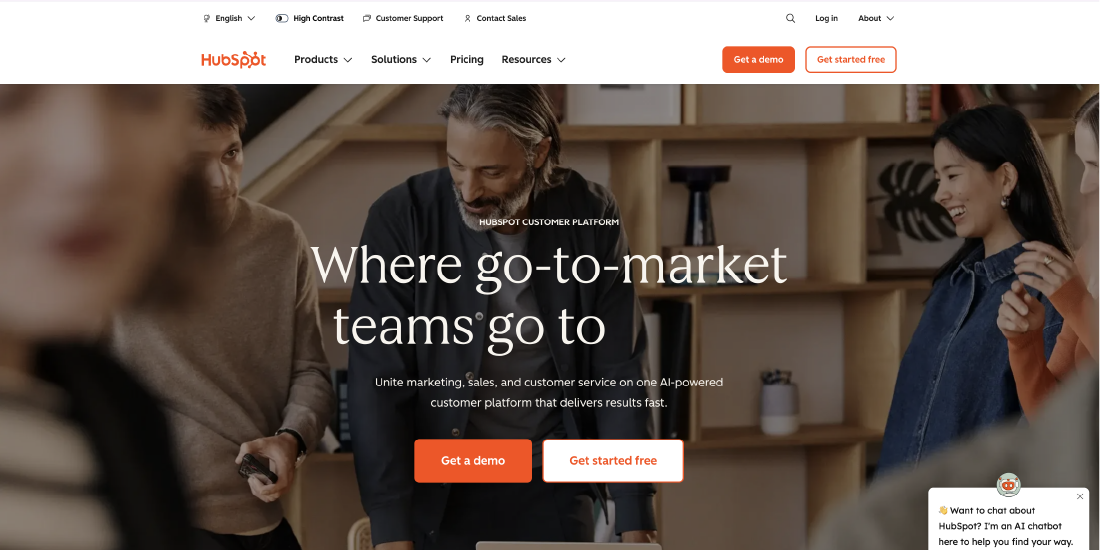
HubSpot CRM is known for its ease of use and marketing automation capabilities. Although it was not created for the higher education industry, it could be used by higher education organizations that need marketing, communication, and engagement capabilities. It also offers a free version, which would be beneficial to smaller higher education organizations.
Ideal for: Smaller institutions or enrollment marketing teams looking for an intuitive CRM that supports communication, outreach, and engagement without a steep learning curve.
LeadSquared Higher Education CRM
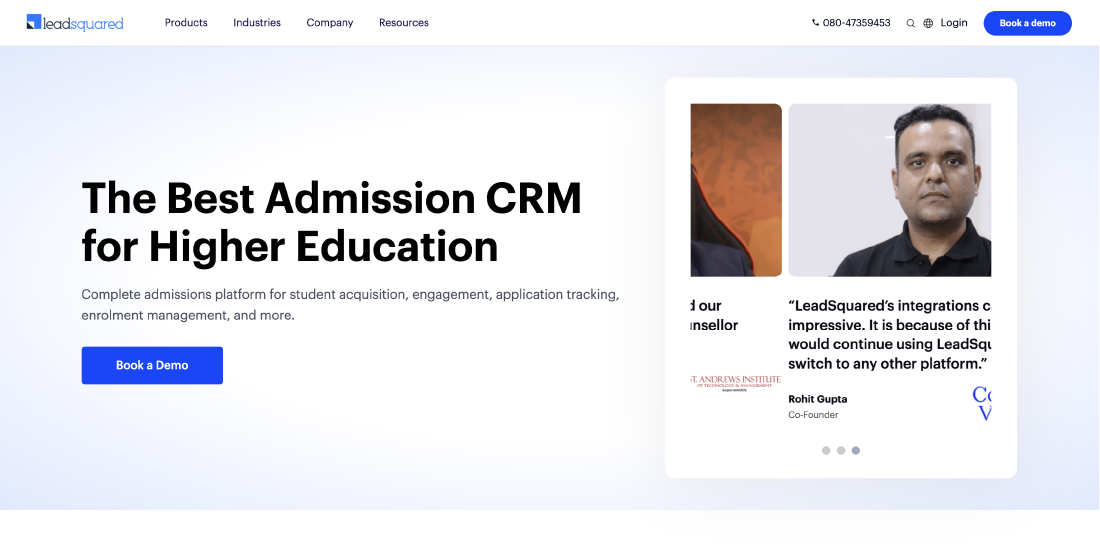
The CRM system LeadSquared places a high value on automated engagement procedures and prompt lead follow-up. It provides analytics and support for the admissions process without requiring complex technical setups. This makes it appropriate for organisations that handle a large volume of enquiries.
Ideal for: Institutions handling a high volume of inquiries that require timely follow-ups, structured workflows, and clear visibility into applicant engagement.
Zoho CRM for Education
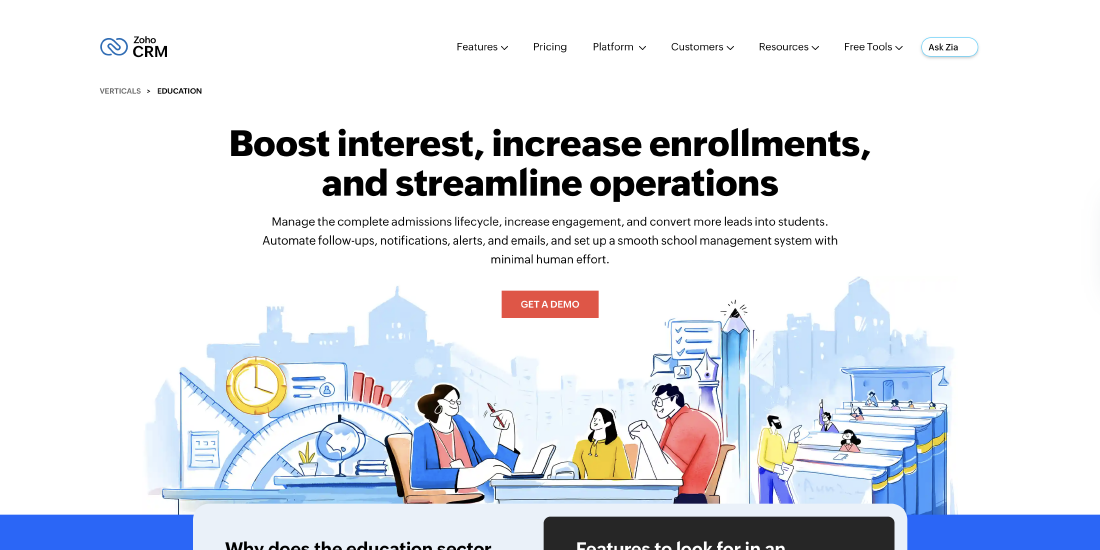
Zoho CRM is an exceptional choice for its flexibility, cost-effectiveness, and incorporated automation tools, contact management, and communication workflow. Small institutions may benefit from its cost-effectiveness and adaptability.
Ideal for: Institutions with limited resources that need a flexible, cost-effective CRM to manage inquiries, communication, and basic admissions processes.
Each CRM system has its own set of strengths that best match the intent of colleges and universities. For example, large, enterprise-type CRMs like Salesforce offer considerable capabilities, while others like Slate or Ellucian are geared towards higher education. Then there are those like HubSpot or Zoho that are quite flexible and user-friendly, making these a good fit for smaller organizations or sections of a university.
How to Select the Best CRM for your Higher Education Institution?
Selecting a CRM is not only about choosing the right technology; it also involves many other strategic facets. Its implementation can enhance efficiency, boost student involvement, and help the organization achieve its goals and aspirations. However, it is important to make specific observations, and the best CRM for one university may not be the best for another; the evaluation system ensures compatibility with the university’s needs and long-term plans as well.
Key Steps to Choose the Right CRM
Understand Institutional Goals and Priorities
To begin the journey of choosing the best CRM for the institution, it is necessary to clearly define the organization’s overall objectives. For example, the Institution’s administrationmusto decide whether the key objective is to improve recruitment, retention, or student services. If the primary objective of an organization is to improve its admissions outreach campaigns, it would need a strong CRM.
Map Current Processes and Challenges
Ahead of evaluating any CRM options, institutions should document existing processes across departments. This includes how inquiries are tracked, how applications are processed, and how student support is provided. Mapping current workflows reveals inefficiencies and areas that need improvement. For instance, outlining how prospective students are followed up after an inquiry helps identify whether automation could reduce manual work and improve response times.
Evaluate Integration Capabilities
For a CRM system to thrive, it should integrate well with other critical infrastructure that includes the Student Information System (SIS), Learning Management System (LMS), finance tools, as well as numerous communication tools. When opting for a CRM system, it is critical for an institution to establish compatibility with other critical infrastructure. For example, numerous organizations with Ellucian SIS infrastructure often prefer a CRM system that is capable of communicating with SIS to avoid data duplication.
Assess User Experience and Accessibility
The CRM should be user-friendly for all stakeholders, ranging from admissions staff, academic advisors, and student services staff. The user adoption of a CRM is greatly influenced by its user-friendliness. Institutions should ensure that their staff, particularly those representing different departments, participate in product demonstrations and trials. This is to obtain feedback on their perceptions of user-friendliness. A hard-to-use CRM can be detrimental.
Review Reporting and Analytics Capabilities
Good CRMs should include robust reporting features to enable informed decision-making. It is recommended that institutions consider the ease of obtaining insights from potential systems regarding the performance of the recruitment funnel, student retention, and campaign success. For instance, a dashboard that displays enrollment trends over time will help institutions plan for the next recruitment cycle.
Evaluate Vendor Support and Training
The importance of the CRM extends beyond the product’s technical capabilities. The quality of vendor support, the quality of training materials, and the learning opportunities available are important considerations for the product’s overall success within the institution.
Compare Total Cost of Ownership
Additionally, cost evaluation should extend beyond the license cost. The institutions should consider the costs of implementation, integration, training, support, and any planned customizations. Lower costs may mean higher costs in the future, especially for further integration or support. A cost estimate will prevent any unexpected cost overruns.
A combination of technical analysis, strategic clarity, and careful consideration of user needs goes into choosing the best CRM. Institutions can find a CRM system that not only meets their short-term needs but also supports long-term development and student success by setting objectives, reviewing current processes, and carefully evaluating each option’s integration, usability, and support.
Implementing a CRM for Higher Education Institutions
For a university, implementing a CRM system is not only an ed-tech initiative but an actual transformation. Successfully implementing a CRM system requires proper action planning, inter-divisional effort, data integrity, and a strong emphasis on adoption for success. Ultimately, a CRM system implemented correctly can help the university be more efficient, student-centric, and beneficial across the entire process.
Best Practices for Implementing a CRM in Higher Education
Define Clear Objectives Before Implementation
Before implementing a CRM, institutions should clearly define what success looks like. This may include goals such as reducing application processing time, improving response rates to student inquiries, or increasing retention. For example, an institution may aim to ensure that all prospective students receive a response within 24 hours of submitting an inquiry.
Involve Stakeholders Across Departments
CRM systems impact multiple teams, including admissions, advising, IT, student services, and alumni relations. Involving these stakeholders early ensures the system reflects real operational needs. For instance, admissions teams can define recruitment workflows, while advisors can specify how student support interactions should be tracked.
Prepare and Clean Existing Data
Another key to a successful CRM implementation is data quality, and institutions should conduct a data audit of existing student data before migrating, eliminating duplicates and ensuring uniformity in data presentation formats. This will ensure that clean data generates authentic reports and avoids any confusion once the CRM has been implemented. For example, using similar names and standardized contact details helps ensure there are no duplicate student records in CRM systems.
Planned System Integrations
A CRM must integrate flawlessly with existing systems, such as the Student Information System (SIS), the Learning Management System (LMS), and communication tools. Institutions must define which data needs to align and how frequently. Proper integration prevents manual updates and ensures staff always work with current information.
Configure Workflows and Automation
CRM workflows should reflect institutional processes rather than forcing teams to change how they work overnight. Automation can handle tasks such as sending reminders, assigning follow-ups, or updating statuses. For example, when an application is submitted, the CRM can automatically notify the admissions team and send confirmation to the student.
Provide Training and Support for Users
User adoption is extremely critical to CRM success. Institutions should implement role-based training so that each team understands how to use the system effectively. Ongoing support and clear documentation help staff feel confident and reduce their aversion to change.
Conclusion
The CRM integration is the most sought-after feature in modern student-centric education, and it is not just a blueprint for modern colleges and universities. This is because the CRM integration will allow Institutions to dissolve the data silo and deliver a seamless and fluid student-centric personal experience at every point in the student lifecycle. This means that the CRM integration will allow the different departments in the Universities to be more effective and respond to changes in real time. This will result in better student retention and Student Enrollment. Universities that are committed to heavy CRM integration in the industry will be better positioned to pivot and thrive in the dynamic education sector.
Frequently Asked Questions
What is a CRM in higher education, and how is it different from a traditional CRM?
How does a CRM improve student recruitment and enrollment?
Can a CRM help improve student retention and success?
How should a university choose the right CRM system?
Written By






No comments yet. Be the first to comment!
Leave a Comment