

Table Of Contents
- 1Introduction
- 2What is Campus Management? How can you improve at your university?
- 3Key Areas Included in Campus Management
- 4Features of Campus Management Software
- 5Benefits of Campus Management Software for Educational Institutions
- 6Types of Campus Software Solutions
- 7Top Campus Management Software Solutions
- 8 How to Choose the Right Campus Management Software
- 9Summary
Introduction
Modern universities are navigating unprecedented complexity, serving diverse student populations, managing sprawling administrative tasks, and meeting heightened expectations for digital experiences. A cornerstone of this evolution is campus management systems, integrated platforms that unify admissions, academic records, scheduling, financials, and student services into a single digital backbone. Today, roughly 70% of North American higher education institutions have adopted cloud-based student information systems, reflecting a broader shift toward scalable, real-time operations that boost efficiency and student satisfaction. Industry forecasts expect the student management software market to grow from about $15.3 billion in 2024 to over $32 billion by 2029, driven by demand for AI-driven analytics and personalized student engagement. These modern systems aren’t just administrative, they unlock data-driven decision-making, mobile access, and seamless integration across campus services, positioning institutions to thrive in an increasingly competitive educational landscape.
What is Campus Management? How can you improve at your university?
Campus management is the end-to-end coordination of academic, administrative, and student-facing operations within a university, powered by people, processes, and technology working in sync. It covers everything from admissions, enrollment, and academics to exams, housing, and finance, as well as student support, compliance, and alumni engagement. In short, it’s how a university runs smoothly behind the scenes while delivering an excellent student experience up front. Good campus management turns chaos into clarity. Excellent campus management turns data into decisions.
Let’s discuss how it actually works on campus:
Unify Systems & Data
Most universities run on a patchwork of systems, SIS for records, CRM for recruitment, LMS for learning, finance tools for billing, and spreadsheets everywhere. The problem? Each system tells a different version of the truth.
Improving campus management starts with connecting these systems so that data flows automatically and consistently. When admissions updates a student’s status, it should be reflected instantly in academics, housing, and billing. A unified data layer eliminates duplicate records, reduces manual reconciliation, and provides leaders with a complete, real-time view of each student’s journey, from inquiry to alumni status.
Automate What Slows You Down
If staff are manually checking documents, updating statuses, sending follow-ups, or chasing approvals, efficiency is already lost. Automation enables universities to handle high volumes without overloading teams. For example:
- Applications move automatically based on status changes
- Documents are validated using rules or AI
- Students receive timely, personalized notifications
The result? Faster turnaround times, fewer errors, and staff focusing on complex, high-value work, not repetitive admin.
Use Data, Not Gut Feel
Decisions based on instinct alone don’t scale. Modern campus management relies on actionable analytics to track enrollment yield, course demand, retention risk, student engagement, and operational bottlenecks. Real-time dashboards help leadership identify what’s working and what’s broken before it becomes a crisis. Data-driven institutions intervene earlier, allocate resources more effectively, and continuously improve outcomes, both academically and financially.
Design for the Student Experience
Students compare your digital experience to the apps they use daily, and they’re not forgiving. Improving campus management means designing around student convenience:
- Self-service portals for forms, payments, and status checks
- Mobile-friendly access to schedules and notifications
- 24/7 support via chatbots or knowledge hubs
When students feel informed, supported, and in control, satisfaction rises and so do retention and completion rates.
Train Teams & Evolve Processes
Technology alone won’t fix broken workflows, real improvement comes when universities invest in people, processes, and platforms. Staff need training to use systems effectively, understand data insights, and adapt to new workflows. At the same time, outdated approval chains and manual handoffs must be simplified. Continuous process improvement ensures campus management evolves with changing student needs, regulations, and institutional goals.
Key Areas Included in Campus Management
Campus management spans the whole student lifecycle and serves as the institution’s operational backbone. The goal is simple, run the campus efficiently while delivering a seamless student experience.
Admissions & Enrollment Management
Admissions is the university’s front door and one of the most operationally intensive areas of campus management. It covers lead capture, applications, document submission, evaluations, offers, and enrollment confirmations. Modern universities handle thousands, sometimes hundreds of thousands, of applications across multiple intakes and programs. Effective admissions management relies on automated workflows, centralized applicant data, and real-time visibility into the funnel. When systems are unified, staff can track applicant progress in real time, reduce processing delays, and identify drop-off points early. Strong enrollment management directly improves conversion rates, planning accuracy, and revenue predictability.
Student Information & Records Management
This area serves as the institution’s single source of truth. It manages student profiles, academic history, demographic data, compliance records, and lifecycle status from admission through graduation and beyond.
Poor records management leads to duplicate data, reporting errors, and compliance risks. Modern campus management systems centralize student data, enforce validation rules, and provide role-based access across departments. Accurate, accessible records ensure smoother audits, better student support, and informed decision-making across the university.
Academic & Curriculum Management
Academic management governs how programs are structured and delivered. It includes curriculum design, course catalogs, credit requirements, timetables, faculty assignments, grading frameworks, and progression rules.
Effective academic management ensures consistency across departments, compliance with accreditation standards, and flexibility to introduce new programs quickly. When digitised and well-integrated, it reduces scheduling conflicts, improves faculty workload planning, and ensures students follow clear academic pathways, leading to higher completion rates and better educational outcomes.
Student Services & Engagement
This area focuses on everything outside the classroom that shapes student success. It includes advising, counseling, career services, housing, health services, clubs, and co-curricular activities. Modern campus management platforms enable proactive engagement by tracking student behavior, attendance, and service usage. Early alerts help institutions identify at-risk students and intervene before issues escalate. A strong student services ecosystem improves satisfaction, retention, and overall student wellbeing, key metrics for institutional reputation.
Finance & Fee Management
Finance is the operational backbone of the university. This area manages tuition billing, fee structures, scholarships, financial aid, refunds, and regulatory reporting. Integrated finance management ensures accurate billing, real-time payment tracking, and transparency for students. Automation reduces manual errors, improves cash flow visibility, and simplifies reconciliation. When aligned with enrollment and student records, finance teams can forecast revenue more accurately and support data-driven institutional planning.
Features of Campus Management Software
Campus Management Software (CMS) integrates university administrative functions into a unified system, streamlining operations across admissions, student records, academics, finance, and student services. By automating tasks, improving data accuracy, and offering real-time insights, CMS enhances both administrative efficiency and student experience.
- Unified Student Data: Centralizes all student information, from admissions to graduation, ensuring data consistency and accessibility across departments.
- Admissions & Enrollment Automation: Automates application processing, document verification, offer generation, and enrollment confirmation to improve efficiency and reduce errors.
- Course & Curriculum Management: Facilitates course scheduling, faculty assignments, and curriculum design, ensuring academic integrity and streamlined timetabling.
- Fee & Finance Management: Manages tuition fees, scholarships, financial aid, and billing processes, improving transparency and reducing manual errors.
- Student Services Management: Tracks and manages housing, health services, counseling, career services, and extracurricular activities, ensuring student well-being and engagement.
- Reporting & Analytics: Provides real-time dashboards and insights on enrollment trends, student performance, and financial health to support data-driven decision-making.
- Communication Tools: Enables automated notifications, reminders, and alerts to students, staff, and faculty, improving engagement and responsiveness.
- Mobile Access: Provides mobile-friendly access for students and staff, enabling them to manage academic schedules, grades, payments, and more on their phones.
- Integration Capabilities: Seamlessly integrates with other institutional systems like LMS, SIS, CRM, and finance tools, ensuring smooth data exchange and operational synergy.
- Compliance & Security: Ensures that student data and institutional operations adhere to legal regulations like FERPA, GDPR, and other relevant standards.
Benefits of Campus Management Software for Educational Institutions
Campus Management Software (CMS) provides educational institutions with a streamlined, efficient way to manage day-to-day operations. By integrating key functions like admissions, academics, finance, and student services into a single platform, CMS reduces manual work, improves data accuracy, and enhances the overall student and faculty experience.
Improved Operational Efficiency
Automates administrative tasks like admissions, scheduling, and fee collection, reducing manual errors and freeing up staff time for more strategic activities.
Streamlined Data Management
Centralizes all student, faculty, and academic data in one system, ensuring accuracy and consistency while enabling easy access across departments.
Enhanced Student Experience
Offers students self-service portals for accessing grades, schedules, and payments, and provides timely notifications and updates, improving engagement and satisfaction.
Data-Driven Decision Making
Provides real-time analytics and reporting to help administrators make informed decisions on student performance, resource allocation, and institutional growth.
Cost Savings and Resource Optimization
Reduces operational costs by automating processes and optimizing resource usage (e.g., faculty assignments, classroom scheduling), ensuring more efficient use of both financial and human resources.
Types of Campus Software Solutions
Modern universities rely on multiple campus software solutions to manage academics, administration, and student services efficiently. These systems work together to digitize operations, improve collaboration across departments, and enhance the overall student experience, from admission to graduation and beyond.
Student Information System (SIS)
A Student Information System is the core system of record for any university. It manages student data throughout the entire lifecycle, from admission to graduation. SIS stores personal details, enrollment status, course registrations, grades, transcripts, attendance, and degree progress.
A well-implemented SIS ensures data accuracy, reduces duplication, and allows different departments to access consistent information. It also supports compliance reporting, accreditation requirements, and long-term academic planning, making it essential for smooth institutional operations.
Learning Management System (LMS)
An LMS supports teaching, learning, and assessment in digital, hybrid, or online environments. It allows faculty to upload course materials, conduct assessments, track attendance, grade assignments, and engage students through discussions and quizzes.
For students, an LMS provides a centralized learning space accessible anytime, anywhere. For institutions, it improves instructional consistency, enables scalable learning delivery, and supports analytics to track academic engagement and performance.
Campus Management System (CMS)
A Campus Management System is an integrated platform that brings together admissions, academics, exams, finance, and student services into a single system. Unlike standalone tools, CMS focuses on end-to-end operational coordination across departments.
By automating workflows and unifying data, CMS reduces administrative burden, improves process transparency, and ensures faster service delivery. It plays a key role in improving efficiency, governance, and the overall campus experience.
Customer Relationship Management (CRM)
CRM systems in education focus on student recruitment, communication, and engagement. They manage leads, inquiries, applications, follow-ups, and personalized communication across the student lifecycle.
CRMs help institutions track interactions, identify drop-off points in the admissions funnel, and run targeted campaigns. When integrated with SIS and CMS, CRM systems improve enrollment outcomes, student retention, and long-term engagement.
Finance & ERP Systems
Finance and ERP systems manage tuition billing, payments, scholarships, payroll, procurement, and budgeting. They ensure financial transparency, compliance, and accurate reporting.
When connected to enrollment and student data, these systems enable better revenue forecasting and financial planning. Automation reduces manual errors, speeds up reconciliation, and supports data-driven decision-making across the institution.
Top Campus Management Software Solutions
Campus Management Software solutions help universities manage admissions, academics, finance, student services, and compliance through centralized, technology-driven platforms. The right solution improves efficiency, data accuracy, and the student experience, but each has its own strengths and trade-offs.
Ellucian (Banner / Colleague)
Ellucian is one of the most widely adopted campus management platforms in higher education, especially among public universities and large institutions. It provides comprehensive support for admissions, student records, academics, finance, and compliance, all designed specifically for higher-ed workflows. Its strength lies in handling complex academic structures, regulatory reporting, and large student populations.
Pros:
- Built specifically for higher education needs
- Strong compliance, reporting, and accreditation support
- Scales well for large and multi-campus institutions
Cons:
- Implementation can be time-consuming and resource-intensive
- Higher licensing and maintenance costs
- The user interface may feel dated without upgrades
Workday Student
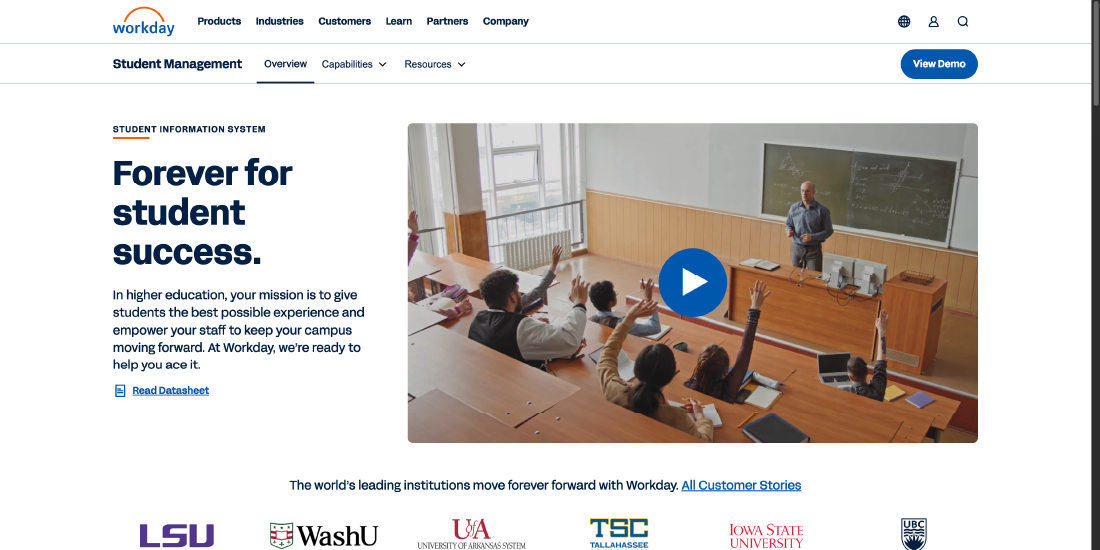
Workday Student is a cloud-native campus solution focused on real-time data, analytics, and seamless integration with Workday Finance and HCM. It supports the whole student lifecycle, from admissions to graduation, while offering modern dashboards and data-driven insights for leadership.
Pros:
- Real-time data visibility and strong analytics
- Unified platform for student, finance, and HR data
- Modern, intuitive user experience
Cons:
- Limited flexibility for highly customized academic models
- High cost, making it less accessible for smaller institutions
- Customizations often require certified partners
Oracle PeopleSoft Campus Solutions
Oracle PeopleSoft is a mature and highly configurable campus management system used by many large universities worldwide. It is known for its robust handling of student records, enrollment, and financials, and for its integrations with Oracle ERP systems, making it suitable for institutions with complex operational needs.
Pros:
- Highly customizable to fit institutional processes
- Strong integration with Oracle financial systems
- Proven stability for large-scale deployments
Cons:
- Often relies on on-premise infrastructure
- Requires dedicated IT resources for maintenance
- Steeper learning curve for users
Blackbaud Education Management
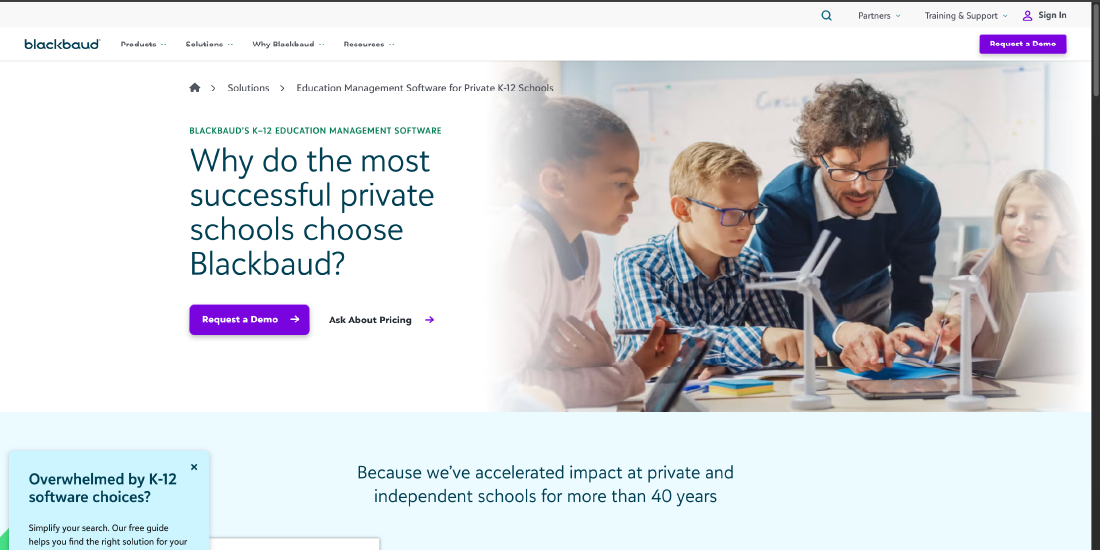
Blackbaud is widely used by private institutions and schools that offer both K–12 and higher education programs. It focuses on student information management, communication, and institutional advancement, with an emphasis on usability and engagement.
Pros:
- User-friendly interface for students and staff
- Strong communication and engagement tools
- Good fit for private and smaller institutions
Cons:
- Limited depth for complex academic workflows
- Not ideal for large research universities
- Advanced features may require additional modules
Element451
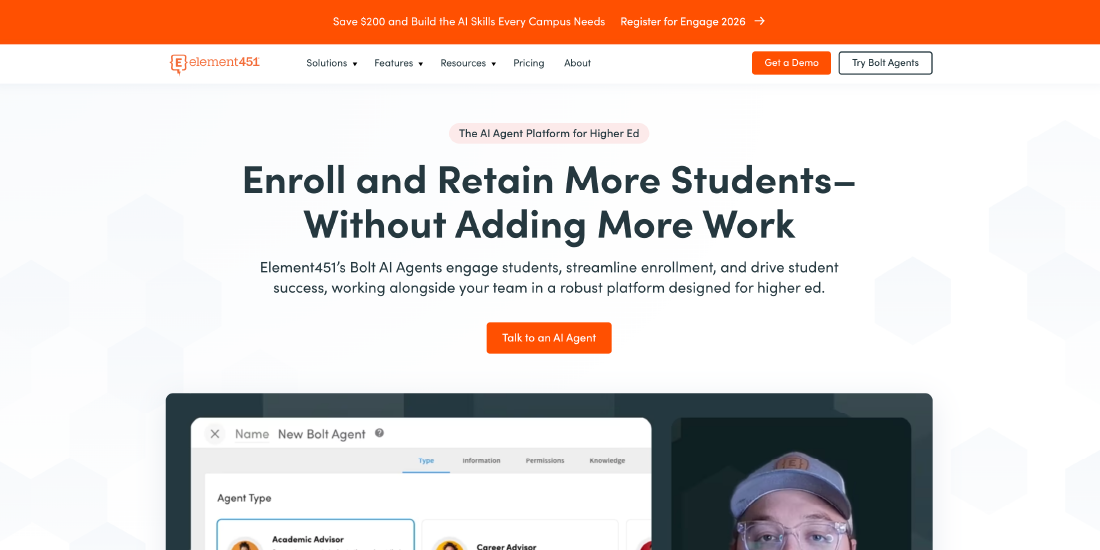
Element451 is a modern, CRM-driven platform designed to enhance recruitment, admissions, and student engagement. It excels in communication automation, personalized outreach, and enrollment funnel visibility, often working alongside an SIS rather than replacing it.
Pros:
- Strong focus on admissions and student engagement
- Excellent communication automation and personalization
- Easy to integrate with existing SIS platforms
Cons:
- Not a complete campus management or SIS solution
- Limited academic and financial capabilities
- Requires integration with other systems for end-to-end management
How to Choose the Right Campus Management Software
Choosing a campus management software isn’t about picking the “most popular” tool, it’s about selecting the right fit for your institution’s reality and future. Here’s how to do it smartly:
Start with Your Institutional Needs
Assess your size, program complexity, student volume, and delivery modes (on-campus, hybrid, online). A large public university needs deep SIS and compliance capabilities, while a growing private institution may prioritize admissions and engagement.
Look for End-to-End Coverage (or Smart Integration)
No single system does everything perfectly. Choose software that either covers key areas, such as admissions, academics, finance, and student services, or integrates seamlessly with your existing SIS, LMS, CRM, and ERP tools.
Prioritize Ease of Use
If staff need weeks of training and students avoid the portal, adoption will fail. A clean UI, self-service features, and mobile access are non-negotiable.
Evaluate Automation & Analytics
Strong campus management software should automate workflows and offer real-time insights. Look for dashboards, alerts, and reporting that help you act, not just observe.
Check Scalability & Flexibility
Your software should grow with you. Ensure it can support new programs, higher enrollment, and evolving academic models without expensive rework.
Don’t Compromise on Security & Compliance
Confirm support for FERPA, GDPR, role-based access, audit logs, and data governance. Compliance issues are costly, both financially and reputationally.
Summary
Modern universities are operating in a far more complex environment than ever before. Managing admissions, academics, finance, and student services across multiple systems has made efficiency and visibility critical. Campus management systems help institutions integrate these functions, creating a connected digital foundation for day-to-day operations. By unifying data, automating routine processes, and enabling real-time insights, universities can reduce administrative burden and respond faster to student needs. Strong campus management is not just about technology, it’s about improving decision-making, enhancing the student experience, and ensuring teams work with accurate, consistent information. When implemented thoughtfully, these systems help institutions scale sustainably while maintaining academic quality, compliance, and student success.
Frequently Asked Questions
Question 1. How long does it take to implement campus management software?
Question 2. What is the typical cost of campus management software?
Question 3. How do you measure the success and ROI of campus management systems?
Question 4. What’s the difference between a Student Information System (SIS) and a campus management system?
Written By


You May Also Like
 AI in Education

 AI in Education
 AI in Education
No comments yet. Be the first to comment!
Leave a Comment