


Table Of Contents
- 1Introduction
- 2What Is Admissions Automation?
- 3Challenges in Traditional University Admission Systems
- 4Key Features of an Automated University Admission System
- 5How Automation Enhances the University Admissions Funnel
- 6Top 15 Admission Automation Tools for Universities
- 7Education CRMs & Admissions Management Systems
- 8Application Management Systems
- 9Marketing & Nurture Campaign Tools
- 10Integration & Workflow Automation
- 11Analytics & Behavior Tracking
- 12Key Benefits of Automation in University Admissions
- 13Strategic Roadmap for Implementing Automation in University Operations
- 14Identifying New Automation Opportunities Across the Admissions Journey
- 15Real-World Examples of University Automation Success
- 16How to Select the Right Admissions Automation Solution
- 17Conclusion
Introduction
The admissions process is often complex, time-consuming, and prone to errors, affecting both applicants and staff. Managing applications, tracking documents, sending updates, and handling routine queries often delays decisions and adds to the administrative workload. Admissions automation offers a solution by streamlining these tasks, improving efficiency, and enhancing the overall applicant experience. By using AI-powered tools, automated workflows, and real-time notifications, universities can reduce errors, speed up decisions, and engage prospective students more effectively. This blog explores how institutions can implement automation for a transparent, accurate, and scalable admissions process.
What Is Admissions Automation?
Admissions automation uses technology to streamline repetitive tasks and deliver timely, personalized communications to prospective students. It acts like a smart assistant, automatically triggering emails, updating CRM records, sending reminders, and highlighting important actions for your team all based on a prospect’s behavior.
For instance:
- When a student downloads a brochure, they automatically receive a follow-up email with additional information.
- If someone starts an application but doesn’t complete it, they are sent a reminder with helpful guidance.
- When a prospect shows interest in housing or accommodation, the relevant team member is notified to follow up.
By automating these processes, admissions teams can work more efficiently, reduce manual effort, and focus on high-value, personalized interactions that drive engagement and enrollment.
Challenges in Traditional University Admission Systems
Traditional admission systems have been used for decades, but they come with many inefficiencies. Relying on manual tasks, paper forms, and separate communication channels causes delays, mistakes, and frustration for both students and staff.
Slow and Inefficient Processing
Traditional admissions systems depend heavily on paperwork and manual application reviews, making the process slow and resource-intensive. Large volumes of applications must be handled individually, which delays evaluations and decision-making. As a result, applicants often wait weeks for updates or outcomes. This lack of speed increases uncertainty and frustration among students.
High Risk of Errors and Document Misplacement
Manual data entry and paper-based admission workflows significantly increase the risk of human error. Important details may be entered incorrectly, documents can be misplaced, and application records may become inconsistent across systems. These issues can directly affect the accuracy of evaluations and delay critical admission decisions. When processes rely heavily on manual handling, maintaining data integrity becomes challenging. The incident at William & Mary Law School, where acceptance emails were mistakenly sent to over 400 applicants due to a review system error, clearly illustrates how procedural weaknesses can lead to serious consequences.
Limited Real-Time Communication
Many applicants do not receive timely updates about their application status, which leads to uncertainty and frustration. The absence of real-time notifications and a centralized communication system reduces transparency in the admissions process. Traditional admission models often leave students waiting for long periods without clear information. This lack of visibility makes it difficult for applicants to track progress or understand next steps.
Time-Consuming and Inconsistent Screening
Manual application screening demands substantial time and effort from admissions teams, particularly during high-volume admission cycles. Reviewing applications individually slows down the overall decision-making process. Evaluation standards may differ from one reviewer to another, leading to inconsistent assessments. This lack of uniformity can affect fairness and transparency.
Security and Compliance Challenges
Managing admissions data through paper records or fragmented systems makes it difficult to maintain strong data security. Institutions often struggle to comply with data protection regulations such as FERPA and GDPR when information is not centrally managed. Physical files and unsecured databases increase the risk of unauthorized access. Data breaches can expose sensitive personal and academic information. The Columbia University data hack, which compromised millions of applicants’ records, highlights the serious consequences of inadequate admissions data security.
Increased Administrative Workload and Costs
Traditional admissions systems rely heavily on manual processes such as handling documents, printing, and mailing, which consume significant staff time. These labor-intensive tasks create operational inefficiencies and slow down the overall admission workflow. As a result, institutions face higher administrative costs due to the additional manpower and resources required.
Key Features of an Automated University Admission System
An automated university admission system modernizes the application process by reducing manual intervention, improving accuracy, and increasing operational efficiency. Below are the key features that make automated admission systems essential for today’s universities.
Centralized Digital Application Portal
A single, unified online platform allows applicants to submit applications, upload required documents, and monitor their application status in real time. This eliminates paper-based processes, reduces administrative workload, and improves accessibility for students across locations.
Automated Document Verification
Using Optical Character Recognition (OCR), the system scans and validates academic records, certificates, and identification documents. Automated verification accelerates processing, minimizes manual errors, and helps detect incomplete or fraudulent submissions.
AI-Driven Eligibility Screening
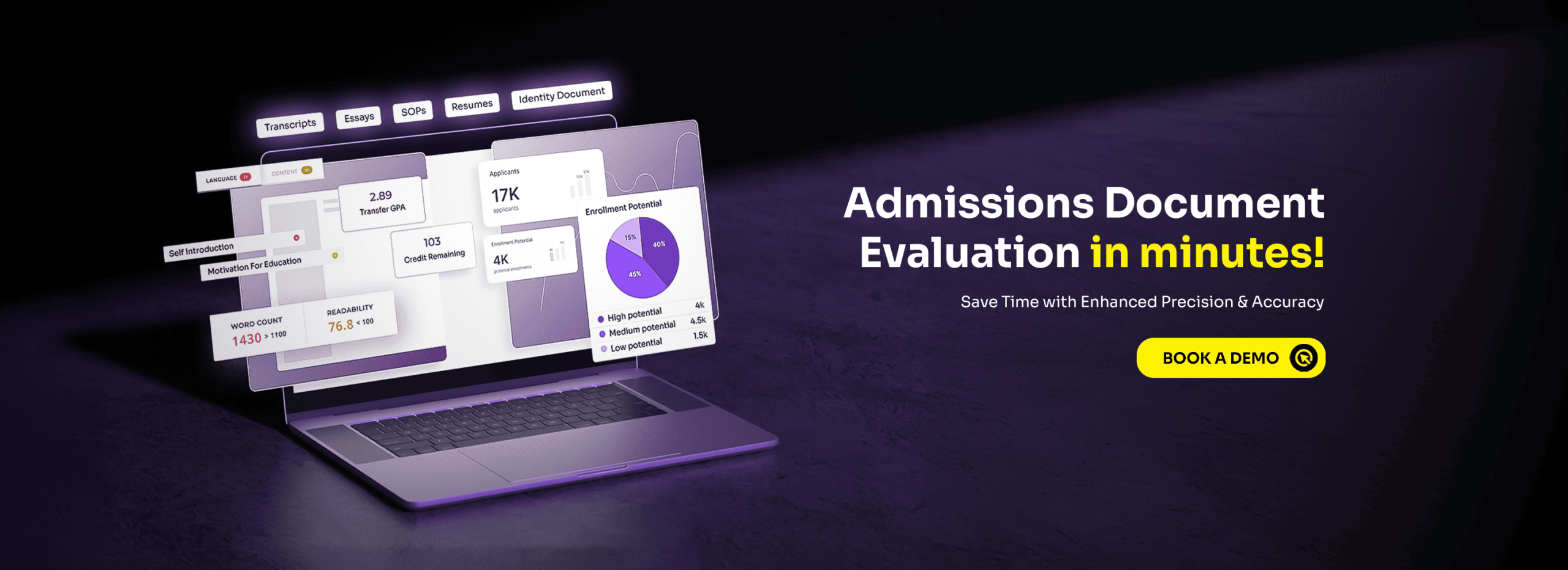
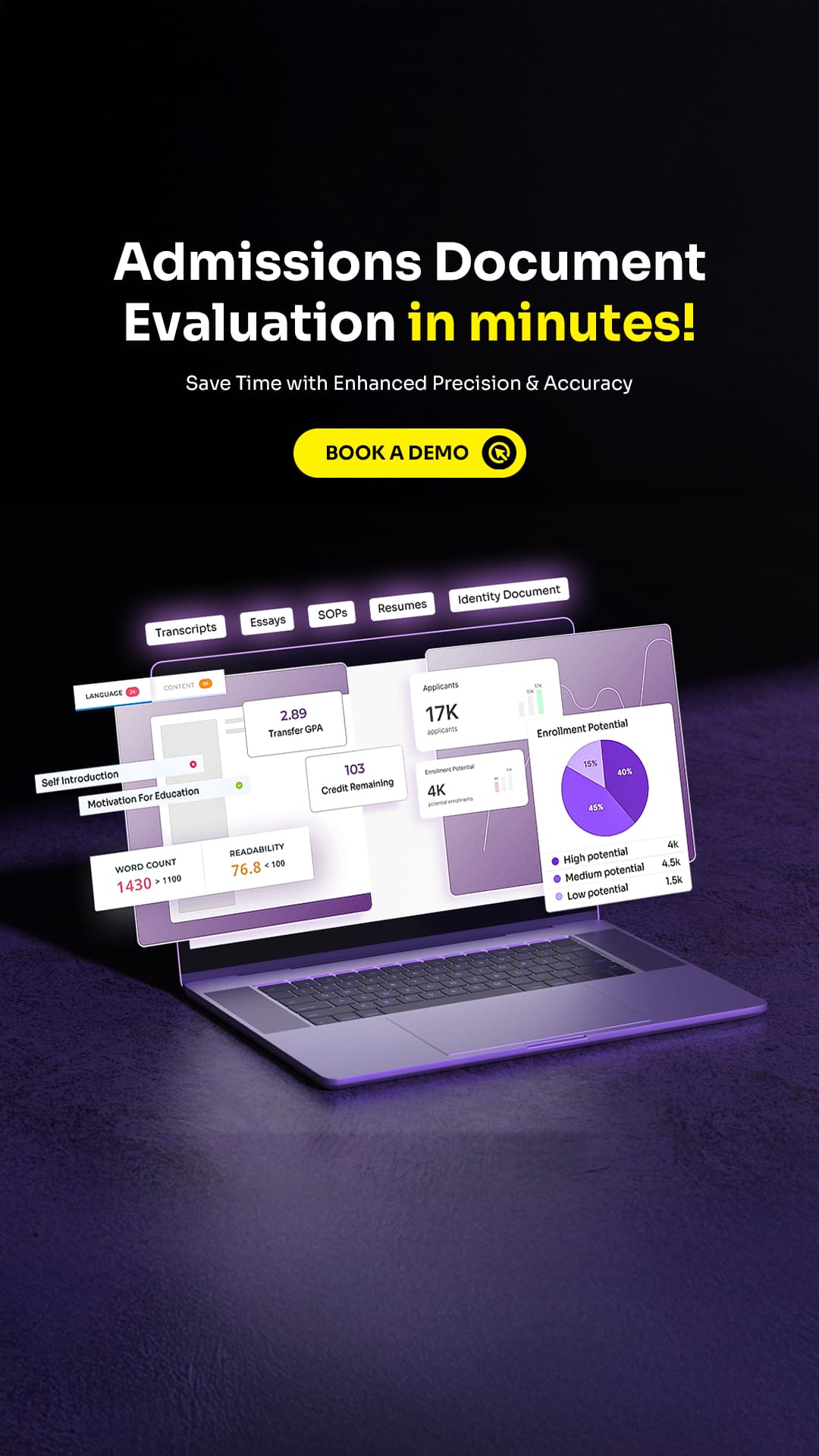
Artificial intelligence can assess applications against predefined academic, financial, and extracurricular criteria, enabling faster, more consistent candidate shortlisting. By standardizing evaluations, AI helps reduce unintentional bias and provides data-driven insights to support admission decisions. For example, Virginia Tech is implementing an AI-powered essay reader, which the university expects will allow it to release decisions about a month earlier than usual, as the tool can rapidly process tens of thousands of essays. The EDMO Application Evaluator further enhances this process by analyzing SOPs, LORs, transcripts, and resumes instantly, highlighting applicant strengths for smarter enrollment decisions. It integrates seamlessly with CRMs, processes bulk applications, and reduces manual errors.
Intelligent Workflow and Task Automation
Automated workflows streamline the admissions process by routing applications to the right departments or reviewers based on predefined rules. Configurable systems can handle approvals, rejections, or conditional reviews without manual intervention, ensuring consistent and timely processing. This reduces administrative bottlenecks and allows staff to focus on higher-value tasks. By standardizing procedures, intelligent workflow automation minimizes errors and enhances overall operational efficiency. Institutions can manage large application volumes more effectively while maintaining structured, transparent processes.
Real-Time Application Tracking and Notifications
Online admissions systems provide applicants with real-time updates on their application status through email, SMS, or in-portal notifications. This transparency allows applicants to stay informed at every stage of the process and reduces uncertainty. Automated reminders also help both applicants and staff meet critical deadlines, improving overall compliance and workflow efficiency.
Robust Data Security and Regulatory Compliance
Modern admissions systems provide secure storage and transmission of sensitive applicant information while ensuring compliance with regulations such as FERPA and GDPR. Security features like encryption, role-based access controls, and detailed audit logs help maintain data integrity and prevent unauthorized access. These safeguards reduce the risk of data breaches and protect both applicants and institutions.
How Automation Enhances the University Admissions Funnel
Automation can support universities at every stage of the student journey, from initial awareness to final enrolment. By delivering timely communication, tracking engagement, and streamlining processes, automation ensures students receive the right information at the right time, while easing the workload for admissions teams.
Top of the Funnel: Raising Awareness
At this stage, prospective students are exploring options. They may have downloaded a brochure, signed up for a newsletter, or attended a webinar — but they are still evaluating universities. Automation helps nurture interest without overwhelming prospects by delivering targeted content over time.
Examples of automated communication:
- Thank-you email with the requested brochure or resource.
- Personalized invitations to upcoming open days or information sessions.
- Alumni testimonials showcasing student experiences.
- Guidance on financial aid or frequently asked questions.
Automation also enables personalized engagement at scale. According to recent data, 81% of higher education professionals believe chatbots and virtual assistants will transform marketing and enrollment management, helping guide prospects from initial inquiry to application.
Middle of the Funnel: Supporting Applicants
At this stage, students have started applications and are managing multiple deadlines. Automation simplifies the process, keeping applicants engaged and on track.
Examples of automated communication:
- Thank-you emails with links to resume incomplete applications.
- Step-by-step guidance for completing specific sections.
- Invitations to Q&A sessions with admissions staff.
- Friendly reminders about upcoming deadlines.
Automation tracks the progress of each application and alerts the team when follow-up is needed for example, prompting outreach to applicants who abandoned their application at 80% completion. The EDMO Advisor Copilot enhances this support by providing 24/7 automated student assistance, delivering personalized outreach, and prioritizing high-intent leads. It answers queries instantly, sends tailored messages based on student behavior and engagement, and identifies applicants most likely to enroll.
Bottom of the Funnel: Driving Enrolment
Once a student has been admitted, the goal is to secure their commitment. Many students receive multiple offers, so timely and relevant communication is critical to help them make their final decision.
Examples of automated communication:
- Admission confirmation emails with a welcome message or video from the program director.
- Guidance on visa applications, housing, and other logistics.
- Campus life highlights and onboarding resources.
- Key dates and checklists to prepare for the start of the program.
Automating the admissions process allows institutions to map the enrollment journey, delivering the right information to students at the right time while giving admissions teams clear visibility into which applicants may need additional support.
Top 15 Admission Automation Tools for Universities
Admission automation tools enable universities to manage recruitment, applicant engagement, and enrollment more efficiently. These solutions reduce manual effort, improve response times, and support data-driven decision-making throughout the admissions lifecycle.
All-in-One AI Recruitment Platforms
These platforms combine multiple automation capabilities into a single system, supporting the admissions journey from first inquiry to counselor interaction.
EDMO
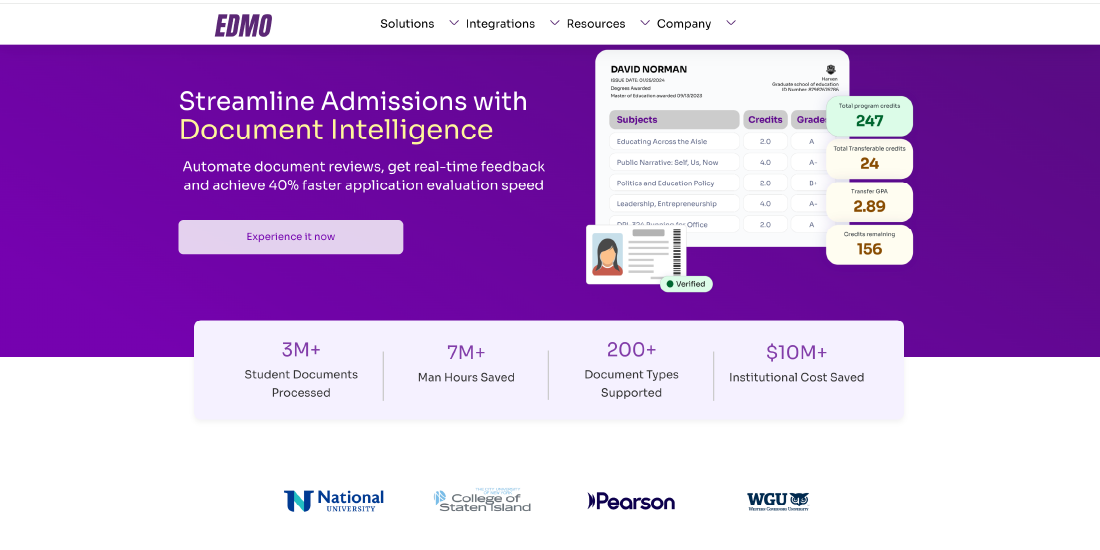
EDMO is an AI-powered enrollment and admissions platform designed specifically for higher education. It helps universities manage inquiries, applications, and student engagement more efficiently through automation.
Key features:
- AI-driven chatbots and virtual assistants to respond to student queries instantly
- Automated inquiry handling and follow-ups across channels
- Centralized management of applicant data and communications
- Analytics to track engagement and enrollment performance
Best for: Universities looking for an all-in-one admissions and enrollment automation platform tailored for higher education.
Education CRMs & Admissions Management Systems
These tools serve as the foundation of admissions operations by centralizing student data, communications, and workflows.
Slate by Technolutions
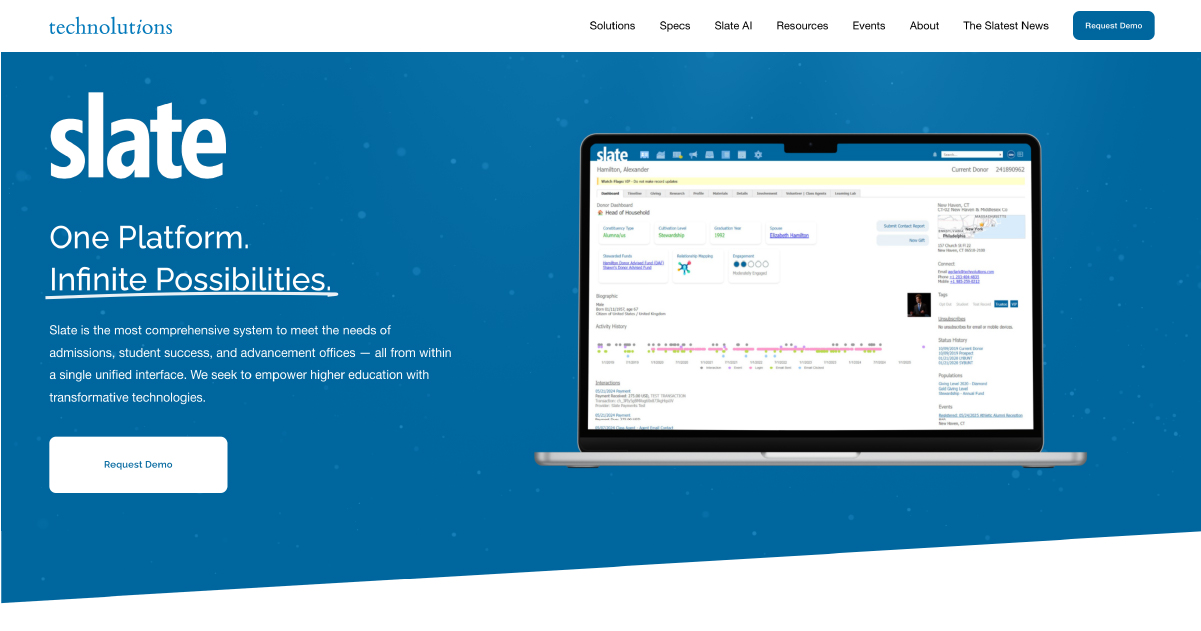
Slate is one of the most widely used higher education CRMs. It offers a comprehensive solution for managing admissions, recruitment, and enrollment with advanced customization. When paired with EDMO, universities can enhance automation across the entire admissions funnel, from lead engagement to application tracking. Together, Slate and EDMO provide a seamless, end-to-end solution that improves efficiency, reduces manual work, and delivers a personalized experience for prospective students.
Key features:
- Customizable application and decision workflows
- Integrated email marketing and communications
- Detailed reporting and enrollment analytics
Best for: Medium to large universities seeking a highly customizable admissions CRM.
Salesforce Education Cloud
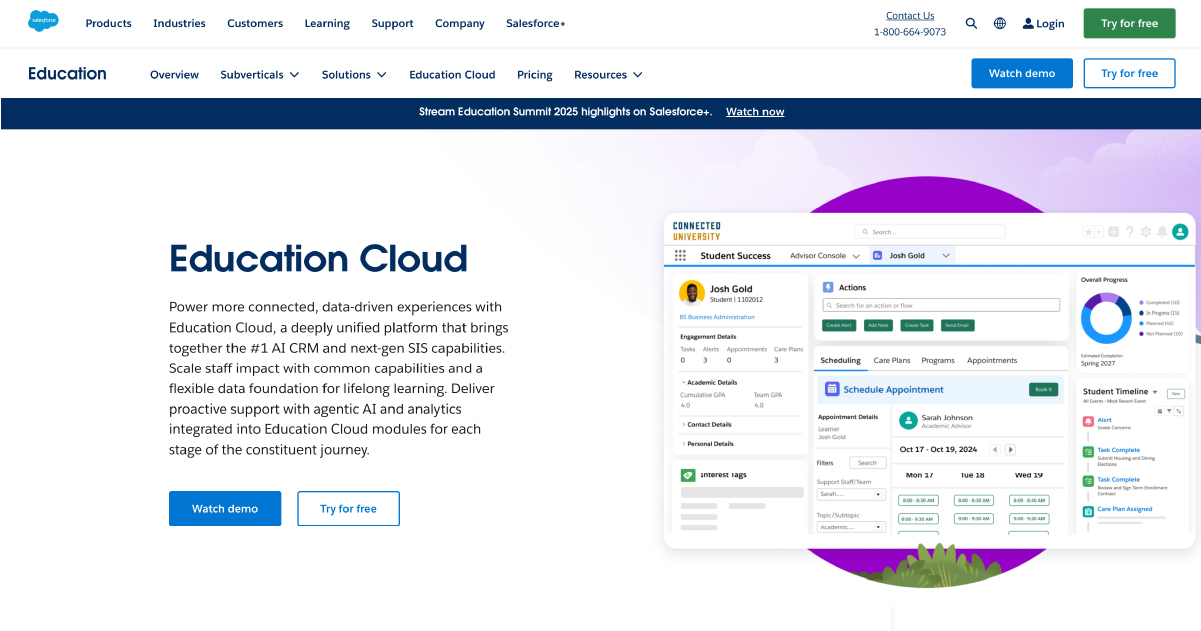
Built on Salesforce’s powerful CRM platform, Education Cloud supports the entire student lifecycle, from recruitment to alumni engagement. When integrated with EDMO, universities can automate admissions workflows, track applicant interactions in real time, and deliver personalized communications at scale.
Key features:
- Highly flexible and scalable architecture
- Integration with thousands of third-party applications
- Strong data reporting and automation capabilities
Best for: Institutions with complex workflows and in-house technical or CRM expertise.
Element451
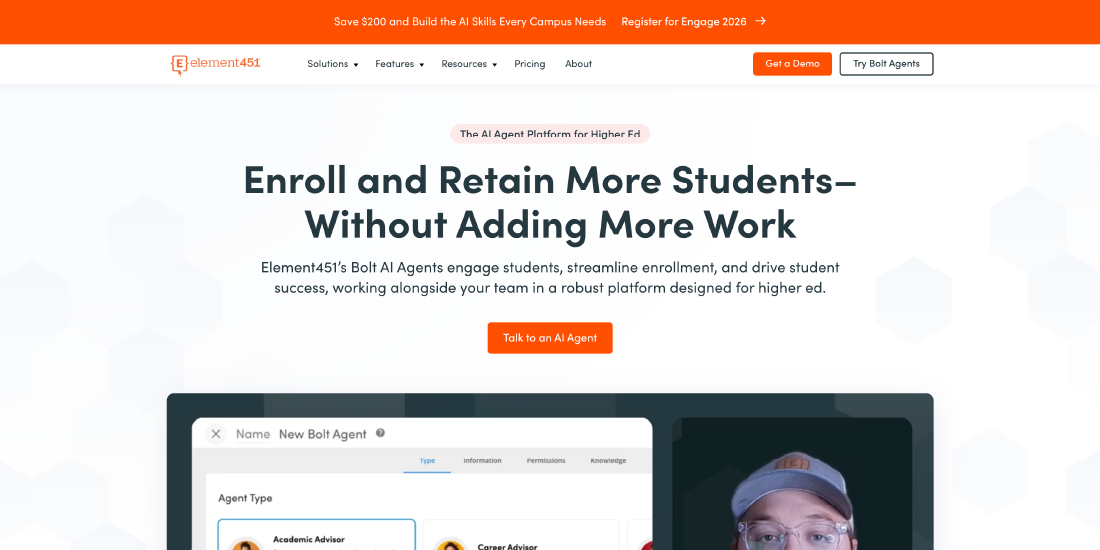
Element451 blends CRM functionality with AI-driven marketing automation to create personalized student experiences.
Key features:
- Behavior-based messaging and segmentation
- AI-powered campaign optimization
- Student journey tracking and analytics
Best for: Universities focused on personalized recruitment and marketing automation.
Chatbot & Live Chat Solutions
These tools provide instant responses to prospective students, reducing staff workload and improving user experience.
Ocelot
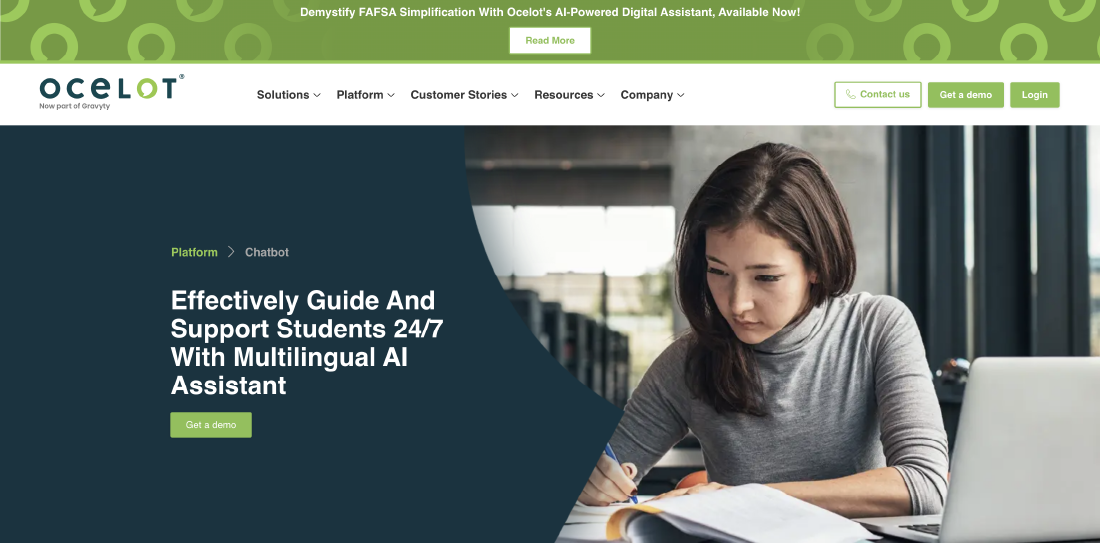
Ocelot is purpose-built for higher education, offering AI chatbots trained on admissions, financial aid, and student services content.
Key features:
- Pre-built higher education knowledge base
- Multilingual chatbot support
- Analytics on student questions and engagement
Best for: Universities seeking a higher-ed-specific chatbot solution.
Drift
Drift is a conversational marketing platform that uses AI chatbots to engage website visitors and convert inquiries into leads.
Key features:
- Real-time website chat and lead qualification
- Meeting scheduling through chat
- User-friendly interface
Best for: Institutions focused on website lead conversion and real-time engagement.
Intercom
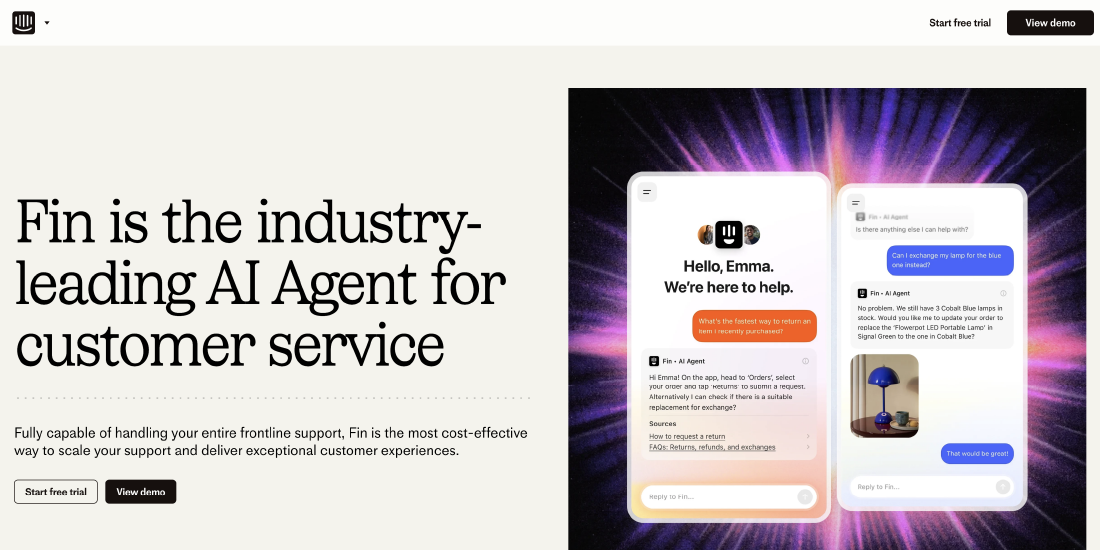
Intercom combines AI chatbots with live chat to support proactive communication and personalized outreach.
Key features:
- Automated and human chat support
- Targeted messaging based on user behavior
- Integration with CRMs and help desks
Best for: Universities wanting a balance of automated and live student support.
Appointment Scheduling Tools
These tools simplify scheduling by allowing students to book meetings without manual coordination.
Calendly
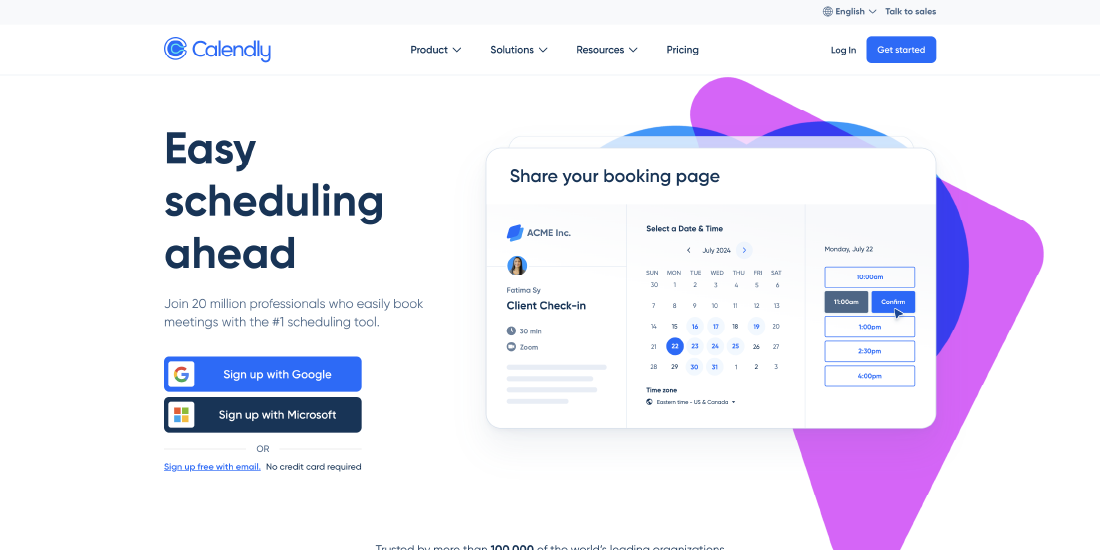
Calendly is a straightforward scheduling tool that integrates with popular calendar systems.
Key features:
- Automated meeting scheduling
- Calendar sync with Google and Outlook
- Easy sharing links
Best for: Admissions teams needing simple, reliable scheduling.
Acuity Scheduling
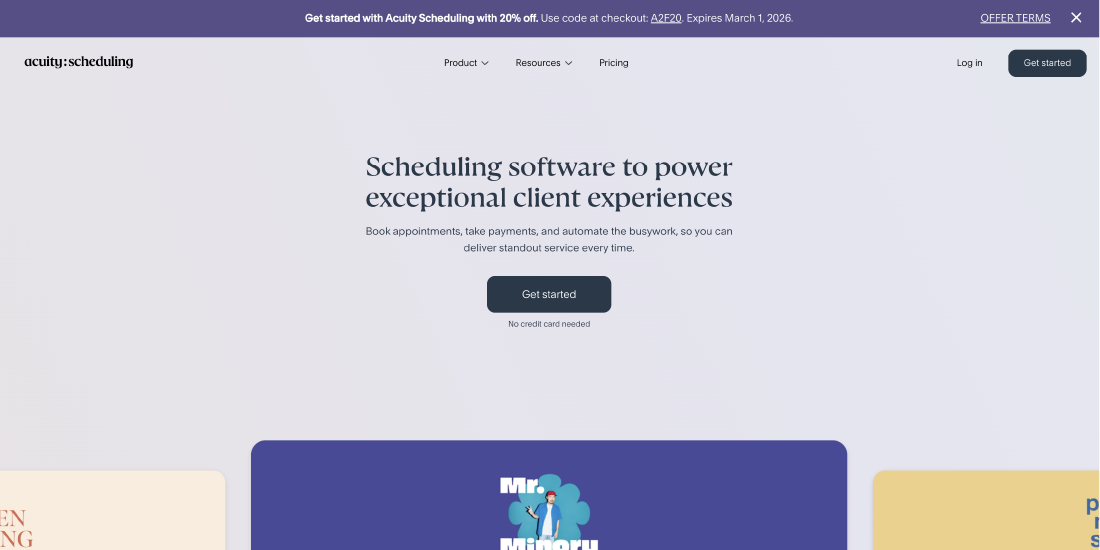
A more advanced scheduling solution offering customization and additional administrative features.
Key features:
- Custom intake forms
- Branding customization
- Payment processing options
Best for: Institutions that require more control over scheduling workflows.
Application Management Systems
These platforms help standardize and streamline application submissions and reviews.
Liaison CAS
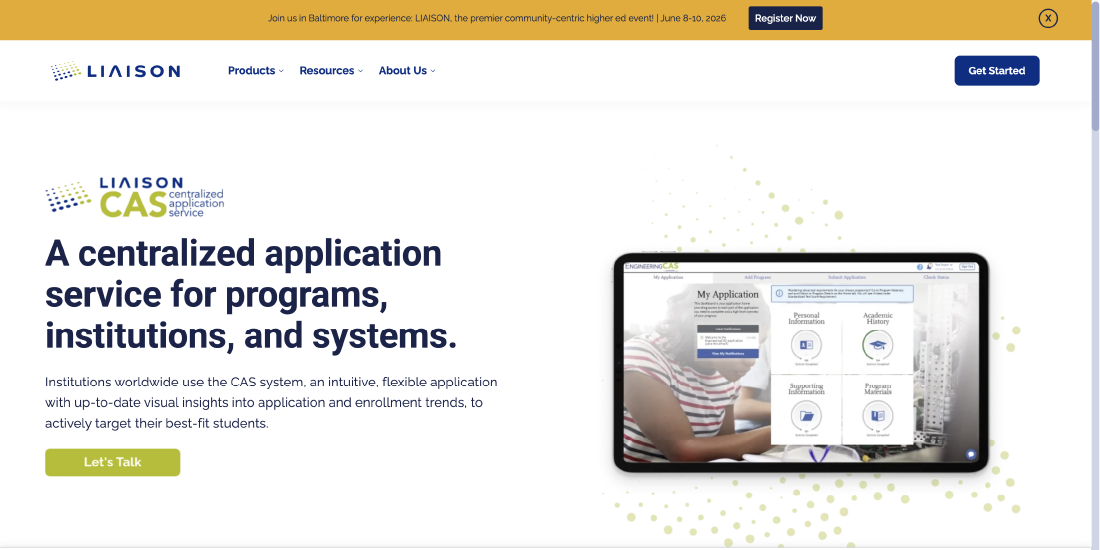
Liaison powers centralized application services for many academic programs and professional schools.
Key features:
- Unified application for multiple programs
- Standardized data collection
- Secure document handling
Best for: Universities offering specialized or professional programs.
Common App
The Common Application enables students to apply to multiple colleges using one application.
Key features:
- Simplified application process
- Wide adoption across U.S. colleges
- Reduced barriers for applicants
Best for: Undergraduate admissions teams targeting domestic and international students.
Marketing & Nurture Campaign Tools
These tools automate communication to keep prospects engaged throughout the admissions funnel.
HubSpot
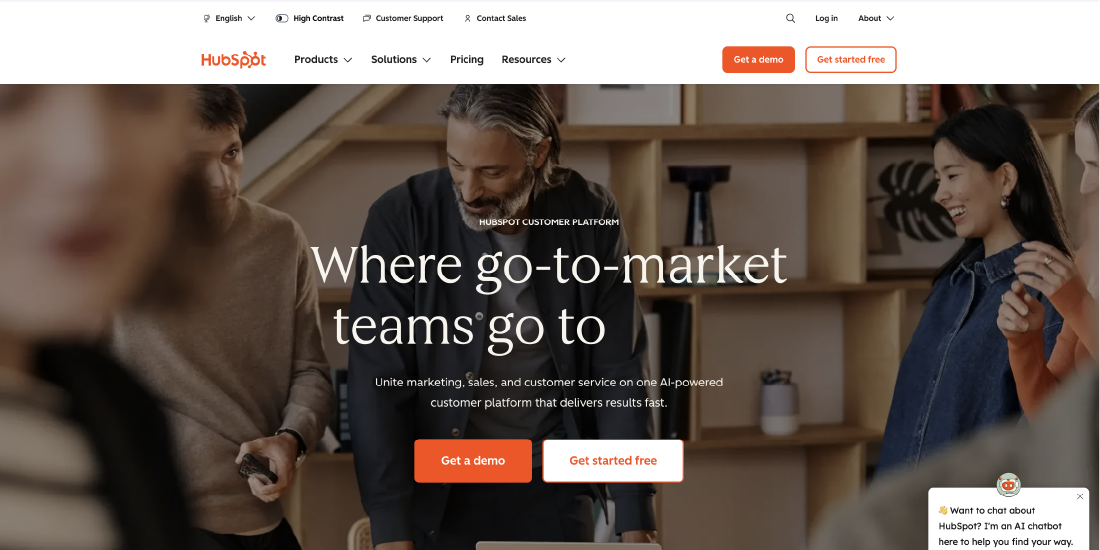
HubSpot offers marketing automation, CRM, and analytics in a single platform.
Key features:
- Email and SMS automation
- Campaign tracking and reporting
- Free CRM with paid advanced features
Best for: Institutions focused on structured nurture campaigns and performance tracking.
Mailchimp
Mailchimp is an easy-to-use email marketing platform suitable for basic automation needs.
Key features:
- Email campaign creation
- Audience segmentation
- Automated reminders and updates
Best for: Smaller institutions or teams new to marketing automation.
Integration & Workflow Automation
These tools connect multiple platforms to create seamless automated processes.
Zapier
Zapier enables no-code automation between thousands of applications.
Key features:
- App-to-app integrations
- Automated data syncing
- No technical expertise required
Best for: Teams needing quick integrations without custom development.
Analytics & Behavior Tracking
Understanding user behavior helps identify friction points and improve conversion rates.
Google Analytics
Google Analytics provides insights into website traffic and user behavior.
Key features:
- Traffic and demographic analysis
- Conversion and goal tracking
- Marketing channel performance insights
Best for: Institutions wanting data-driven insights into recruitment and application performance.
Key Benefits of Automation in University Admissions
Admissions software is transforming university admissions by reducing manual effort, enhancing applicant engagement, and delivering measurable returns on investment.
Faster and More Efficient Application Processing
Automation streamlines the admissions process by minimizing manual tasks such as data entry, document sorting, and internal routing. Applications are automatically directed to the relevant teams, allowing for quicker reviews and faster decision-making.
By reducing administrative bottlenecks, institutions can handle larger application volumes efficiently while maintaining accuracy. For example, a January report from The Daily Tar Heel highlighted that the University of North Carolina at Chapel Hill uses AI tools to evaluate student essays based on factors like word choice, sentence structure, vocabulary, grammar, punctuation, and overall writing quality, enabling faster and more consistent assessment of applications.
Reduced Administrative Workload
Admissions teams often spend considerable time on repetitive operational tasks that slow down the overall process. Automation takes over functions like document verification, status updates, and routine communications. This allows staff to focus on strategic priorities, such as enhancing student engagement and planning recruitment initiatives. By reducing manual effort, institutions can improve efficiency while freeing up resources for higher-value work.
Improved Accuracy and Consistency
Manual application processes are susceptible to errors and inconsistencies, which can affect decision quality. Automated systems validate data in real time and apply standardized rules across all applications. This ensures uniform processing and reduces the likelihood of mistakes or rework. As a result, admissions decisions become more reliable and transparent.
Better Applicant Experience
Automation significantly improves the admissions experience by providing transparency, speed, and convenience for applicants. Features like real-time application tracking, instant notifications, and self-service portals keep students informed and help them complete requirements without unnecessary delays. This reduces confusion and enhances satisfaction throughout the admissions process. For instance, Georgia Tech is introducing an AI tool to review transfer students’ transcripts, allowing applicants to receive transfer credit information much faster. The EDMO Transfer Credit Evaluator further enhances this process by automating transcript analysis, accurately mapping transfer credits to degree requirements, and clearing backlogs in minutes. It ensures consistent, error-free evaluations while allowing staff to focus on high-impact cases, speeding up admissions decisions and improving overall applicant experience.
Consistent and Timely Communication
Automation ensures that applicants receive consistent and timely communication throughout the admissions process. Automated emails, reminders, and notifications from application confirmations to deadline alerts help keep students informed and engaged. For example, the University of Nebraska–Lincoln is launching Cornelius, a conversational AI chatbot, in November to support undergraduate students. Cornelius will proactively reach out to students every 10 days, providing 24/7 assistance on academic, financial, social belonging, and well-being matters.
Scalability During Peak Admission Periods
During peak application cycles, universities often face surges in application volumes that can overwhelm staff. Automation enables institutions to process large numbers of applications simultaneously without increasing workload, ensuring efficiency even during high-demand periods. For example, Stony Brook University in New York is leveraging artificial intelligence to review applicants’ transcripts and is testing AI tools to summarize essays and letters of recommendation, highlighting key points for admissions officers. These technologies allow universities to manage higher volumes effectively while maintaining accuracy and timely decision-making.
Enhanced Data Security and Compliance
Automated admissions systems come equipped with robust security features, including encryption, role-based access controls, and detailed audit trails. These measures protect sensitive applicant information and help institutions comply with regulations such as FERPA and GDPR. By centralizing and securing data, universities reduce the risk of breaches while ensuring that personal and academic records are managed responsibly.
Data-Driven Decision Making
Automation captures comprehensive insights on applicant behavior, conversion rates, and enrollment trends. These analytics enable universities to optimize recruitment strategies, make accurate enrollment forecasts, and enhance overall admissions performance. By leveraging data-driven insights, institutions can make informed decisions that improve efficiency, target the right prospects, and increase the likelihood of successful student enrollment.
Strategic Roadmap for Implementing Automation in University Operations
Implementing automation across a university’s marketing, admissions, and student support functions is a transformative initiative. A phased and well-planned approach helps institutions reduce risk, gain staff buy-in, and deliver measurable outcomes.
Evaluate Operational Gaps and Set Clear Objectives
Begin by reviewing existing processes across marketing, admissions, and student support to identify repetitive, time-intensive, or error-prone tasks such as manual follow-ups, document checks, and routine query handling. Gather feedback from staff to understand day-to-day bottlenecks and operational challenges. Next, define clear and measurable goals for automation, such as improving response times, increasing application completion rates, or reducing manual data entry. Finally, align high-volume tasks with each stage of the student journey, from initial inquiry through enrollment and ongoing support.
Choose the Right Tools and Platforms
After defining requirements, select automation tools that fit the university’s goals, budget, and existing systems. Focus on platforms that integrate easily with CRMs, student information systems, email tools, and social channels. Ease of use, scalability, and reliable vendor support are equally important. For chatbots and marketing automation, prioritize solutions designed for higher education and offering low-code or no-code features for quicker adoption.
Build and Roll Out Automated Workflows
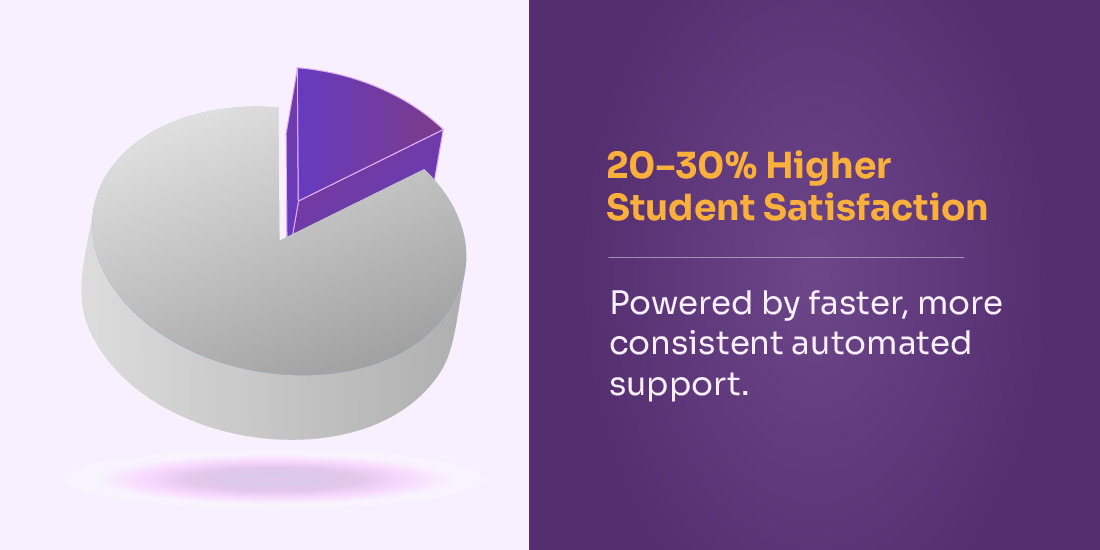
Once automation tools are chosen, start by automating a few key processes like inquiry follow-ups, reminders for incomplete applications, or FAQ responses. Implement workflows in phases, test with sample data, and set alerts for errors. Proper documentation helps maintain the system over time. Colleges using automated support often see 20–30% higher student satisfaction due to faster and more consistent engagement.
Train Teams and Update Responsibilities
Automation works best when staff understand and trust the system. Provide hands-on training so teams can confidently use dashboards, manage automated messages, and step in when human support is needed.
As manual tasks reduce, roles should shift toward monitoring workflows, analyzing data, and offering personalized student support. Assigning internal automation leads can help manage updates and maintain data accuracy.
Track Results and Continuously Improve
After automation is in place, regularly measure its performance against the goals you set earlier. Monitor key indicators such as response time to inquiries, application completion rates, enrollment outcomes, support resolution speed, and student satisfaction.
Use data from automation tools, CRMs, and reports to understand what is working well and where gaps exist. Continuous testing and refinement help ensure automation remains effective and aligned with student and institutional needs.
Expand Gradually and Integrate Advanced AI Capabilities
After achieving success with core workflows, universities can extend automation to more advanced use cases. This may include predictive analytics to identify students who need personalized outreach, AI-assisted content generation for tailored communications, or deeper integration across the student lifecycle from admissions through alumni engagement.
As edtech continues to evolve, institutions should regularly review their automation stack and adopt new capabilities that align with strategic goals.
Identifying New Automation Opportunities Across the Admissions Journey
Even when an admissions system is already in place, there are often opportunities to improve efficiency and student experience through smarter automation. By reducing manual effort, automation allows admissions teams to focus more on meaningful interactions with students and parents. A well-planned automation strategy ensures that every improvement supports a smoother, more supportive admissions journey.
Automate Initial Inquiries and Prospect Engagement
The first interaction with a prospective student sets the tone for the entire admissions experience. Automated inquiry forms embedded on websites or landing pages make it easy to collect student information. Once submitted, data should flow directly into the admissions CRM, triggering instant confirmation messages or relevant program content. For inquiries requiring a personal response, workflows can notify admissions counselors to follow up on time, helping prevent missed connections and early drop-offs.
Optimize Application Form Management
With many institutions adopting common application platforms, students can now apply to multiple universities quickly. To keep up with increased application volumes, universities should automate application intake, document handling, and status updates. Even with automation, communication should remain personalized, accurate, and responsive, ensuring students feel supported regardless of how or where they apply.
Enable Faster Admission Decisions Through Direct Response Models
Direct response admissions provide students with faster decisions, sometimes instantly, reducing uncertainty and long waiting times. This approach is especially helpful for underrepresented or high-priority students, making access to higher education easier. Faster decisions also allow institutions to secure enrollments sooner and prevent students from choosing other universities. More than a dozen U.S. states now use direct admissions programs to send acceptance letters even before students formally apply. This helps simplify the admissions process and encourages higher participation among high school seniors.
Automate Reminders and Ongoing Student Communication
Automated emails and text reminders keep students informed about deadlines, events, and enrollment requirements, ensuring a smooth progression through the admissions process. This reduces delays and helps applicants complete tasks on time. Recent reports show that 60% of higher education institutions use chatbots to handle student queries, enhancing response speed and availability. The EDMO Student Copilot takes this further by serving as a student-facing omnichannel bot that delivers real-time application updates, resolves queries instantly, and provides end-to-end enrollment support. This ensures applicants stay informed, engaged, and supported throughout their admissions journey.
Simplify Early Registration and Onboarding Support
After admission, students often need guidance during course registration and onboarding. Automated reminders about registration timelines, combined with seamless data sharing with academic advisors, help new students make informed choices. Reducing confusion at this stage improves the overall student experience and can positively influence retention and long-term engagement.
Streamline and Secure Student Data Collection
Student data collection occurs throughout the admissions lifecycle, but it should never feel repetitive or intrusive. Automation helps eliminate duplicate data requests, ensures secure data transfers, and routes information to the right teams without errors. Clear communication about data usage and privacy builds trust, while secure, automated workflows reduce frustration and protect sensitive information.
Real-World Examples of University Automation Success
Universities around the world are using automation to improve recruitment, admissions efficiency, and student engagement. The following case examples highlight how well-planned automation initiatives have delivered measurable outcomes across marketing, admissions, and student support.
Florida Polytechnic University
Florida Polytechnic University, a STEM-focused institution, adopted a higher-education-specific marketing automation platform to strengthen its recruitment efforts. By using behavioral tracking, personalized content, and automated email workflows, the university significantly improved lead nurturing. Over a three-year period, applications increased by 185%, while admitted student numbers grew by 78%. Automation enabled consistent follow-ups and targeted messaging without requiring a proportional increase in staff, allowing the admissions team to scale outreach efficiently.
University of Missouri–Kansas City (UMKC)
UMKC integrated marketing automation into its recruitment process to address enrollment challenges. By combining automation with behavioral intelligence, the university improved how it identified and engaged prospective students. Within one year, inquiries increased by 50%, applications rose by 14%, and enrollments grew by 10%. Automated targeting and personalized communications helped a small admissions team maximize impact and focus efforts on high-intent prospects.
Georgia State University
Georgia State University introduced an AI chatbot, “Pounce,” to support admitted students during the enrollment phase. The chatbot answered questions, sent reminders, and guided students through key steps. This initiative reduced summer melt from 19% to 9% in one study and significantly improved engagement during the transition to enrollment. By handling tens of thousands of student queries automatically, the chatbot saved staff time while improving enrollment yield and student confidence.
Thompson Rivers University
Thompson Rivers University deployed chatbots and live chat across multiple departments to provide round-the-clock support. The system automated responses to a majority of routine inquiries, with 83% handled without staff intervention. This approach improved service availability for students while reducing the need for night and weekend staffing. The no-code chatbot platform also allowed internal teams to continuously refine responses based on student needs.
University of Melbourne
The University of Melbourne implemented automation across more than 22 admissions processes, including data entry and document verification. This initiative saved approximately 10,000 staff hours annually and reduced errors in application processing. By shifting administrative work to automated systems, staff were able to focus more on student engagement and complex decision-making.
King’s University College
King’s University College replaced a paper-based admissions system with a digital document management platform supported by automated workflows. The transition reduced document loss, improved cross-department collaboration, and accelerated admission decisions. Applicants benefited from a faster and more transparent admissions experience.
University of Pécs
To attract international students, the University of Pécs adopted an automated application management system that streamlined document submission, tracking, and communication. Over five years, international enrollment tripled. Automation reduced administrative workload and allowed staff to focus on personalized support for prospective students.
University of Auckland
The University of Auckland integrated automation into admissions workflows to reduce repetitive administrative tasks and improve data accuracy. Automated verification and digitized processes enhanced operational efficiency and student satisfaction. The initiative also supported broader institutional innovation, including the introduction of academic programs focused on automation technologies.
University of Calgary
The University of Calgary automated key admissions and student records processes, including document validation and decision tracking. As a result, manual effort was reduced by approximately 70%, enabling the university to process thousands of applications more efficiently each year while maintaining accuracy and consistency.
How to Select the Right Admissions Automation Solution
Choosing the right admissions automation platform is critical to long-term success. The following factors can help guide an informed decision:
Integration Capabilities
Ensure the solution integrates smoothly with your existing systems, such as your CRM, student information system, email platforms, and other institutional tools. Seamless data flow reduces duplication and manual work.
Scalability and Performance
Select a platform that can scale as your institution grows and handle increased application volumes during peak admission cycles without compromising performance.
Budget and Resource Fit
Consider the total cost of ownership, including implementation, training, and ongoing support. For smaller institutions, lightweight tools that cover essential needs may be more practical than complex systems that require significant budgets or technical staff.
Ease of Customization
Look for solutions that can be easily customized to match your admissions workflows and policies. Low-code or no-code platforms allow teams to adapt processes without relying heavily on IT resources. Evaluating tools against these criteria helps ensure the chosen solution is effective, sustainable, and aligned with your institution’s operational needs.
Conclusion
Admissions automation is transforming how universities manage applications, communicate with prospects, and make enrollment decisions. By automating repetitive tasks, providing real-time updates, and leveraging AI-driven tools, institutions can reduce errors, save staff time, and improve overall efficiency. More importantly, automation enhances the applicant experience by ensuring transparency, timely communication, and faster decisions. Implementing the right automated workflows allows colleges to focus on strategic priorities like student engagement and recruitment, ultimately driving higher enrollment and better outcomes.
Frequently Asked Questions
Question 1. Can one tool replace a CRM?
Question 2. Which processes in university admissions can be automated?
Question 3. Why is a quick response time so important in student recruitment?
Question 4. How can automation help with international student recruitment?
Question 5. Will using AI make our admissions process feel impersonal?
Question 6. Can smaller institutions benefit from admissions automation?
Question 7. What are the best admissions automation tools for small colleges?
Question 8. How do admissions automation tools support prospective student outreach?
Written By



No comments yet. Be the first to comment!
Leave a Comment