
Table Of Contents
- 1Introduction
- 2Key Factors Influencing Student Recruitment in Higher Education
- 3Strategic Recruitment Practices for Colleges and Universities
- 4Comparing Student Recruitment Strategies in Higher Education
- 5How Student Recruitment Is Evolving: Key Do’s and Don’ts for Institutions
- 6Balancing Innovation and Human Connection in Student Recruitment
- 7Conclusion
Introduction
Student recruitment in higher education is evolving rapidly as institutions face changing demographics, increasing competition, and higher expectations from prospective students. Colleges and universities must adopt strategic, data-driven, and personalized approaches to attract, engage, and enroll the right students. From digital marketing and CRM systems to virtual recruitment events and scholarship optimization, effective strategies in student recruitment in higher education are essential for building a strong, diverse, and sustainable student body.
Key Factors Influencing Student Recruitment in Higher Education
Student recruitment in higher education is evolving rapidly due to demographic shifts, changing student expectations, and policy changes. Colleges and universities are facing increased competition for a smaller and more diverse applicant pool, making it essential to understand the forces shaping enrollment trends.
Declining Enrollment Nationwide
Student recruitment is becoming increasingly challenging as growth in international enrollment begins to slow across the United States. After several years of expansion, institutions are now facing heightened uncertainty driven by changing immigration policies, evolving visa regulations, and delays in visa processing. These factors create hesitation among prospective international students, influencing both application volumes and enrollment decisions. As a result, many colleges and universities are experiencing reduced interest from international applicants and greater competition for a smaller pool of students.
A Rapidly Changing Education Landscape
The demand for online learning is growing across all student groups, reshaping how colleges and universities deliver education. According to recent reports:
- Graduate students: 74% of institutions have seen increased interest.
- Adult undergraduates: 66% of institutions report higher demand.
- Traditional-age undergraduates: 60% of institutions are experiencing growth.However, the ability to expand online offerings varies across institutions:
- Public four-year colleges: Over half plan to launch multiple new online programs.
- Community colleges: Only about one in five can expand their online programs at a similar pace.
As a result, competition in online education is rising, with most institutions reporting that attracting students online is more competitive than a few years ago.
To meet these evolving needs, colleges are increasing investment in:
- Online and hybrid degree programs
- Short-term certificates
- Microcredentials and skill-based programs
These efforts aim to provide flexible, accessible learning opportunities while remaining competitive in a rapidly evolving educational landscape.
Persistent Educational Inequities
Persistent educational inequities continue to influence student recruitment and enrollment outcomes, particularly among Black students at highly selective institutions. Recent data show significant declines in Black first-year enrollment across many Ivy League and top liberal arts colleges:
- Columbia University: Black students dropped from 20% of the first-year class in 2023 to 13% in 2025.
- Harvard University: Black enrollment fell from 18% to 11.5% over the same period.
- Princeton University: The share of Black first-year students decreased from 9% to 5%, marking the lowest level in nearly 60 years.
Top liberal arts colleges have seen similar trends:
- Amherst College: Declined from 11% to 6%.
- Williams College: Dropped from 6.84% to 4.79%.
Technical institutions are also affected:
- California Institute of Technology (Caltech): Black first-year enrollment fell from 5% in 2023 to just 1.6% in 2025.
These declines highlight ongoing challenges in access and representation. Addressing educational inequities through diversity, equity, and inclusion (DEI) initiatives is crucial for institutions seeking to attract and support a broad range of talented students.
Changes and Challenges in Recruitment for the Higher Education Sector
The higher education sector is facing significant changes and challenges in student recruitment. Colleges must adapt to evolving circumstances, including the so-called “Search Cliff,” shifts in testing, privacy regulations, and increased competition for prospective students.
The Search Cliff
The Search Cliff refers to the sharp decline in the number of prospective student records available to colleges for outreach. In the past, institutions relied heavily on standardized testing programs, where students could opt in to share their information with colleges and universities. As participation in standardized testing declines and more students choose test-optional pathways, fewer student names are entering recruitment databases. This reduction limits early outreach opportunities and makes identifying and engaging qualified prospects more challenging for admissions teams.
Privacy Restrictions
Privacy regulations across the U.S. have further limited access to student data:
- California SOPIPA (2014): Prohibits edtech providers from selling student data to third parties.
- FERPA: Protects student education records nationwide and grants parents access rights.
- New York Education Law 2-d: Restricts sharing of student data with external organizations.
Such legislation reduces colleges’ ability to directly connect with prospective students, making recruitment more complex.
Rise of Test-Optional Policies
Test-optional and test-free admissions policies continue to change the college application landscape. Recent admissions cycles show that when some selective institutions reinstated standardized testing requirements, application numbers declined. For example, Harvard reported nearly an 11% drop in applications after bringing back a test requirement.
While test-optional policies help expand access and reduce barriers for students, they also reduce the amount of standardized test data colleges previously relied on for recruitment and applicant evaluation.
Demographic Cliff
One of the most significant long-term challenges facing higher education is the Demographic Cliff. This trend refers to the steady decline in the number of high school graduates, which directly reduces the size of the college-bound student population.
Demographic projections show that the number of 18-year-olds graduating from high school is expected to decrease by approximately 13% by 2041. As a result, colleges and universities will face a smaller applicant pool, increased competition for students, and greater pressure to diversify recruitment strategies and program offerings.
Increasing Competition
With fewer student records available, the recruitment landscape is becoming more competitive. Colleges are often sourcing the same students from limited data pools, which makes it crucial to differentiate their institution. Diversifying data sources and obtaining unique records are key strategies for staying competitive.
Email Deliverability and Outreach Challenges
Effective communication is another growing challenge. Many institutions struggle with email outreach due to:
- Emails landing in spam or low inbox engagement,
- Stricter requirements for bulk email senders,
- Outdated contact data leading to high bounce rates.
These factors reduce the effectiveness of a core recruitment channel, making direct student engagement more difficult and expensive.

Strategic Recruitment Practices for Colleges and Universities
Recruiting students in today’s higher education environment requires more than traditional outreach. With changing demographics, evolving student expectations, and increasing competition, institutions must adopt targeted, data-driven, and personalized strategies. These approaches help colleges engage prospective students, build meaningful connections, and improve enrollment outcomes in a dynamic and competitive landscape.
Personalized Digital Marketing and Social Media Engagement
In today’s crowded digital landscape, generic marketing no longer captures student attention. Effective recruitment now requires colleges to provide personalized and relevant experiences across every digital touchpoint.
Research shows that 62% of prospective students want tailored content, and 65% are more likely to apply when marketing is personalized to their preferences. By leveraging data analytics, institutions can better understand student behavior, preferences, and decision-making drivers.
Recruitment teams can use segmentation based on factors such as:
- Academic interests
- Geographic location
- Engagement history
This targeted approach allows colleges to deliver content that is timely, relevant, and personal, improving both engagement and application conversion rates.
How to Put This into Action
- Audience Segmentation Using Data: Leverage CRM and analytics tools to create detailed segments such as “international STEM applicants” or “local arts-focused prospects.”
- Platform-Specific Messaging: Align content with platform expectations, short-form videos on Instagram and TikTok for campus life, and LinkedIn for career outcomes and faculty expertise.
- Targeted Advertising Campaigns: Use retargeting ads to show relevant program details to students who have already visited specific pages on your website.
- Search-Optimized Program Pages: Ensure program pages reflect the real search terms students use, such as “online MBA without GMAT” or “best environmental science degree.”
When digital outreach feels helpful rather than promotional, students are more likely to trust the institution and remain engaged throughout their decision journey.
Student Ambassador and Peer Referral Programs
Prospective students consistently place greater trust in peer recommendations than in institutional messaging. This recruitment strategy formalizes that trust by empowering current students to serve as authentic ambassadors for the institution. By transforming word-of-mouth into a structured program, institutions can scale peer influence while maintaining authenticity.
Student ambassadors provide real-world perspectives on academics, campus culture, and outcomes, helping prospects envision themselves at the institution. When guided properly, these programs become a powerful and cost-effective recruitment channel.
How to Put This into Action
- Representative Ambassador Selection: Recruit students from diverse academic backgrounds, regions, and identities to ensure broad relatability.
- Clear Training and Guidance: Provide ambassadors with institutional knowledge, communication best practices, and ethical recruitment standards.
- Authentic Storytelling Freedom: Offer talking points without rigid scripts to preserve genuine personal expression.
- Meaningful Incentives: Reward participation through stipends, tuition credits, professional development, or referral-based recognition.
Personal stories from current students often resonate more deeply than polished marketing materials, driving stronger emotional connections.
Long-Term High School Partnership Development
Effective recruitment extends beyond marketing campaigns into relationship-building with high schools. This strategy emphasizes creating structured, ongoing partnerships that support students well before the application stage. Rather than isolated campus visits, institutions focus on collaboration that benefits students, counselors, and educators alike.
By embedding the institution within the high school ecosystem, colleges create a consistent and predictable enrollment pipeline while building trust with key influencers.
How to Put This into Action
- Structured Academic Pathways: Introduce dual enrollment options, guaranteed admission criteria, or early college credit programs.
- Counselor Engagement and Support: Offer professional development sessions, exclusive updates, and dedicated admissions contacts for counselors.
- Collaborative Student Programs: Co-create summer bridge initiatives, on-campus workshops, or faculty-led classroom sessions.
- Ongoing Communication Plans: Maintain regular updates through counselor newsletters, portals, and planning meetings.
When an institution is seen as a partner in student success rather than just a destination, enrollment decisions become more natural and confident.
Personalized Outreach Through CRM Platforms
Students now expect communication that reflects their interests, behaviors, and stage in the decision process. A well-implemented CRM system enables institutions to deliver personalized engagement at scale by centralizing data and tracking every interaction.
This strategy replaces mass messaging with targeted communication workflows, ensuring students receive relevant information when it matters most.
How to Put This into Action
- Unified Data Management: Consolidate inquiry, visit, and engagement data into a single CRM system with strong data hygiene practices.
- Behavior-Based Segmentation: Segment students based on actions such as event attendance, brochure downloads, or application progress.
- Balanced Automation: Automate reminders and deadlines while reserving counselor outreach for high-impact personal interactions.
- Continuous Optimization: Regularly test and refine email subject lines, messaging timing, and calls to action to improve engagement and conversion rates. Research shows that 55% of students check their email more than once a day, highlighting the importance of optimizing email communication for visibility and effectiveness.
Source: EAB
EDMO Advisor Copilot enhances CRM-driven personalization by delivering 24/7 automated student support, scoring high-intent leads, and enabling timely, relevant outreach at scale. By answering queries instantly and prioritizing enrollment-ready students, it helps admissions teams boost engagement, improve conversions, and focus efforts where they matter most. Thoughtful personalization turns recruitment from a transaction into a relationship, increasing trust and enrollment likelihood.
Virtual and Hybrid Recruitment Experiences
Traditional recruitment events are limited by geography, cost, and scheduling. Virtual and hybrid recruitment models overcome these barriers by offering flexible, scalable engagement opportunities that reach students wherever they are.
By blending digital accessibility with interactive design, institutions can create inclusive recruitment experiences that complement in-person events.
How to Put This into Action
- High-Quality Production Standards: Invest in reliable audio, video, and lighting to maintain professionalism.
- Purpose-Built Session Design: Keep virtual sessions concise, interactive, and focused to sustain attention.
- Engagement Tools: Use live polls, moderated Q&A, and breakout rooms to encourage participation.
- Dedicated Technical Support: Provide clear access instructions and real-time troubleshooting assistance.
Hybrid recruitment expands reach without replacing face-to-face engagement, giving students multiple ways to connect.
Strategic Use of Scholarships and Financial Aid
Affordability is a critical factor in students’ college decisions. Using scholarships and financial aid strategically allows institutions to position funding as a proactive recruitment tool, rather than just a backend process.
By thoughtfully designing, targeting, and communicating financial aid opportunities, colleges can attract a diverse and high-quality applicant pool. Research indicates that over 80% of families rank financial aid and scholarships among their top five considerations when choosing a college, with many citing it as the most important factor in their decision.
How to Put This into Action
- Predictive Aid Analysis: Use historical data to determine how aid packages influence enrollment outcomes.
- Early Financial Transparency: Share scholarship eligibility and estimated net costs early in the recruitment process.
- Targeted Scholarship Design: Offer automatic merit awards or program-specific scholarships to align with institutional goals.
- Clear Communication: Simplify award letters and train staff to explain net costs and long-term value.
When students feel financially supported early, institutions remain competitive throughout the decision cycle.
Alumni Engagement as a Recruitment Asset
Alumni represent living proof of institutional value. This strategy leverages their success stories and global presence to strengthen recruitment credibility and reach.
How to Put This into Action
- Formal Alumni Ambassador Roles: Define clear opportunities for alumni participation in events and interviews.
- Ongoing Training and Updates: Keep alumni informed about programs and admissions priorities.
- Technology-Enabled Coordination: Use CRM tools to manage alumni involvement efficiently.
- Market-Focused Deployment: Engage alumni strategically in key geographic or industry markets.
Alumni voices add authenticity that no marketing campaign can replicate.
Predictive Analytics for Enrollment Optimization
Data-driven recruitment allows institutions to anticipate outcomes rather than react to them. Predictive modeling uses historical and behavioral data to forecast enrollment likelihood and identify intervention opportunities.
How to Put This into Action
- Data Consolidation: Ensure accurate, unified datasets across systems.
- Targeted Predictive Models: Focus on actionable predictions such as enrollment probability or summer melt risk.
- Mixed-Data Analysis: Combine quantitative data with qualitative insights for context.
- Skill and Tool Investment: Train teams or partner with analytics specialists.
Analytics empower recruitment teams to make smarter, more timely decisions. Western Washington University demonstrates this approach by using a comprehensive data system to transform daily operations and strategic planning. By analyzing aggregated data, the university can identify inefficiencies, predict enrollment trends, and allocate resources more effectively, improving overall recruitment outcomes.
Global Recruitment and International Partnerships
International recruitment requires localized strategy, cultural understanding, and strong global partnerships. Institutions that invest in sustainable international pipelines gain diversity and long-term enrollment stability.
How to Put This into Action
- International Institutional Partnerships: Collaborate with overseas schools and scholarship bodies.
- Ethical Agent Networks: Work with vetted recruitment agents where appropriate.
- Cultural Competency Training: Prepare staff to communicate effectively across cultures.
- End-to-End Student Support: Offer comprehensive pre- and post-arrival assistance.
International recruitment succeeds when institutions demonstrate long-term commitment to student success.
Content Marketing and Academic Thought Leadership
Today’s students evaluate institutions based on expertise and relevance, not just program listings. Content marketing positions universities as knowledge leaders by sharing meaningful insights, research, and real-world impact.
How to Put This into Action
- Faculty-Led Content: Highlight research and expertise through blogs, videos, and publications.
- Stage-Specific Content: Align content with awareness, consideration, and decision stages.
- Centralized Content Hub: Create a branded platform to showcase thought leadership.
- Search and Social Optimization: Ensure content is discoverable and shareable across channels.
Institutions that educate before they promote build trust, authority, and long-term engagement.
Comparing Student Recruitment Strategies in Higher Education
Higher education institutions have a variety of recruitment strategies at their disposal, each with different levels of effort, resource requirements, and impact. Understanding the strengths, costs, and best applications of these strategies helps colleges make informed decisions, optimize their recruitment efforts, and achieve better enrollment outcomes.
| Recruitment Strategy | Level of Effort | Resource Investment | Key Results | Best-Suited Scenarios | Core Benefits |
| Digital Marketing & Social Media Outreach | Medium–High: ongoing content creation, performance tracking | Moderate: skilled marketers, digital tools | Higher engagement, measurable ROI, wide reach | Engaging diverse audiences, international recruitment | Targeted, cost-efficient, always-on visibility |
| Campus Ambassador & Student Referral Programs | Medium: training, coordination, program management | Low–Moderate: incentives, staff oversight | Increased trust, expanded peer networks | Peer-led recruitment, community-focused outreach | Authentic voices, high credibility, affordable |
| High School & Institutional Partnerships | High: relationship building, coordination | Moderate: staff time, partnership resources | Stable enrollment pipeline, early student engagement | Long-term pipelines, dual-enrollment initiatives | Sustainable growth, strong relationships |
| Personalized Outreach & CRM Platforms | High: system setup, data integration, training | High: CRM tools, technical expertise | Better conversion rates, scalable personalization | Managing large applicant pools, data-driven recruitment | Precision targeting, efficiency, full-funnel tracking |
| Virtual & Hybrid Recruitment Events | Medium: technology setup, event planning | Moderate: platforms, AV support | Broader access, reduced geographic barriers | Remote and international student engagement | Cost savings, flexibility, wider participation |
| Scholarship & Financial Aid Optimization | High: policy planning, compliance management | High: financial resources, expert staff | Improved yield, stronger enrollment outcomes | Overcoming financial barriers, attracting top talent | Direct enrollment impact, competitive positioning |
| Alumni Network Activation | Medium: coordination, engagement planning | Low–Moderate: volunteer support | Expanded reach, credible advocacy | Alumni-led recruitment, mentorship initiatives | Trust-driven, affordable, strengthens alumni ties |
| Data Analytics & Predictive Insights | High: advanced analytics, data governance | High: technology and analytics expertise | Smarter decisions, optimized recruitment strategies | Forecasting demand, early intervention | Competitive advantage, improved efficiency |
| International Recruitment & Global Partnerships | High: regulatory compliance, cultural alignment | High: travel, specialized teams | Diverse student body, increased global revenue | International enrollment growth, brand expansion | Revenue growth, cultural diversity |
| Content Marketing & Thought Leadership | Medium–High: content planning, editorial oversight | Moderate: content teams, SEO tools | Long-term visibility, brand credibility | SEO-driven recruitment, trust building | Sustainable traffic, authority building |
How Student Recruitment Is Evolving: Key Do’s and Don’ts for Institutions
Student recruitment in higher education has moved beyond a one-size-fits-all approach. Today’s college-ready students expect personalized communication, digital-first engagement, and clear value from the institutions they consider. To stay competitive, colleges and universities must develop recruitment strategies that place prospective students at the center, ensuring that outreach, messaging, and engagement align with what students truly seek in their educational experience.
Modern Student Recruitment Strategies: What Works Today
To attract and engage high-potential high school graduates, institutions should focus on the following best practices:
Do’s
- Align recruitment marketing with enrollment goals for first-year undergraduate admissions.
- Analyze enrollment data to understand where current freshmen come from—whether in-state, out-of-state, international, or feeder schools—and continue focused outreach in those regions.
- Begin outreach early, including middle school audiences, to build long-term awareness and interest.
- Use virtual recruitment tools such as digital recruitment platforms, institutional websites, social media, webinars, chatbots, and virtual campus tours. For example, the University of Central Florida’s Knightbot provides real-time support on academics, financial aid, and campus resources, helping thousands of students and improving responsiveness beyond office hours. EDMO Student Copilot extends virtual recruitment efforts by offering 24/7 AI-powered support that instantly answers student queries across channels, even beyond office hours. By guiding students through academics, admissions, and financial aid in real time, it improves engagement, responsiveness, and overall student experience.
- Simplify the application journey by guiding students through requirements such as transcripts and documentation.
Don’ts
- Don’t limit recruitment efforts to only the final year of high school.
- Don’t overlook how complex or time-consuming application paperwork can feel to students.
Effective Strategies for Recruiting International Students
The U.S. remains a leading destination for international education. To support sustainable growth in international student enrollment, institutions should adopt targeted, student-focused strategies.
Do’s
- Create content tailored to international prospects, including information on visas, scholarships, financial aid, housing, internships, and post-study opportunities.
- Identify foreign-born students already studying in U.S. high schools as a high-potential recruitment segment.
- Evaluate marketing and engagement channels regularly to ensure they remain competitive and visible globally.
Don’ts
- Don’t rely on generic messaging that fails to address international students’ specific concerns and decision factors.
Diversity Recruitment: Best Practices and Pitfalls to Avoid
Reaching students from underrepresented backgrounds requires thoughtful, inclusive, and consistent engagement not occasional outreach.
Do’s
- Share authentic stories through blogs and videos featuring relatable student ambassadors.
- Offer flexible academic counseling hours, including evenings, to accommodate working students.
- Provide printed recruitment materials to schools where digital access may be limited.
- Enable easy social sharing through mobile-friendly platforms and apps.
- Offer step-by-step video tutorials explaining the application and enrollment process.
- Actively support students throughout the completion of their applications.
Don’ts
- Don’t limit diversity storytelling to awareness months or special campaigns where authentic inclusion should be ongoing.
- Don’t assume all students have equal access to technology or counseling resources.
Student Recruitment Advertising and Marketing: Do’s and Don’ts
In a competitive admissions environment, effective recruitment marketing must be personalized, data-driven, and responsive.
Do’s
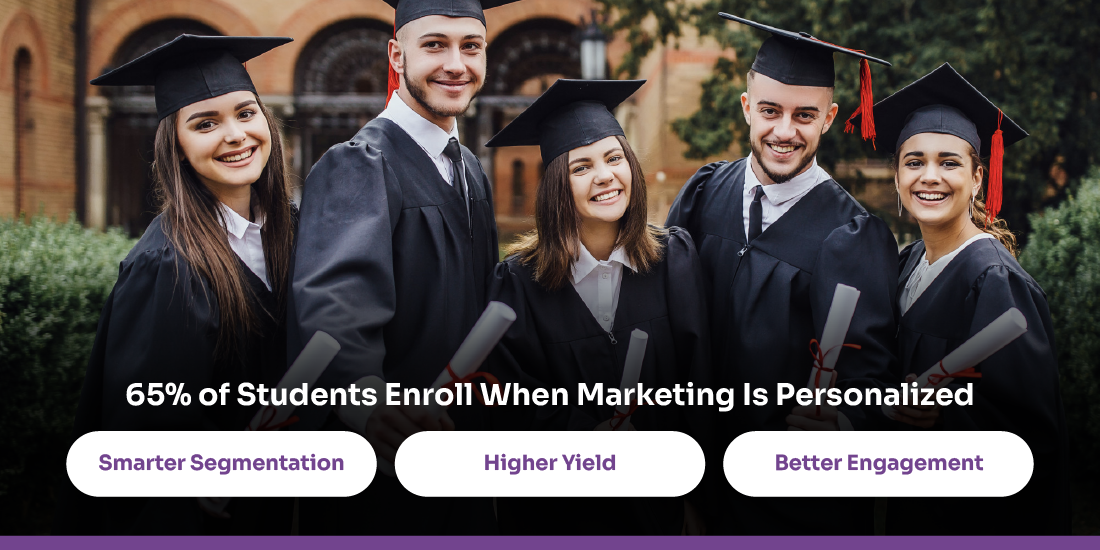
- Target your messaging toward high-potential student segments rather than simply addressing the largest audiences. Research shows that 65% of prospective students are more likely to enroll when marketing is personalized and targeted, highlighting the effectiveness of segment-driven outreach over generic campaigns.
- Develop clear strategies for each marketing channel that drive inquiries.
- Keep website content updated, searchable, and relevant.
- Offer multiple communication options—chatbots, text, email, forms, and phone to answer questions easily.
- Follow up promptly with every inquiry or website interaction.
- Encourage opt-ins for newsletters, webinars, forums, and social media.
- Track engagement metrics such as followers, subscriptions, and virtual event attendance regularly.
- Explore emerging technologies, including immersive digital environments, to future-proof recruitment.
- Share program-specific stories and outcomes rather than relying solely on rankings or generic updates.
- Use branded materials that highlight academics, extracurriculars, internships, and scholarships together.
Don’ts
- Don’t neglect follow-up or make it difficult for students to respond.
- Don’t overlook data tracking and performance analysis.
Balancing Innovation and Human Connection in Student Recruitment
Student recruitment today is shaped by digital engagement, data-driven personalization, and career-focused academic programs. Institutions increasingly rely on tools such as virtual events, artificial intelligence, and analytics to reach prospective students efficiently. At the same time, building strong industry partnerships helps align academic offerings with current and future workforce needs.
However, technology alone is not enough. Personal connection continues to play a critical role in influencing student decisions. Direct interactions with student ambassadors, faculty members, and admissions teams help build trust, answer questions, and provide an authentic view of campus life.
The most effective recruitment strategies balance innovation with human engagement. By combining advanced digital tools with meaningful personal interactions, institutions can meet student expectations, strengthen relationships, and drive successful enrollment outcomes.
Conclusion
Student recruitment in higher education is evolving rapidly, driven by changing student expectations, digital transformation, and increased competition for a smaller applicant pool. Institutions that succeed are those that adopt data-driven, personalized, and innovative strategies—from targeted digital marketing and CRM-based engagement to strategic use of scholarships, virtual recruitment tools, and predictive analytics.
By focusing on student-centered approaches, leveraging technology effectively, and continuously analyzing outcomes, colleges and universities can attract, engage, and enroll the right students while strengthening their brand and long-term enrollment outcomes.
Frequently Asked Questions
Question 1. What are the benefits of a strong student recruitment strategy?
Question 2. Why is a digital-first approach important for student recruitment?
Question 3. How does personalization improve the student recruitment process?
Question 4. What role does a CRM play in student recruitment?
Question 5. What are key enrollment indicators (KEI)?
Question 6. How can student recruitment software in higher education improve enrollment?
Written By





No comments yet. Be the first to comment!
Leave a Comment