
Table Of Contents
Introduction
Student outreach is a crucial part of modern higher education, helping institutions connect with prospective and current students. With increasing competition and more informed students, colleges and universities need strategies that go beyond generic emails or advertisements.
Personalized student outreach focuses on tailoring communication to each student’s academic interests, career goals, and engagement patterns. By doing so, institutions can build stronger connections, address concerns, and guide students throughout the enrollment journey. This blog explores how personalized outreach strategies can make a real difference in student recruitment.
What is Student Outreach?
Student outreach refers to the strategies and activities educational institutions use to connect with prospective and current students. It focuses on building awareness, sharing information, and guiding students through different stages of their academic journey from inquiry to enrollment and beyond.
In higher education, student outreach includes communication through emails, social media, webinars, campus visits, school visits, and community events. The goal is to inform students about academic programs, admission processes, scholarships, campus life, and career opportunities.
Student outreach also plays a key role in improving engagement and enrollment rates. By providing timely and personalized communication, institutions can build trust, answer student queries, and create a positive first impression.
Ways to Improve Your Student Outreach
Improving student outreach requires a strategic and student-centered approach. Institutions must focus on clear communication, personalization, and consistent engagement to attract and retain students.
Below are effective ways to strengthen your student outreach efforts:
Personalize Communication
Students are more likely to engage with institutions when communication feels relevant to their interests, academic goals, and career aspirations. Using student data to tailor emails, program suggestions, event invitations, and follow-ups makes outreach more meaningful.
Personalized messaging shows that the institution understands individual needs rather than sending generic information. In fact, nearly 48%–58% of students say personalized communication increases their likelihood of engaging with or applying to an institution.
Use Multi-Channel Engagement
Engaging students across multiple communication platforms increases visibility and accessibility. Institutions should connect through email, SMS, social media, webinars, phone calls, and campus events to ensure consistent interaction.
Different students prefer different channels, so a diversified approach improves overall reach. A strong multi-channel presence ultimately improves response rates and student engagement.
Predict Student Intent with AI Analytics
AI-driven analytics enable institutions to identify high-intent students based on their digital behavior and engagement patterns. By analyzing website visits, event registrations, email interactions, and inquiry history, institutions can better understand student interest levels.
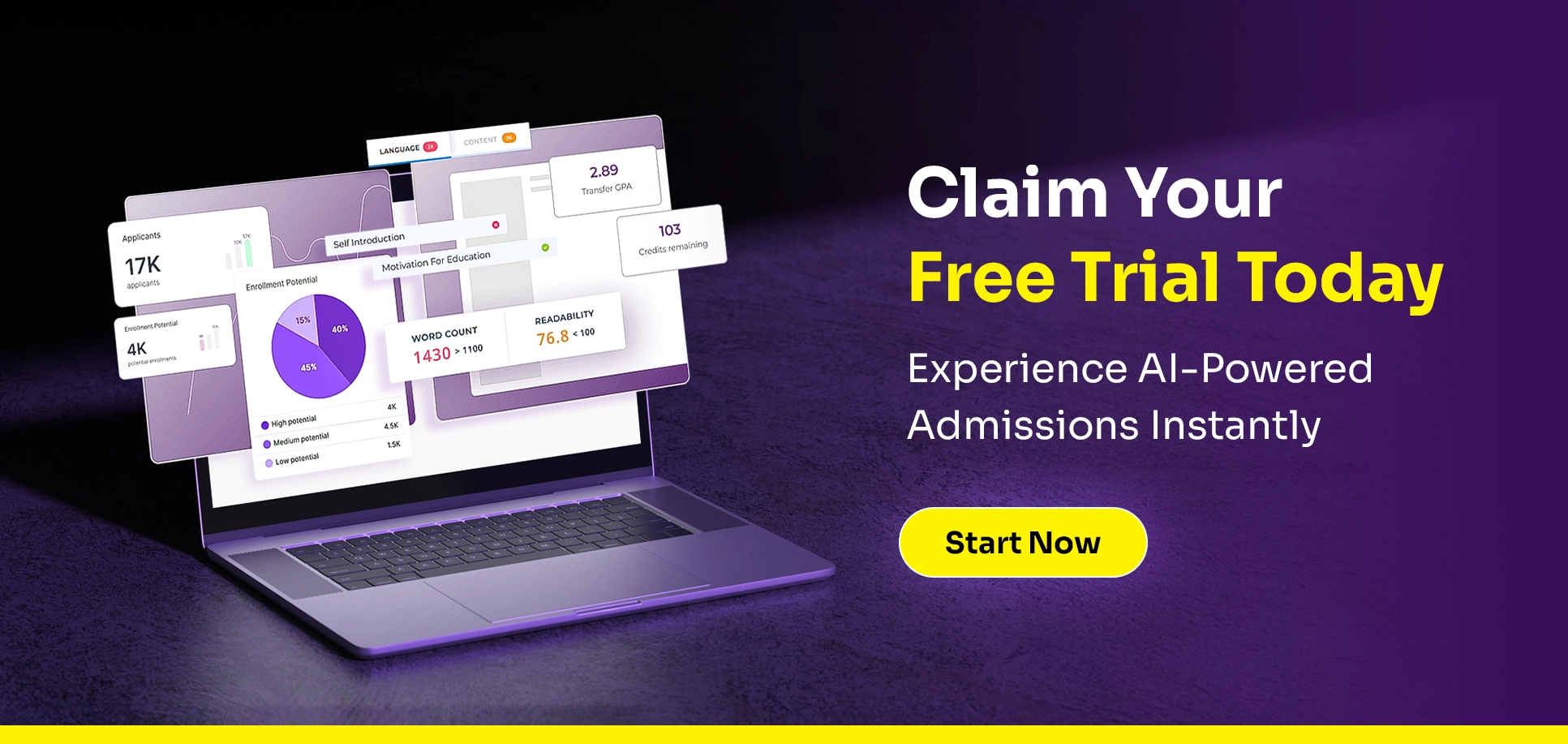
Predictive insights allow admissions teams to focus efforts on prospects most likely to enroll. EDMO Advisor Copilot enhances predictive student intent analysis with 24/7 automated support, personalized outreach, and intelligent lead scoring. Instantly answering student queries across channels and analyzing engagement patterns such as website visits, event participation, and inquiry behavior helps admissions teams identify and prioritize high-intent prospects.
Faster responses boost engagement, while automated query handling improves operational efficiency, allowing staff to focus on high-value interactions that drive enrollment outcomes.
Host Virtual and On-Campus Events
Virtual sessions and on-campus events give students a real sense of the institution beyond brochures and advertisements. Webinars, open houses, campus tours, and faculty interactions provide opportunities for direct engagement. These experiences allow students to ask questions and explore academic and campus life firsthand. Personal interaction builds credibility and trust during the decision-making stage.
Provide Quick and Clear Responses
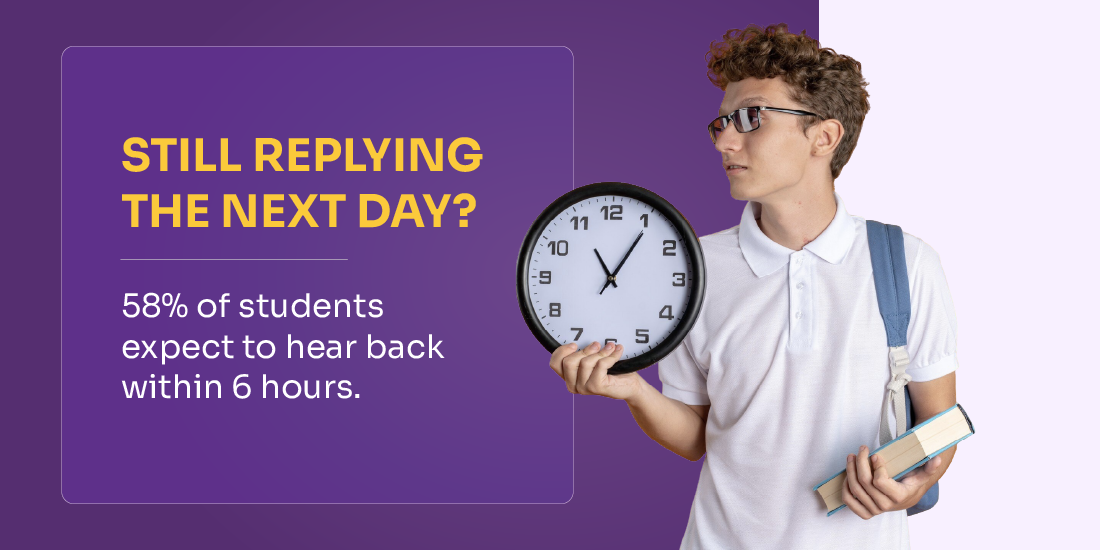
Prompt communication plays a critical role in student satisfaction and enrollment decisions. Timely responses to queries reduce uncertainty and prevent students from losing interest. Automated acknowledgments and defined response timelines ensure no inquiry goes unanswered. Clear, concise information helps students move smoothly through the admissions process. Research shows that 58% of students expect replies within six hours, highlighting the importance of responsiveness in modern outreach.
Highlight Student Success Stories
Showcasing student testimonials, alumni accomplishments, and career outcomes strengthens institutional credibility. Real success stories provide authentic proof of academic quality and career support.
When prospective students see relatable journeys and achievements, they can better imagine their own future at the institution. Sharing these stories through websites, social media, and events enhances trust and emotional connection.
Strengthen School and Community Partnerships
Building partnerships with high schools, academic counselors, and community organizations expands outreach and influence. These collaborations create direct access to prospective students and trusted advisors. Strong relationships help institutions share accurate information about programs, scholarships, and career pathways.
By combining personalization, technology, proactive communication, and consistent engagement, institutions can build stronger connections with students and significantly improve enrollment outcomes.
Practical Examples of Student Outreach Strategies
Student outreach involves various initiatives aimed at building meaningful connections with prospective and current students. These efforts help institutions increase awareness, improve engagement, and guide students throughout their academic journey.
Below are some effective examples of student outreach strategies commonly used by schools, colleges, and universities.
Email and SMS Campaigns
Institutions use targeted email and SMS campaigns to keep students informed about academic programs, admission deadlines, scholarships, events, and application updates. Personalized messaging ensures the information is relevant and timely for each prospective student.
Automated follow-ups help maintain consistent communication throughout the enrollment process. Studies show that 68% of students prefer receiving information from colleges via email, making it one of the most effective outreach channels.
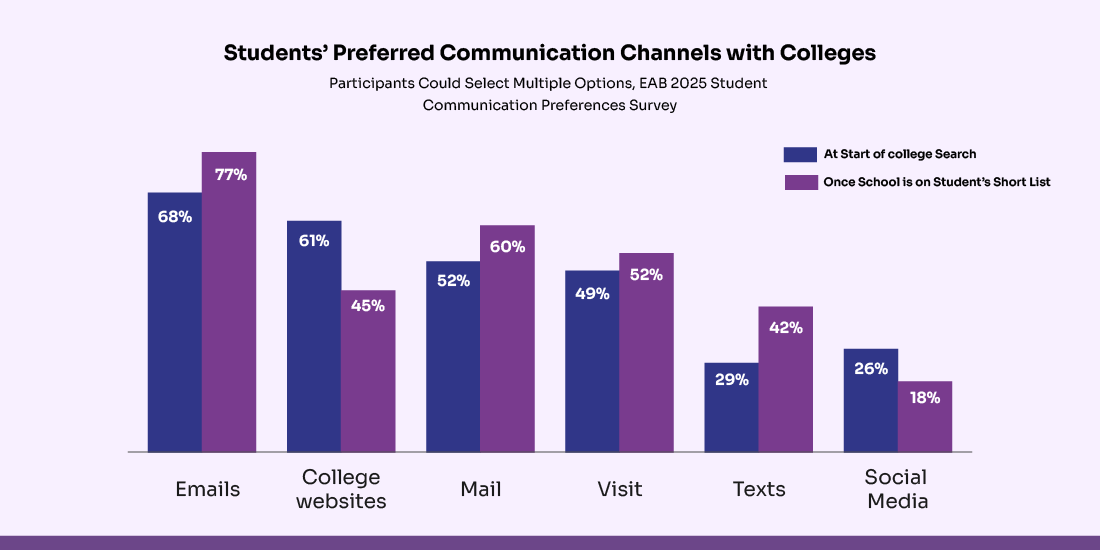
Source: EAB
Social Media Engagement
Colleges actively use platforms such as Instagram, LinkedIn, Facebook, and YouTube to connect with prospective students. They share campus updates, highlight student achievements, host live Q&A sessions, and provide virtual tours to showcase campus life.
Social media allows institutions to engage with students on platforms they frequently use. Research shows that nearly 74% of students have interacted with a college on social media, and about 70% are open to viewing college-related advertisements on these platforms.
School Visits and Education Fairs
Admissions representatives visit high schools, coaching institutes, and education fairs to engage directly with students and counselors. These in-person interactions provide an opportunity to explain academic programs, admission requirements, and career pathways in detail. Face-to-face communication builds credibility and trust. It also allows institutions to address questions immediately and clarify doubts.
Webinars and Virtual Information Sessions
Institutions organize online information sessions to guide students through admission procedures, program offerings, financial aid options, and campus life. These virtual events make it easier for students and parents to participate from any location. Live Q&A segments enable real-time interaction and personalized clarification. Webinars help institutions reach a broader and more diverse audience.
Alumni and Student Ambassador Programs
Institutions involve current students and alumni in outreach initiatives to share real-life experiences and success stories. Through testimonials, mentorship sessions, and peer discussions, ambassadors provide authentic insights into academic and career journeys. This relatable engagement helps prospective students visualize their future at the institution. Genuine student voices add credibility to recruitment efforts.
Application Support and Counseling
Dedicated counselors guide students through course selection, eligibility requirements, documentation, and financial aid procedures, ensuring a smooth application process. To enhance this support, many institutions are now using AI-powered chatbots to provide instant guidance and answer common questions 24/7.
These chatbots can deliver personalized assistance, send reminders about deadlines, and clarify complex steps, reducing confusion and improving application completion rates. Nearly 40% of universities are adopting AI-driven tools like these to deliver more efficient, personalized outreach and ensure a smoother enrollment experience.
By combining digital communication, in-person engagement, and personalized guidance, institutions can create effective student outreach strategies that improve enrollment, engagement, and long-term student success.
How Personalized Student Outreach Improves Admissions Yield
Admissions yield is the percentage of accepted students who ultimately decide to enroll at an institution. Personalized student outreach significantly influences this metric by enhancing engagement, building trust, and increasing students’ confidence in their enrollment decisions.
When communication is tailored to individual interests and needs, institutions create stronger connections that positively impact final enrollment outcomes.
Builds Stronger Emotional Connection
When institutions customize communication based on a student’s academic interests, career aspirations, and previous engagement, the interaction feels personal and meaningful. Instead of being treated as just another applicant, students feel recognized and understood.
Personalized emails, relevant program suggestions, and introductions to faculty members help create an early sense of belonging. This connection strengthens trust and emotional commitment to the institution.
Increases Engagement and Response Rates
Targeted communication significantly improves student interaction across the admissions funnel. Messages aligned with a student’s preferred program, scholarship eligibility, or geographic location are more likely to capture attention.
This relevance leads to higher email open rates, stronger click-through performance, and increased participation in webinars or campus visits. Institutions that adopt segmented and personalized outreach strategies often see engagement and response rates rise by approximately 20–26% compared to generic campaigns. EDMO Student Copilot delivers instant, proactive guidance through omnichannel communication, connecting students with admissions teams via voice calls, SMS, WhatsApp, and more for 24/7 personalized support. By ensuring consistent messaging across platforms and reaching students on their preferred channels, EDMO enhances engagement, improves response rates, and creates a seamless enrollment experience.
Reduces Application Drop-Off
A significant number of admitted students do not complete enrollment due to unanswered questions, missed deadlines, or insufficient follow-up. Personalized reminders regarding important dates, required documents, and financial aid procedures help keep students informed and organized.
By reducing confusion and maintaining consistent engagement, institutions can minimize last-minute drop-offs. Data-driven, personalized outreach strategies have been shown to increase enrollment commitments by over 15%, demonstrating their direct impact on yield improvement.
Strengthens Trust and Institutional Credibility
Consistent and relevant communication signals that the institution genuinely understands and values student needs. When information is clear, timely, and tailored, students perceive the institution as organized and supportive. Transparency in areas such as tuition, scholarships, academic expectations, and career outcomes further enhances credibility.
Enables Data-Driven Yield Strategies
Using CRM systems and AI-powered analytics, institutions can segment students based on engagement levels and intent. Admissions teams can prioritize high-interest prospects and deliver targeted campaigns. This strategic approach improves efficiency and maximizes yield outcomes.
By combining tailored communication, timely engagement, and data insights, institutions can convert more admitted students into enrolled students while building long-term relationships that support student success.
Conclusion
Personalized student outreach has become a critical strategy for improving admissions yield in today’s competitive higher education environment. By tailoring communication to individual interests, engagement history, and decision-making needs, institutions can build stronger relationships with admitted students. Relevant, timely, and proactive outreach reduces uncertainty, increases engagement, and minimizes enrollment drop-offs.
When supported by data analytics, AI tools, and multi-channel communication, personalized outreach becomes even more effective and scalable. Institutions that focus on creating meaningful, student-centered experiences are more likely to convert admitted applicants into enrolled students.
Frequently Asked Questions
Question 1. What is higher education yield management?
Question 2. How can institutions stay top of mind with an authentic touch in communication?
Question 3. What do students expect today from universities?
Question 4. Why is personalized communication important in admissions?
Question 5. What role does AI play in personalized student outreach?
Question 6. What are some common mistakes to avoid in student outreach?
Written By


You May Also Like
 AI in Education

 AI in Education
 AI in Education
No comments yet. Be the first to comment!
Leave a Comment