


Table Of Contents
Introduction
University admissions teams manage large volumes of applications and student inquiries, making it challenging to respond quickly and maintain consistent engagement. AI tools integrated with Slate CRM help simplify this process by automating routine tasks, personalizing communication, and providing useful enrollment insights. This blog covers five AI tools for Slate that universities and admissions teams should know to improve efficiency, enhance the applicant experience, and support smarter enrollment decisions.
AI Tools for Slate That Universities and Admissions Teams Should Know
University admissions teams face increasing complexity as application volumes rise and student expectations for timely, personalized communication grow. Managing these demands manually often leads to inefficiencies, delayed responses, and limited visibility into enrollment trends. According to the 2025 EDUCAUSE AI Landscape Study, 57% of universities now consider AI a strategic priority, underscoring its growing importance in enrollment management.
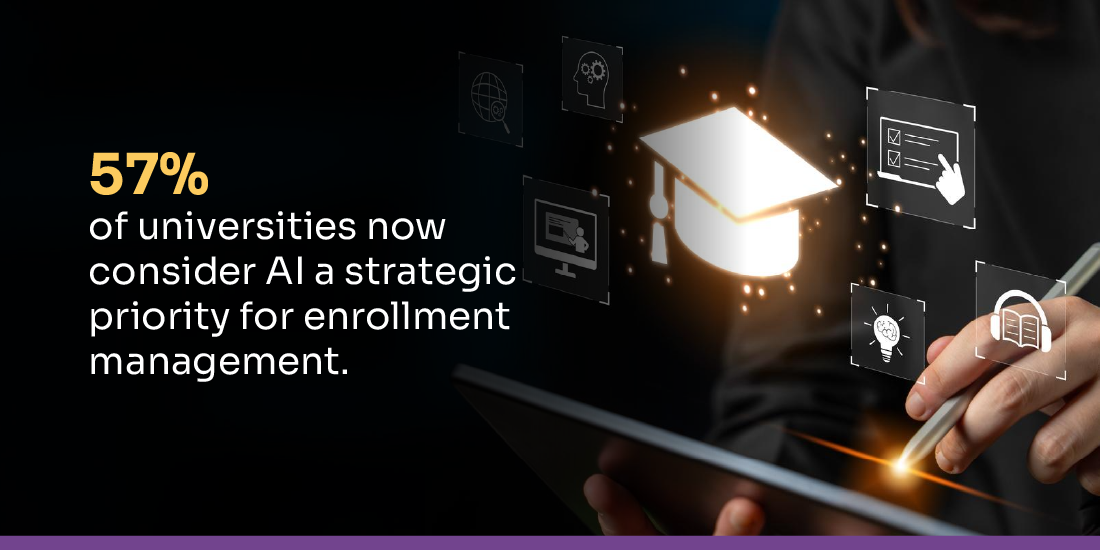
Source: 2025 EDUCAUSE AI Landscape Study
AI tools integrated with Slate CRM help institutions address these challenges by automating routine administrative tasks, analyzing applicant behavior, and delivering real-time insights across the admissions lifecycle. From intelligent student communication and automated lead nurturing to application review support and predictive enrollment analytics, these AI tools assist admissions teams at every stage of the enrollment funnel.
By leveraging AI within Slate, universities can improve operational efficiency, enhance the applicant experience, and make more accurate, data-driven enrollment decisions.
AI Tools for Slate That Support Universities
Universities are increasingly relying on AI tools to streamline administrative tasks, enhance communication, and make data-driven decisions. When integrated with Slate, these tools help admissions teams manage applications more efficiently, engage prospective students effectively, and improve overall institutional operations. Here are five key AI tools that universities can use to get the most out of Slate.
EDMO
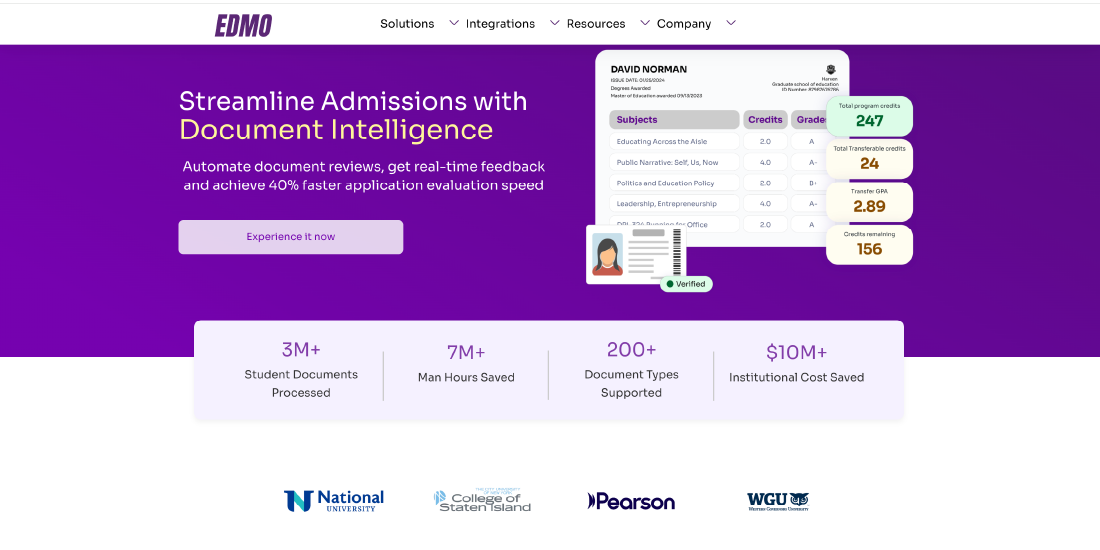
EDMO uses AI and predictive analytics to help universities understand applicant behavior and forecast enrollment outcomes. By identifying high‑intent students and engagement patterns, it allows admissions teams to tailor recruitment strategies, improve yield rates, and allocate resources more effectively.
Key Features:
- Predictive modeling to identify high-intent applicants
- Enrollment forecasting and trend analysis
- Automated alerts for prospective student engagement
- Integration with Slate dashboards for real-time insights
Pros:
- Helps prioritize applicants likely to enroll
- Reduces guesswork in admissions decisions
- Supports data-driven planning for resource allocation
Cons:
- May require training for staff to interpret predictive insights
LeadsBridge
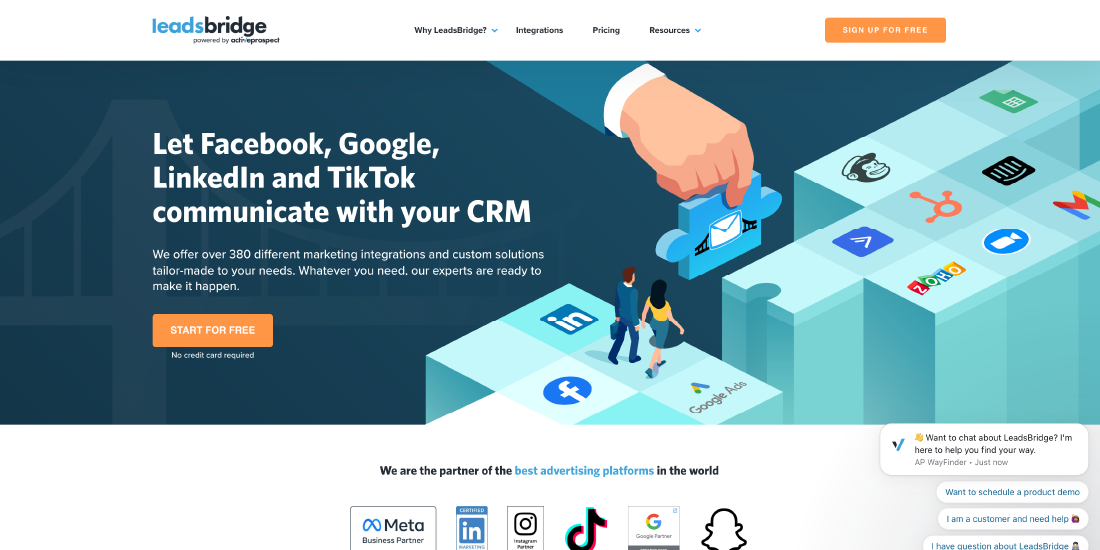
LeadsBridge connects Slate with external marketing platforms, ensuring seamless data flow between systems. It automates the movement of leads from ads, web forms, and campaigns into Slate, helping universities maintain accurate data, improve tracking, and enhance multi‑channel marketing efforts.
Key Features:
- Syncs prospective student data across multiple marketing and CRM platforms
- Automates lead capture and transfer from web forms, social ads, and campaigns
- Tracks lead engagement and campaign performance
Pros:
- Ensures consistent and accurate student data across systems
- Saves time by automating manual lead transfers
- Enhances multi-channel marketing efforts
Cons:
- Some integrations may require technical setup
- Dependent on third-party platforms for full functionality
Zapier
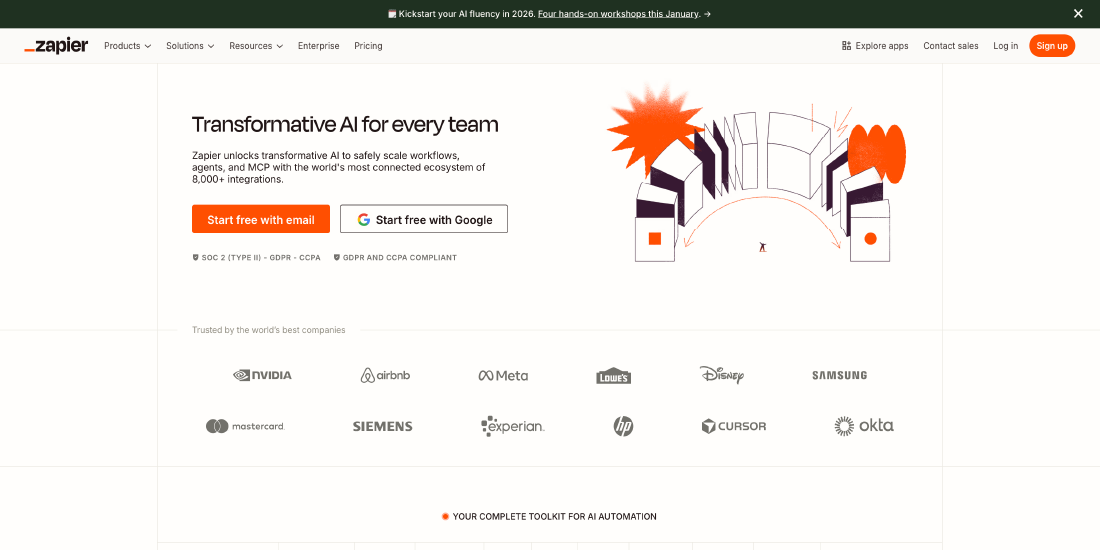
Zapier is an automation tool that connects Slate with hundreds of apps to simplify workflows without coding. Admissions teams can set up triggers that automatically perform tasks, such as updating records, sending emails, or notifying staff about new applications.
Key Features:
- Triggers automatic actions between Slate and other apps (email, spreadsheets, notifications)
- Streamlines repetitive administrative tasks
- Easy-to-use drag-and-drop interface for workflow creation
Pros:
- Reduces manual work for admissions staff
- Flexible, supporting many apps and use cases
- Quick to set up basic automation without IT support
Cons:
- Complex workflows may require advanced setup
- Some integrations have limits on volume or frequency in free plans
Slate’s Built-In AI Features
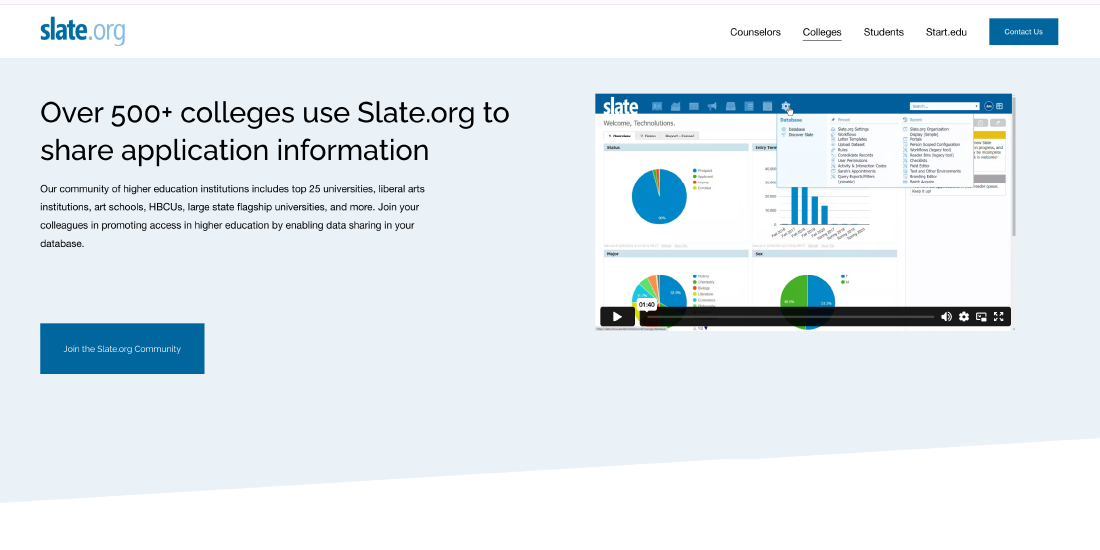
Slate itself includes AI‑driven capabilities that support admissions and administrative functions. These features help with tasks such as application review, automated communications, real‑time analytics, and predictive insights, allowing teams to work faster and make data‑informed decisions without external tools.
Key Features:
- AI-assisted application review and scoring
- Automated email and communication workflows
- Real-time reporting and analytics dashboards
- Predictive insights on enrollment and student engagement
Pros:
- Fully integrated with Slate-no external tools required
- Streamlines multiple admissions tasks in one platform
- Offers actionable insights from existing admissions data
Cons:
- Advanced AI features may be limited in lower-tier Slate plans
- Users may need training to fully leverage AI analytics
Beefree
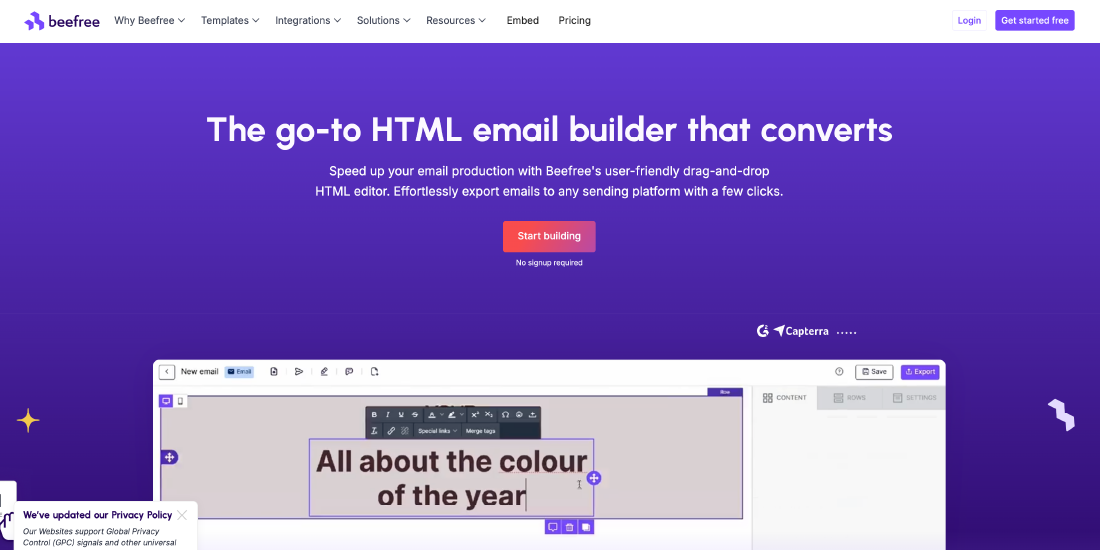
Beefree is an integrated email and campaign design tool that helps universities create professional, responsive messages within Slate. It enables admissions and marketing teams to build targeted communications, track engagement metrics, and enhance outreach efforts with visually appealing, personalized content.
Key Features:
- Drag-and-drop email design for desktop and mobile
- Customizable templates for campaigns, reminders, and newsletters
- Personalized messaging based on applicant data in Slate
- Analytics to track open rates, clicks, and engagement
Pros:
- Easy-to-use interface for admissions and marketing staff
- Improves student engagement with personalized campaigns
- Visual and responsive email design with minimal technical knowledge
Cons:
- Limited advanced automation compared to dedicated marketing platforms
- Full functionality may require paid plans

Conclusion
AI tools integrated with Slate CRM are becoming essential for universities aiming to manage admissions more efficiently and competitively. From automating routine tasks and improving student communication to delivering predictive insights that support smarter enrollment decisions, these tools help admissions teams work more strategically across the entire enrollment funnel. As AI continues to play a growing role in higher education, adopting the right AI tools for Slate enables institutions to enhance the applicant experience, optimize resources, and make data-driven decisions that support long-term enrollment success.
Frequently Asked Questions
Question 1. How do AI-powered tools support university admissions teams?
Question 2. Can AI tools improve communication with prospective students?
Question 3. Is AI used to review student applications?
Question 4. How does AI help with enrollment planning?
Question 5. Do AI tools replace admissions staff?
Question 6. How do AI tools help during high-volume admission periods?
Question 7. Can AI tools personalize the admissions experience?
Question 8. Do AI tools require extensive training for admissions teams?
Written By






No comments yet. Be the first to comment!
Leave a Comment