

Table Of Contents
Introduction
Universities & colleges are reviewing more student admission applications than ever, yet the downside is that many enrollment teams still rely heavily on manual review processes.
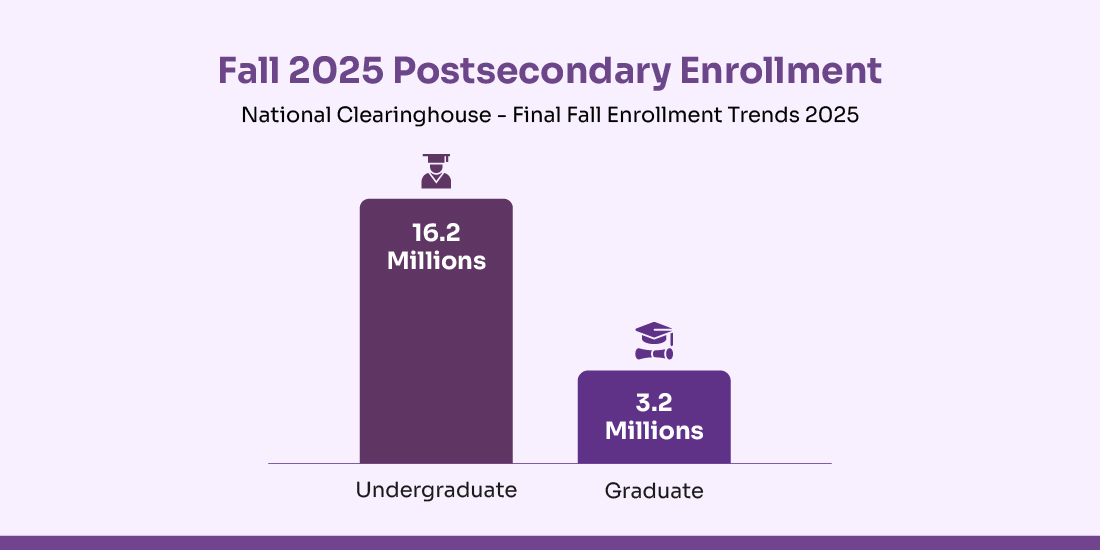
According to the National Clearinghouse report titled “Final Fall Enrollment Trends 2025 Report”, over 19.4 million postsecondary enrollments were recorded in fall 2025, drawing in 16.2 million undergraduate and 3.2 million graduate students. As per the statistics, there is 1% uptick in total postsecondary enrollment, with undergraduate gains poised at +1.2%, whereas graduate enrollment remained stable (-0.3%).
Imagine the scale and pressure that the admissions team must be facing while reviewing thousands or even millions of applications without intelligent support systems in place.
Adding to the problems, there are many drawbacks to manual evaluations. Sorting transcripts, recalculating GPAs, verifying documents, and evaluating eligibility can slow decision timelines, downgrade quality analysis, and create bottlenecks during enrollment cycles. It consumes indispensable staff time and increases the risk of inconsistencies, overlooked details, and embarrassing evaluation errors, causing universities to lose bright candidates.
Over time, these inefficiencies worsen, making it nearly impossible to streamline application reviews, foster a responsive student-friendly enrollment ecosystem, and provide a smooth applicant experience.
In the past couple of years, AI-powered tools have been rewriting the rules of how higher education institutions conduct, oversee, and regulate student application evaluation. Earlier, everybody viewed AI through a lens of skepticism, but now it’s being viewed as an enabler to fast-track processes, reform review strategies, & finetune student experience.
By automating GPA & transfer credit calculations, conducting AI-powered interviews, document extraction, and eligibility checks, universities can supercharge admission workflows while maintaining accuracy and compliance. Intelligent systems help reduce manual friction and errors, delineate high-intent applicants faster, and equip enrollment officers with real-time insights for smarter & data-driven decision-making.
Top AI Tools for automating Application Review in Higher Education
EDMO
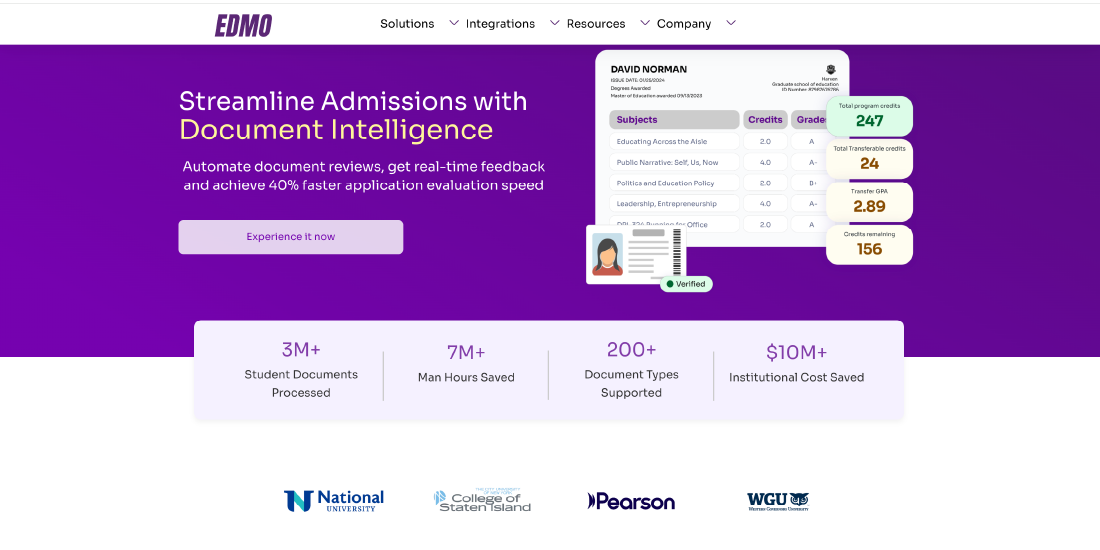
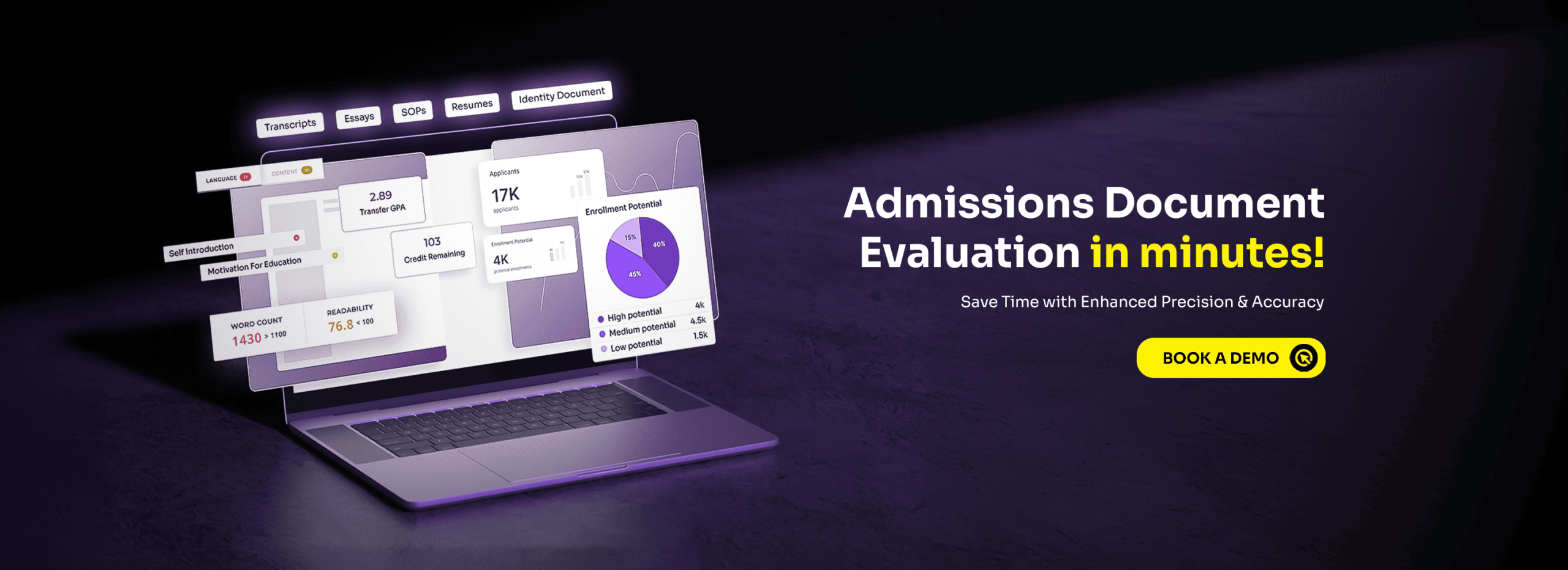
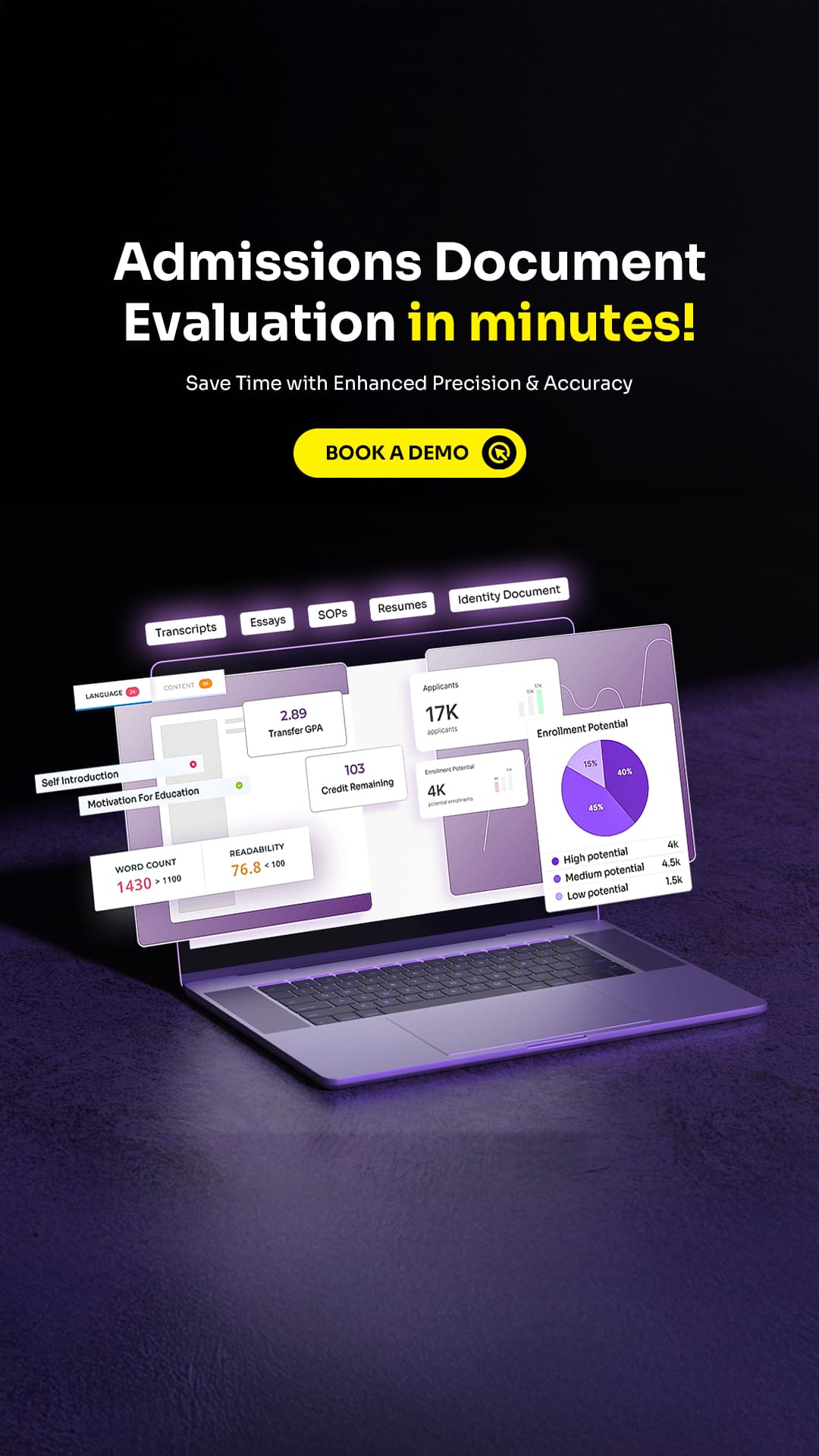
EDMO is an AI-driven enrollment automation platform purpose-built for higher education enrollment teams. It offers a comprehensive product suite called Document Intelligence that manages the most critical and time-intensive facets of student application reviews. EDMO has been created to handle a multitude of evaluation workflows. Document Intelligence automates document processing, transcript evaluation, and eligibility authentication, introducing structure, speed, and consistency to enrollment operations.
Within this suite, EDMO offers tools such as the GPA Calculator, Transfer Credit Evaluator, and Application Evaluator that have individual functionalities, including standardizing GPA computations, analyzing transcripts for credit equivalency, extracting key applicant data, and applying institutional eligibility criteria with precision.
By embedding intelligence into these workflows, EDMO helps admissions officers streamline application reviews, supercharge admission workflows, and reduce manual friction and errors across their key responsibility areas.
Enrollment teams can automatically triage applications, prioritize high-intent candidates, accelerate transfer credit decisions, and ensure compliance with academic policies, all while significantly cutting down manual data entry and repetitive evaluation tasks.
Key Features:
- Intelligent Document Extraction: Automatically extracts key data points from academic transcripts, scoring marksheets, certificates, and supporting documents.
- Automated GPA Calculation: Standardizes GPA conversions across domestic and international grading systems based on institutional rules.
- Transfer Credit Evaluation: Analyzes prior coursework and maps it to institutional equivalencies, accelerating transfer decisions.
- Application Eligibility Assessment: Evaluates applicants against predefined admission criteria, highlighting qualified candidates instantly.
Benefits for Enrollment Teams:
- Automated Review Efficiency: Streamlines application reviews by eliminating manual calculations and repetitive sorting.
- Accuracy & Consistency Assurance: Reduces manual friction and errors, ensuring uniform and reliable evaluations.
- Accelerated Applicant Communication: Speeds up response times so prospective students receive timely updates.
- Strategic Staff Enablement: Frees staff bandwidth to focus on high-impact engagement and informed decision-making.
Slate by Technolutions
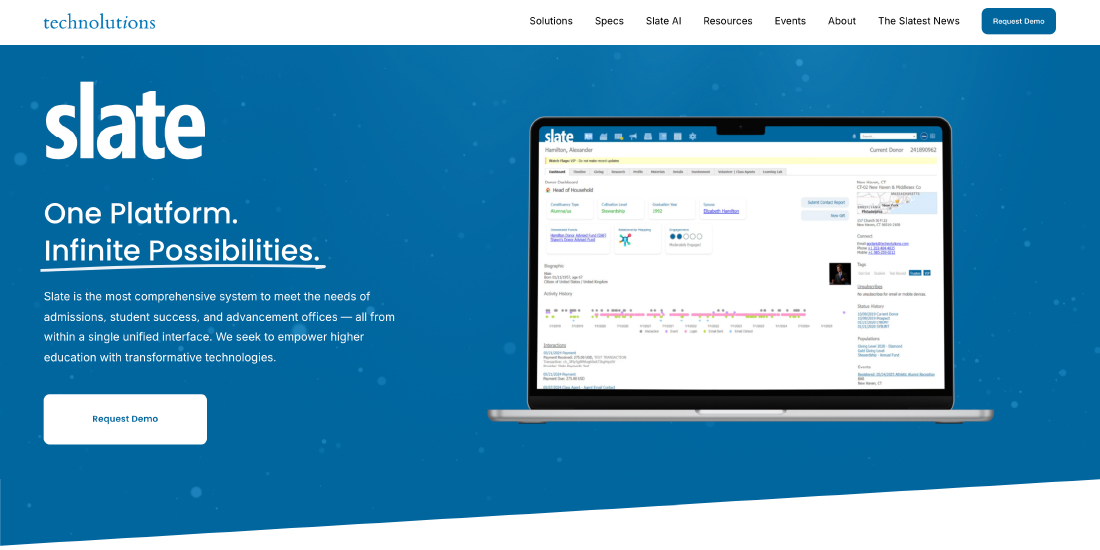
Slate is an all-inclusive CRM and admissions management system commonly used in higher education. It has a tool called Slate Reader, which allows enrollment advisors to review and assess applications. It enables reviewers to comment on documents, assess, and rate applications.
Key Features:
- Reader Bins: Applications are placed, organized and arranged in bins such as “Admit,” “First Read,” and “Ready for Review.”
- Organized Workflows: Reviewers can allocate applications to other staff members, transfer them across bins, or set them for a final decision.
- Review Forms: Slate also offers adaptable forms to enrollment teams that support both quantitative and qualitative evaluation for giving ratings to documents and adding comments to applications for a smoother review process
- Dashboard & Search: It provides a comprehensive overview of the student record, including application history, test results, and transcripts.
- Batch Processing: It also streamlines bulk application movement and material uploading in batches.
Benefits for Enrollment Teams:
- Enhanced Application Visibility and Prioritization: Advisors may efficiently prioritize outreach and follow-ups by using Reader Bins and dashboard views based on their application stage.
- Faster Decision Turnaround: Advisors can provide faster updates to potential students due to well-organized procedures and batch processing.
- Improved Teamwork: The feasibility to assign ratings to applications, move bins, and add review comments is praiseworthy. It ensures smooth communication between enrollment advisors and admissions reviewers.
Salesforce Education Cloud with Admissions Connect
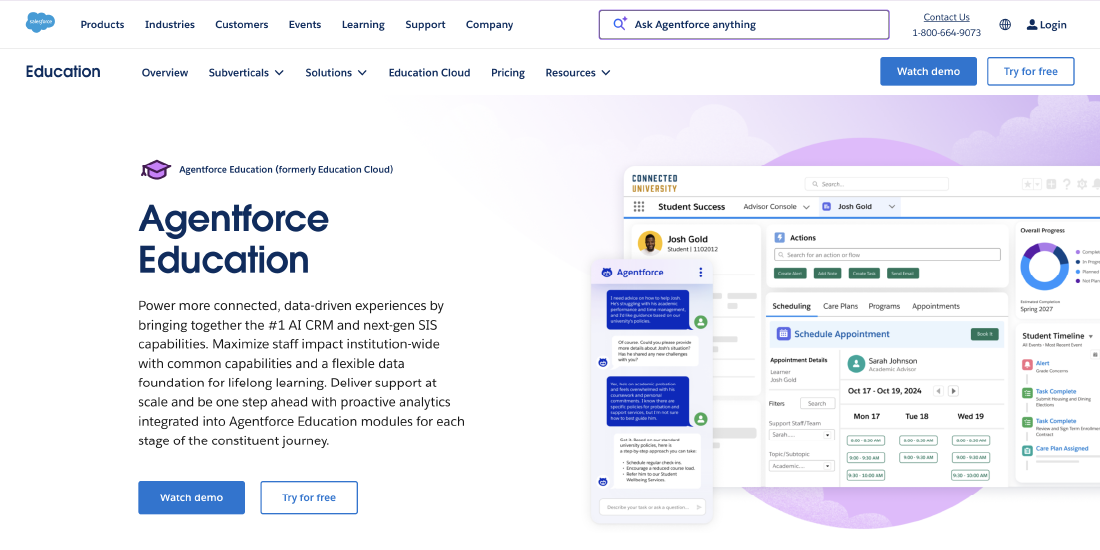
Salesforce Education Cloud is a CRM platform used by top schools such as Stanford University, University of Southern California (USC), Yale University, Purdue University, Rutgers University, University of Pennsylvania (UPenn), among many others. Through its advanced features, such as Education Cloud & Admissions Connect, it’s safe to say that Salesforce can process, review, and analyze student applications to an extent. It is not only an application data management platform but also helps to streamline admissions workflows.
Key Features
- Unified Admissions Data Visibility: Admissions Connect provides access to enrollment professionals to store & view application data, such as academic history, certificates, & letter of reference, and uploaded documents.
- Automated Review Processes: The Salesforce system can direct application records to reviewers who have the authority and merit to evaluate them, enabling a comprehensive evaluation. Adding to it, enrollment teams can also utilize and leverage Salesforce flow templates to categorize different stages of the application journey, such as submitted, under review, or on the waitlist.
- AI Integration: Einstein AI and chatbot solutions can be deployed for student inquiry management and application readings.
Benefits for Enrollment Teams:
- Centralized Applicant View: Access all application data and documents in one place for faster, more informed decisions.
- Automated Application Routing: Streamline reviews with auto-assignment and stage tracking to keep the pipeline moving efficiently.
- AI-Powered Engagement: Use Einstein AI and chatbots to handle inquiries and support application review at scale.
Ellucian Intelligent Automation
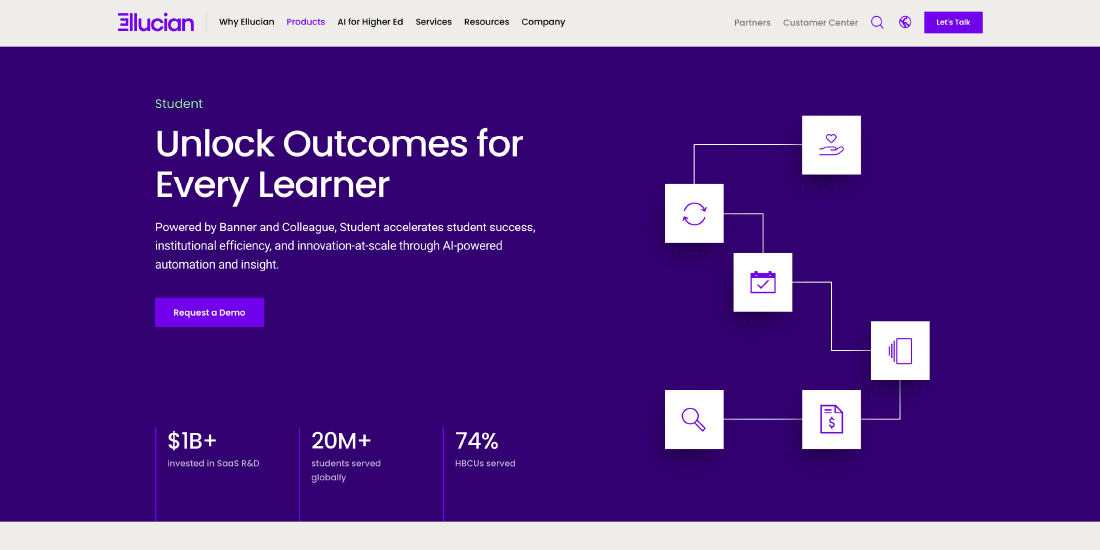
Ellucian is a premier provider of ERP and student information systems for higher education. Its student information systems offerings, such as Banner and Colleague, and recruitment tools like Ellucian Experience, encompass the capabilities to process & manage student applications. Ellucian fosters an enrollment management ecosystem regulating the entire application lifecycle. It has various functionalities such as reviewing data integrity, detecting fraudulent records, and automating application processing.
Key Features:
- Application Management: Ellucian’s application management tools are multilingual, supporting over 100 languages, and identify duplicate applications and chunk entries.
- AI and Automation: Ellucian Student allows the admissions team to identify top student leads to maximize enrollment yields.
- Enhanced Security: Ellucian has developed specialized features to protect and manage student records during the application process.
Benefits for Enrollment Teams:
- Global Reach: Teams can interact with foreign candidates more successfully, reducing language barriers to a sizeable extent.
- Cleaner & More Accurate Data: Duplicate record identification and entry authentication lowers down scope of errors.
- Increased Enrollment Yield: Teams can effectively recruit and convert high-potential students by leveraging AI-driven lead identification.
- Improved security features: It protects sensitive student records, lowering risk and guaranteeing regulatory compliance for stronger data protection and compliance.

How to Choose the Best AI Tool for Application Review in Higher Education?
AI-powered technologies are increasingly indispensable to contemporary admissions operations as higher education institutions deal with rising applicant numbers, increased competition, and greater expectations. But not every AI solution is designed with the intricacy and accountability of application review in mind. Comparing feature lists is not enough to select the best tool; institutional goals, workflow alignment, ethical issues, technical capabilities, and long-term scalability must all be strategically evaluated.
Understand Your Core Functional Needs
Clearly describe the admissions difficulties you need to solve before choosing an AI tool. High-volume processes like transcript processing, GPA conversion, and eligibility checks should be automated by the perfect solution, which should also enable comprehensive evaluation by analyzing recommendation letters and essays. Maintaining workflow efficiency requires seamless interaction with current SIS or CRM systems, and multilingual capabilities are crucial for organizations managing global applications.
Put Ethics, Justice, and Compliance first
Institutions using AI in admissions or planning to use it must make sure the technology fosters equity rather than perpetuates prejudice. To guarantee equity across demographics, vendors should be open about the training process of their models and exhibit active bias auditing. To protect sensitive application information, strict adherence to laws like FERPA and robust data privacy safeguards are necessary. Above all, AI needs to serve as a tool for decision-support rather than a decision-maker, enabling admissions officials to retain control, use discretion, and have ultimate say over results.
Assess Operational and Technical Capabilities
Institutions must evaluate the AI tool’s performance in actual admissions environments in addition to feature lists. An easy-to-use interface should be provided by the platform to reduce training time and promote broad team acceptance. Pilot testing should be used to verify its correctness and dependability by contrasting AI-generated and human judgments. Explainability is equally crucial; in order to maintain openness and confidence, the system must explicitly describe how it makes suggestions, emphasizing the variables that affected the score or prioritizing.
Evaluate Scalability, ROI, and cost.
Instead of being viewed as a temporary efficiency boost, an AI tool should be considered a long-term strategic investment. Institutions must take into account not only the initial pilot funding but also the entire cost of ownership, which includes subscription fees, implementation costs, training, support, and the anticipated long-term return on investment. In order to provide dependability and consistent results during periods of high admissions, the platform should also be designed to expand, managing seasonal spikes in application volume without experiencing performance problems.
Conclusion
In higher education, artificial intelligence (AI) tools are evolving from operational add-ons to strategic enablers of more intelligent, expedient, and equitable applicant processing. AI enables admissions personnel to refocus their attention from manual processing to meaningful decision-making and student engagement by automating tedious processes, improving data accuracy, and facilitating holistic evaluation.
When used properly, with human oversight and robust governance, these technologies enhance scalability, consistency, and transparency throughout enrollment operations in addition to increasing efficiency. AI-driven review tools will be crucial in determining how admissions is shaped in the future as colleges continue to manage growing application quantities and international competitiveness.
Frequently Asked Questions
Question 1: Why are AI tools particularly useful for reviewing applications in higher education?
Ques 2: Can AI tools integrate with existing campus technology systems?
Ques 3: What should administrators consider when evaluating AI tool pricing for their higher education institution?
Written By


You May Also Like
 AI in Education

 AI in Education
 AI in Education
No comments yet. Be the first to comment!
Leave a Comment