

Table Of Contents
Introduction
With enrollment numbers soaring, admissions teams face combustible pressure & burnout, managing not only higher student application volumes but also functional bottlenecks such as staffing shortages and students’ expectations for instant, personalized communication. Such challenges often hurt institutions’ enrollment ambitions because delayed follow-ups, missed engagement opportunities, and inconsistent messaging lead to higher rates of application drop-off and enrollment melt.
When manual processes remain sluggish, even highly interested applicants may disengage due to a lack of prompt guidance or clarity. The use of Artificial Intelligence (AI) might save the day by automating routine tasks, sending real-time nudges, identifying high-intent prospects, and providing data-driven insights to admission teams.
It not only helps admission teams automate critical workflows but also helps sustain stronger relationships with students. With AI, admissions teams can respond quickly, prioritize effectively, and deliver personalized support at scale. This leads to higher application completion rates, reduced melt between the inquiry and enrollment stages, and a more seamless, student-centered admissions experience. EDMO’s Student Copilot is an AI assistant that provides real-time application updates, answers admission queries instantly, and guides students through every step of the enrollment journey. It delivers 24/7 personalized support across multiple channels, including voice calls, SMS, and WhatsApp.
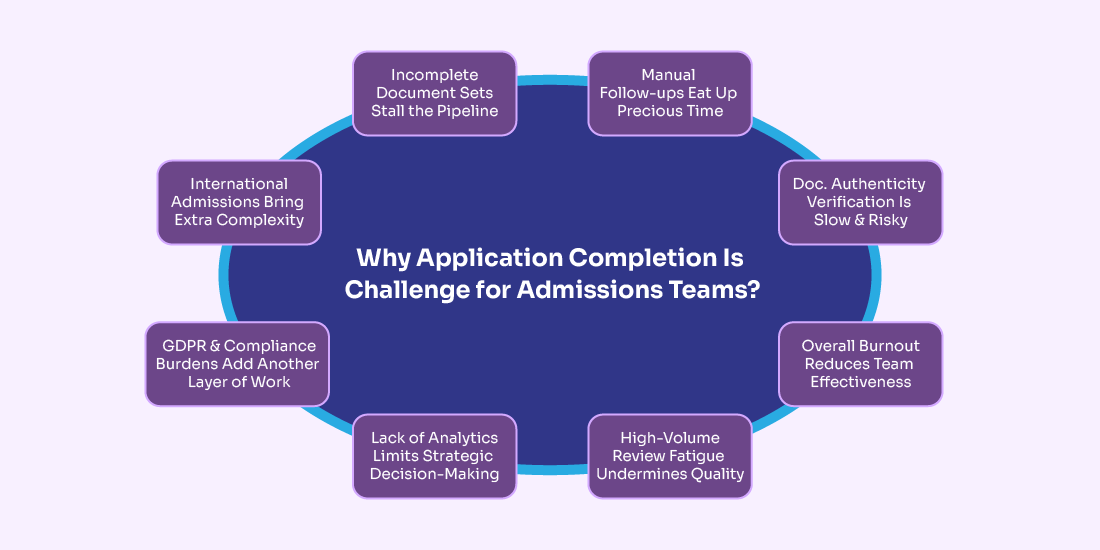
Why Application Completion Is a Challenge for Admissions Teams?
Application completion remains a critical and resource-intensive challenge for admissions teams because flawless submissions are a rarity on the first go. Many prospective students & applicants leave applications unfinished, submit incomplete documents, miss supplemental requirements, or abandon the process due to confusion, ambiguity, or conflicting priorities.
For offices managing thousands of applicants across multiple programs and deadlines, this results in ongoing manual follow-ups, status checks, and reminder emails. As a result, teams spend significant time resolving missing materials and clarifying requirements, rather than focusing on evaluating candidates, vetting documents, and shaping the incoming batch. This turns a potentially streamlined process into a fragmented and time-consuming one.
EDMO’s Advisor Copilot is a true standout here. It is an AI tool that analyzes student data, scores and prioritizes leads, and helps advisors tailor outreach based on each student’s interests and engagement history. This enables more effective, personalized communication and improves conversion rates.
Manual Follow-ups Eat Up Precious Time
Admissions teams spend significant time following up with applicants for missing documents, such as transcripts and recommendation letters, and responding to repetitive inquiries like “Is my application complete?” or “Did you receive this PDF?”
Nearly 40% of an officer’s time is devoted to these manual tasks. This slows the process and forces staff to react to issues rather than proactively manage the admissions pipeline.
Incomplete Document Sets Stall the Pipeline
Incomplete files consistently create bottlenecks. Reviewers cannot proceed until all materials are received, so missing or partially uploaded documents delay application processing. This often results in: constant manual checking loops, last-minute panic calls and emails, and unnecessary stress on staff and applicants alike. In international admissions, these delays can cause applicants to miss visa or enrollment deadlines.
Document Authenticity Verification Is Slow and Risky
Admissions officers must verify the authenticity of diplomas, transcripts, and recommendation letters. This often involves manually contacting previous institutions or cross-checking records, which is time-consuming and prone to error. Without automation, this process becomes a significant bottleneck, especially during peak review periods.
International Admissions Bring Extra Complexity
Foreign educational documents differ significantly in structure, grading scales, and language compared to domestic credentials. Admissions teams often must manually research grading equivalencies or translation standards, typically without adequate training. This results in slow and inconsistent evaluations.
GDPR and Compliance Burdens Add Another Layer of Work
Handling personal data, including sensitive documents such as passports or visas, requires strict controls over access, storage, and logging. Compliance with regulations such as GDPR adds complexity to admissions workflows, requiring thorough documentation and audit trails that are not easily integrated into traditional application systems.
Lack of Analytics Limits Strategic Decision-Making
Most admissions systems track basic metrics such as clicks or document status, but few offer meaningful insights into applicant behavior, enrollment likelihood, or engagement patterns. As a result:
- Teams don’t know which applicants are most likely to say “yes”
- Scholarship or outreach resources may not be used optimally
- Cohort planning becomes reactive rather than strategic
Without robust analytics, admissions relies more on guesswork than on data-driven planning.
High-Volume Review Fatigue Undermines Quality
Reviewers often have only 5 to 10 minutes per application, which forces them to skim materials rather than conduct thorough & cohesive evaluations. Processing dozens of applications daily leads to cognitive fatigue, increasing the risk of oversight, inconsistent judgments, and errors.
Overall Burnout Reduces Team Effectiveness
The cumulative effect of these challenges, including frequent follow-ups, verification work, compliance demands, and high volume, leads to staff burnout. This impacts retention, increases error rates, and reduces the ability to provide positive applicant experiences.
The long-term consequences are scarier: higher turnover of experienced admissions officers, lower morale and slower response times, and worse experiences for prospective students.
How AI Improves Application Completion Rates
AI helps more students finish their applications by guiding them through each step. It sends personalized reminders, offers real-time support, and checks documents automatically. This reduces delays and mistakes, keeps students engaged, and makes sure their applications are complete and accurate.
Continuous AI-Driven Student Support via Chatbots
AI-driven virtual assistants & chatbots allow admissions teams to provide instant, 24/7 assistance to applicants, answering common questions about deadlines, document requirements, and program details.
These chatbots can guide students step by step through completing their applications, reducing errors and missing information. By handling repetitive queries, they free up staff to focus on complex cases and strategic initiatives. Additionally, AI chatbots can proactively nudge students with reminders and personalized updates, keeping the application process on track and improving overall completion rates.
- Immediate Query Resolution: AI chatbots provide prompt responses to frequently asked questions regarding deadlines, application requirements, and financial aid, regardless of business hours.
- Real-Time Form Guidance: Chatbots assist applicants throughout the application process, minimizing frustration and reducing form abandonment rates.
- Multilingual Support: AI tools communicate in multiple languages, supporting international students and mitigating language barriers that contribute to student attrition.
Intelligent and Proactive Communication Nudges
AI-powered communication nudges anticipate when students may miss deadlines or overlook required documents. These systems automatically send personalized reminders through email, SMS, or in-app messages, prompting timely action without overburdening staff with additional tasks.
By analyzing application progress, AI delivers targeted nudges to the right students at the right time, which increases completion rates. This approach keeps applicants engaged and reduces manual follow-ups, enabling admissions teams to focus on higher-value tasks.
- Context-Aware Reminders: AI systems analyze applicant behavior to deliver personalized and timely reminders via email or SMS, prompting completion of specific tasks such as document submission or fee payment.
- Mitigation of “Summer Melt”: Ongoing, personalized AI-driven communication maintains student engagement from initial inquiry through enrollment, thereby significantly reducing the incidence of “summer melt.”
Automated Document Processing and Verification
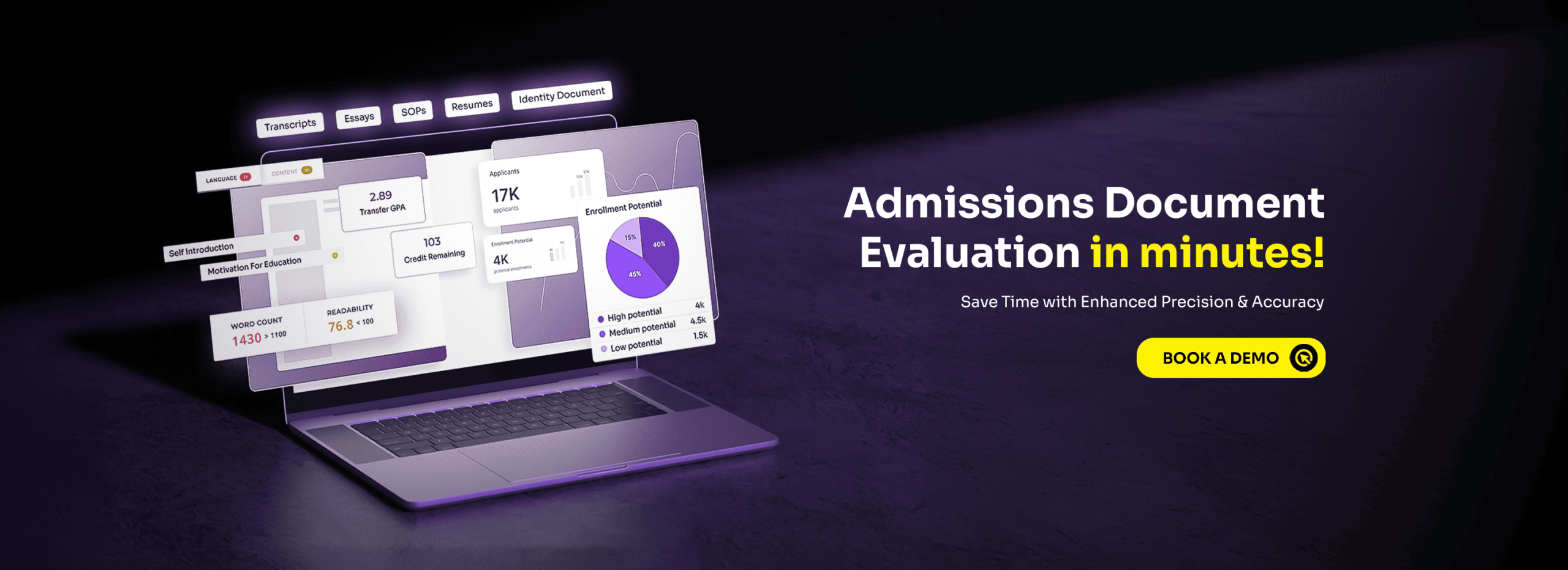
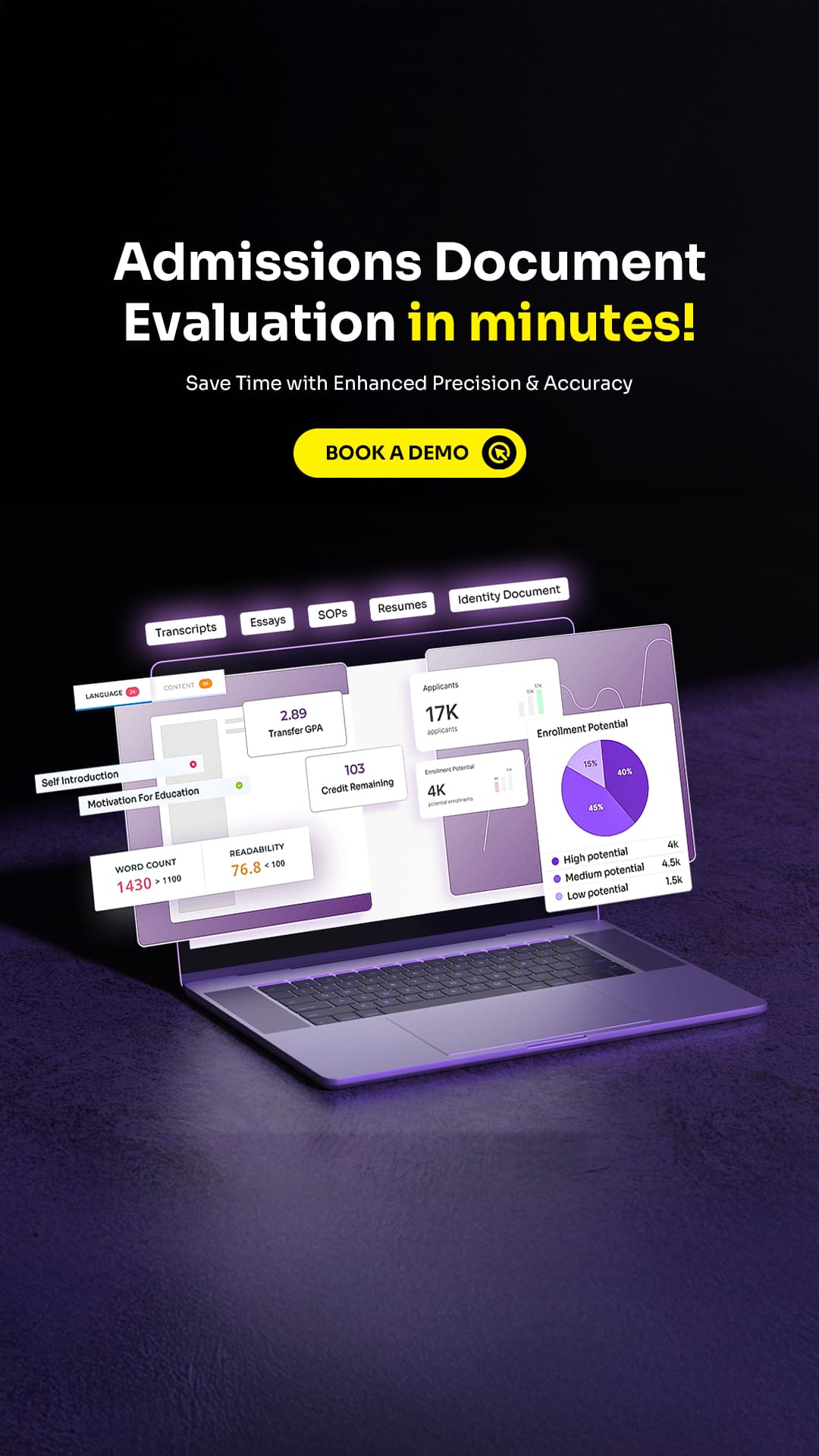
Automated document processing and verification uses AI to efficiently read, categorize, and validate application materials such as transcripts, recommendation letters, and test scores. This reduces manual checks and saves admissions teams significant time. AI instantly flags missing or inconsistent information, ensuring applications are complete and accurate. Faster verification enables quicker decisions and reduces errors and administrative delays.
- Immediate Document Verification: AI-powered systems employing Optical Character Recognition (OCR) technology scan transcripts and other documents to promptly identify missing information or inconsistencies.
- Accelerated Transcript Evaluation: AIdelivers rapid credit assessments, providing students with timely feedback on the transferability of previous coursework, which enhances confidence and supports higher-ed completion rates.
Predictive Analytics for Targeted Applicant Outreach
Predictive analytics uses AI to look at past applicant behavior and find out which students are most likely to finish their applications or enroll. This helps admissions teams focus their outreach on candidates who are more likely to respond, making their communication efforts more effective.
AI can also suggest personalized messages, reminders, or incentives to keep applicants interested. In the end, this data-driven approach helps more students complete their applications and supports building a stronger, more committed incoming class.
- Identification of High-Intent Applicants: Machine learning models analyze historical data to predict which applicants are most likely to enroll.
- Early Intervention for At-Risk Applicants: AI identifies individuals who have ceased portal interactions or are experiencing difficulties completing forms, enabling staff to provide targeted support.
Streamlined Application Review Process
A streamlined application review process uses AI and automation to organize and prioritize applications efficiently. Admissions teams can quickly access key information, highlight standout candidates, and flag incomplete or inconsistent submissions.
This reduces time spent on manual sorting and ensures every application gets a fair and thorough evaluation. As a result, decisions are faster, more accurate, and less stressful for staff.
- Automated Application Screening: AI manages initial, high-volume, routine screening of applications and flags cases for human review based on predefined criteria, enabling staff to concentrate on complex cases.
- Essay and Portfolio Analysis: Natural Language Processing (NLP) categorizes unstructured text in personal statements, significantly reducing manual review time.
Conclusion
Artificial intelligence provides admissions teams with advanced tools to address common challenges that impede application completion. These tools include smart chatbots that offer continuous support, predictive analytics that inform targeted outreach, automated document verification, and streamlined review workflows.
The implementation of these solutions reduces manual workload and minimizes errors. As a result, institutions can maintain applicant engagement, ensure the completeness of applications, and make faster, more informed decisions. Ultimately, artificial intelligence improves completion rates and enhances the overall efficiency and effectiveness of the admissions process.
Frequently Asked Questions
Ques 1: Is AI only useful for large, online institutions in improving application completion rates?
Ques 2: What are the biggest mistakes institutions make when adopting AI in the application process?
Ques 3: How does AI process applications?
Written By



No comments yet. Be the first to comment!
Leave a Comment