

Table Of Contents
Introduction
University admissions teams face nerve-wracking pressure to manage rising application volumes, respond promptly to student inquiries, and improve enrollment outcomes. With limited staff and fragmented systems, it becomes nearly impossible to perform these functions.
On the other hand, manual follow-ups, dispersed applicant data, repetitive queries, document verification delays, and inconsistent communication vitiate decision cycles and frustrate both students and administrators. These operational challenges delay admissions timelines, resulting in lower application completion rates and missed enrollment opportunities.
AI admissions assistant tools are transforming higher education by automating repetitive tasks, centralizing data, providing 24/7 student support, and generating predictive insights. These solutions streamline the admissions process from inquiry management to enrollment yields. Leading AI admissions assistants offer features such as intelligent chatbots, automated document processing, predictive lead scoring, real-time analytics dashboards, and personalized communication workflows. By addressing inefficiencies across multiple touchpoints, these tools help institutions accelerate processing times, enhance applicant engagement, reduce staff burnout, and achieve stronger enrollment outcomes.
What is an Admissions Assistant Tool?
An Admissions Assistant Tool is a technology solution that helps improve institutional student recruitment efficiency. Often powered by Artificial Intelligence (AI) and Machine Learning (ML), these tools support many parts of the admissions process, such as answering applicant questions around the clock with AI chatbots, automating follow-ups, verifying documents, scoring high-intent prospects, and providing predictive enrollment insights. By promoting data unification and massively reducing repetitive tasks, they help staff make decisions faster and provide applicants with a more swift and personalized enrollment experience.
How Admissions Assistant Tools Support Key Roles:
For Admission Counselors:
- Automate repetitive FAQs and routine email responses
- Prioritize high-intent leads using AI-driven scoring
- Track applicant engagement and communication history in one dashboard
- Reduce manual data entry and document follow-ups
For Admission Advisors:
- Provide real-time access to accurate policy and program information
- Offer personalized program recommendations based on student profiles
- Enable timely nudges for incomplete applications or missing documents
- Use analytics to guide strategic outreach and enrollment planning
These tools allow counselors and advisors to spend more time on important tasks like building relationships, offering guidance, and helping students with complex decisions.
Top Features for Admission Assistant Tools
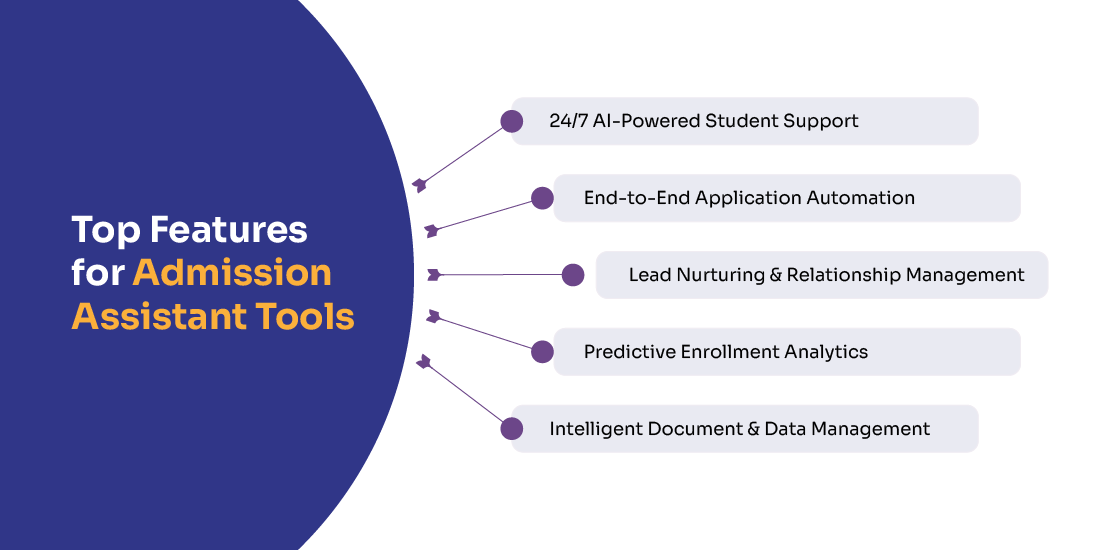
Modern admissions assistant tools offer more than basic automation. They serve as intelligent workflow engines that optimize each stage of the enrollment process. By integrating AI, data analytics, and CRM systems, these platforms reduce operational bottlenecks and enhance the student experience. They increase responsiveness, remove repetitive manual tasks, and provide admissions teams with actionable insights to improve enrollment results. These tools create impact in several key areas:
24/7 AI-Powered Student Support
AI-powered virtual assistants and chatbots help prospective students get quick and accurate answers anytime, so they do not have to wait long for critical admission information.
These tools can answer common questions, guide applicants through requirements, schedule appointments, and send more complex issues to enrollment counselors when needed. By keeping communication steady and real-time across websites, WhatsApp, email, and other channels, institutions can boost engagement, respond faster, and make applicants more satisfied.
Core KRAs:
- Average response time to student inquiries
- Inquiry-to-application conversion rate
- Student engagement rate across channels
- Reduction in repetitive query workload for staff.
End-to-End Application Automation
Admissions assistant tools make the entire enrollment process smoother, from the initial inquiry through online application submission, document uploads, fee payments, and status updates.
Automated reminders notify applicants about incomplete applications, highlight missing documents, and cut down on manual data entry. As a result, processing times are shorter, and there are fewer human errors and operational delays that can slow down decisions.
Core KRAs:
- Application completion rate
- Application processing turnaround time
- Reduction in manual administrative hours
- Error rate in application data and documentation
Lead Nurturing & Relationship Management
When connected to CRM platforms, admissions assistant tools keep track of every student interaction and create detailed profiles for each prospect. With AI-powered segmentation, you can send targeted emails, suggest programs that fit each student, and follow up based on their actions.
This approach makes communication more relevant and timely, matching each applicant’s interests and stage in the process. As a result, both engagement and conversion rates improve.
Core KRAs:
- Lead-to-enrollment conversion rate
- Email open and click-through rates
- Prospect engagement score
- Yield rate across different applicant segments
Predictive Enrollment Analytics
AI tools use past enrollment data and real-time behavior to spot patterns that show which prospects are most likely to apply, accept offers, or enroll. This helps admissions teams focus on high-intent students, use recruitment resources better, and predict enrollment numbers more accurately. With this data-driven method, admissions moves from reacting to situations to planning ahead.
Core KRAs:
- Enrollment forecast accuracy
- Percentage of high-intent leads successfully converted
- Recruitment ROI improvement
- Reduction in last-minute enrollment shortfalls
Intelligent Document & Data Management
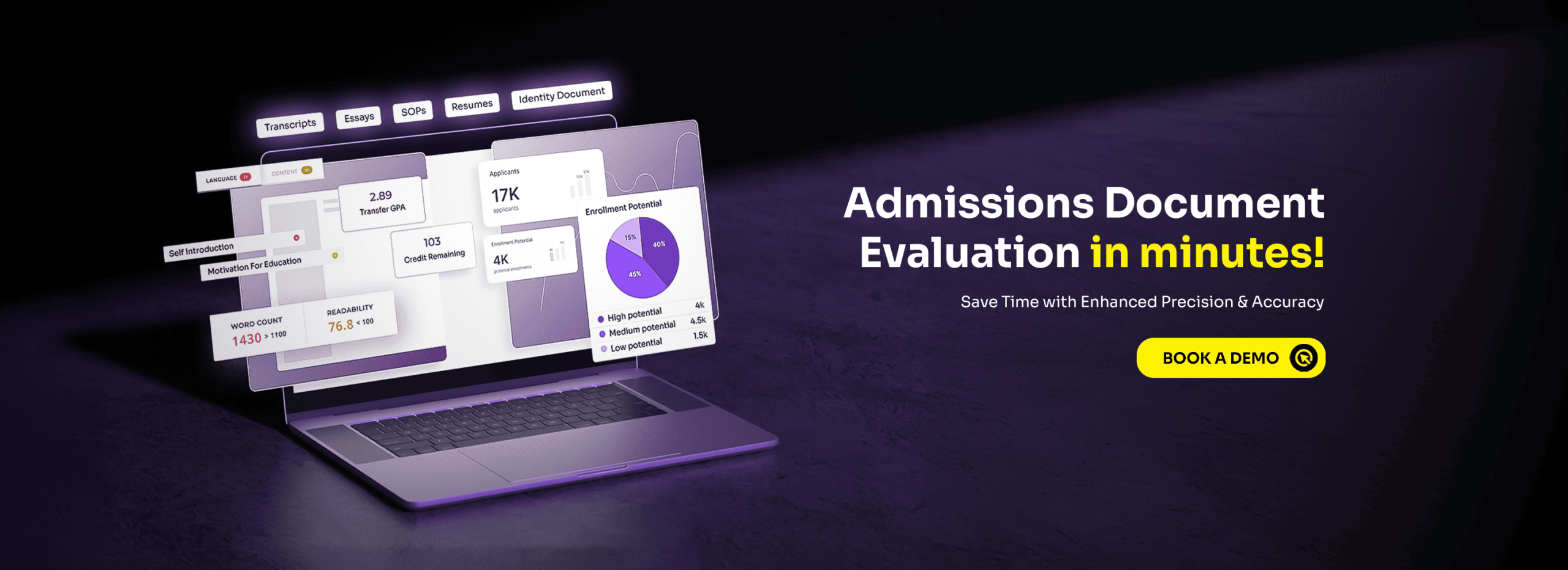
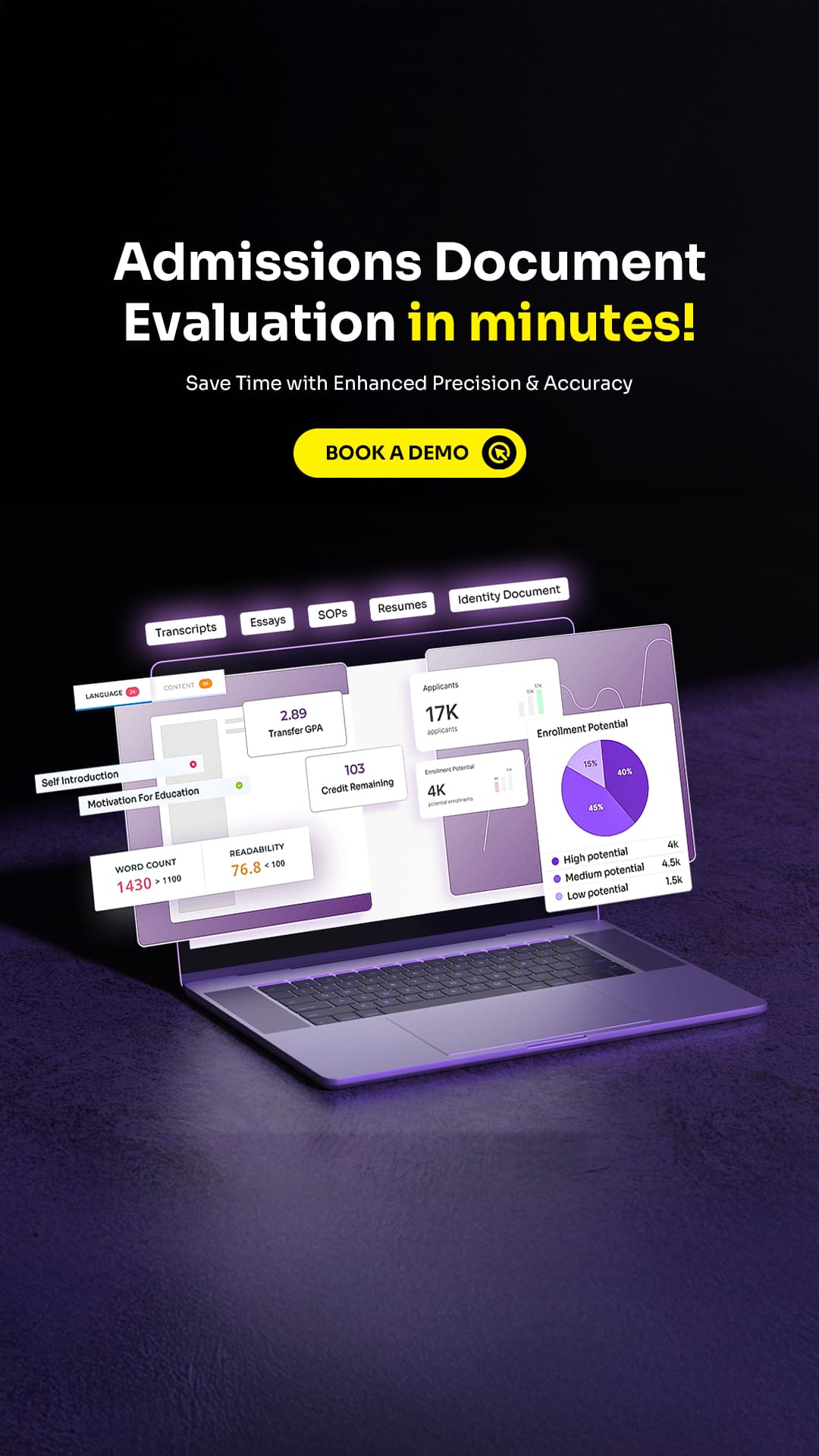
AI-powered systems can automatically extract, check, and organize transcripts, recommendation letters, and other important documents. Tools like Optical Character Recognition (OCR) and smart validation help cut down on manual review time and reduce data entry mistakes.
This leads to better compliance, more accurate records, and gives admissions staff more time to focus on evaluating applicants and connecting with students instead of handling paperwork.
Core KRAs:
- Document verification turnaround time
- Data accuracy rate
- Reduction in manual document handling
- Compliance and audit readiness metrics
Key Benefits of AI Admission Assistant Tools
Higher education institutions are facing more applications, higher student expectations, and tighter budgets. To meet these challenges, many are turning to AI admission assistant tools. These tools do more than automate simple tasks; they help admissions teams connect with prospective students, process applications efficiently, and make better decisions using data.
With features like real-time communication, smart workflow automation, predictive analytics, and personalized outreach, AI-powered assistants help schools work more efficiently, reduce errors, and create a smoother experience for applicants. This leads to better engagement, higher conversion rates, and more sustainable enrollment growth.
24/7 Applicant Support & Engagement
AI-powered chatbots and virtual assistants help prospective students get quick answers to their questions at any time. They can clarify things like eligibility, deadlines, scholarship options, or document requirements, which helps reduce uncertainty and keeps students from dropping out of the process.
Regular reminders, helpful nudges, and personalized updates encourage applicants to keep moving forward, leading to higher application completion rates and greater student satisfaction.
Increased Operational Efficiency
Admissions teams often spend a lot of time on repetitive tasks like answering common questions, entering applicant data, checking documents, and setting up appointments. AI can handle these routine jobs, which cuts down on manual work and helps avoid processing delays. This lets staff focus more on strategic projects, building relationships, and offering personalized counseling. These activities have a direct impact on enrollment results.
Improved Precision and Accuracy
When staff processes thousands of applications by hand, mistakes in data entry, document tracking, and communication can happen more often. AI helps reduce these errors by checking information automatically and making workflows more consistent. This leads to more accurate results, fewer compliance problems, and a stronger reputation for fairness and reliability.
Personalized Applicant Experience
Today’s applicants want communication that feels personal, not generic. AI can look at things like academic history, behavior, location, and how students interact with the school to suggest programs, send targeted emails, and share helpful reminders. When students get this kind of attention, they feel understood and supported, which helps them connect with the school and makes them more likely to enroll.
Data-Driven Decision Making
AI tools help admissions leaders by offering useful insights from both past and current data. With predictive analytics, they can spot enrollment trends, find applicants who are likely to enroll, and notice students who might not finish their applications. This information helps schools improve their recruitment strategies, use resources wisely, and address any issues in the enrollment process early on.
Cost and Time Reduction
AI admission assistants help cut down costs by automating repetitive tasks and reducing the need for manual work. It speeds up application reviews, improves response times, and makes workflows more efficient, which shortens the admissions process. These improvements save money and help institutions stay competitive when quick responses matter most.
Enhanced Diversity and Inclusion
AI-driven systems can spot patterns of bias in traditional admissions and encourage a more well-rounded review of applications. By making evaluation criteria consistent and drawing attention to a wider range of talent, these tools help create fairer decisions. With careful design and oversight, AI can help schools build more inclusive student groups while staying transparent and consistent.
Conclusion
As enrollment becomes more competitive and fast-paced, leading AI admissions assistant tools are now a strategic necessity for higher education institutions. These platforms use automation, predictive intelligence, personalization, and real-time engagement to resolve operational challenges and improve the applicant experience. By reducing administrative workload, increasing accuracy, and supporting data-driven recruitment, AI-powered assistants help teams work more efficiently and respond quickly. Institutions that adopt these tools can achieve stronger enrollment results, higher student satisfaction, and a more agile admissions process.
Frequently Asked Questions
Ques 1. What challenges do higher education institutions face when implementing AI admissions assistant tools?
Ques 2: What are the benefits of using AI tools for automating admissions decision-making in higher education?
Ques 3. What are the top higher education CRM platforms for AI admissions in 2026?
Ques 4. How do AI admissions assistants support higher education institutions?
Ques 5. What are the key features of AI enrollment tools for ensuring data security in higher education?
Written By




No comments yet. Be the first to comment!
Leave a Comment