


Table Of Contents
Introduction
In today’s competitive higher education environment, admissions response time plays a crucial role in shaping a student’s decision. When students apply to multiple universities, they often prefer institutions that respond quickly and provide clear updates about their application status. Long waiting periods can create uncertainty and may even cause prospective students to choose another university that communicates faster.
For universities, improving admissions response time is not only about efficiency but also about delivering a better applicant experience. By streamlining internal processes, using technology, and maintaining transparent communication, institutions can reduce delays and build stronger trust with prospective students.

Why Fast Admissions Response Time Is Critical for Universities
Admissions response time directly impacts student decisions, institutional reputation, and overall enrollment success. In today’s competitive higher education environment, speed and transparency are key differentiators.
Improves Enrollment Yield
A faster admissions response can significantly increase the likelihood that admitted students will accept an offer and enroll. When universities communicate decisions quickly, students feel more confident and valued during the application process.
Timely responses also give applicants more time to plan finances, visas, accommodation, and course preparation. Leading institutions such as Harvard University have achieved exceptionally high yield rates, with more than 83% of admitted students choosing to enroll. This demonstrates how efficient admissions communication can directly influence enrollment conversion and institutional success.
Creates a Competitive Advantage
Most prospective students apply to several universities at the same time, making response speed a crucial differentiator. Institutions that provide quick updates, clear communication, and faster admission decisions stand out among competing options.
A prompt response signals that the university is organized, responsive, and committed to supporting students throughout the process. This positive first impression can strongly influence a student’s final decision.
Reduces Application Drop-offs
A lengthy or unclear admissions process can create uncertainty and anxiety for prospective students. When universities take too long to provide updates, applicants may lose interest or fail to submit the required documents on time. Timely communication and regular status updates keep students engaged and encourage them to complete their applications.
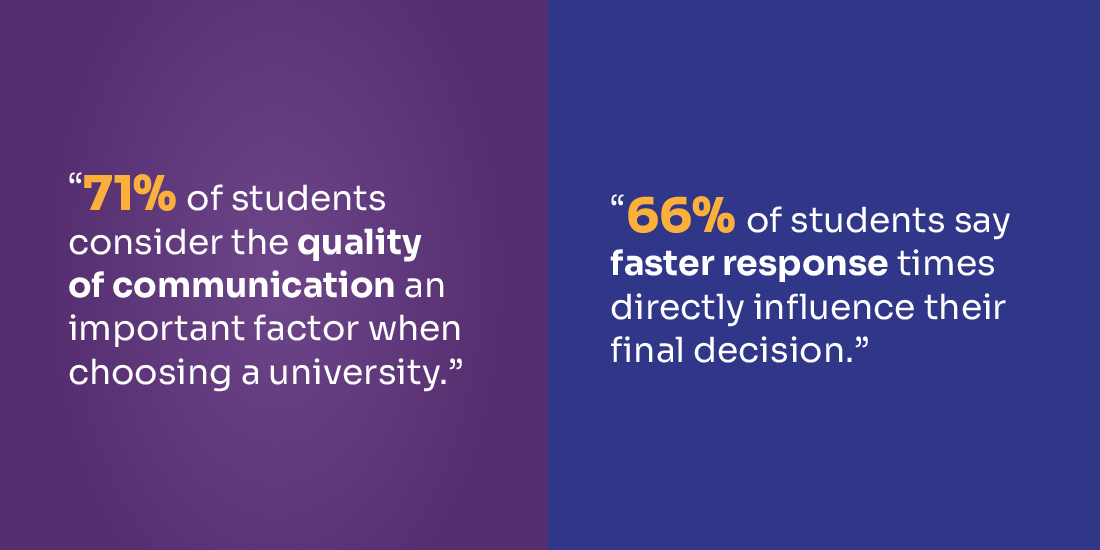
Clear guidance also reduces confusion about deadlines, documentation, and next steps. Studies indicate that 71% of students consider the quality of communication an important factor in choosing a university, while 66% say that faster response times directly influence their final decision.
Enhances Student Experience and Brand Image
A smooth and transparent admissions journey plays a vital role in shaping a student’s first impression of an institution. When universities provide real-time application updates and clear communication, applicants feel more confident and supported throughout the process. This positive experience builds trust even before the student joins the institution. A well-managed admissions process also reflects professionalism and organizational efficiency.
Supports Efficient Institutional Planning
Faster admissions responses also benefit universities by improving internal planning and decision-making. When institutions process applications quickly, they gain a clearer understanding of potential enrollment numbers earlier in the cycle.
This allows administrators to allocate financial aid budgets, manage housing availability, and plan academic resources more effectively. Research shows that universities using real-time admissions data and analytics can improve recruitment response rates by up to 30% and achieve more accurate enrollment forecasting.
Application Decision Timelines by Admission Type
The time it takes to receive a college admission decision often depends on the admission plan chosen and the university’s evaluation process. Different admission types follow different timelines, which can influence when applicants receive their results. Understanding these timelines helps students manage expectations and plan the next steps of their academic journey.
Early Decision (ED) and Early Action (EA)
Early Decision (ED) and Early Action (EA) are admission plans that allow students to apply to universities earlier than the regular application cycle. Applications submitted under these plans are reviewed before Regular Decision applications, and most institutions release results around mid-December.
Early Decision is typically binding, meaning students must enroll if admitted, while Early Action usually allows more flexibility. Because of this commitment, universities provide ED decisions earlier to give students sufficient time for enrollment preparations.
Regular Decision (RD)
Regular Decision (RD) follows the standard admission timeline used by most universities. Students usually submit their applications between December and January, and institutions take several months to review the entire applicant pool. Admission decisions are typically announced between late March and early April.
This process allows universities to evaluate applications carefully and compare candidates before making final selections. Since deadlines and evaluation timelines vary across institutions, students should regularly check their application portals for updates and notifications.
Rolling Admissions
Rolling admissions is a flexible admission process in which universities review applications as they are received rather than waiting for a fixed deadline. Decisions are released on an ongoing basis, often within a few weeks to a couple of months after submission. The response time may vary depending on the application volume and the date of submission. Students who apply earlier usually receive decisions sooner and have a better chance of securing available seats. For this reason, applying early is highly recommended when universities follow a rolling admissions policy.
By understanding these timelines, students can better manage expectations and make informed decisions throughout the admissions journey.
Effective Approaches to Improve Admissions Response Time
Reducing admissions response time requires a strategic combination of technology integration, streamlined processes, and proactive communication. Universities that focus on operational efficiency can accelerate decision-making while delivering a better experience to prospective students. Below are key areas institutions should prioritize.
Adopt Automation and Digital Solutions
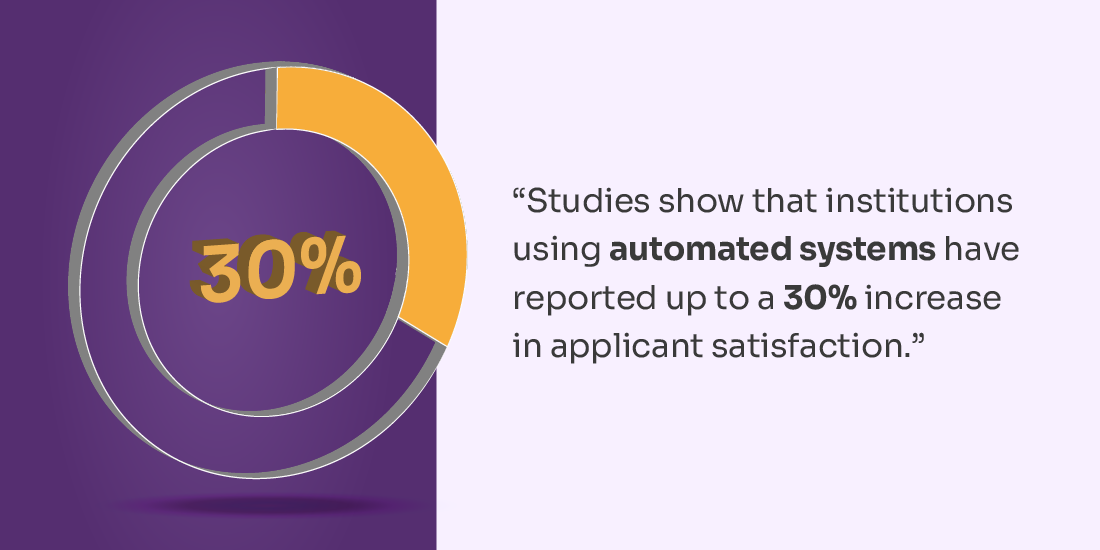
Universities can significantly improve admissions response times by adopting automation and digital technologies. These tools reduce manual work, streamline communication, and help institutions manage large volumes of applications more efficiently. Studies show that institutions using automated systems have reported up to a 30% increase in applicant satisfaction due to faster responses and improved communication.
Use CRM Systems: Customer Relationship Management (CRM) systems help universities organize applicant data, track inquiries, and automate communication during different stages of the admissions process. Automated emails, reminders, and status updates ensure timely responses while reducing the administrative workload for admissions teams.
Implement a Centralized Application System: A centralized application platform allows universities to manage all applicant documents and information in one place, reducing errors and accelerating the review process. For instance, the Georgia Institute of Technology uses an AI-powered tool to automatically review transfer student transcripts, helping staff analyze course details quickly and inform applicants about transferable credits faster.
Similarly, tools like the EDMO Application Evaluator use AI-powered document analysis to instantly review SOPs, LORs, transcripts, and resumes. With bulk processing, seamless integration, and analytics, it helps admissions teams identify applicant strengths quickly and make faster, more accurate decisions.
Integrate AI and Chatbots: AI-powered chatbots help universities provide instant responses to common student queries and offer 24/7 support throughout the admissions process. These tools improve engagement by ensuring that applicants receive immediate assistance without long waiting times. For example, Point Park University has deployed a 24/7 AI admissions chatbot that answers student queries instantly, helping eliminate long wait times and supporting admissions staff more effectively.
Similarly, solutions like the EDMO Student Copilot enhance communication through omnichannel support, connecting students with admission teams via voice calls, SMS, and WhatsApp. It ensures wider student reach, consistent messaging across platforms, and provides timely updates and personalized guidance to improve the overall student experience.
Streamline Internal Processes
Strong internal coordination is essential for accelerating admissions decisions. By improving how applications are reviewed and managed across departments, institutions can significantly reduce response times and create a more efficient admissions workflow.
Enable Parallel Reviews: Allow academic, financial, and administrative teams to review applications simultaneously instead of following a sequential process. This approach minimizes bottlenecks and speeds up decision-making. Studies indicate that institutions with streamlined processing systems can reduce application processing time to 2–4 weeks, improving applicant satisfaction by 15%.
Assign Clear Accountability: Designating a specific admissions officer to oversee each application ensures clear ownership and accountability. This prevents applications from getting delayed between departments and helps maintain consistent progress throughout the review process.
Standardize Evaluation Criteria: Establishing clear eligibility guidelines and standardized assessment criteria enables admissions teams to evaluate applications more efficiently and consistently, leading to faster and more reliable decision-making.
Improve Communication and Transparency
Clear, timely communication plays a critical role in reducing applicant uncertainty and improving the overall admissions experience. When institutions maintain transparent communication throughout the application process, students remain informed and admissions teams face fewer repetitive inquiries.
Automate Status Notifications: Sending automated updates such as confirmation of document receipt, application progress updates, or review notifications keeps applicants informed at every stage. This reduces uncertainty and minimizes the number of follow-up queries admissions teams must handle.
Communicate Clear Timelines: Providing clear information about expected decision timelines helps manage applicant expectations. When prospective students know when they are likely to receive an update, it builds trust and creates a more transparent admissions process.
Modernize the Application Experience
A streamlined and user-friendly application process plays a key role in encouraging faster submissions and reducing the number of incomplete applications. By modernizing their application systems, institutions can provide a more accessible and convenient experience that aligns with the expectations of today’s digitally driven students.
Ensure Mobile Accessibility: Implementing a mobile-responsive application portal allows students to start, complete, and track their applications easily from smartphones or tablets. This flexibility enables applicants to manage the process anytime and from any device, improving overall engagement.
Simplify Application Forms: Reducing unnecessary steps and removing repetitive or complex questions can significantly improve the user experience. Clear, concise forms make the process easier to navigate, helping applicants complete their submissions more quickly and accurately.
Conclusion
Admissions response time has become an important factor in the student recruitment process. Faster decisions help universities remain competitive, improve student satisfaction, and increase enrollment rates. When institutions respond quickly and communicate clearly, applicants feel more confident and engaged throughout the admissions journey.
By adopting efficient workflows, modernizing application systems, and strengthening communication strategies, universities can significantly improve their response times. In the long run, a faster and more transparent admissions process benefits both institutions and students, creating a smoother path from application to enrollment.
Frequently Asked Questions
Question 1. What is the typical response time for universities after inviting international students for admission?
Question 2. When and How Often Should a Student Follow Up on Their Application?
Question 3. Can an Admissions Decision Be Revoked Even After Receiving the Acceptance Letter?
Question 4. What factors can delay a university’s admissions response?
Question 5. How can students speed up the admissions decision process?
Written By


You May Also Like
 AI in Education

 AI in Education
 AI in Education
No comments yet. Be the first to comment!
Leave a Comment