
Table Of Contents
Introduction
Inbound marketing is becoming essential for higher education institutions looking to attract and engage prospective students. By creating valuable content, optimizing for search engines, and using personalized communication, universities can guide students through every stage of the enrollment journey.
The right marketing tools make it easier to track engagement, nurture leads, and measure results, helping institutions improve application rates and deliver a better student experience.
Inbound Marketing for Higher Education: How to Attract and Engage Students
Inbound marketing, also called Inbound Enrollment in higher education, is changing how colleges and universities connect with prospective students. Traditional methods like billboards, radio, mail, and viewbooks are still used, but they are often expensive, hard to measure, and easy for students to ignore.
Earlier, with only a few channels like TV, radio, and magazines, it was easier to get attention. Today, students use many digital and offline platforms phones, tablets, streaming services, and connected devices. In this crowded environment, spending more on advertising isn’t enough.
The key is providing value answering students’ questions when, where, and how they are searching. The goal is to attract students to your institution, rather than pushing messages out to them.
The Inbound Enrollment Funnel
Colleges and universities are moving from the traditional enrollment funnel to the inbound methodology, which has four stages: Attract, Convert, Nurture, and Close. Here’s a closer look at the first stage:
Attract: Bringing the Right Students to Your Website
Paid campaigns can be expensive clicks may cost $35–$100, and conversion rates are often just 1–5%. For smaller schools, acquiring even a single inquiry through paid search can cost hundreds or thousands of dollars.
Inbound marketing helps level the playing field by focusing on student personas, understanding who your ideal students are, their goals, and the journey they take to choose a program or school. By creating useful, targeted content like blogs, social media posts, and SEO-optimized pages, schools can attract prospective students organically, without relying on costly paid ads.
Content ideas to attract students:
- Alumni success stories and career paths
- Tips for campus tours
- Guides to the local city and student life
- How to use college networks for career growth
- Highlights of faculty research and projects
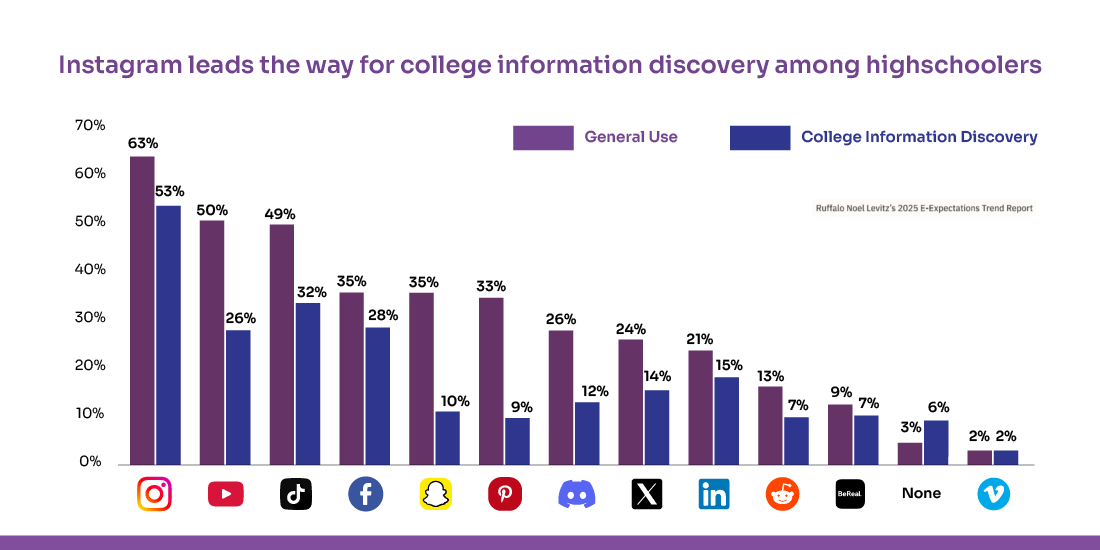
According to the 2025 EETR report, 56% of high school students use social media early in their college search often before visiting a school’s website or campus making targeted social content crucial for early engagement.
Source: foundationinc
Convert: Turning Visitors into Prospects
Once students visit your website, the next goal is to convert them into identifiable leads. This can be done by offering valuable resources such as white papers, guides, or webinars accessible through a form on a dedicated landing page.
When students share their email addresses, it provides a direct channel for ongoing communication, allowing you to nurture them further along the enrollment journey. This stage effectively transforms casual visitors into actionable prospects. According to industry data, 72% of marketers report that content marketing boosts engagement, while 89% say that inbound strategies deliver a higher ROI compared to traditional outbound methods.
Nurture & Close: Guiding Prospects to Apply and Enroll
Each form submission builds your email list and enables personalized communication. Tools like HubSpot can send targeted emails and website content based on a student’s interests, for example, program info, campus visits, or alumni stories.
Personalized communication helps students make informed decisions and increases applications. Currently, 46% of students had no contact with admissions officers last year, 64% feel college info isn’t personalized, and fewer than 14% respond to typical outreach despite receiving 1,300 emails/mailers annually.
With EDMO Communication Intelligence, schools can automate highly targeted, data-driven outreach that adapts to each student’s interests, ensuring more meaningful engagement and higher conversion rates.
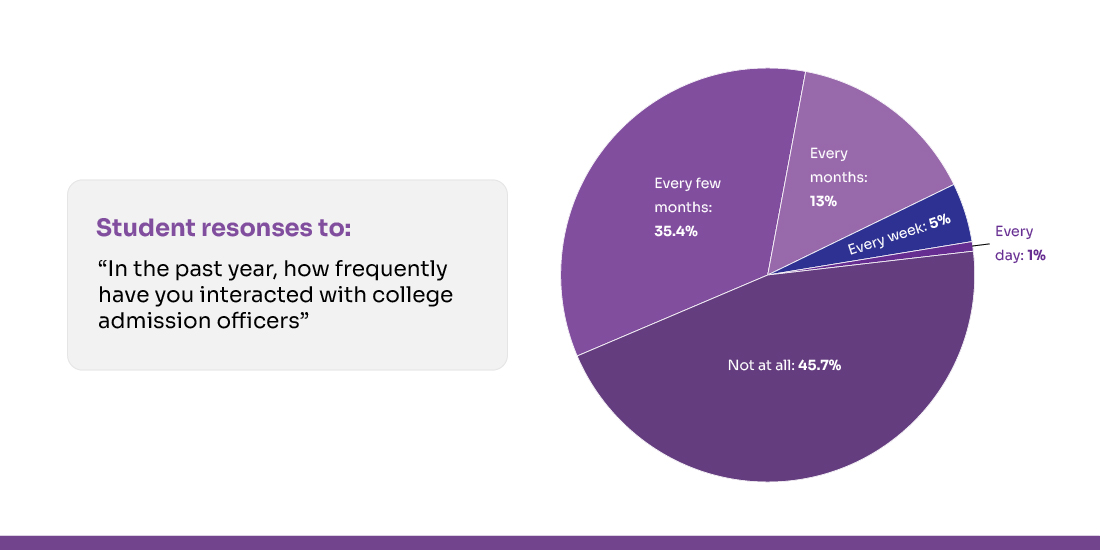
Source: Forbes
Shifting to Inbound Enrollment
Moving from outbound to inbound marketing takes time, but focusing on the student experience delivers results. Start by asking new students about challenges they faced during admissions, then create online resources to address them. Consistently sharing useful content helps grow your inbound enrollment funnel and improve marketing effectiveness.
Top Inbound Marketing Tools for 2026
Inbound marketing focuses on being where your potential customers are search engines, social media, email, third-party partners, and more. The goal is to attract leads, convert them at the top of the funnel, and use marketing automation tools to nurture them into customers.
Default
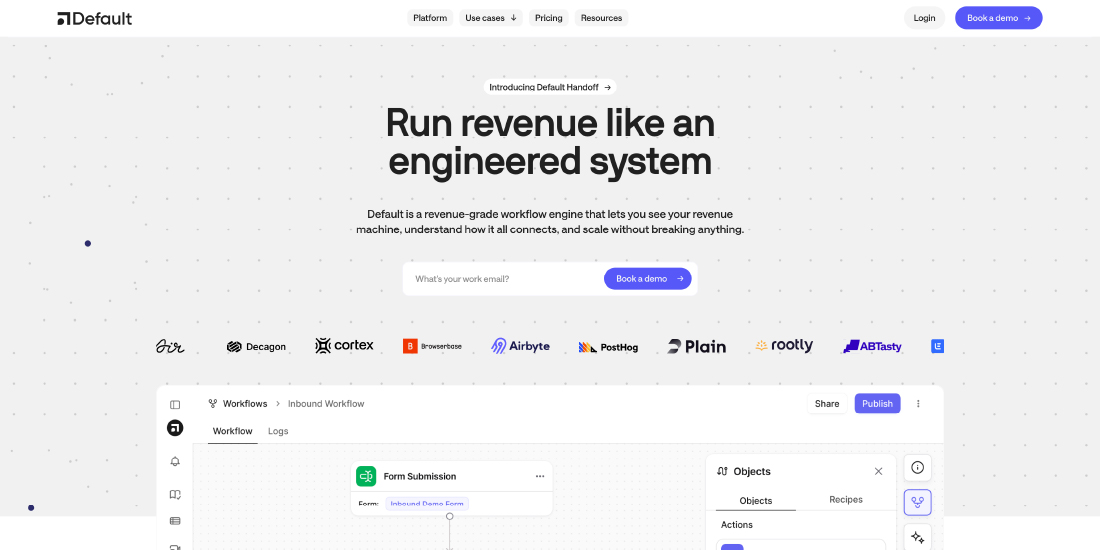
Default is an all-in-one platform designed to support inbound campaigns without broken integrations or revenue leakage.
Key Features:
- Real-time, automated lead distribution using CRM insights, behavioral data, and enrichment.
- Automated scheduling at the point of conversion to improve response rates.
- Drag-and-drop, no-code workflows with advanced customizations.
Pricing:
- Essential: $250 enriched leads/month, 5 seats.
- Growth: 1,000 enriched leads/month, 10 seats.
- Enterprise: Unlimited enriched leads, 20+ seats.
Pros:
- All-in-one platform reduces siloes, broken touchpoints, and data loss.
- Intuitive UI, no coding expertise required.
- Behavior-based lead distribution and real-time lead enrichment.
Cons:
- Not a point solution; built for ease-of-use, not highly technical users.
HubSpot
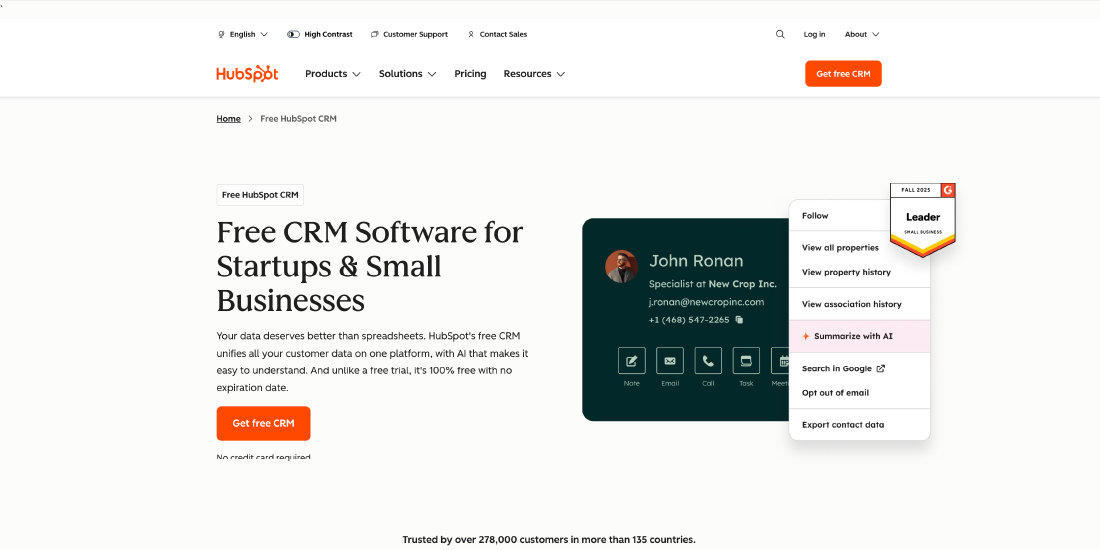
HubSpot is known for its all-in-one CRM ecosystem that seamlessly integrates marketing, sales, and service automation. Its robust analytics and reporting provide insights across the entire inbound journey, helping teams optimize campaigns effectively.
Key Features:
- CRM integrates with multiple inbound touchpoints for a full lead activity feed.
- Form and landing page builders for lead capture.
- Built-in lead scoring, workflows, and automation for nurturing and routing leads.
- Email marketing campaigns with advanced reporting dashboards.
Pricing:
- Free CRM available; Marketing, Sales, and Service Hubs can be added.
- Monthly plans range from $20 to $3,600 depending on features, users, and contacts.
Pros:
- Centralized database for inbound marketing automation.
- Scalable and sophisticated analytics integrated with Google Analytics.
Cons:
- Workflows can be difficult to customize.
- Automation is limited in the Starter plan.
SEMrush
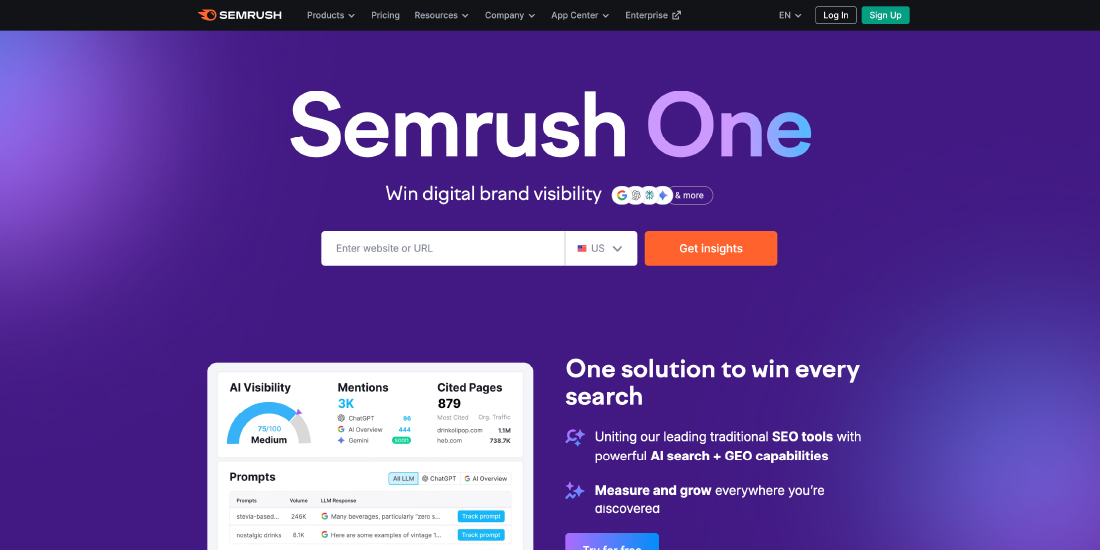
SEMrush excels by providing comprehensive SEO insights, including keyword research, competitor analysis, and rank tracking. This enables marketers to optimize content, increase visibility, and attract high-intent traffic to their website.
Key Features:
- Keyword research and competitor analytics.
- On-page SEO guidance and link-building tools.
- Live rank tracking for real-time progress monitoring.
Pricing:
- Pro: $135.95/month, 500 keywords.
- Guru: $249.95/month, 1,500 keywords.
- Business: $499.95/month, 5,000 keywords.
Pros:
- Comprehensive analytics for content strategy.
- Saves time with consolidated competitor insights.
Cons:
- Higher price point for small businesses.
- Platform can be overwhelming for beginners.
Apollo.io
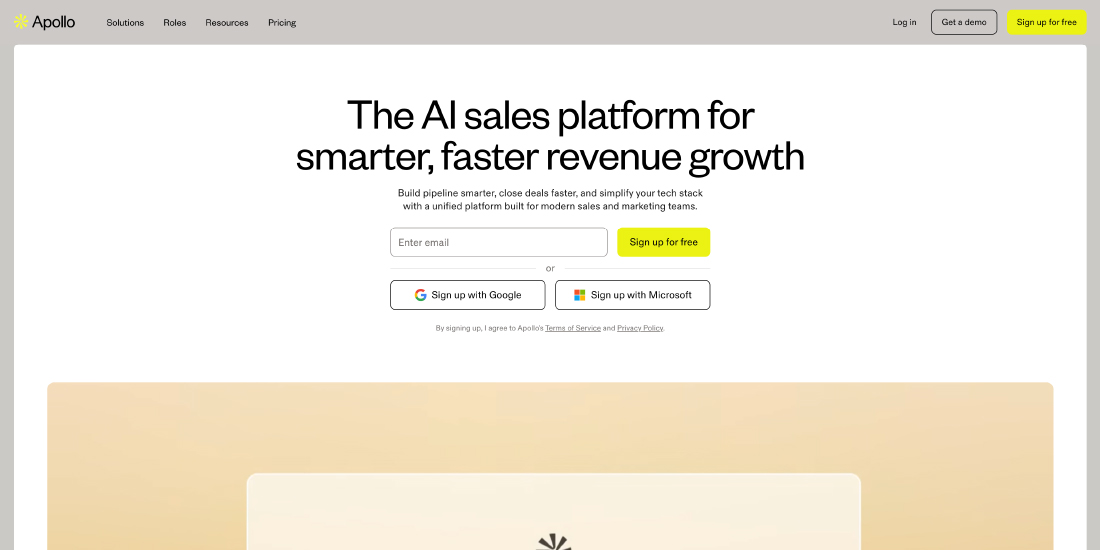
Apollo.io stands out with its massive database of contacts and companies, offering detailed demographic and behavioral data. It helps marketers build hyper-targeted campaigns and automate multi-channel outreach for more effective lead engagement.
Key Features:
- Database with 200M+ contacts and 60M+ companies.
- Demographic and behavioral filters for precise targeting.
- Email, LinkedIn, and call sequence automation.
- CRM integration support.
Pricing:
- Free tier available. Paid tiers range from $49–$149/month.
Pros:
- Easy-to-use UX/UI and powerful filtering.
- Up to 10,000 free leads initially.
Cons:
- Some spam filter issues; limited built-in forms.
- Manual steps required for certain workflows.
Klaviyo
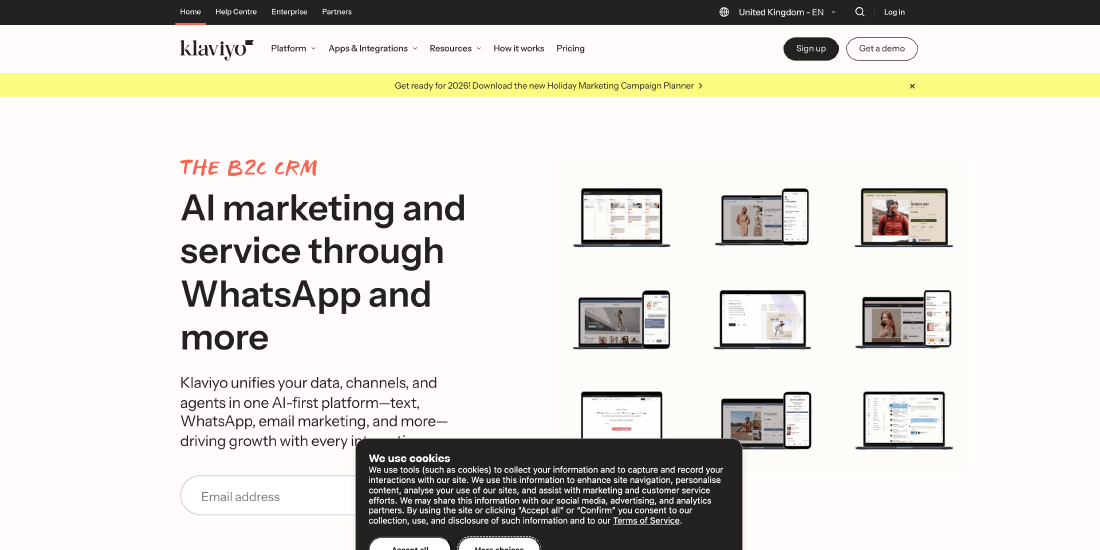
Klaviyo is a leader in personalized marketing automation, supporting email, SMS, and push notifications. Its segmentation and workflow capabilities allow marketers to deliver highly targeted campaigns that drive engagement and conversions.
Key Features:
- Multi-channel automation.
- Segmentation using real-time data.
- Pre-built workflow templates for customization.
- Reporting dashboards to measure campaign performance.
Pricing:
- Free for first 500 sends. Paid plans: $20–$2,350/month depending on volume.
Pros:
- Highly customizable workflows.
- Easy to get started with templates.
Cons:
- Limited to workflows; doesn’t handle full inbound strategy.
- Performance can slow with heavy data use.
Buffer
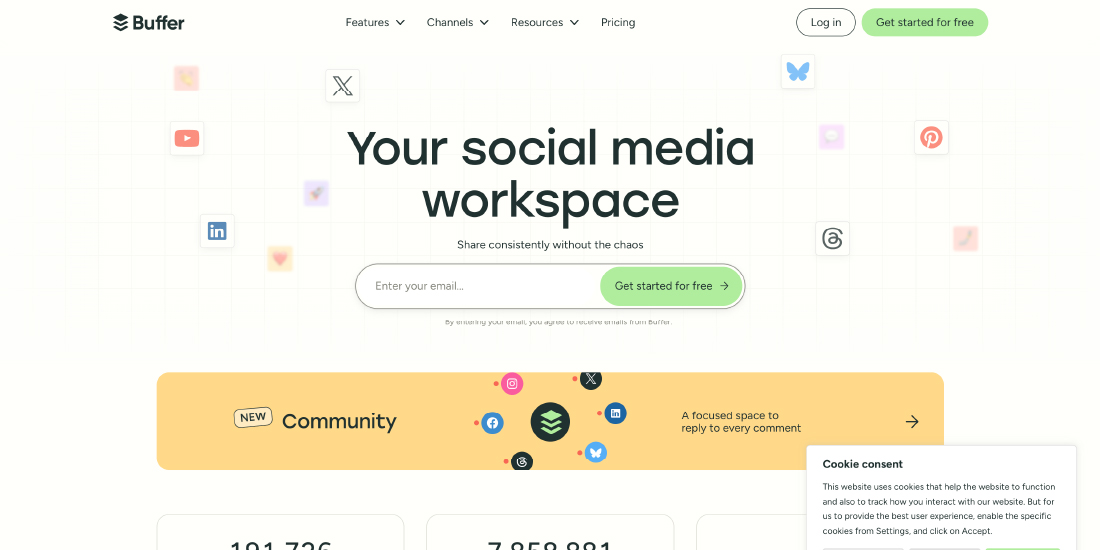
Buffer simplifies social media management by enabling scheduling, automation, and engagement tracking across multiple platforms. Its analytics and calendar features help maintain a consistent online presence and improve campaign performance.
Key Features:
- Multi-platform posting and content calendar.
- Comment and message management.
- Analytics dashboards for performance review.
Pricing:
- Free tier: 3 channels. Paid plans: $6–$120/month.
Pros:
- Simple, intuitive interface.
- Helps maintain consistent social presence.
Cons:
- Post-conversion nurturing not supported.
- Occasional minor bugs reported.
Webflow
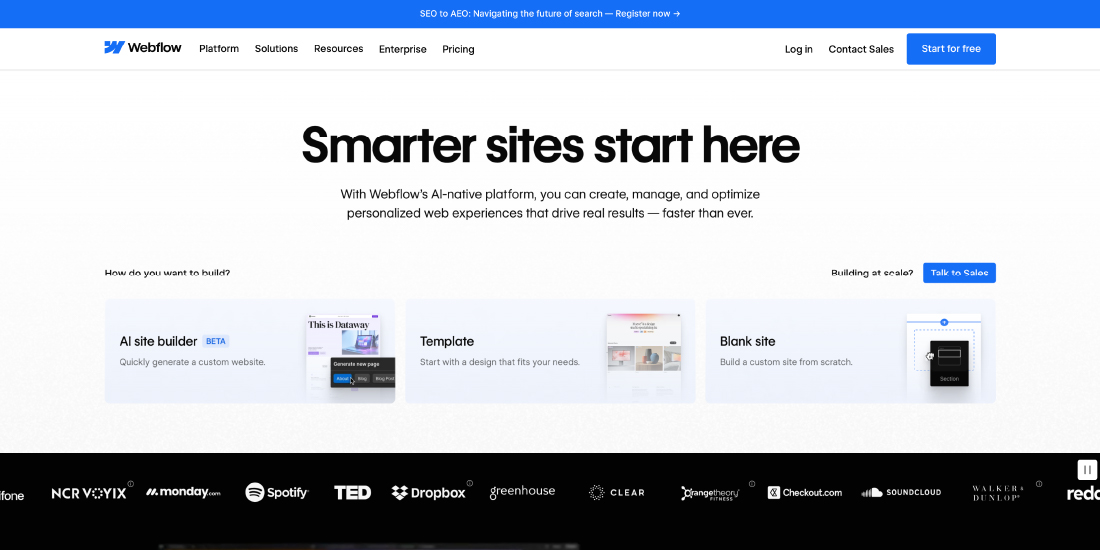
Webflow stands out by allowing marketers to build fully customized, responsive websites without coding. Its built-in SEO tools and visual editor make it easy to create engaging content that drives organic traffic and conversions.
Key Features:
- Real-time website builder with interactive elements.
- SEO-friendly tools for organic growth.
- Localization for targeted personalization.
- Google Analytics integration.
Pricing:
- Free tier for hobby sites. Paid plans: Basic, CMS, Business, Enterprise.
Pros:
- User-friendly interface for marketers.
- Great support and educational resources.
Cons:
- Limited form submissions on lower plans.
- Lead capture forms require back-end integration for automation.
How to Choose the Best Inbound Marketing Software
Selecting the right inbound marketing software depends on your organization’s goals, resources, and long-term strategy. To make a smart and effective investment, consider the following factors:
Define clear objectives
Begin by outlining what you want to achieve with inbound marketing software. Identify the processes you aim to automate or streamline, such as lead nurturing, campaign tracking, or analytics, and decide how you will measure ROI. Having clear goals makes it easier to compare tools and choose the one that best fits your needs. Notably, inbound marketing generates leads at 62% lower cost than outbound marketing.
Balance functionality and ease of use
Advanced inbound marketing platforms often offer powerful features, but they can be complex to manage. Consider your team’s size, technical skills, and daily workload when evaluating tools. The ideal platform should provide the features you need without creating usability challenges that slow adoption or productivity.
Set a realistic budget
Understanding your budget early helps narrow down your options and prevents time spent evaluating tools that are out of reach. Research pricing models, including subscription tiers and add-on costs, to ensure the software delivers value within your financial limits.
Check reviews and market reputation
User reviews on platforms like G2 and Capterra provide valuable insights into real-world experiences. These reviews help you assess whether the software’s performance, support, and usability match the claims made by vendors, allowing you to make a more informed decision.
Conclusion
Inbound marketing is becoming a critical strategy for universities looking to attract and engage prospective students. By using the right software and tools, higher education marketers can streamline campaigns, personalize communication, track engagement, and make data-driven decisions. From marketing automation and analytics platforms to content management and CRM systems, these tools help institutions deliver a seamless and impactful student experience.
Adopting and integrating these technologies enables universities to stay competitive, improve enrollment outcomes, and build lasting relationships with students.
Frequently Asked Questions
Question 1. How many inbound marketing tools do universities need?
Question 2. What if the university already uses many inbound marketing tools?
Question 3. What is the ideal inbound marketing tech stack to optimize speed-to-lead?
Question 4. Inbound Marketing in Higher Education – What tools are best for inbound marketing in higher education?
Question 5. How does inbound marketing improve student enrollment outcomes?
Written By


You May Also Like
 AI in Education

 AI in Education
 AI in Education
No comments yet. Be the first to comment!
Leave a Comment